


Why Local Climate Action is Essential for Your Home’s Comfort
When we talk about the global climate crisis, it often feels like a problem happening "out there"—rising sea levels in distant oceans or wildfires in the high mountains. However, as of April 2026, we are seeing more clearly than ever that the most effective way to address these massive shifts is through local action. National networks, like the National Academy of Medicine’s Climate Communities Network (CCN), have highlighted that over 100,000 lives are lost each year in the US due to air pollution—a figure expected to worsen with climate stress. This is why tailored resilience is so important.
For a homeowner in Hammond or Merrillville, "resilience" isn't an abstract concept; it’s a furnace that doesn't quit during a Lake Michigan blizzard and an AC that can handle a "heat island" effect in more densely populated areas. Community-driven initiatives elevate frontline expertise, ensuring that the people who actually live in a climate are the ones designing the solutions. This translates to HVAC systems that aren't just "on," but are optimized for our specific socio-ecological-technological systems (SETs).
By integrating local knowledge, we can avoid the pitfalls of generic installations. For example, knowing Signs Your HVAC System Needs Attention Before Temperatures Rise is a form of local expertise. In Northwest Indiana, our "spring" can involve a 30-degree temperature swing in four hours. A system that isn't calibrated for that volatility will cycle constantly, leading to premature wear and tear.
How Local Climate Expertise Translates to Better Solutions for NWI Homeowners
To truly understand how local climate expertise translates to better solutions, we look at the SETs framework. This stands for Socio-Ecological-Technological systems. In plain English, it means we don't just look at the air conditioner (the technology); we look at the house it’s in (the social/built environment) and the weather outside (the ecology).
In areas like East Chicago or Gary, urban heat islands—where pavement and buildings trap heat—can make the air significantly hotter than in rural Cedar Lake. Furthermore, historical inequities like redlining have left some neighborhoods with less green space, meaning those homes work much harder to stay cool. A local expert recognizes these patterns and adjusts your system accordingly.
| Feature | Generic HVAC Configuration | Climate-Specific (NWI) Configuration |
|---|---|---|
| Humidity Control | Standard cycle times | Extended dehumidification cycles for humid summers |
| Filtration | Standard pleated filter | High-MERV filtration to combat industrial particulates |
| Thermostat Logic | Fixed schedules | Adaptive recovery for rapid Lake Effect temperature drops |
| Equipment Sizing | Based on square footage only | Based on sun exposure, local shade, and NWI wind loads |
How local climate expertise translates to better solutions for air quality
Air quality is a major concern in our region. With health costs linked to climate impacts totaling $820 billion annually in the US, protecting your indoor environment is a medical necessity, not just a luxury. Poor Indoor Air Quality leads to increased asthma and respiratory conditions, especially during humid months when mold spores thrive.
Local expertise means knowing when to recommend whole-home dehumidifiers versus simple filter upgrades. It also means timing your maintenance correctly. We often suggest Spring Cleaning for Your HVAC System: Filters, Ducts, and Air Quality because it clears out the winter’s buildup of dust and dander before the humid spring air arrives, which can otherwise turn that debris into a breeding ground for allergens.
How local climate expertise translates to better solutions for extreme heat
As global temperatures rise, local "micro-climates" become more extreme. In Northwest Indiana, we use real-time sensors and Air Conditioning zoning to manage this. Research into localized solutions shows that co-producing data—where technicians and homeowners work together to monitor how a house actually performs—leads to much higher trust and better results.
Zoning allows you to direct cooling only where it’s needed, which is vital when one side of your house is baked by the afternoon sun while the other stays shaded. This is why we emphasize that Why Spring is the Best Time to Schedule an AC Tune-Up; it allows us to test these zones under load before the first 90-degree day hits.
Integrating Community-Driven Data and Co-Production in HVAC Planning
One of the most exciting shifts in climate science is "co-production." This is the process of making data trusted, useful, and used. In the HVAC world, this means we don't just show up, look at a model, and leave. We use stakeholder-friendly information—your own feedback about which rooms feel "stuffy" or where the "cold spots" are—to build a technical assistance plan for your home.
When a technician explains system data to you, they are translating global climate trends into a personal comfort strategy. For instance, understanding Common HVAC Issues to Watch for After Winter Ends helps you provide us with better "data" when we arrive for service. If you noticed your unit making a specific sound during the last thaw, that’s "local data" that helps us find a better solution faster.
Real-World Examples of Localized Climate Resilience
We can look at examples from around the world to see how localizing global frameworks works. In Georgia, a system of 20 localized climate solutions—adapted from the global Project Drawdown framework—is projected to cut the state’s carbon footprint by 35% by 2030. They did this by focusing on what works for their specific land (like afforestation and building retrofits).
Similarly, in Senegal, coastal communities are using local knowledge to build Early Warning Systems (EWS) for floods. In India, farmers are finding that their traditional knowledge of wind patterns and animal behavior is now being validated by scientific weather data to improve irrigation.
What does this mean for you in Crown Point or Munster? It means that a Heat Pump or a high-efficiency furnace isn't just a piece of machinery; it’s part of a localized carbon reduction strategy. When we help you How to Prepare Your Air Conditioner for the First Hot Days of the Year, we are applying these same global principles of "readiness" to your specific backyard.
Overcoming Barriers to Effective Local Climate Adaptation
There are often barriers to effective climate action, such as a lack of trust in new technology or the initial investment required for high-efficiency systems. However, by focusing on co-benefits—like better public health, lower utility bills, and increased home value—these barriers begin to fall.
Equity and inclusion are also vital. Every home in Northwest Indiana, regardless of the neighborhood, deserves clean air and reliable heat. Systems like Ductless mini-splits have become a "better solution" because they allow for localized comfort in older homes that were never designed for central air, effectively overcoming the architectural barriers of the past.
By following a Spring HVAC Maintenance Checklist: What to Do Before Warmer Weather Arrives, you are taking a small but significant step in local climate adaptation. You are ensuring your home isn't wasting energy and that your "micro-climate" is healthy and stable.
Frequently Asked Questions about Local Climate Expertise
Why is local climate action essential for addressing the global climate crisis?
Global targets are only met through the sum of local actions. When thousands of homeowners in NWI switch to high-efficiency systems and maintain them properly, it significantly reduces the regional carbon load. Local action also addresses the immediate health threats—like air pollution and heat stress—that global policies might take decades to impact.
How do community-driven initiatives elevate frontline expertise?
Frontline expertise comes from the people who experience climate impacts first. In HVAC, this means the technicians and homeowners who know how Lake Effect snow and high humidity actually affect machinery. Community-driven initiatives ensure that solutions are feasible and culturally appropriate, rather than being "top-down" mandates that don't fit the local reality.
What co-benefits do local climate solutions provide beyond carbon abatement?
The biggest co-benefit is public health. Improved indoor air quality reduces respiratory illness. Additionally, localized solutions create jobs for local technicians and provide food security by stabilizing the environments where we live and work. Finally, there is the simple benefit of personalized comfort—knowing your home is a sanctuary regardless of the weather outside.
Conclusion
As we move through April 2026, the weather patterns in Northwest Indiana continue to challenge us with their unpredictability. From the industrial corridors of Whiting and Hammond to the growing residential areas of St. John and Portage, the need for climate-specific HVAC solutions has never been greater.
At Mr. Freeze Heating & Cooling, we believe that how local climate expertise translates to better solutions is the foundation of our work. We aren't just fixing machines; we are helping our neighbors adapt to a changing world. Since 2006, we’ve stood by our 100% satisfaction guarantee because we know that when we get the local details right, your home stays comfortable, your family stays healthy, and your energy bills stay manageable.
If you want to learn more about our commitment to the region, read About Us or reach out for a free estimate on your next climate-ready home upgrade. Our Services are designed with your specific NWI needs in mind.
Discover more articles
Why Northwest Indiana Businesses Are Simply Built Different
Discover advantages of a locally owned Northwest Indiana business: economic multipliers, resilience, affordability & community impact.
Why Local HVAC Pros Keep You Cooler Than the Rest
Discover benefits of choosing a local HVAC company since 2006 in Northwest Indiana. Faster service, expertise & community trust keep you cool!
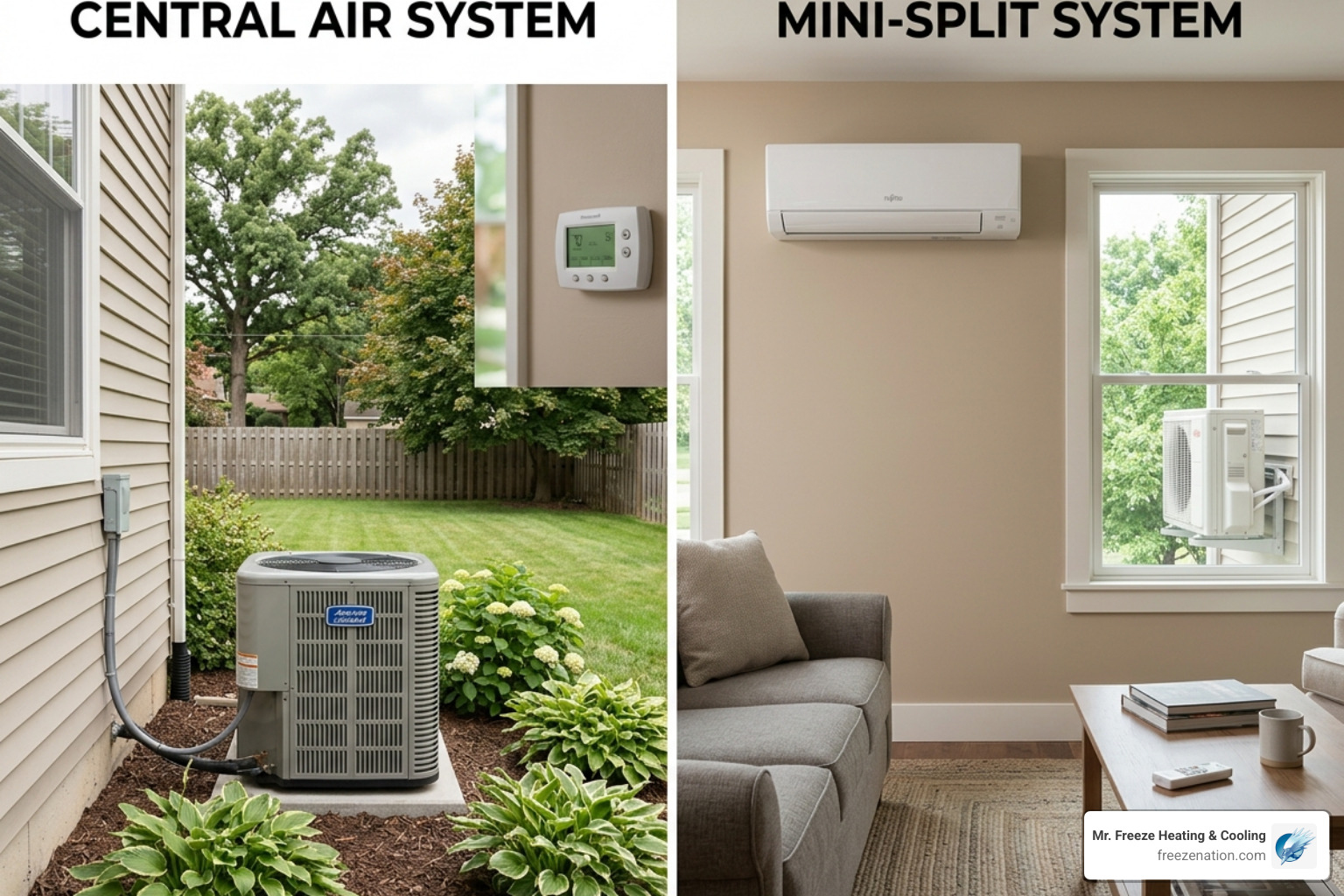
The Best Cooling Solutions for Northwest Indiana Homeowners
Discover central air vs mini split for northwest indiana homes. Compare efficiency, zoning & installation for extreme weather comfort.