
Resolve Your Home Comfort Inefficiencies with Modern Solutions
Dealing with a failing climate control system in Hammond results in uneven temperatures, exorbitant energy bills, and the constant fear of a breakdown during a winter freeze or a summer heatwave. Contact us immediately to schedule a site evaluation or to inquire about our financing options.
When your current equipment can no longer keep up with the demands of the local climate, a seamless transition to a modern heat pump system provides a reliable, all-in-one solution for heating and cooling. We specialize in precise, code-compliant replacements that restore safety and efficiency to your home without unnecessary delays.
- Fast, professional installation designed to minimize disruption to your daily routine.
- Enhanced energy efficiency and consistent performance using top-tier equipment.
- Around-the-clock service availability to address urgent heating or cooling failures.
All installations are backed by comprehensive labor and manufacturer warranties for your complete peace of mind.
Efficient Heat Pump Installation Services
Transitioning to a heat pump system represents a significant upgrade in how your property manages indoor climate control. Unlike traditional furnaces that burn fuel to generate heat, a heat pump moves heat, providing a versatile solution that cools your home in the summer and warms it in the winter. For residents in Hammond, IN, where weather patterns fluctuate drastically between humid highs and freezing lows, establishing a reliable thermal barrier is essential. Mr.Freeze Heating & Cooling provides technical expertise to ensure your new system is sized correctly and installed according to strict manufacturer specifications.
The efficiency of a heat pump relies entirely on the quality of the installation. A unit with a high SEER2 (Seasonal Energy Efficiency Ratio) or HSPF2 (Heating Seasonal Performance Factor) rating will fail to perform if the ductwork is compromised, the refrigerant charge is incorrect, or the airflow is restricted. We approach every project with a focus on building science, ensuring that the equipment we install integrates perfectly with your existing infrastructure. This attention to detail prevents common issues such as short-cycling, humidity imbalances, and premature component failure.
Modern heat pump technology has evolved significantly. In the past, there was hesitation about using these systems in northern climates due to efficiency drops in sub-freezing temperatures. Today, cold-climate heat pumps and hybrid dual-fuel configurations allow homeowners to utilize electric heating for the majority of the season while having a backup method for extreme cold snaps. Our service focuses on identifying the exact configuration that lowers your operational costs while maintaining precise comfort levels in every room of the house.
What to Expect from Our Service Today
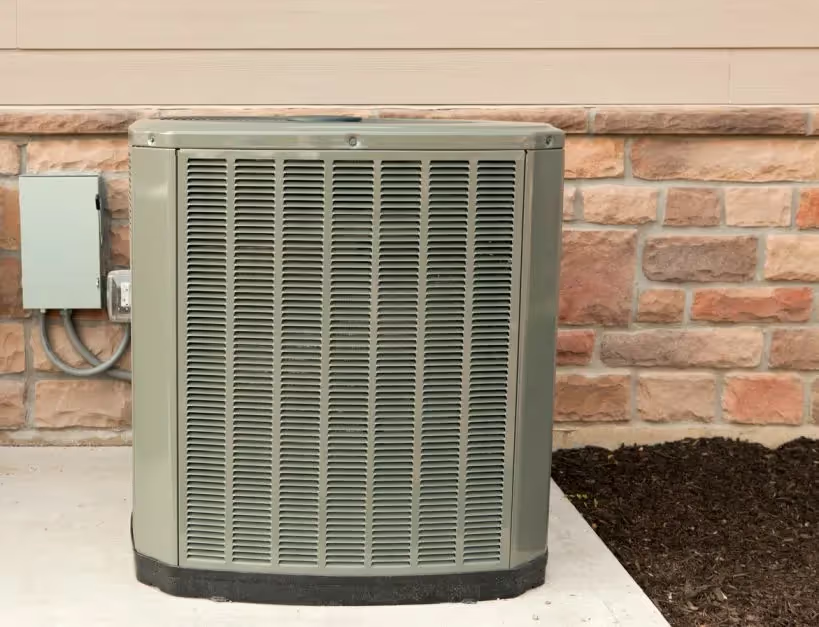
When you engage professional installers for a heat pump replacement, the objective is to restore comfort as rapidly as possible while adhering to safety protocols. The scope of work typically involves the complete removal of the existing outdoor condenser and the indoor air handler or furnace coil. We handle the environmentally safe recovery of old refrigerant, ensuring no hazardous materials are released into the atmosphere.
Upon arrival, technicians prepare the installation site to protect your property. This includes laying down drop cloths and ensuring a clear path to the service area. If the installation requires modifications to the plenum or transition ductwork to fit the new cabinet, this fabrication is often handled on-site to ensure a custom, airtight seal. We also inspect the existing electrical disconnects and wiring to verify they can handle the amperage requirements of the new high-efficiency equipment.
The timeline for a standard installation usually spans a single day, depending on the complexity of the job and whether new refrigerant lines need to be run. You can expect a fully operational system by the end of the project. This includes a new digital thermostat or control interface, properly insulated line sets, and a stable, leveled outdoor pad that keeps your unit elevated above anticipated snow levels.
Our Hassle-Free Installation Process
A systematic approach to installation ensures that no step is overlooked and that the system performs at its peak from the very first cycle. We utilize a rigid checklist protocol that aligns with industry best practices and local building codes.
- Load Calculation and Sizing: Before any equipment is ordered, we verify the heating and cooling load of your home. This goes beyond simply reading the label on the old unit. Changes in insulation, windows, or home additions affect the size required. We perform Manual J calculations to ensure the new heat pump is neither oversized (which causes humidity issues) nor undersized (which fails to heat).
- Site Preparation and Removal: The power supply is disconnected, and the old equipment is carefully disconnected from the ductwork and gas lines (if applicable). We remove the old unit and debris from the premises. The area is cleaned, and the mounting pad is inspected for stability. If the ground has shifted, we re-level or replace the pad to ensure proper vibration isolation and drainage.
- Indoor and Outdoor Unit Installation: The indoor air handler is positioned and sealed to the supply and return plenums. Simultaneously, the outdoor unit is set. We pay close attention to clearance distances to ensure adequate airflow around the coil, which is vital for heat exchange efficiency.
- Refrigerant Line Connection: Copper refrigerant lines are routed between the indoor and outdoor units. We use nitrogen purging during the brazing process. This critical technical step prevents oxidation and scale buildup inside the copper pipes, which could otherwise clog the sensitive expansion valves in the new system.
- Pressure Testing and Evacuation: Once the lines are connected, the system is pressurized with nitrogen to test for leaks. After verifying the system is sealed, we use a vacuum pump to remove moisture and non-condensables from the lines. Achieving a deep vacuum (measured in microns) is non-negotiable for the longevity of the compressor.
- Final Charging and Commissioning: The refrigerant is released or added to meet the exact sub-cooling and superheat targets specified by the manufacturer. We then test the system in both heating and cooling modes, verify thermostat operation, and measure static pressure in the ducts to ensure optimal airflow.
Deciding Between Repair and Replacement
Homeowners often struggle with the decision to repair an aging unit or invest in a new system. While repairs can offer a short-term fix, there are specific technical and financial indicators that suggest replacement is the more prudent path.
- The Age of the Equipment: Heat pumps generally have a lifespan of 10 to 15 years. If your unit is approaching or has exceeded this range, major components like the compressor or reversing valve are at high risk of failure. Investing heavily in a system near the end of its life typically yields diminishing returns.
- Frequency and Cost of Repairs: If you have required multiple service calls in the last two years, or if a single repair estimate approaches 50% of the cost of a new unit, replacement is financially sounder. "Nickel and diming" an old system often exceeds the monthly cost of financing a new, warrantied unit.
- Refrigerant Type: Older systems may utilize R-22 refrigerant (Freon), which has been phased out and is astronomically expensive to replenish. New systems use R-410A or newer, more eco-friendly refrigerants. If your old R-22 system leaks, upgrading is often the only viable option.
- Efficiency and Utility Bills: Heat pump technology has improved drastically. A system installed 12 years ago likely has a much lower efficiency rating than the entry-level models of today. If your energy bills are rising despite consistent usage habits, the equipment’s internal components have likely degraded, losing their ability to transfer heat effectively.
- Comfort Issues: If certain rooms are never warm enough in winter or cool enough in summer, or if the unit creates excessive noise, it indicates that the system is no longer capable of meeting the load requirements of the structure.
Understanding Hammond's Climate Needs
Operating a heat pump in Hammond requires specific considerations due to the regional climate profile. The winters here bring temperatures that frequently drop into the 20s and can plunge below zero, while summers are characterized by high humidity and temperatures in the 80s. A standard "off-the-shelf" installation often fails to account for these extremes.
- Permits and Local Codes: Installation work in this region requires strict adherence to local building codes. This includes electrical upgrades, disconnect box placement, and proper venting. We manage the permitting process to ensure that your installation passes all municipal inspections, protecting your home’s value and insurance validity.
- Snow and Ice Management: Because heat pumps need to breathe to extract heat from the outside air, the outdoor unit must be kept clear of snow drifts. We install units on riser legs (snow stands) to elevate them above the average snowfall accumulation. This prevents the coil from becoming buried, which would trigger emergency shut-offs and potential damage to the fan blades.
- Defrost Cycle Optimization: In our climate, frost accumulation on the outdoor coil is normal during winter operation. A properly functioning system will enter a defrost cycle to melt this ice. We verify that the defrost control board and sensors are calibrated correctly so that the unit does not spend excessive energy melting ice or, conversely, allow ice to build up until it crushes the coil fins.
- Supplemental Heating: Given the potential for sub-zero temperatures, heat pump installations in this area almost always require an auxiliary heat source. This can be electric heat strips located in the air handler or a gas furnace in a dual-fuel setup. We ensure the transition point—the temperature at which the system switches from the heat pump to the backup heat—is set for maximum economic efficiency.
Why Technical Expertise Matters
Selecting a service provider goes beyond finding the lowest initial quote. The long-term performance of a heat pump is dictated by the physics of the installation. Incorrect refrigerant charges, even by a few ounces, can reduce efficiency by up to 20% and shorten the compressor's life. Poor ductwork modification can lead to high static pressure, causing blower motor burnout and noisy operation.
We prioritize technical accuracy over speed. Our technicians are trained to evaluate the entire thermal envelope of the home. This means we look at how the windows, insulation, and ductwork interact with the new equipment. If the ductwork is leaky, installing a high-efficiency heat pump is a waste of resources. We identify these deficiencies early in the process so they can be addressed, ensuring you get the full benefit of the new technology.
Furthermore, we handle the registration of your equipment warranties. Many manufacturers require proof of professional installation and registration within a specific window to grant full parts coverage. We ensure this paperwork is filed correctly, protecting your investment for the long haul.
Maximizing Your Investment with Modern Controls
A new heat pump installation is an opportunity to upgrade your control infrastructure. Modern systems are compatible with smart thermostats that offer features specifically beneficial for heat pumps.
- Intelligent Recovery: Smart thermostats learn how long it takes to bring your home to the desired temperature. They gradually ramp up the heat pump rather than forcing it into high-stage or auxiliary mode, which saves significant energy.
- Humidity Control: In the humid summers typical of the region, controlling moisture is as important as controlling temperature. Variable-speed heat pumps, when paired with the right controls, can run at lower speeds to dehumidify the air without over-cooling the space, providing a more comfortable environment.
- Remote Monitoring: Wi-Fi-enabled controls allow you to monitor your system’s performance remotely. Some advanced systems can even alert us to performance irregularities before you notice a change in comfort, allowing for proactive maintenance.
Secure Your Comfort with Professional Installation
Delaying the replacement of a failing HVAC system only leads to higher operating costs and the inevitability of a breakdown at the most inconvenient time. A modern heat pump offers a streamlined, energy-efficient solution for year-round comfort, handling both the freezing winters and humid summers with ease. Mr.Freeze Heating & Cooling delivers the technical precision and reliable service required to maximize the lifespan and efficiency of your new equipment.
Make the decision to upgrade your home’s infrastructure today. Contact us to schedule your consultation and take the first step toward a more comfortable, energy-efficient home.