


Understanding the Central AC vs Ductless Mini Split Comparison
The central ac vs ductless mini split comparison is one of the most important decisions you'll make for your home's comfort — and the right answer isn't the same for everyone.
Both systems cool your home using refrigerant and an outdoor condenser unit. But how they deliver that cool air is very different. Central AC pushes cooled air through a network of ducts and vents, controlled by a single thermostat. Ductless mini-splits skip the ductwork entirely, using wall-mounted indoor units to deliver cooling directly to individual rooms or zones.
Here's a quick side-by-side look at how the two systems compare:
| Feature | Central AC | Ductless Mini-Split |
|---|---|---|
| Air delivery | Through ducts and vents | Directly to each room via wall units |
| Ductwork required | Yes | No |
| Zoning control | Limited (add-ons needed) | Built-in, per room |
| Energy efficiency (SEER2) | Up to 26 SEER2 | Up to 35 SEER2 |
| Best for | Larger homes with existing ducts | Older homes, additions, targeted cooling |
| Installation disruption | High (if no ducts exist) | Minimal (3-inch wall hole) |
| Heating capability | With furnace or heat pump | Built-in heat pump option |
| Lifespan | ~15 years | 20–30 years |
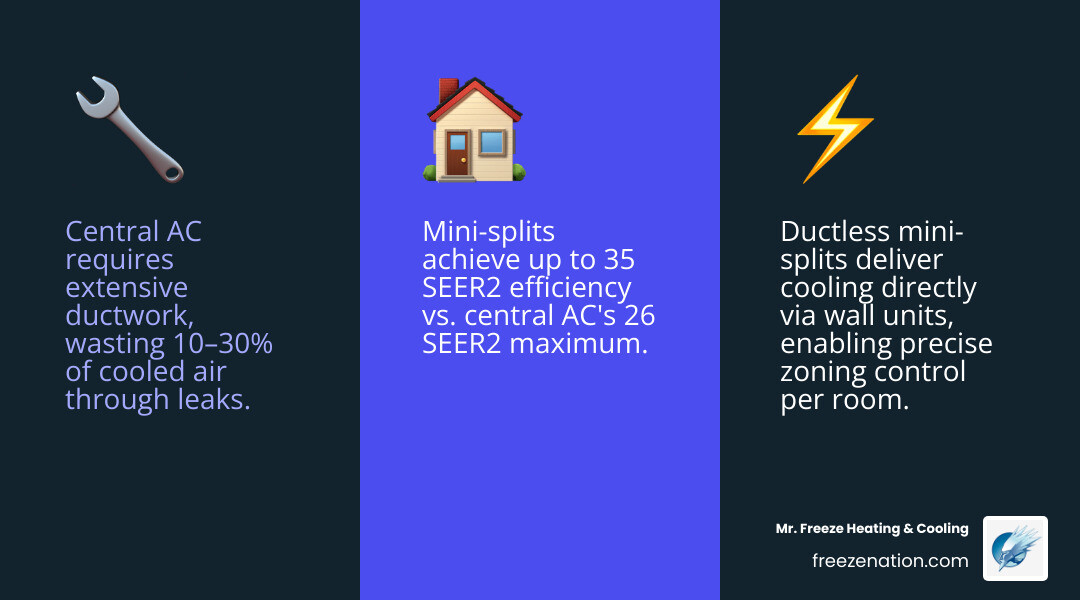
In Northwest Indiana, where summers get hot and humid and winters can be brutal, choosing the wrong system can mean wasted energy, uneven comfort, and higher bills year after year. Ducts alone can waste 10–30% of cooled air through leaks — a real problem in many older homes across the region.
Whether you're replacing an aging system, finishing a basement, or just trying to stop fighting over the thermostat, understanding these two options puts you in control.
To truly grasp the central ac vs ductless mini split comparison, we have to look at how these systems move heat. At their core, both are Air Conditioning systems that use an outdoor condenser to release heat and an indoor evaporator coil to absorb it. However, the infrastructure requirements are worlds apart.
Central AC is a "forced air" system. It relies on a large indoor air handler (often connected to your furnace) to push air through a labyrinth of metal or flexible ducts. If your home in Hammond or Munster already has these ducts in good condition, central AC is the traditional, discreet choice.
Ductless mini-splits, on the other hand, use thin refrigerant lines to connect the outdoor unit directly to one or more indoor "heads." There is no air traveling through your attic or crawlspace. This eliminates the "duct loss" that plagues many older Northwest Indiana homes, where cooled air leaks out before it ever reaches your living room.
| Infrastructure Component | Central AC | Ductless Mini-Split |
|---|---|---|
| Indoor Unit | Central Air Handler/Furnace | Individual Wall/Ceiling Heads |
| Connection Type | Large Sheet Metal/Flex Ducts | Small Copper Refrigerant Lines |
| Thermostat | Single Central Control | Individual Remote/App per Unit |
| Wall Penetration | Extensive for Vents | Single 3-inch Hole |
How Central Air Conditioning Works in Northwest Indiana
Central air conditioning is the "set it and forget it" champion for many large homes in Crown Point and St. John. It uses a single thermostat to regulate the temperature of the entire house. The system pulls warm air from your rooms through "return" vents, cools it at the central evaporator coil, and blows it back through "supply" vents.
This centralized control is excellent for maintaining a uniform temperature across a large floor plan. However, it can struggle with "nuisance rooms"—those spots like a south-facing bedroom or a kitchen that always seem five degrees warmer than the rest of the house. Because the system is "all or nothing," you can't easily cool the upstairs without also chilling the downstairs.
The Mechanics of a Ductless Mini Split Comparison
When we look at Ductless Mini Splits, the primary mechanical advantage is inverter technology. Traditional central AC units are often "single-stage," meaning they are either 100% on or 100% off. Imagine driving a car by only flooring the gas or hitting the brakes—it’s not very efficient!
Ductless systems use variable-speed compressors. They can slow down or speed up to match the exact cooling needs of the room. Once the room reaches the target temperature, the unit sips just enough power to stay there. This "targeted cooling" is why mini-splits are often the go-to solution for homes in East Chicago or Whiting that lack the space for bulky ductwork.
Energy Efficiency and Performance Standards in 2026
Efficiency is where the central ac vs ductless mini split comparison gets really interesting. As of April 2026, the industry has fully transitioned to SEER2 (Seasonal Energy Efficiency Ratio 2) standards, which provide a more accurate reflection of how systems perform in real-world conditions.
Ductless mini-splits are the undisputed heavyweight champions of efficiency. While a high-end central AC system might reach 26 SEER2, premium ductless systems can soar up to 35 SEER2.
The biggest energy "thief" in a central system is duct leakage. Research shows that ducts can waste 10-30% of cooled air. In a typical Northwest Indiana summer, that’s money literally disappearing into your walls or attic. By delivering air directly, ductless systems can save homeowners up to 30% more energy than traditional central systems. Furthermore, many of these high-efficiency units qualify for federal tax credits and ENERGY STAR certification, helping to offset your initial investment.
Zoning Control and Customization for Different Home Layouts
Do you have a family member who wants the bedroom at 68 degrees while you prefer the living room at 74? This is where ductless systems shine. Each indoor head acts as its own independent zone with its own thermostat.
With our Specialty Services, we can design a multi-zone system that allows you to turn off cooling in guest rooms or home offices when they aren't in use. Central AC can be zoned using expensive mechanical dampers inside the ductwork, but it rarely matches the precision and ease of a ductless setup. For sprawling ranch homes in Merrillville or multi-story houses in Hobart, this level of customization is a game-changer for both comfort and energy conservation.
Installation and Aesthetic Considerations for Your Property
Installation is often the deciding factor for our neighbors in Northwest Indiana. Installing central AC in a home that doesn't have existing ducts is a major construction project. It involves cutting into ceilings, walls, and floors, which can be incredibly invasive and messy.

A ductless installation is much faster. We only need to drill a small, 3-inch hole in the exterior wall to run the refrigerant and condensate lines. To keep things looking sharp, we use "line hides"—decorative covers that match your siding—to protect the lines and maintain your home's visual appeal.
Choosing the Right System for Older Homes and New Additions
Northwest Indiana is full of beautiful historic architecture and unique home styles. From the classic brick homes in Hammond to the newer additions in Cedar Lake, every structure has its limits.
- Older Homes: Many vintage homes were built with radiant heat (boilers) and have no ductwork. For these residents, Ductless Mini Splits are the ideal solution. They provide modern cooling without destroying the structural integrity or aesthetic of a historic home.
- New Additions: If you've just added a sunroom, a garage workshop, or a finished attic, your existing central AC might not have the capacity to handle the extra square footage. Rather than overtaxing your main system or spending a fortune to extend ductwork, a single-zone mini-split can provide perfect comfort for that specific space.
Maintenance Requirements and Indoor Air Quality Benefits
Whether you choose central or ductless, regular upkeep is the secret to a 20-year lifespan. However, the maintenance tasks differ slightly.
Central AC systems require you to change a large pleated filter every 1–3 months. Because air travels through ducts, it’s also important to keep those ducts clean to prevent the buildup of dust and allergens.
Ductless units have small, built-in filters that should be rinsed or vacuumed every 2–4 weeks during peak use. Because there are no ducts to collect dust, many homeowners find that ductless systems actually improve indoor air quality by reducing the circulation of airborne microbes and allergens. At Mr. Freeze, Our Services include deep-cleaning the coils and checking refrigerant levels to ensure your system remains a "whisper-quiet" cooling machine.
Frequently Asked Questions about Cooling Systems
We hear a lot of questions from homeowners in Portage and Highland about which path to take. Here are the most common concerns we address during our free estimates.
Which system is more suitable for heating and cooling?
While we often focus on the "AC" part, many of these systems are actually heat pumps. A Heat Pump can reverse its cycle to provide heat in the winter.
Modern ductless heat pumps are incredibly capable, with some models maintaining high capacity even when Northwest Indiana temperatures drop toward zero. While central AC is usually paired with a gas furnace in our region, a ductless heat pump can serve as a highly efficient primary heat source or a supplemental one to take the edge off chilly spring and fall nights.
Can I use a hybrid setup for my home?
Absolutely! This is a very popular choice in Northwest Indiana. You might have a perfectly functional central AC system for the main floor, but your upstairs bedrooms are always too hot. In this scenario, we can install a small ductless system specifically for the second floor. This "hybrid" approach gives you the best of both worlds: the whole-home coverage of central air with the precision zoning of ductless.
Is a Central AC vs Ductless Mini Split Comparison Necessary for Large Homes?
Yes, because home size dictates capacity. For homes over 2,500 square feet with existing, well-maintained ductwork, a high-efficiency central Air Conditioning system is often the most practical choice. It provides the powerful airflow needed to move large volumes of air. However, if that large home has "hot spots" or unused wings, adding ductless units can significantly lower your overall operating costs.
Conclusion
The central ac vs ductless mini split comparison ultimately comes down to your home's bones and your family's comfort goals. If you have solid ductwork and want a hidden, whole-home solution, central AC is a tried-and-true winner. But if you're looking for maximum efficiency, room-by-room control, or a way to cool a home without ducts, the mini-split is the modern champion.
At Mr. Freeze Heating & Cooling, we’ve been serving Northwest Indiana since 2006. From our home base in Hammond to every corner of Lake and Porter counties, we pride ourselves on honest pricing and a 100% satisfaction guarantee. We don't believe in high-pressure sales—just expert advice to help you stay chilled.
Whether you're in Schererville, Griffith, or Lansing, IL, we're here to help you navigate HVAC. Contact us for expert air conditioning solutions today and let's get your home ready for the heat!
Discover more articles
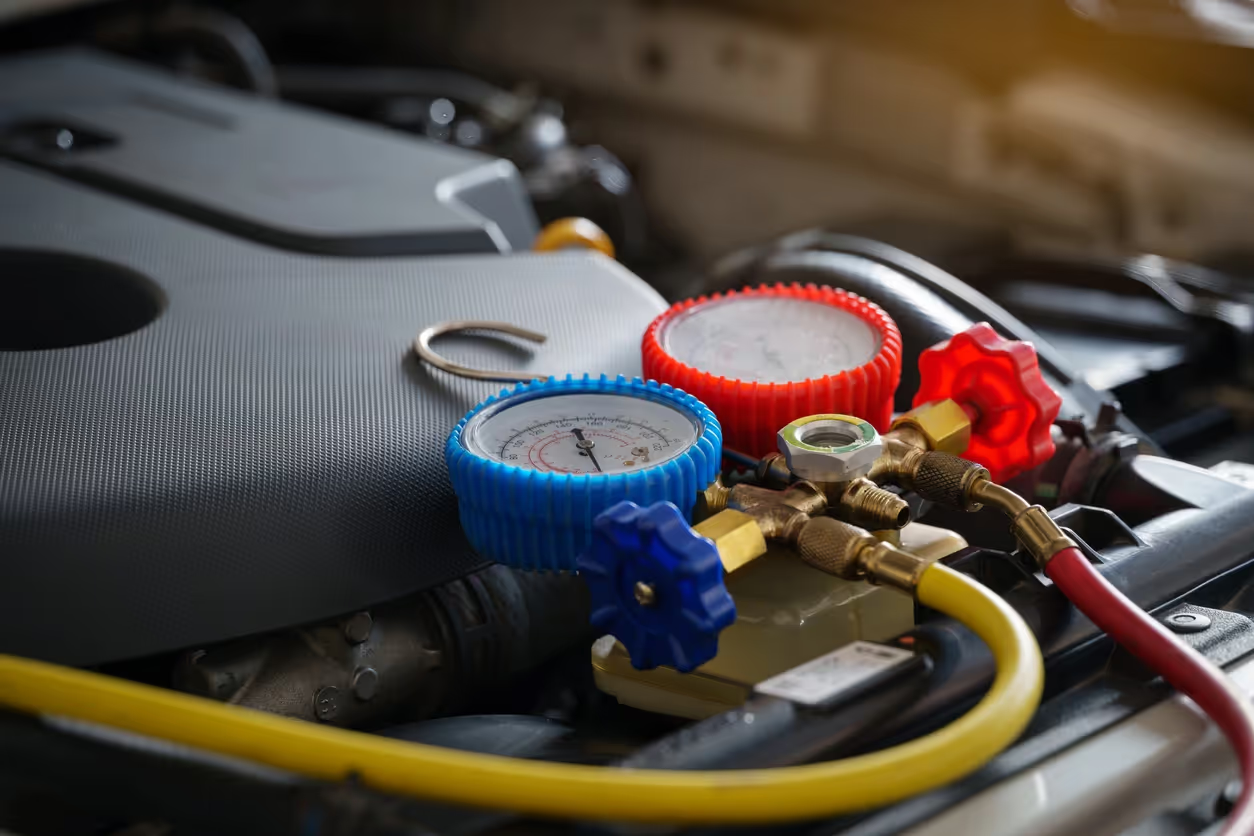
Why Spring Is the Best Time to Schedule an AC Tune-Up
Spring is the perfect time to schedule an AC tune-up with Mr. Freeze to boost efficiency and prevent breakdowns. Learn more and get ready for warmer days!

Experience Matters More Than You Think When Your AC Dies
Discover how nearly 20 years of service builds trust in HVAC. Choose Mr. Freeze for reliable AC repairs in Northwest Indiana since 2006.
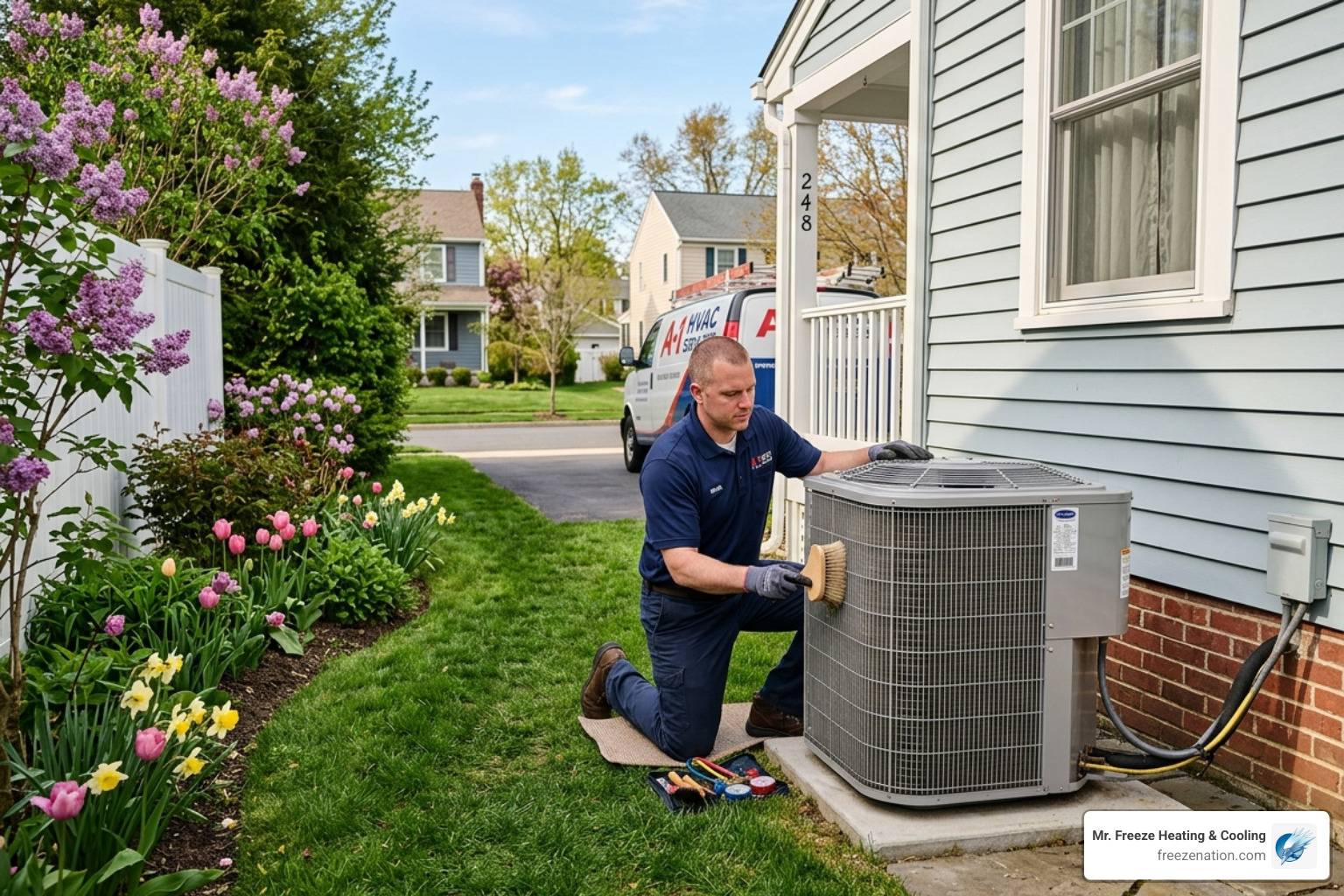
The Ultimate Guide to Spring AC and HVAC Maintenance
Master spring ac and hvac maintenance: DIY tips, pro checklists & efficiency boosts for summer readiness in Northwest Indiana.