

What You Need to Know About the Spring HVAC Transition from Heating to Cooling
The spring hvac transition from heating to cooling is something every homeowner in Northwest Indiana needs to handle before temperatures climb. Here's a quick overview of what it involves:
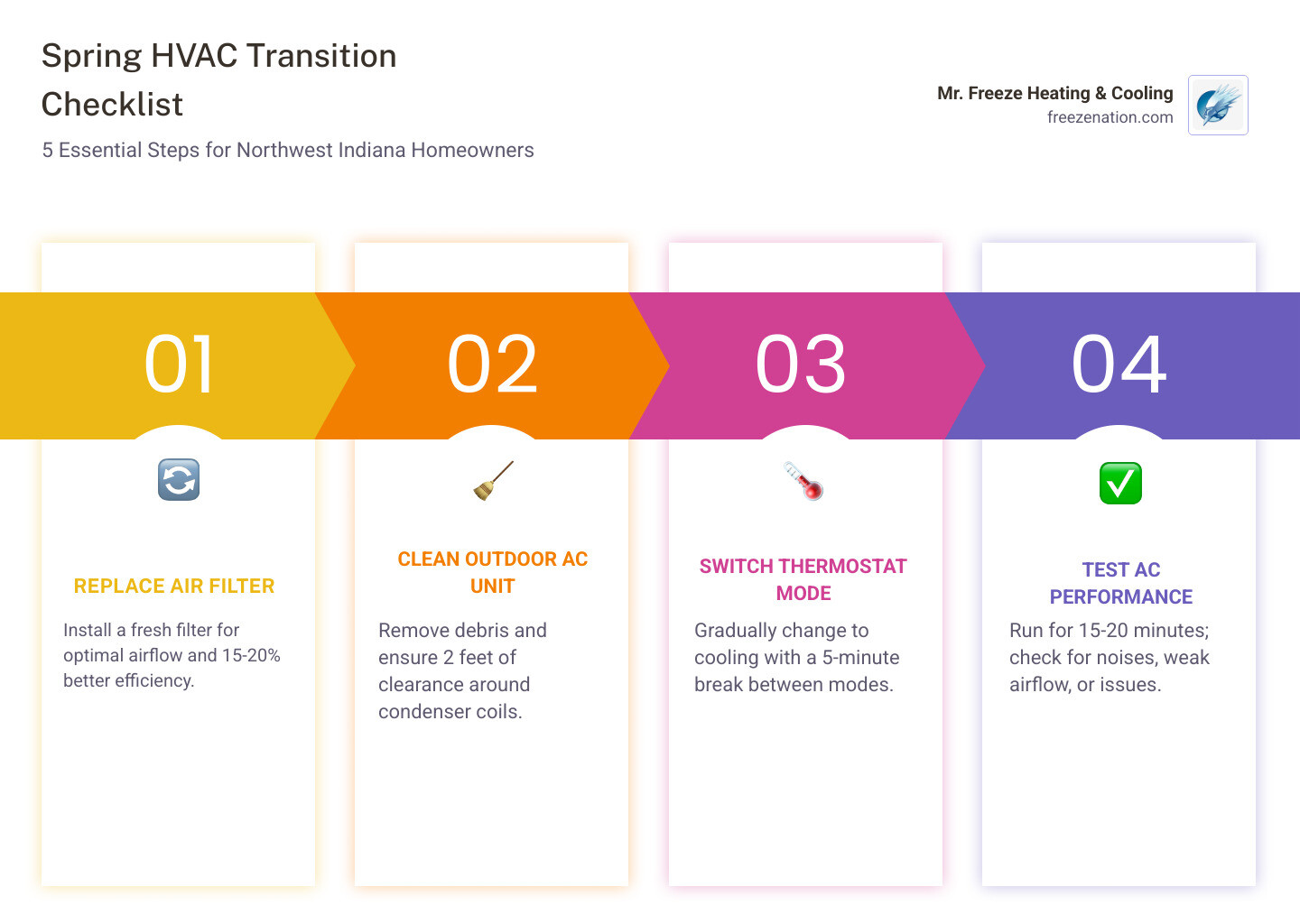
- Replace your air filter - A fresh filter keeps airflow strong and protects the system.
- Clean the outdoor AC unit - Clear debris and make sure there's at least 2 feet of open space around it.
- Switch your thermostat to cooling mode - Do it gradually and give the system a 5-minute break between modes.
- Test your AC - Run it for 15-20 minutes and listen for unusual sounds or weak airflow.
- Schedule a professional tune-up - A technician checks refrigerant levels, electrical connections, coils, and more.
Spring in Northwest Indiana means unpredictable weather - warm afternoons, cool nights, and everything in between. If your HVAC system isn't ready when the first real heat wave hits, you could be looking at a breakdown right when you need cooling the most.
Think of it like getting your car ready for a long road trip. You wouldn't just turn the key and go without checking the basics first. Your HVAC system is no different. After months of running in heating mode, it needs attention before it switches jobs entirely.
The good news? Most of the prep work is straightforward, and taking care of it now saves you from costly emergency repairs in July.
Why the Spring HVAC Transition from Heating to Cooling Matters
As we move into April 2026, the shift from heating our homes to cooling them is more than just a flick of a switch. In places like Hammond, Munster, and Crown Point, our systems have been working overtime all winter to combat the Lake Michigan chill. Transitioning your system properly is vital for several reasons.
First and foremost is energy efficiency. A system that hasn't been prepped for spring is like a runner trying to finish a marathon in heavy winter boots. Research shows that well-maintained HVAC systems use significantly less energy. In fact, dirty filters alone can reduce your system's efficiency by up to 15-20%. By taking the time to transition correctly, you ensure that every dollar you spend on utilities actually goes toward keeping you cool, rather than fighting against dust and debris.
Secondly, this transition protects your system longevity. HVAC units are a major investment for any homeowner. Forcing a system to switch modes while it’s clogged with winter dust or surrounded by fallen branches puts immense strain on the compressor and motor. Regular seasonal maintenance is often equated to a car’s annual service; it prevents the "catastrophic failures" that tend to happen on the hottest day of the year.
Finally, there are the utility bills. We all want to keep more money in our pockets. By optimizing your system now, you avoid the "sticker shock" of that first summer electric bill. Proper preparation helps you spot Signs Your HVAC System Needs Attention Before Temperatures Rise, allowing you to fix small issues before they become expensive nightmares.
Essential Steps for Your Spring HVAC Preparation Checklist
Preparation is the enemy of perspiration. To ensure your home stays a sanctuary of cool air, we recommend following a structured Spring HVAC Maintenance Checklist: What to Do Before Warmer Weather Arrives.
Inspecting and Replacing Air Filters
If the air filter is the "lungs" of your home, then winter usually leaves those lungs feeling pretty congested. During the heating season, filters trap a massive amount of dust, pet dander, and soot.
When you start the spring hvac transition from heating to cooling, the first thing you should do is check the filter. Hold it up to a light source; if you can't see light passing through the fibers, it’s time for a change. We generally suggest checking them monthly and replacing them at least every 90 days. However, during the heavy-use transition period in April and May, a monthly swap is best.
When choosing a new filter, pay attention to the MERV (Minimum Efficiency Reporting Value) rating. While higher ratings catch smaller particles, they also restrict airflow more. Make sure your filter matches your system’s requirements to avoid straining the blower motor. You can find more tips on this in our guide to Spring Cleaning for Your HVAC System: Filters, Ducts, and Air Quality.
Cleaning the Outdoor AC Unit
Your outdoor condenser unit has likely spent the last few months acting as a magnet for dead leaves, twigs, and maybe even some wind-blown trash from a winter storm. For your AC to dump heat effectively, it needs room to breathe.
Follow these steps for the outdoor unit:
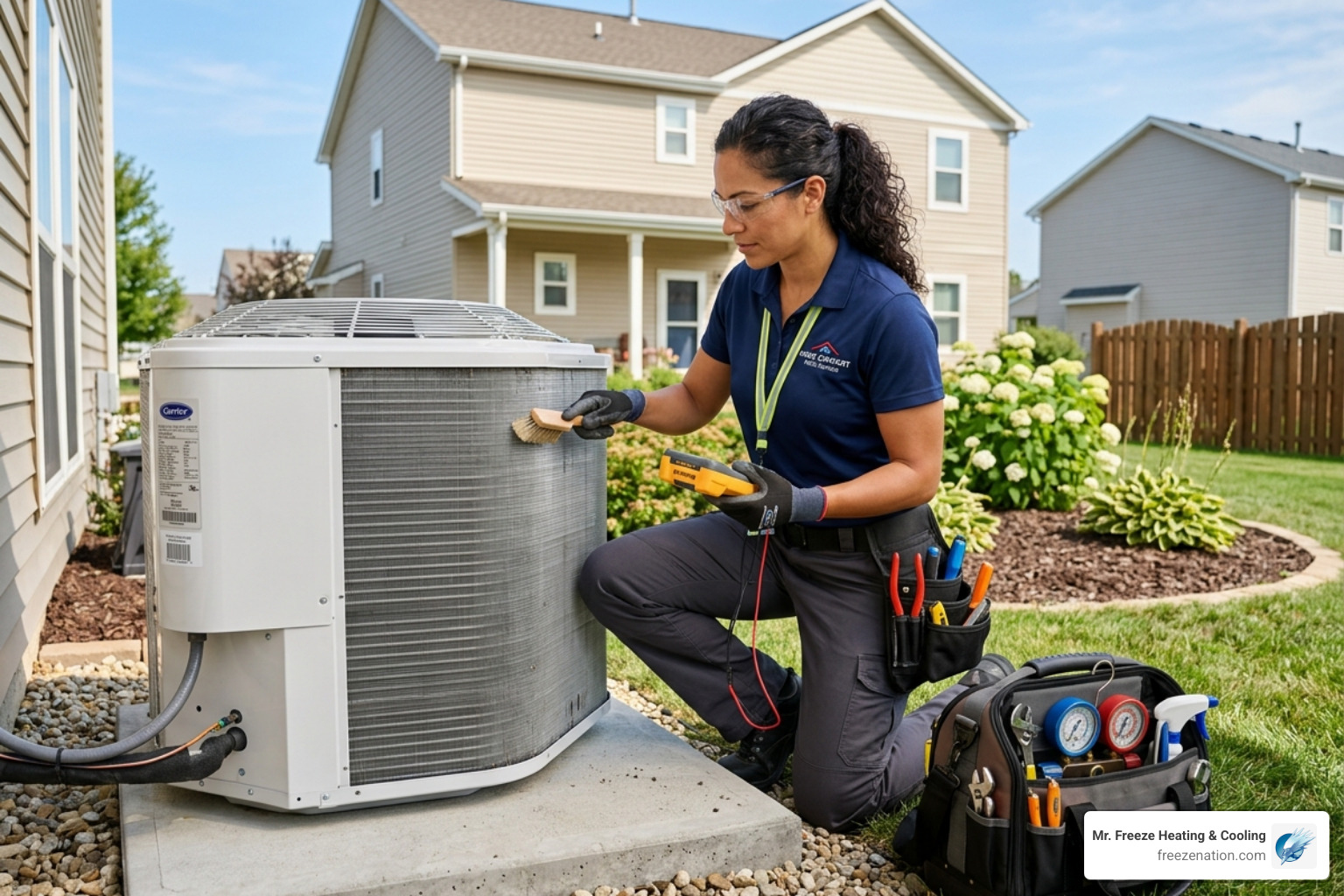
- Clear the Perimeter: Ensure there is at least 2 feet of clear space around the entire unit. Trim back any shrubs or decorative grasses that grew over the unit during the fall.
- Remove Debris: Carefully pick out any leaves or branches stuck in the fins.
- Gently Clean: You can use a garden hose to gently wash away dust and dirt from the exterior coils. Warning: Never use a power washer, as the high pressure can bend the delicate aluminum fins and ruin your unit.
- Inspect for Damage: Look for any chewed wires (critters love nesting in these units during winter) or visible damage to the refrigerant lines.
Taking these steps is essential for How to Prepare Your Air Conditioner for the First Hot Days of the Year.
Optimizing Airflow and Indoor Air Quality
Airflow is the lifeblood of your comfort. If the air can't move, your home won't cool. One of the biggest culprits of poor airflow is leaky ductwork. Statistics show that leaky ducts can lose up to 30% of the air passing through them. This means you’re paying to cool your attic or crawlspace instead of your living room!
| Filter Type | Efficiency Level | Best For |
|---|---|---|
| Standard Fiberglass | Low | Basic equipment protection; needs frequent changes. |
| Pleated Paper/Polyester | Medium | Captures dust, lint, and some allergens; good balance. |
| High-Efficiency (HEPA) | High | Best for severe allergies; requires specialized systems. |
Beyond ducts, check your vents and registers. Over the winter, furniture might have been moved to block a return air vent, or dust might have settled thick on the slats. Give them a quick vacuum or wipe down with a damp cloth. Ensuring a balanced Air Conditioning system means making sure the air has a clear path to circulate back to the unit.
Managing Humidity and Allergens
Spring in Northwest Indiana isn't just about warmth; it’s about the "bloom." Pollen counts in Highland and Schererville can skyrocket in April and May. Your HVAC system plays a dual role here: it cools the air and filters out those allergens.
If you have a Heat Pump, it’s especially effective at managing humidity. Air conditioners naturally dehumidify the air as they cool it, but during the "sticky" spring days, you might notice your home feels clammy. Maintaining clean coils and proper refrigerant levels ensures the system can pull that moisture out of the air effectively, preventing mold growth and keeping your family breathing easy.
Safely Switching Your Thermostat Settings
"Thermostat whiplash" is a real thing in our region. One day it's 75 degrees in Merrillville, and the next night it's back down to 38. This back-and-forth can strain your system if you aren't careful.
When you are ready to make the spring hvac transition from heating to cooling, don't just crank the dial down 20 degrees.
- The 5-Minute Rule: If you just turned the Heating off, wait at least five minutes before switching to "Cool." This allows the system pressures to equalize and prevents short-cycling.
- Use "Auto" Judiciously: While many thermostats have an "Auto" mode that switches between heat and cool, it can lead to the system fighting itself during temperature swings. It’s often better to manually select "Cool" once the house consistently stays above your comfort threshold.
- Deadband Settings: If you have a programmable or smart thermostat, ensure there is a "deadband" (a temperature gap) of at least 3-5 degrees between your heating and cooling setpoints. This prevents the AC from turning on the second the heater stops.
Testing Your Spring HVAC Transition from Heating to Cooling
Don't wait for a 90-degree day to find out your AC is broken. Run a test cycle on a mild afternoon.
- Listen: Do you hear grinding, squealing, or loud banging? These are Common HVAC Issues to Watch for After Winter Ends and usually indicate a loose belt or failing motor.
- Feel: Check the air coming out of the vents. Is it actually cold? If it’s lukewarm, you might have a refrigerant leak or a failed capacitor.
- Smell: A slight "dusty" smell is normal for the first few minutes, but a pungent, musty, or burning smell is a red flag.
Finalizing Your Spring HVAC Transition from Heating to Cooling
If you have a separate furnace and AC setup, you may want to properly "shut down" the heating side. For some, this means turning off the gas supply to the furnace or ensuring the pilot light (on much older models) is handled. Most modern systems handle this electronically, but ensuring the electrical components are clear of dust prevents that "burning dust" smell later in the year.
Maximizing Efficiency with Professional Maintenance
While DIY steps are great, there are some things only a pro can handle. A yearly HVAC tune-up is a wise investment that pays for itself in efficiency and avoided repairs.
During a professional visit, a technician will:
- Check Refrigerant Levels: Too much or too little refrigerant forces the compressor to work harder and can eventually kill it.
- Clean Coils: They will clean both the evaporator (indoor) and condenser (outdoor) coils more deeply than a garden hose can.
- Lubricate Moving Parts: Reducing friction saves energy and prevents wear.
- Tighten Electrical Connections: Winter vibrations can loosen wires, which is a common cause of system failure.
We often tell our neighbors in Portage and Hobart that Why Spring Is the Best Time to Schedule an AC Tune-Up is simply because our schedules are more flexible before the summer rush begins.
Upgrading for Better Performance
If your system is 10-15 years old, spring is the perfect time to look at Our Services for an upgrade. Modern units have much higher SEER (Seasonal Energy Efficiency Ratio) ratings.
Other smaller upgrades can make a huge difference too:
- Smart Thermostats: These can cut cooling costs by about 10% annually by learning your schedule and adjusting while you're at work or sleeping.
- Ceiling Fans: Ensure they are rotating counter-clockwise for summer. This creates a downdraft that makes you feel cooler, allowing you to raise the thermostat by about 4 degrees without losing comfort.
- Sealing Leaks: Use weatherstripping or caulk around windows and doors to keep that expensive cold air inside where it belongs.
Frequently Asked Questions about Spring HVAC Transitions
How often should I check my air filters during the spring transition?
In Northwest Indiana, spring is a high-pollen season. We recommend checking your filter every 30 days during the transition. If you have pets or suffer from allergies, you might even need to change it every month to maintain peak airflow and indoor air quality.
Is it safe to run my heater and air conditioner on the same day?
Yes, it is safe, provided you give the system a break. If you’ve been running the heat in the morning and need the AC in the afternoon, turn the heat off and wait about 5 to 10 minutes before switching to cooling. This prevents "short-cycling," which can damage the compressor.
What are the signs that my AC isn't ready for summer?
Watch out for weak airflow, inconsistent temperatures between rooms, or a system that turns on and off rapidly (short-cycling). Also, keep an eye on your utility bills; a sudden spike in energy use usually means something is wrong under the hood.
Conclusion
The spring hvac transition from heating to cooling is the key to a stress-free summer. By following these steps—replacing filters, cleaning your outdoor unit, and testing your system early—you can enjoy the blooming flowers of Northwest Indiana without worrying about a broken AC.
At Mr. Freeze Heating & Cooling, we’ve been keeping homes comfortable from Hammond to Cedar Lake since 2006. We believe in honest pricing and a 100% satisfaction guarantee. If your system seems sluggish or you just want the peace of mind that comes with a professional eye, we’re here to help.
Don't let the first heat wave catch you off guard. Consider joining our Maintenance Plan to ensure your system gets the VIP treatment every spring and fall. Stay cool, Northwest Indiana!
Discover more articles

How to Prepare Your Air Conditioner for the First Hot Days of the Year
Learn how to prepare your air conditioner for the first hot days of the year with expert tips from Mr. Freeze. Learn more and stay comfortable all summer.
Stop HVAC emergencies before they start with these tips
Learn how to prevent hvac emergencies with maintenance: checklists, warning signs & pro tips for reliability. Save on repairs now!
Is Your AC Trying to Tell You Something? Decoding Weird Noises
Decode ac making strange noises what they mean: banging, hissing, buzzing. NW IN guide + repair tips!