
Inconsistent Temperatures Putting Your Vintage Collection at Risk?
Finding the right balance of temperature and humidity for your wine cellar in Whiting can be tricky, especially with our region's fluctuating climate where standard air conditioning simply cannot compete. You need a dedicated solution that not only cools but also maintains the specific atmospheric conditions required to preserve your investment all year round. Contact us today at [Phone Number] to schedule a consultation or inquire about financing options for your new installation.
- Achieve ideal wine preservation with precise temperature control systems designed to hold steady between 55°F and 58°F.
- Reduce energy costs with high-efficiency units tailored to handle Whiting's humid summers and freezing winters.
- Guard against mold growth and cork damage with advanced humidity management that keeps levels between 50% and 70%.
Backed by comprehensive warranties and expert local installation, ensuring your peace of mind and the longevity of your collection.
Advanced Wine Cellar Cooling Solutions Available Today
Preserving wine is a science that requires more than just cold air. Standard HVAC equipment is designed to cool humans, which involves dropping temperature quickly and stripping moisture from the air. This approach is disastrous for wine. If the humidity drops too low, corks dry out, shrink, and allow oxygen to spoil the wine. If humidity is too high, labels peel and mold contaminates the storage area. Mr.Freeze Heating & Cooling provides purpose-built refrigeration systems specifically engineered to handle the unique latent and sensible cooling loads of a dedicated wine cellar.
When you invest in a professional cooling solution, you are purchasing equipment capable of maintaining a precise temperature delta regardless of the weather outside in Whiting. This equipment runs differently than a home air conditioner. It utilizes specialized evaporator coils and heavy-duty compressors designed for continuous, low-velocity operation. This ensures that the air temperature remains consistent without creating cold spots or aggressive air drafts that could disturb the aging process of the wine.
The scope of a modern wine cellar cooling project involves selecting the right unit architecture for your specific build. We provide access to top-tier entities like WhisperKool, CellarPro, and Wine Guardian, ensuring that the hardware matches the aesthetic and functional needs of the space. Whether you are converting a small closet or building a large basement cellar, the equipment installed today features digital thermostats for exact monitoring, alarm systems for temperature excursions, and quiet operation protocols to ensure the equipment does not disrupt your home environment.
Types of Systems Installed
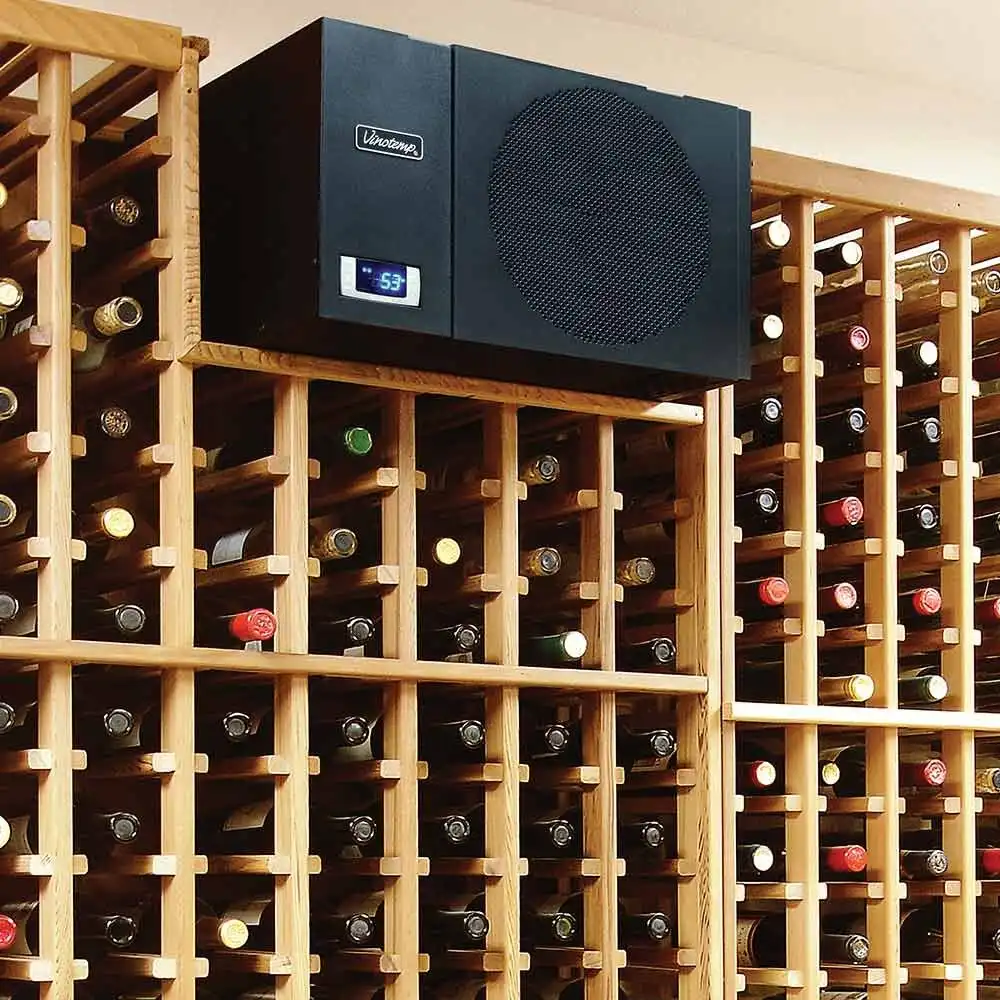
- Self-Contained Through-the-Wall Units: These are cost-effective units that mount between the studs of the cellar wall. They exhaust heat into an adjacent room, which must be well-ventilated. They are ideal for smaller collections where easy maintenance and installation are priorities.
- Ductless Split Systems: Similar to a mini-split AC, the noisy compressor and condenser are located outside your home or in a mechanical room, while the quiet evaporator mounts on the cellar wall. This removes heat and noise from the cellar entirely, making it perfect for display cellars where silence is golden.
- Ducted Cooling Systems: For collectors who want no visible equipment inside the cellar, ducted systems are the premium choice. The unit is located remotely, and conditioned air is ducted into the cellar through unobtrusive grilles. This allows for the highest level of aesthetic control and humidity management.
The Installation and Calibration Process
Installing a wine cellar cooling unit is a construction project, not just an appliance hookup. The success of the cooling unit is entirely dependent on the integrity of the room’s envelope. Without a proper seal, even the most expensive cooling unit will fail to hold temperature and will run continuously, leading to premature burnout and high energy bills. The installation process follows a strict protocol to ensure the environment is sealed, insulated, and mechanically sound.
- First, we perform a detailed load calculation. This goes beyond square footage; it accounts for the R-value of the walls, the glass exposure, the lighting heat load, and the frequency of door openings. In Whiting, we must also account for the high latent heat load caused by summer humidity.
- Next, we verify the vapor barrier construction. A wine cellar must be wrapped in a 6-mil vapor barrier on the warm side of the insulation. This prevents moisture from migrating through the walls and condensing on the cold surfaces inside the cellar, which causes rot and mold.
- Then, line sets and drainage are routed. For split and ducted systems, copper refrigeration lines are run to the condenser location. A dedicated drain line is installed to handle the condensate produced by the unit. Gravity drains are preferred, but condensate pumps are installed if gravity flow is not possible.
- Following the rough-in, the electrical supply is established. Wine cooling units typically require a dedicated circuit to prevent tripping and to ensure consistent power delivery.
- Finally, the unit is mounted, charged with refrigerant (if a split system), and calibrated. We test the thermostat accuracy, set the humidity parameters, and monitor the system through a full cooling cycle to ensure it cycles off appropriately.
When to Repair vs. Replace Your Cooling Unit
Wine cellar cooling units operate under heavy stress. Unlike a standard AC that runs only during summer days, a cellar unit runs 24/7/365 to maintain 55°F. This constant duty cycle means components wear out. Making the decision to repair an existing unit or invest in a replacement depends on the age of the system, the nature of the failure, and the value of the wine being protected.
Signs It Is Time to Replace
- Compressor Failure: If the compressor seizes or grounds out, replacement is almost always the more economic choice. The cost of a new compressor, refrigerant, and labor often rivals the cost of a new, more efficient unit with a fresh warranty.
- Age Over 10 Years: Technology in refrigeration has advanced significantly. If your unit is over a decade old and requires a major repair (like a fan motor or control board), the money is better spent on a new unit that uses eco-friendly refrigerant and consumes less electricity.
- Inconsistent Humidity: If the unit cools but strips too much moisture, causing corks to dry, it is not sized correctly or is failing mechanically. Adding a humidifier is a band-aid; replacing the unit with one designed for high-humidity retention is the cure.
- Excessive Noise and Vibration: As units age, bearings wear and fan blades become unbalanced. Vibration is detrimental to wine aging as it disturbs the sediment. If the unit has become noticeably louder, it is risking the quality of your collection.
When Repair Is Feasible
- Minor Component Failure: If a thermostat sensor, capacitor, or relay switch fails on a relatively new unit, a repair is quick and cost-effective.
- Refrigerant Leaks (Fixable): If a leak is located in an accessible joint or connection point, it can often be brazed, pressure tested, and recharged. However, leaks in the evaporator coil itself usually necessitate a component or unit replacement.
- Clogged Drains or Coils: Water pooling on the floor or the unit icing up often indicates a lack of maintenance rather than a fatal flaw. Clearing the drain line and chemically cleaning the coils can restore performance immediately.
Local Considerations for Whiting Installations
Building and maintaining a wine cellar in this part of Indiana presents specific challenges that generic, out-of-the-box instructions do not address. The stark contrast between our seasons dictates how the room must be built and how the cooling unit must be configured.
Seasonal Humidity and Vapor Barriers
In the summer, Whiting experiences high humidity. The vapor barrier mentioned earlier is critical here. Without it, the moisture from the outside air will aggressively try to move into the 55°F cellar. This forces the cooling unit to work overtime removing moisture, which decreases its cooling capacity. Conversely, in winter, the ambient air in your home becomes very dry due to central heating. The wine cooling unit must be able to operate without stripping the remaining moisture from the cellar, ensuring the corks remain swollen and sealed.
Condenser Placement and Ambient Temperatures
For split systems where the condenser is placed outdoors, we must install low-ambient controls. Standard condensers are not designed to run when the outside temperature drops below freezing. Since your wine cellar needs cooling even when it is 20°F outside (because the interior of the home is heated), the outdoor unit requires a kit to prevent the oil from thickening and the compressor from freezing up. We ensure every outdoor installation is rated for our specific winter lows.
Permitting and Electrical Requirements
Local building codes may require specific electrical dedication for refrigeration equipment to prevent overload. Additionally, if the system involves significant ductwork or refrigerant line runs through structural members, proper permits ensure the installation is safe and compliant for future home resale. We handle the verification of necessary codes to ensure the project is compliant with local regulations.
Why Professional Execution Matters
A wine cellar is not just a storage room; it is a life-support system for a living product. Wine changes chemically over time, and the environment dictates whether it evolves into something complex and valuable or turns into vinegar. Using a general handyman or attempting a DIY installation with a window AC unit puts the entire collection at jeopardy. The equipment we utilize is purpose-built for the task, designed to run quietly, efficiently, and with the precision required for long-term storage.
Mr.Freeze Heating & Cooling brings a level of refrigeration expertise that goes beyond standard HVAC. We understand the physics of latent heat, the importance of vapor pressure, and the mechanical requirements of long-term preservation. Whether you are storing a few hundred bottles for personal enjoyment or managing an investment-grade collection, the mechanical backbone of your cellar must be flawless.
Protect Your Collection with Precision Cooling Solutions
Wine preservation depends on consistency, accuracy, and professional execution. A properly designed and installed wine cellar cooling system safeguards your investment against temperature swings, humidity damage, and premature aging. With expert system selection, meticulous installation, and climate-specific engineering, Mr.Freeze Heating & Cooling delivers dependable, long-term protection for your collection. Contact Mr.Freeze Heating & Cooling today to schedule your wine cellar cooling consultation and ensure your collection is preserved under ideal conditions for years to come.
Protect your investment with professional-grade cooling solutions. Contact us today to schedule your site assessment and ensure your collection is stored under the perfect conditions.