
Your Heat Pump Stopped Working and Your Comfort Can’t Wait
When your heat pump stops working, the comfort of your home is at stake, especially during Whiting's harsh winter lows or muggy summer highs. You need rapid, reliable repair services that promise to restore your system without delay, so contact us today to schedule a diagnostic or inquire about financing options.
Mr.Freeze Heating & Cooling understands that a malfunction isn't just an inconvenience; it is an emergency that affects your safety and daily life. We prioritize getting your system back online quickly with professional, focused service.
- Same-day repair services to ensure you are not left in the cold (or heat).
- Skilled technicians using the latest tools and parts for enduring fixes.
- Transparent pricing with no hidden costs—satisfaction guaranteed.
All repairs are fully licensed, meeting local codes with warranty options for peace of mind.
What to Expect From Professional Heat Pump Repair
When you request service, the objective is to restore functionality immediately while ensuring long-term reliability. A heat pump is a complex piece of equipment that handles both heating and cooling, meaning it runs year-round. This constant operation creates wear patterns that are different from a standard furnace or air conditioner.
Upon arrival, the focus is on accurate diagnostics. The goal is not just to swap a part but to identify the root cause of the failure. For homeowners in Whiting, this often means checking the system's ability to handle the transition between high humidity in summer and freezing temperatures in winter.
- Comprehensive System Evaluation: The technician assesses the entire unit, including the outdoor compressor, indoor air handler, and thermostat communication.
- Safety Verification: Electrical components, refrigerant pressures, and airflow levels are tested to ensure the system is safe to operate.
- Clear Communication: You receive a detailed explanation of the issue, the proposed solution, and the total cost before any work begins.
- Immediate Repair Execution: Trucks are stocked with common parts like capacitors, contactors, and control boards to facilitate same-day repairs whenever possible.
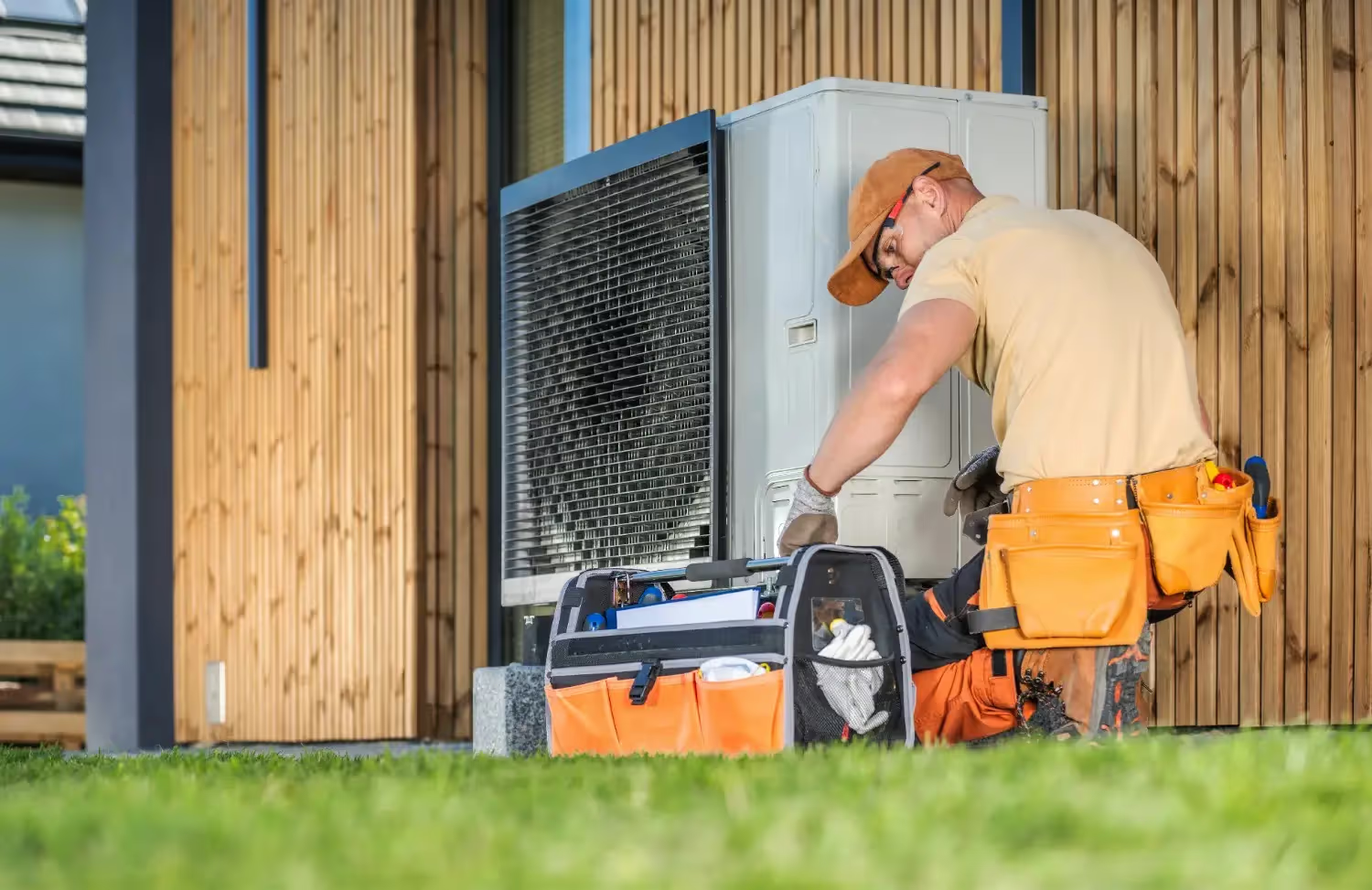
The Diagnostic and Repair Process
Understanding how a professional approaches a breakdown helps you feel confident in the repair. The process is systematic, eliminating guesswork to ensure the fix works the first time.
- Visual Inspection: The technician examines the outdoor unit for debris, ice buildup, or physical damage. They also inspect the indoor unit for filter blockages and signs of water leakage.
- Thermostat Testing: The interface is checked to ensure it is sending the correct signals to the reversing valve and compressor.
- Electrical Analysis: High-voltage connections are tightened, and amperage draws on motors are measured to detect failing components before they burn out completely.
- Refrigerant Check: Gauges are attached to measure subcooling and superheat. Incorrect refrigerant levels are a leading cause of poor performance and compressor failure.
- Airflow Measurement: Static pressure is tested to ensure air is moving freely through the ducts. Restricted airflow can cause the system to freeze up or overheat.
- Component Isolation: If a specific part is suspected, it is isolated and tested with a multimeter to confirm the failure.
- Repair Implementation: Once approved, the faulty component is removed and replaced with an OEM or high-quality equivalent part.
- System Validation: After the repair, the system is run through a full cycle to verify it is heating or cooling as intended and that all readings are within manufacturer specifications.
Deciding Between Repair and Replacement
One of the most difficult decisions a homeowner faces during a breakdown is whether to invest in a repair or opt for a full system replacement. This decision relies on the age of the unit, the cost of the repair, and the frequency of recent breakdowns.
Mr.Freeze Heating & Cooling helps you navigate this decision with data, not pressure. We use industry-standard guidelines to help you determine the most financially sound path forward.
When Repair is the Right Choice:
- The System is Young: If the heat pump is under 10 years old, it likely has significantly more service life remaining.
- Warranty Coverage: If parts or labor are still covered under the manufacturer’s warranty, repair is almost always the most cost-effective option.
- Minor Component Failure: Issues with capacitors, contactors, sensors, or fan motors are routine and relatively inexpensive to fix.
- Solid Maintenance History: If the unit has been serviced annually and is generally in good condition, a repair is usually a safe investment.
When Replacement Makes More Sense:
- The 50% Rule: If the cost of the repair approaches 50% of the value of a new system, replacement is generally the better financial move.
- Major Component Failure: If the compressor fails or the reversing valve is stuck on an older unit, the repair cost is significant and may not be worth it on an aging chassis.
- Refrigerant Type: If your system uses R-22 (Freon), which has been phased out, repair costs for refrigerant-related issues will be exorbitant. Upgrading to a system with R-410A or newer refrigerants is advisable.
- Frequent Breakdowns: If you have required multiple repairs in the last two years, the system is likely entering the end of its reliable lifespan.
- Efficiency Concerns: Older heat pumps often have much lower SEER and HSPF ratings. Replacing a 10 SEER unit with a modern 16+ SEER unit can result in substantial energy savings that offset the installation cost over time.
Common Heat Pump Issues in Northern Indiana
The climate in this region presents specific challenges for heat pumps. The distinct four-season weather, featuring humid summers and freezing winters, puts stress on specific components.
The Defrost Cycle Issue
In the winter, the outdoor coil of a heat pump acts as an evaporator, absorbing heat from the outside air. Even when it is cold, there is heat energy in the air. However, moisture in the air can freeze onto the outdoor coil. The system must enter a "defrost cycle" to melt this ice.
- The Problem: If the defrost board fails or sensors malfunction, the unit turns into a block of ice, stopping heat transfer.
- The Symptom: You might see heavy ice buildup on the outdoor unit, or the system may blow cold air while trying to heat.
- The Fix: Technicians troubleshoot the defrost control board, sensors, and reversing valve to ensure the cycle engages correctly.
Auxiliary Heat Failure
Heat pumps rely on "auxiliary" or "emergency" heat strips (electric resistance coils) when the outdoor temperature drops too low for the heat pump to keep up (usually below 30-35°F), or during the defrost cycle.
- The Problem: If the heat strips are burned out or the sequencers (relays) fail, the system will blow lukewarm or cool air during the coldest days of the year.
- The Symptom: The thermostat indicates "Aux Heat" is on, but the air coming from the vents is not hot.
- The Fix: Testing the amperage of the heat strips and replacing faulty heating elements or sequencers.
Reversing Valve Malfunctions
The reversing valve is what makes a heat pump unique; it reverses the flow of refrigerant to switch between heating and cooling.
- The Problem: The valve can get stuck in one mode.
- The Symptom: The system cools fine in summer but won't heat in winter (or vice versa).
- The Fix: Sometimes the solenoid can be replaced, but often the entire valve needs replacement, which requires recovering refrigerant and brazing a new valve in place.
Local Considerations: Utilities and Codes
Operating a heat pump in Whiting involves navigating local utility requirements and building codes. Professional repair services ensure that your system remains compliant and safe.
Permits and Electrical Codes
- Major repairs, particularly those involving the replacement of the outdoor unit or significant electrical alterations, may require adherence to updated local electrical codes.
- Technicians ensure that disconnect boxes, wire sizing, and circuit breakers are rated correctly for the heat pump’s amperage requirements to prevent fire hazards.
Utility Rebates and Programs
- Local energy providers sometimes offer rebates for repairing or upgrading to high-efficiency electric heating systems.
- Proper documentation of repairs and efficiency ratings is often required to qualify for these incentives. Professional invoices serve as necessary proof of work.
Seasonality and System Load
- The local climate requires systems to handle high latent heat (humidity) removal in the summer. If a heat pump is short-cycling due to a repair issue, it will fail to dehumidify the home, leading to mold growth risks.
- In winter, the system must contend with heavy snowfall. Technicians check that the outdoor unit is elevated properly on "snow legs" to prevent it from being buried, which would starve the unit of air and cause failure.
Why Professional Troubleshooting Matters
Attempting DIY repairs on a heat pump is dangerous and often results in further damage. Heat pumps operate with high-voltage electricity and high-pressure refrigerant.
- Refrigerant Handling: Handling refrigerant requires an EPA Section 608 certification. Venting refrigerant into the atmosphere is illegal and environmentally harmful.
- Electrical Safety: Capacitors store high-voltage charges even when the power is off. Incorrect handling can result in severe shock or electrocution.
- Component Calibration: Many modern heat pumps use communicating systems where parts must be digitally calibrated to the thermostat. A simple "part swap" often fails without this programming.
- Warranty Preservation: Most manufacturer warranties are voided if repairs are not performed by a licensed HVAC professional.
Maintaining Efficiency After Repair
Once the immediate repair is resolved, the focus shifts to maintaining the efficiency of the heat pump. A system that has just been repaired should run at its peak performance.
- Filter Maintenance: Airflow is critical. Technicians will advise on the correct MERV rating for your specific filter to balance air quality with system pressure.
- Coil Cleaning: Dirty coils reduce the system's ability to transfer heat. Ensuring the outdoor coil is free of dirt, grass clippings, and cottonwood seeds is part of restoring efficiency.
- Ductwork Integrity: Leaky ducts can lose up to 30% of the conditioned air. Checking for major disconnects or leaks in the ductwork ensures the repaired heat pump delivers air where it is needed.
Restoring Your Home Comfort
A broken heat pump disrupts your life, but the solution should be straightforward and stress-free. You need a partner who values your time, respects your home, and provides technical excellence. Whether it is a frozen coil in January or a failed compressor in July, the priority is always safety, speed, and reliability.
Don't let a heating or cooling failure compromise your home environment for another hour. Secure a repair that stands up to the local weather and keeps your energy bills in check.
Ready to get your system running perfectly again? Contact us now to schedule your heat pump repair service.