
Stay Comfortable with Smart, Energy-Efficient HVAC Controls
Struggling with inconsistent room temperatures? Inconsistent temperatures and rising utility costs often indicate that your current thermostat cannot keep up with the demands of the climate in Whiting. Smart HVAC controls optimize your home comfort and reduce energy bills by learning your habits and adjusting settings automatically. Contact us today to schedule an assessment of your current system or to discuss financing options for a controls upgrade.
- Enjoy precise temperature control room-by-room.
- Save on energy costs with efficient heating and cooling.
- Experience seamless control via mobile and automated settings.
Backed by comprehensive warranties and smart tech support.
Modernize Your Home Climate Management
Upgrading to smart HVAC controls is more than just installing a digital display on your wall; it is a fundamental shift in how your heating and cooling systems operate. Homeowners in Whiting often face the challenge of managing diverse weather patterns, from freezing winters to humid summers. A standard manual or basic programmable thermostat simply reacts to a temperature reading at a single location. In contrast, a smart control system proactively manages your indoor environment based on real-time data, occupancy, and weather forecasts.
Mr.Freeze Heating & Cooling assists homeowners in transitioning from outdated, reactive systems to intelligent, proactive climate management. The installation of smart controls provides immediate visibility into your energy consumption. You gain the ability to monitor how long your system runs, identifying inefficiencies before they become costly repairs. This technology integrates directly with your furnace, air conditioner, or heat pump to ensure the equipment runs only when necessary and at the most efficient stage possible.
What Is Included in a Smart Control Upgrade
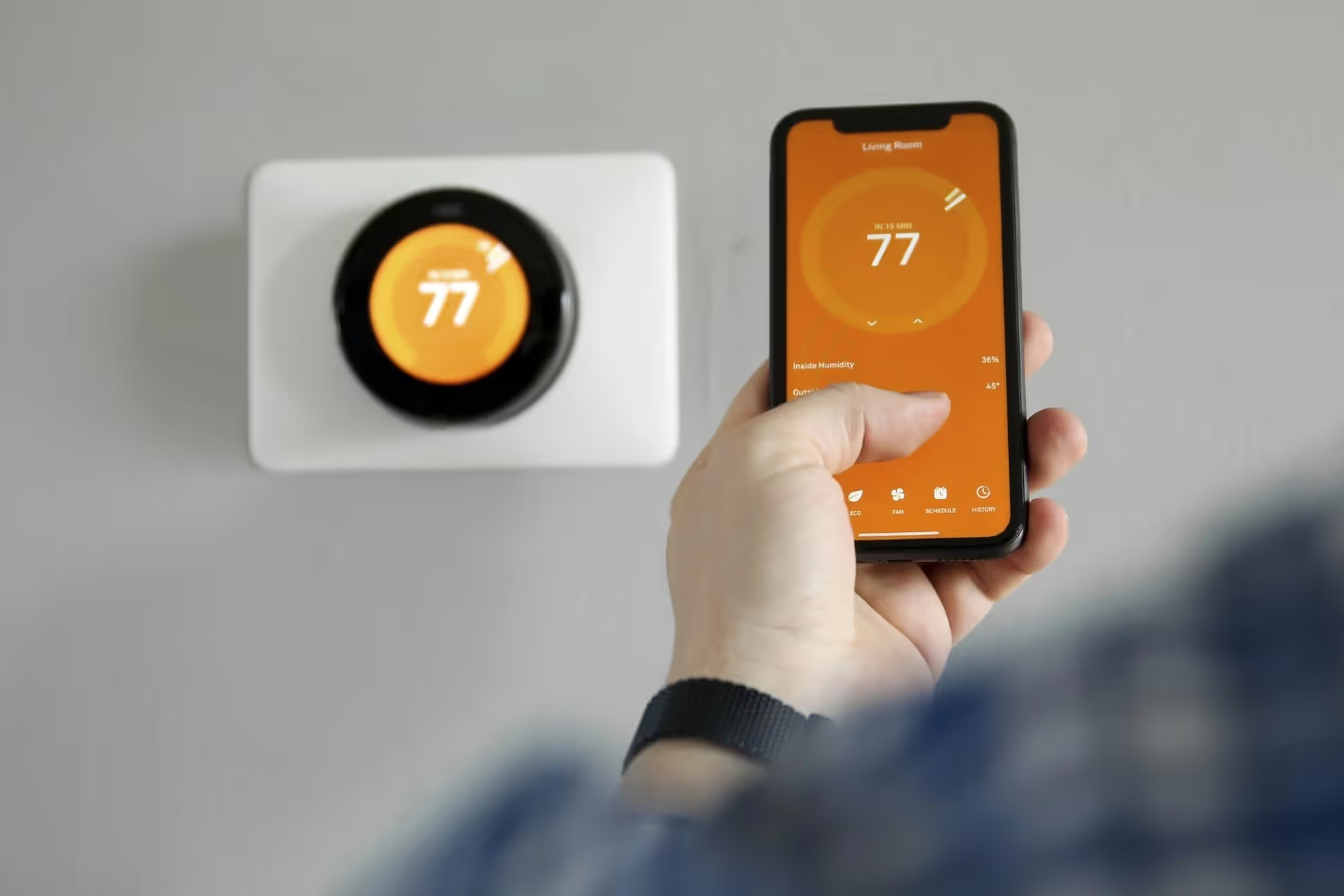
When you invest in a smart HVAC control system, you are purchasing a suite of features designed to reduce workload for you and your HVAC equipment. The hardware typically includes a high-definition interface that connects to your home’s Wi-Fi network. However, the true value lies in the software and sensor capabilities that come with the device.
- Learning Algorithms: The system observes your manual adjustments over the first few weeks. If you consistently lower the temperature at 10:00 PM and raise it at 7:00 AM, the device learns this pattern and automates it, removing the need for constant programming.
- Remote Access and Geofencing: Through a dedicated mobile application, you can adjust settings from anywhere. Geofencing uses your smartphone’s location to detect when you leave the house, automatically setting the system to an energy-saving "Away" mode, and resuming comfort settings as you approach home.
- Energy Usage Reports: Detailed monthly reports show you exactly how much energy you used for heating and cooling, comparing your usage to previous months or similar homes. This data empowers you to make informed decisions about your settings.
- Maintenance Alerts: The system monitors equipment performance. It will alert you when it is time to change the air filter or if it detects unusual behavior in the furnace or AC unit, such as short-cycling or inability to reach the set temperature.
- Smart Home Integration: These controls seamlessly pair with other smart home ecosystems, allowing for voice commands and integration with other automated devices like smart locks or lights.
The Installation and Setup Process
Installing smart HVAC controls is a technical process that requires specific electrical knowledge to ensure compatibility with your existing HVAC equipment. While many thermostats look simple on the surface, the wiring behind the wall dictates how well the system functions. Incorrect installation can lead to blown fuses on control boards, loss of power, or even damage to the compressor or heat exchanger.
System Compatibility Check
The first step involves a thorough assessment of your current heating and cooling equipment. Not all smart thermostats work with all systems. For example, older two-wire heating systems, millivolt heaters, or high-voltage electric baseboard heaters require specific adapters or different types of smart controls. Additionally, modern multi-stage furnaces and variable-speed air conditioners require thermostats capable of handling complex signaling to function at peak efficiency. If a mismatched thermostat is installed, a high-efficiency furnace may effectively be downgraded to a single-stage unit, negating the benefits of the expensive hardware.
The C-Wire Verification
A common hurdle in upgrading to smart controls is the "C-wire" or common wire. Old thermostats often did not require continuous power, running on batteries or stealing power when the heat was running. Smart thermostats with Wi-Fi radios and color touchscreens require a constant 24-volt power source, which the C-wire provides.
- Inspection: Technicians check the existing wire bundle behind your current thermostat.
- Adaptation: If a C-wire is missing, technicians may use an add-a-wire kit (diode steering) or pull a new wire bundle from the furnace to the thermostat location.
- Verification: Using a multimeter, the voltage is tested to ensure a steady stream of power that prevents the thermostat screen from going blank or disconnecting from Wi-Fi.
Configuration and Calibration
Once the hardware is mounted and wired, the software configuration begins. This is a critical step where the thermostat is told exactly what type of equipment it is controlling (e.g., heat pump with electric backup vs. gas furnace with AC). Mr.Freeze Heating & Cooling ensures that parameters such as cycle rates, compressor lockout temperatures, and fan run-times are optimized for your specific home layout.
- Wi-Fi Connection: The device is securely connected to your home network to enable remote features and over-the-air software updates.
- Sensor Placement: If your system includes remote room sensors, these are placed in strategic locations (like bedrooms or home offices) to average out hot and cold spots across the house.
- User Orientation: The process concludes with a walk-through of the interface and mobile app, ensuring you know how to set schedules, override settings, and interpret energy reports.
Deciding Between Repair and Replacement
Homeowners often hesitate to replace a functioning thermostat, even if it is dated. However, the control unit is the brain of your HVAC system. Keeping an obsolete "brain" connected to a modern system—or even an aging system—can result in missed opportunities for savings and comfort.
When to Stick with the Existing Control
If you have a basic, non-programmable digital thermostat that holds temperature accurately and you are rarely away from home, the current setup may be sufficient. Simple systems are often robust and effective for smaller homes where temperature variance between rooms is minimal. If your energy bills are manageable and you do not require remote access, immediate replacement is not strictly necessary.
When to Upgrade to Smart Controls
There are specific scenarios where replacing the thermostat is the only logical financial and operational decision.
- High Energy Bills: If utility costs are rising despite moderate weather, your current thermostat may be causing the system to run longer than necessary or overshoot target temperatures.
- Short-Cycling: If your equipment turns on and off frequently, it causes excessive wear and tear. Smart controls have adjustable "swing" or differential settings to prevent this, protecting the longevity of your compressor and heat exchanger.
- Zoning Issues: If the upstairs is significantly hotter than the downstairs, smart controls with remote room sensors can prioritize occupied rooms, instructing the system to run until the bedroom is cool, rather than just the hallway where the thermostat sits.
- Recent Equipment Upgrade: If you have recently installed a new furnace or air conditioner, using an old thermostat is likely preventing the new unit from achieving its SEER or AFUE efficiency ratings.
- Unpredictable Schedules: If your household schedule changes frequently, a programmable thermostat is often too rigid. A smart thermostat that adapts to your presence saves money without you having to constantly reprogram it.
Regional Considerations for HVAC Controls
Operating an HVAC system in Whiting requires attention to specific environmental factors. The local climate swings heavily between deep freezes in winter and high humidity in summer. A smart thermostat is a critical tool for managing these extremes effectively.
Humidity Management
In this region, summer comfort is not just about temperature; it is about humidity. Many smart thermostats include built-in hygrometers to measure indoor relative humidity. Advanced models can control whole-home dehumidifiers or execute "cool to dehumidify" strategies. This feature runs the air conditioner at a lower fan speed to pull more moisture out of the air without overcooling the space. Conversely, in the winter, these controls can manage whole-home humidifiers to prevent dry air from cracking wood furniture or causing respiratory irritation.
Freeze Protection
The winters in Indiana can cause temperatures to drop rapidly. Smart controls offer superior freeze protection compared to mechanical thermostats. If the indoor temperature drops below a safety threshold (typically 45°F or 50°F), the system will send an emergency alert to your phone. This notification allows you to address a furnace failure immediately, potentially saving your pipes from bursting even if you are on vacation.
Utility Rebates and Incentives
Local utility providers frequently offer incentives to encourage energy efficiency. Because smart thermostats significantly reduce load on the electrical and gas grids during peak times, many providers offer instant rebates or bill credits for installing Energy Star-certified smart controls. Professional installation often ensures that the device qualifies for these programs, maximizing the return on your investment.
Why Professional Installation Matters
While retail packaging often claims "easy DIY installation," the reality of HVAC wiring is complex. Professional installation ensures that your investment in smart technology translates into actual performance. The difference between a properly calibrated smart system and a DIY install often reveals itself in monthly utility bills and system longevity.
Technical Expertise and Integration
A professional installation guarantees that the thermostat communicates correctly with the control board of your furnace and AC. Technicians understand the nuances of dual-fuel systems (heat pumps paired with gas furnaces) and can program the "balance point"—the outdoor temperature at which the system switches from the electric heat pump to the gas furnace for maximum efficiency. This specific calibration is rarely configured correctly in amateur installations.
Protecting Your Warranty
Many HVAC equipment manufacturers state that warranties may be voided if components are damaged due to improper low-voltage wiring. By utilizing a professional service, you protect the warranty of both the smart thermostat and your expensive heating and cooling equipment. The peace of mind that comes with a correctly wired, fully tested system is invaluable.
Secure your home’s comfort and efficiency with the latest in climate control technology — contact us today.
Smarter Control, Lower Bills, Greater Comfort
Smart HVAC controls transform how your home manages comfort—reducing energy waste, smoothing temperature swings, and extending equipment life. With intelligent scheduling, remote access, humidity management, and professional calibration, you gain comfort you can feel and savings you can see.
Secure your home’s comfort and efficiency today. Contact Mr.Freeze Heating & Cooling through Freezenation.com to upgrade to intelligent climate control and enjoy dependable comfort all year long. Upgrade your home with intelligent climate solutions today.