
Feeling the Chill? Immediately Restore Your Comfort
Struggling with a malfunctioning heater during our tough Whiting winters? You’re not alone. When temperatures drop near Lake Michigan, a reliable heating system is not a luxury; it is a necessity for safety and survival. Let us help you find a quick, reliable solution. Contact us today to schedule your installation or click here to explore financing options available for your new system.
We understand that a broken furnace or an inefficient heat pump creates immediate stress for homeowners in Whiting, IN. You need a system that can handle the unique demands of the region, from heavy snowfall to the piercing dampness that comes off the lake. We provide clear answers and rapid deployment of new equipment to minimize downtime.
- Same-day installation to swiftly bring back warmth to your home.
- Energy-efficient systems tailored for Whiting's erratic climate.
- Extended warranties and service plans for peace of mind.
All installations meet local codes with options for financing to ease immediate costs.
Comprehensive Heating Solutions for Your Home
Investing in a new heating system is about securing the next 15 to 20 years of your home’s comfort. The technology in HVAC has advanced significantly in the last decade, offering homeowners distinct advantages over the equipment being replaced. When you schedule an installation service, you are not simply swapping one metal box for another; you are upgrading the infrastructure of your home to manage airflow, humidity, and thermal energy more effectively.
Modern heating installation focuses on precision. A unit that is too small will run constantly, failing to reach the set temperature and driving up utility bills. Conversely, a unit that is too large will "short cycle," turning on and off rapidly, which causes premature wear on components and results in uneven heating. Our approach ensures the equipment is perfectly matched to the square footage and insulation values of your specific property.
We provide access to high-efficiency furnaces and heat pumps that utilize variable-speed technology. Unlike older single-stage motors that only run at full blast, variable-speed blowers adjust their airflow to meet the specific heating demands of the moment. This results in quieter operation, better air filtration, and significantly lower energy consumption. Furthermore, many modern systems are equipped with smart diagnostics, allowing homeowners to monitor efficiency and receive alerts before minor issues become major breakdowns.
How the Installation Process Works
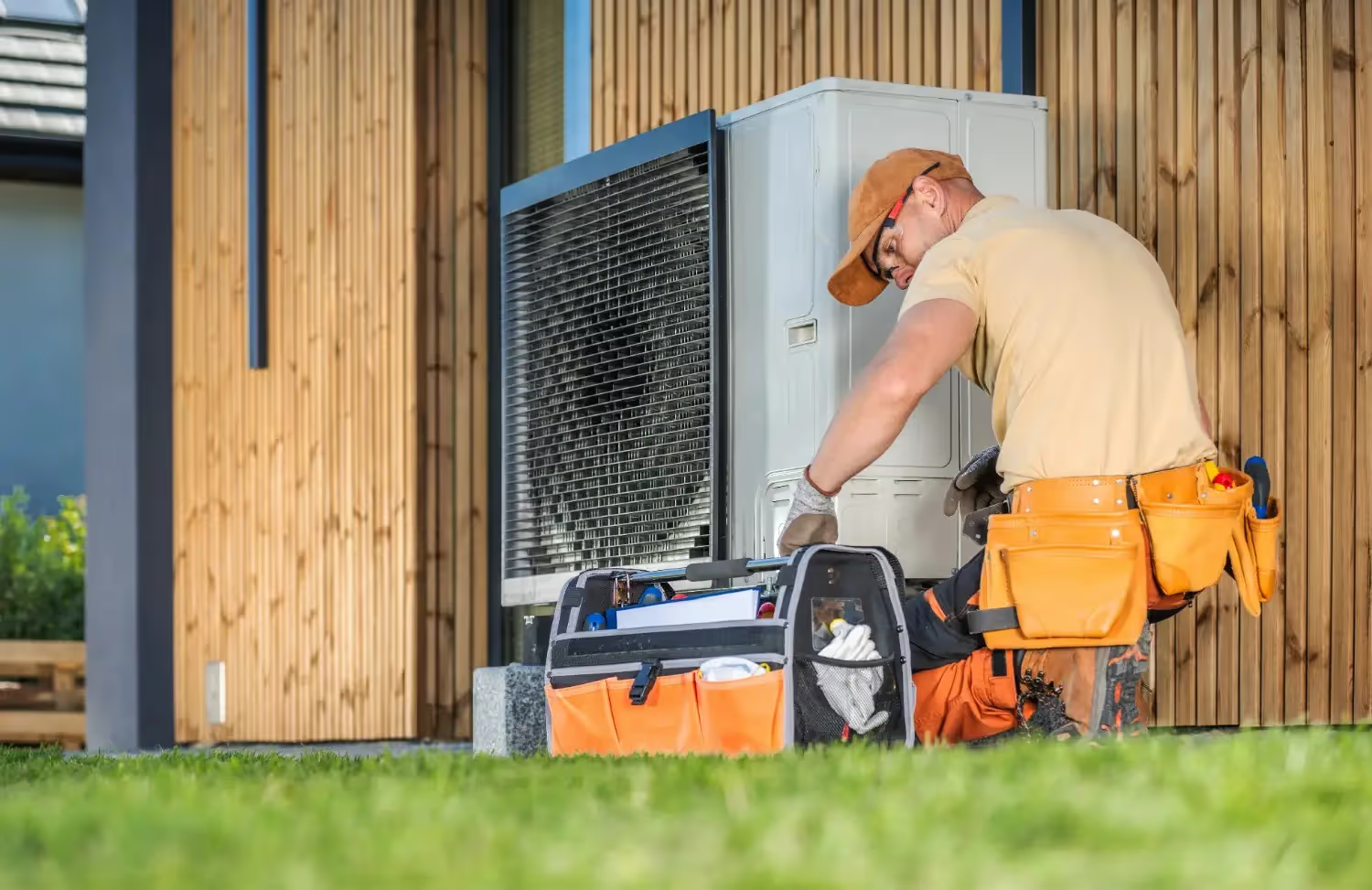
A professional heating installation is a systematic process designed to ensure safety and optimal performance from day one. We adhere to a strict protocol to ensure that every connection is secure, every measurement is accurate, and the final setup is compliant with all safety standards.
- Site Assessment and Load Calculation: The process begins with a manual load calculation. We measure your home’s thermal characteristics, including window types, insulation levels, and room dimensions. This data determines exactly how much heating power (measured in BTUs) your home requires.
- Safe Removal of Existing Equipment: Technicians safely disconnect the old unit from the gas line, electrical supply, and ventilation system. We handle the disposal of the old equipment, ensuring hazardous materials like refrigerants or old components are processed according to environmental regulations.
- System Positioning and Connection: The new furnace or heat pump is positioned and leveled. This step is critical for proper drainage and noise reduction. We then reconnect the plenum (the air distribution box) and ensure the supply and return ducts are sealed tightly to prevent air leakage.
- Utility Integration: Gas lines are reconnected and tested for leaks using specialized detection equipment. Electrical wiring is updated to meet the amperage requirements of the new, more efficient motor. If a heat pump is being installed, refrigerant lines are brazed and vacuum-tested to ensure a closed, pressure-holding system.
- Venting and Safety Checks: Proper venting is established to ensure combustion gases, such as carbon monoxide, are safely expelled from the home. We verify draft pressure and inspect the flue piping for any obstructions or deterioration.
- Final Calibration and Testing: Once the hardware is in place, Mr.Freeze Heating & Cooling technicians initiate the startup sequence. We measure static pressure, temperature rise, and gas manifold pressure to tune the system to the manufacturer's exact specifications.
- Walkthrough and Handoff: The final step involves walking you through the operation of the new system, including how to program the thermostat and how to change filters. We ensure you understand the warranty terms and maintenance requirements before we leave the premises.
Making the Choice: Repair vs. Replacement
Deciding whether to sink more money into an aging heater or to invest in a new installation is a common dilemma for homeowners. While repairs can offer a short-term fix, there is a mathematical tipping point where replacement becomes the more financially sound decision. Understanding this threshold helps you avoid throwing good money after bad.
The age of the system is the primary indicator. Most gas furnaces have a lifespan of 15 to 20 years, while heat pumps typically last 10 to 15 years. If your equipment is approaching or has exceeded this range, critical components like the heat exchanger or compressor are likely near the end of their service life. A breakdown in these core components often costs nearly half the price of a new unit.
Frequency of repairs is another major factor. If you have required professional service more than twice in the last two years, your system is becoming unreliable. These "nickel and dime" repairs accumulate quickly. A new system eliminates these surprise costs and resets the warranty clock, providing coverage for parts and labor that an old system lacks.
Efficiency degradation is also a silent cost. As heating systems age, they lose their ability to convert fuel into heat efficiently. A furnace that was 80% efficient (AFUE) when installed two decades ago may now be operating at 60% efficiency due to wear and tear. Replacing it with a modern 96% AFUE unit immediately reduces monthly fuel consumption, effectively paying back a portion of the installation cost every month through utility savings.
Safety is the final, non-negotiable criterion. Older furnaces are at a higher risk for cracked heat exchangers, which can leak carbon monoxide into the living space. If a safety inspection reveals even a hairline crack in the combustion chamber, immediate replacement is the only safe option.
Seasonal and Regional Considerations
Operating a heating system in Whiting presents specific challenges due to the local geography and climate patterns. The influence of Lake Michigan creates a microclimate that can lead to rapid temperature fluctuations and higher humidity levels even in winter. Your heating installation must be robust enough to handle these shifts without faltering.
- Lake Effect Snow and Venting: Heavy snowfall is common in our region. When installing high-efficiency furnaces, which often vent through the side of the house rather than the roof, it is vital to position the intake and exhaust pipes above the anticipated snow line. Blocked vents can cause the system to shut down automatically as a safety precaution, leaving the house without heat during a blizzard. We account for local average snowfall depths during the design phase.
- Humidity Control: While winter air is generally dry, the proximity to the lake can create damp cold conditions. A properly sized heating system helps regulate indoor humidity. In some cases, integrating a whole-home humidifier into the installation is recommended to prevent the air inside the home from becoming uncomfortably dry, which protects wood flooring and furniture while improving respiratory comfort.
- Permitting and Utility Coordination: Installation work in this area requires strict adherence to local building codes. Permits are generally required for HVAC replacements to ensure the work meets safety standards regarding gas piping and electrical connections. We manage the permitting process with the local building department to ensure your installation passes all required inspections. Additionally, we coordinate with local utility providers like NIPSCO when necessary to ensure gas meter capacity is sufficient for the new appliances.
- The Importance of Insulation: The effectiveness of any heater is directly tied to the home’s thermal envelope. In older local homes, drafts and poor insulation can undermine a new furnace. During our assessment, we identify if ductwork modifications or insulation upgrades are necessary to ensure the heat generated by the new system actually stays inside your living space.
Why Professional Execution Matters
The most important day in the life of a furnace or heat pump is the day it is installed. Industry research consistently shows that improper installation can reduce a system's efficiency by up to 30% and significantly shorten its lifespan. This is not a project for general handymen; it requires specialized tools and certified expertise.
Precise airflow management is a key differentiator in professional installation. If the ductwork is not sized correctly to match the new unit's blower power, the system will struggle to move air, leading to hot and cold spots throughout the house. We utilize static pressure testing to ensure the duct system supports the equipment, making necessary adjustments to baffles or dampers to balance the airflow.
Furthermore, manufacturer warranties are often contingent upon proof of professional installation by a licensed contractor. Attempting a DIY install or using an uncertified laborer can void these warranties, leaving you unprotected if a component fails. We register your equipment with the manufacturer immediately upon completion, ensuring your warranty coverage is active and valid.
We also focus on the "hidden" details that impact longevity. This includes installing proper sediment traps on gas lines to protect the gas valve, ensuring the condensate drain lines are properly pitched to prevent water damage, and calibrating the thermostat to minimize temperature swings. These technical nuances distinguish a working system from a high-performing one.
Secure Your Comfort for the Long Term
Winter in Indiana is unforgiving, and waiting until your system fails completely can lead to frozen pipes and emergency service fees. Taking proactive steps to replace an aging or inefficient unit ensures that your home remains a sanctuary against the cold. You gain control over your indoor climate, reduce your monthly energy expenditure, and eliminate the anxiety of potential breakdowns during a deep freeze.
We provide the expertise required to navigate the complexities of modern heating technology and local climate demands. From the initial load calculation to the final safety check, every step is executed with precision and respect for your property.
Don't wait for the first blizzard to test your heating system's limits. Secure a reliable, high-efficiency solution that keeps your home warm and safe for years to come.
Ready to upgrade your home’s heating? Contact us now to schedule your comprehensive estimate and installation service.