
Certified Indoor Air Quality Specialists Serving Northwest Indiana
Concerned about indoor air quality in your home or office? You’re not alone—many residents in Whiting, IN, seek professional IAQ services to ensure healthier, safer air. If you are noticing persistent dust, lingering odors, or humidity issues, contact us immediately to schedule a comprehensive air quality assessment or discuss our flexible financing options.
- Rapid, on-site IAQ testing to quickly assess your air quality levels.
- Custom solutions based on comprehensive diagnostics of your indoor environment.
- Follow-up support to maintain and improve your air quality over time.
Backed by warranties and the latest in air quality technology assurances.
Comprehensive Indoor Air Quality Services available Today
Improving the air you breathe involves more than just opening a window. Modern homes are built tightly to maximize energy efficiency, which inadvertently traps pollutants, allergens, and moisture inside. When you engage a professional service for Indoor Air Quality (IAQ), you gain access to a suite of advanced technologies designed to treat the entire volume of air circulating through your HVAC system. The goal is to transform your central heating and cooling system into an active air defense mechanism.
Mr.Freeze Heating & Cooling provides a multifaceted approach to air quality that addresses the three main categories of indoor pollutants: particulates, biological growth, and volatile organic compounds (VOCs).
Whole-Home Air Filtration Systems
Standard one-inch furnace filters are designed primarily to protect the equipment, not your lungs. They catch large dust bunnies but allow microscopic particles to pass through and recirculate. Upgrading to a whole-home media air cleaner or a high-efficiency filtration system significantly alters the cleanliness of your environment.
- Captures microscopic particles including pollen, pet dander, and mold spores.
- Extends the lifespan of your HVAC equipment by preventing dust buildup on internal components.
- Reduces the frequency of dusting required throughout the living space.
- Provides a higher MERV rating without restricting airflow to dangerous levels for the furnace.
UV Light Purification
Biological contaminants thrive in the dark, damp environments found inside cooling coils and ductwork. Ultraviolet (UV) light purification systems are installed directly into the HVAC system to sterilize surfaces and the air stream.
- Neutralizes mold and bacteria on AC coils, improving efficiency and preventing "dirty sock" syndrome.
- Deactivates airborne viruses and germs as they pass through the return air ducts.
- Operates silently and continuously without the need for chemical cleaners.
Humidity Control Solutions
Water vapor plays a massive role in how air feels and how healthy it is. In Whiting, the proximity to Lake Michigan creates distinct challenges: high humidity in the summer leading to mold potential, and dry air in the winter that cracks wood and irritates sinuses. Whole-home humidifiers and dehumidifiers integrate with your thermostat to maintain optimal humidity levels between 35% and 50%.
- Dehumidifiers: Remove excess moisture during humid summers to prevent mold growth and reduce the load on your air conditioner.
- Humidifiers: Add necessary moisture during heating seasons to protect wood furniture, reduce static electricity, and alleviate dry skin and throats.
Air Scrubbers and Ionization
For homes struggling with odors from cooking, pets, or chemicals, filtration alone is often insufficient. Air scrubbers use active technology, such as photocatalytic oxidation or ionization, to send "scrubber" ions out into the room.
- Destroys VOCs (Volatile Organic Compounds) from off-gassing furniture, carpets, and cleaning products.
- Causes dust particles to clump together (agglomerate), making them easier for filters to catch.
- Actively reduces surface contaminants on countertops and doorknobs.
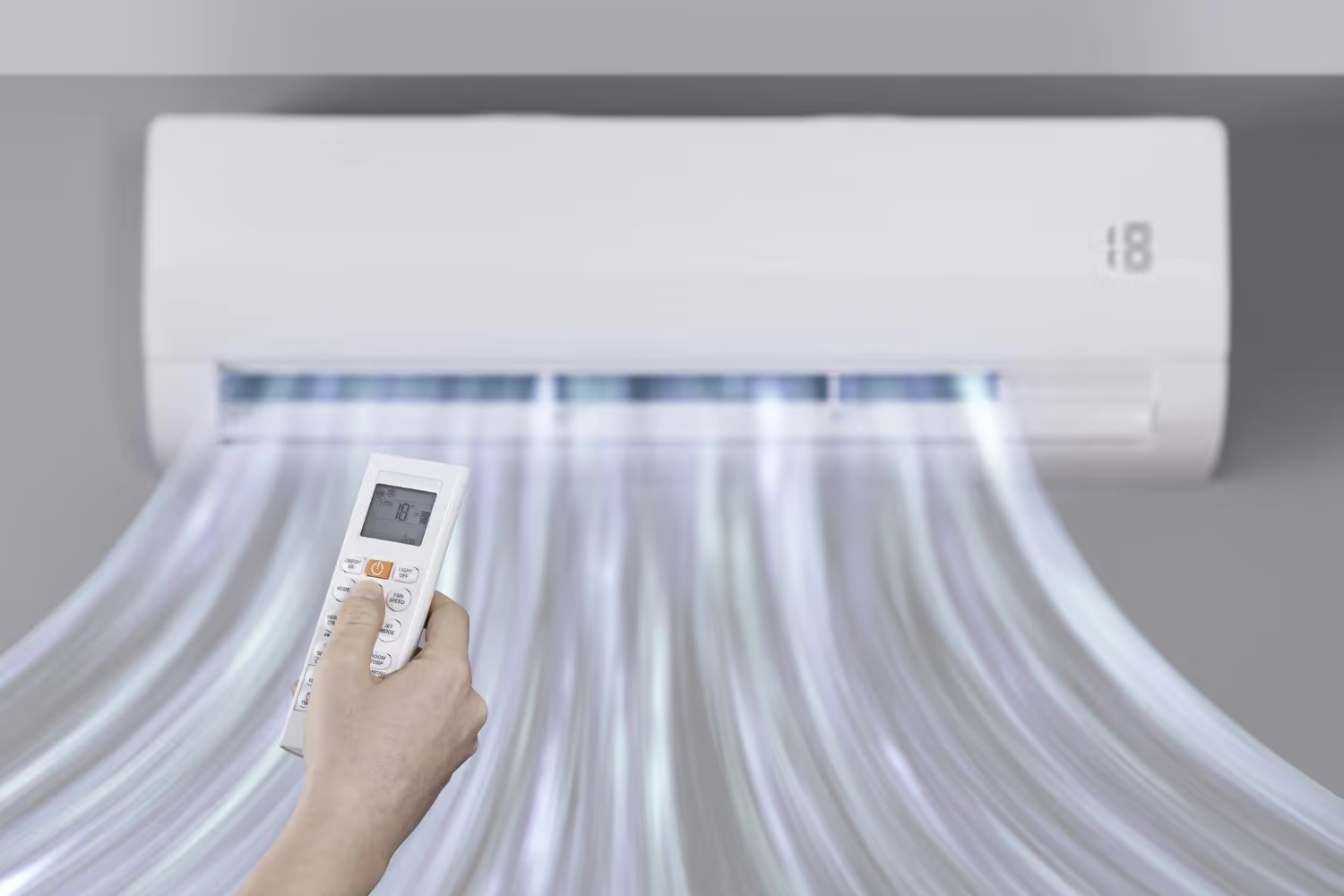
The Process: How We Assess and Improve Your Air
Implementing an IAQ strategy is a systematic process. It requires diagnosing the specific composition of the air in your home before recommending hardware. Generic solutions often fail because they do not address the root cause of the contamination, whether it is infiltration from the attic, back-drafting, or internal pollutant sources.
Step 1: Diagnostic Testing and Evaluation
The process begins with a thorough evaluation of the current indoor environment. Technicians utilize advanced monitoring equipment to detect particulate counts, humidity levels, and the presence of dangerous gases like carbon monoxide or excessive VOCs.
- Inspectors check the ductwork for leaks that may be pulling in dusty air from crawl spaces or attics.
- Technicians measure relative humidity to determine if moisture issues are contributing to biological growth.
- The team evaluates airflow to ensure that any installed equipment will function properly with the existing blower motor.
Step 2: Custom Solution Design
Once the data is collected, a tailored plan is developed. No two homes have the identical air profile; a home with three dogs has different needs than a home with a resident who suffers from seasonal asthma.
- Technicians select the appropriate filtration level (MERV rating) that balances air cleanliness with system static pressure.
- Placement for UV lights is determined to maximize exposure time to the coil and air stream.
- Humidification or dehumidification capacity is calculated based on the square footage and insulation quality of the home.
Step 3: Professional Installation
Installation involves modifying the existing ductwork to accommodate the new equipment. This is a precision task that ensures airtight seals and proper electrical integration.
- Installers cut into the return or supply plenum to mount media cabinets, UV lamps, or humidifiers.
- Electrical connections are hardwired safely into the HVAC system’s power supply, often interlocked so IAQ devices only run when the blower is active.
- Drain lines for humidifiers or dehumidifiers are routed to floor drains or condensate pumps to prevent water damage.
Step 4: Verification and Education
After installation, the system is tested to verify operation. Technicians demonstrate how to operate the new controls and maintain the components.
- The system is cycled to ensure proper airflow and lack of air leaks around the new components.
- Homeowners receive instruction on when and how to change media filters or UV bulbs.
- Maintenance schedules are established to keep the manufacturer warranties valid.
Deciding Between Repair and Upgrade
Homeowners often wonder if they can simply clean their existing ducts or fix an old portable unit rather than investing in whole-home integrated solutions. While maintenance is vital, there are distinct inflection points where upgrading to modern, integrated IAQ hardware is the only way to achieve desired results.
When to Stick with Basic Maintenance
If your home is relatively new and you do not suffer from respiratory issues, standard maintenance may suffice.
- Stick to routine filter changes if standard 1-inch filters keep the air visibly clean and airflow is strong.
- Use portable units if you only need air quality control in a single room for short periods.
- Schedule duct cleaning if the issue is strictly accumulated dust from a recent renovation project.
When to Invest in Integrated IAQ Systems
Integrated solutions are necessary when the problems are systemic, persistent, or health-related.
- Persistent Odors: If cooking smells, pet odors, or mustiness linger despite cleaning, air scrubbers are required to neutralize the molecular source of the smell.
- Recurring Mold: If you find mold growth on vents or near the AC unit, a combination of UV sterilization and dehumidification is necessary to alter the environment that allows mold to thrive.
- Health Symptoms: If family members experience allergy symptoms that subside when they leave the house, the current filtration is likely allowing allergens to recirculate.
- HVAC Efficiency Drops: If the AC coil is constantly dirty despite filter changes, bypass filtration is needed to protect the expensive mechanical components.
Local Factors Affecting Air Quality in Whiting
Operating in Northwest Indiana requires specific attention to regional environmental factors. Whiting presents a unique microclimate due to its industrial history and its location along the shores of Lake Michigan. These factors directly influence the load placed on indoor air quality systems.
Lake Effect and Humidity Swings
The lake exerts a moderating but moisture-heavy influence.
- Summer Saturation: During summer, dew points can remain high. Without dedicated dehumidification, air conditioners may cool the home quickly without running long enough to remove moisture, leading to a "clammy" feeling and potential mold growth in basements or crawl spaces.
- Winter Dryness: Conversely, when lake-effect snow hits and temperatures plummet, furnaces run constantly. This strips moisture from the air, dropping humidity below 20%, which accelerates the spread of airborne viruses and damages woodwork.
Industrial and Urban Particulates
The surrounding industrial density means that outdoor air brings a higher load of particulates when it infiltrates the home.
- Standard filters clog faster in this region compared to rural areas.
- Higher MERV ratings are often recommended to capture the finer particulate matter associated with urban environments.
Code and Utility Considerations
Modifying the HVAC system to add IAQ devices involves electrical and plumbing systems.
- Electrical Safety: UV lights and powered humidifiers require dedicated low-voltage or line-voltage connections. Professional installation ensures these meet local electrical safety codes to prevent fire hazards.
- Water Lines: Humidifiers require water feed lines. Local plumbing codes dictate the type of valve and piping used to prevent leaks and backflow.
- Ventilation Standards: Modern building codes in Indiana increasingly emphasize fresh air exchange (ventilation) alongside filtration to ensure carbon dioxide levels remain low.
The Professional Advantage in Air Quality
There is a significant difference between consumer-grade products bought at a big-box store and the professional-grade systems installed by licensed HVAC contractors. Store-bought portable purifiers are limited by their size and airflow capacity; they treat one room while the central system circulates untreated air throughout the rest of the house.
Accurate Diagnostics vs. Guesswork
Without professional tools to measure particulate counts and humidity, homeowners are often guessing at the problem. You might buy a humidifier when the actual issue is a lack of ventilation, or buy a filter that is too restrictive for your furnace, causing the motor to overheat. Professional diagnostics identify the specific pollutant profile—whether it is chemical, biological, or particulate—and prescribe the exact remedy.
Whole-Home Integration
A professional installation treats the home as a complete ecosystem. By installing equipment directly into the ductwork, every cubic foot of air that passes through the heating and cooling system is treated multiple times per hour. This creates a uniform air quality standard in every room, not just the room with the portable unit.
Long-Term Equipment Protection
IAQ is not just about human health; it is about protecting the investment in the HVAC system. Dust and debris are the leading causes of premature compressor and blower motor failure. By preventing debris from accumulating on critical components, high-quality filtration and purification systems extend the operational life of the furnace and air conditioner.
Warranty and Performance Guarantees
Professional installations come with labor and parts warranties that protect the homeowner. If a DIY unit leaks water or fails, the homeowner bears the cost. When a professional installs a whole-home dehumidifier or air scrubber, the installation is backed by the company. Mr.Freeze Heating & Cooling ensures that every system installed meets rigorous performance standards before the technician leaves the premises.
Taking control of indoor air quality is a decisive step toward a healthier home environment and a more efficient HVAC system. The invisible contaminants in the air—from microscopic allergens to excess moisture—impact comfort and health daily. Professional intervention transforms the home’s mechanical systems into a defense against these pollutants, ensuring clean, balanced air regardless of the season.
Healthier Air, Greater Comfort, Long-Term Protection
Indoor air quality directly impacts your health, comfort, and HVAC system longevity. Excess moisture, allergens, and airborne pollutants quietly affect daily life, often without visible warning. Professional IAQ solutions convert your HVAC system into a powerful defense against these threats, delivering cleaner, balanced air in every season.
Ready to improve the air you breathe? Contact us today to discuss your indoor air quality options.