
Combat Humidity with Expert Whole Home Dehumidification
Struggling with mustiness or mold in your home due to excess moisture is a serious concern that impacts both your property's structure and your family's respiratory health. If you are noticing persistent dampness, condensation on windows, or warping wood floors in Whiting, IN, contact us today or call to schedule a comprehensive assessment and discuss financing options for immediate relief. Mr.Freeze Heating & Cooling specializes in the precise installation of whole-home systems designed to regulate indoor moisture levels efficiently, regardless of the outdoor weather conditions.
- Achieve optimal humidity levels for a healthier home environment.
- Prevent mold growth and protect your home's structure and contents.
- Reduce allergens and improve overall air quality in your house.
All installations are backed by a comprehensive warranty and flexible financing options.
What You Can Expect From Professional Dehumidification Services
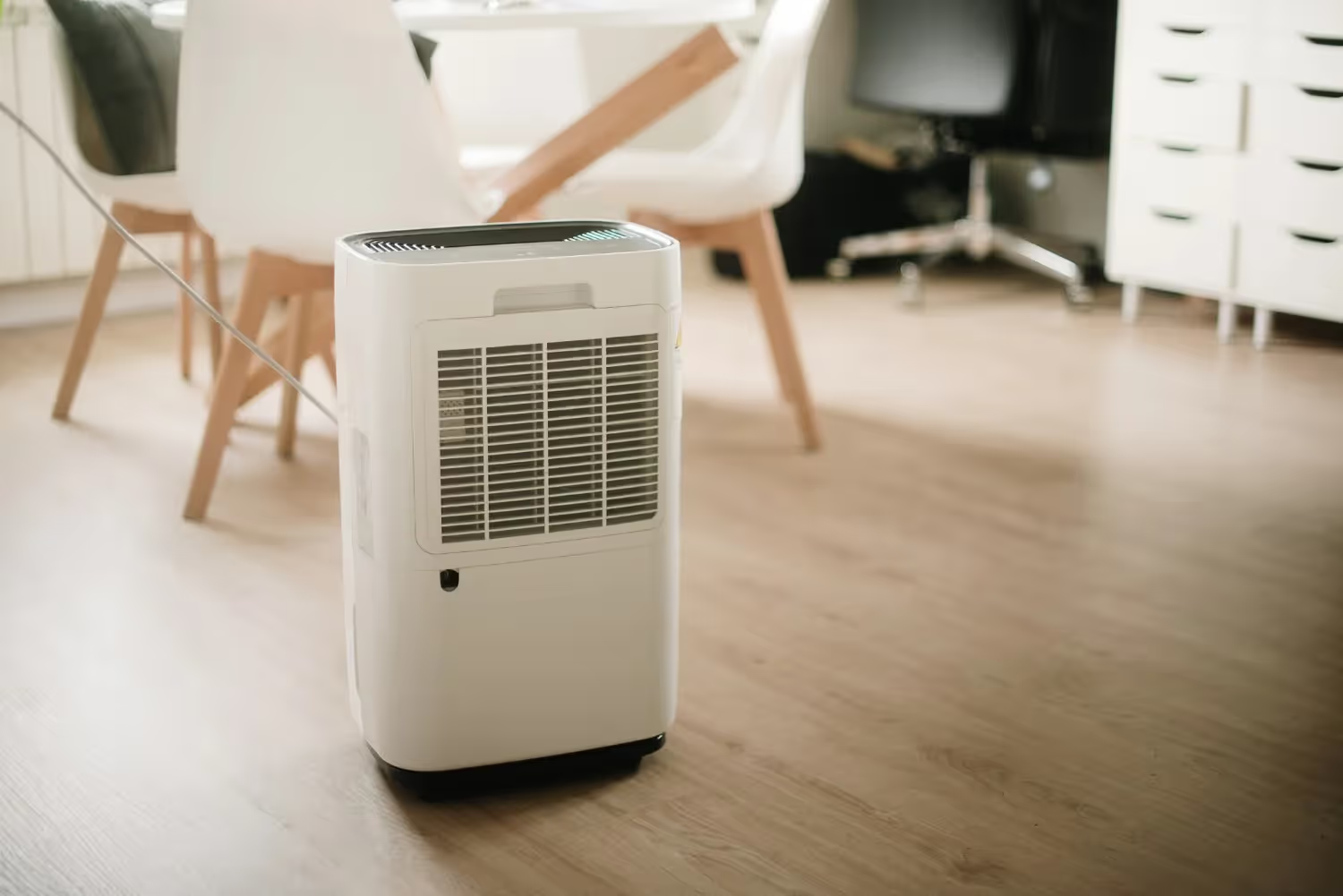
Installing a whole-home dehumidifier is a strategic upgrade to your central HVAC system, designed to treat the air in every room rather than a single area. Unlike portable units that require constant emptying and only address localized dampness, a whole-home solution integrates directly with your existing ductwork. The primary objective is to manage the "latent load"—the moisture content in the air—which air conditioners alone often struggle to control, particularly on days with moderate temperatures but high humidity.
When you invest in this service, you receive a unit properly sized for the square footage and cubic volume of your living space. Capacity is measured in pints of water removed per day (PPD). A standard installation typically involves a unit capable of removing between 70 to 130 pints of water daily, depending on the severity of the moisture issues and the size of the home. This ensures that the relative humidity (RH) inside the residence remains within the ideal range of 30% to 50%, inhibiting biological growth like dust mites and mold.
The equipment provided includes advanced filtration features and dedicated humidistats. These controls allow for automated operation. You do not need to manually turn the device on or off; the system detects when moisture levels rise above your set point and activates automatically. This integration often runs independently of the cooling cycle, meaning you can dehumidify your home on cool, rainy days without over-cooling the space.
Service inclusion covers the complete mechanical integration. This involves:
- Selection of the appropriate dehumidifier capacity based on Manual J load calculations.
- modifications to existing ductwork to accommodate the new equipment.
- Installation of dedicated return and supply ducts if the HVAC configuration requires independent airflow.
- Electrical connections adhering to local safety standards.
- Setup of condensate drainage systems to ensure captured water is routed safely away from the foundation or into a drain line.
The Installation and Integration Process
The process of installing a whole-home dehumidifier is technical and requires a clear understanding of airflow dynamics and psychrometrics. The goal is to install the unit in a location that maximizes efficiency while remaining accessible for future maintenance, such as filter changes.
Site Assessment and Load Calculation
Technicians begin by evaluating the building envelope. This assessment identifies sources of moisture intrusion, such as unsealed crawl spaces, basement cracks, or high-occupancy activities (cooking, showering). Measurements of the home’s total volume are taken to determine the specific PPD requirements. An undersized unit will run continuously without achieving the desired humidity set point, while an oversized unit may short-cycle, leading to inefficiency and wear.
Physical Installation and Ductwork
Once the correct unit is selected, the physical installation begins. The dehumidifier is typically suspended from floor joists in the basement or crawl space, or placed on a vibration-isolation pad to reduce noise transfer.
- The system is ducted into the HVAC system using one of several configurations.
- The most common method involves pulling air from the main return duct, treating it, and discharging the dry air back into the supply plenum.
- Alternatively, a dedicated return can be installed in a central part of the house to draw moist air directly into the unit before distributing dry air through the existing supply vents.
- Dampers are installed to prevent backflow and ensure air is directed properly during operation.
Drainage Configuration
Proper drainage is critical. A whole-home dehumidifier pulls significant gallons of water from the air daily.
- Gravity drains are used whenever the unit is positioned above the drainage point.
- Condensate pumps are installed if the unit is located below the sewer line or drain output, actively pushing the water up and out of the residence.
- Technicians verify that the drain line is trapped correctly to prevent sewer gases from entering the air stream and to ensure smooth water flow.
Electrical and Control Setup
The final step involves hardwiring the unit or installing a dedicated outlet, depending on code requirements. The control wiring is connected to the thermostat or a dedicated humidistat.
- Technicians program the settings to prioritize humidity control.
- System interlocks are tested to ensure the dehumidifier turns on the HVAC blower fan when it runs, ensuring dry air is circulated throughout the entire home, not just the basement or utility room.
Determining When to Repair vs. Replace
Dehumidification systems are durable, but they have a finite lifespan. Determining whether to repair a malfunctioning unit or replace it with a modern system depends on several technical and financial factors.
Compressor Failure and Refrigerant Leaks
The compressor is the heart of the dehumidifier. If the compressor fails or seizes, the cost of the part and the labor to replace it often approaches the cost of a brand-new unit. Similarly, refrigerant leaks in older systems can be problematic. If your current unit utilizes an older refrigerant type that is being phased out or is no longer manufactured, repair may not be feasible or legal. In these instances, replacement is the only viable path to restoring humidity control.
Age and Efficiency
The average lifespan of a whole-home dehumidifier is typically between 10 to 15 years. If your unit is approaching this age range and requires a significant repair (such as a control board or fan motor replacement), investment in a new unit is generally smarter. Newer models are significantly more energy-efficient, removing more water per kilowatt-hour of electricity consumed. This efficiency gain can offset the installation cost over time through lower utility bills.
Persistent Humidity Issues
If an existing unit runs constantly but fails to lower the humidity to the set point, it may be undersized or have lost capacity due to internal wear. Mr.Freeze Heating & Cooling technicians can perform a performance test to measure the actual water removal rate. If the unit is functioning but cannot keep up with the home's moisture load—perhaps due to room additions or changes in the home’s insulation—replacement with a higher-capacity unit is necessary.
Cost of Repair vs. Value
A general rule of thumb used in the industry is the "50% Rule." If the cost of the repair exceeds 50% of the cost of a new system, replacement is recommended. This avoids the scenario of "throwing good money after bad," where one repair is quickly followed by another component failure.
Local Considerations for Whiting, IN
Operating a dehumidification system in Whiting requires specific attention to the regional climate and local building codes. The proximity to Lake Michigan influences the local weather patterns, creating distinct challenges for indoor air quality.
Climate and Seasonality
Whiting experiences a wet climate with average summer highs around 85°F. However, it is the latent heat—the humidity—that often makes indoor environments feel oppressive. During the spring and autumn "shoulder seasons," temperatures may be mild enough that the air conditioner does not run frequently. Without the AC running, humidity builds up inside the home. A whole-home dehumidifier is essential during these periods to maintain comfort without over-cooling the house. Furthermore, winter lows can drop to 20°F. While winter air is generally dry, basements and crawl spaces can remain damp due to soil moisture, requiring year-round monitoring.
Permit and Code Compliance
Installations in Whiting must adhere to local building and electrical codes.
- Electrical connections often require a dedicated circuit to prevent overloading, especially in older homes with limited panel capacity.
- Condensate disposal must meet local plumbing codes to ensure that wastewater is handled correctly and does not discharge into areas that could cause icing in winter or foundation damage.
- For homes with crawl spaces, encapsulation combined with dehumidification is frequently recommended to meet energy efficiency standards and prevent soil gases from entering the living space.
Utility Rebates and Incentives
Indiana utility providers sometimes offer rebates for high-efficiency HVAC upgrades. Installing an Energy Star-rated dehumidifier may qualify homeowners for specific financial incentives. It is important to verify current program availability and ensure that the equipment selected meets the necessary Seasonal Energy Efficiency Ratio (SEER) or Integrated Energy Factor (IEF) criteria.
Why Specialized Installation Matters
Choosing the right equipment is only half the battle; the quality of the installation dictates the long-term performance and reliability of the system. Generic HVAC work often overlooks the nuances of humidity control, leading to systems that are noisy, inefficient, or ineffective.
Precision Airflow Management
Proper placement of supply and return connections is crucial for static pressure. If a dehumidifier is installed incorrectly, it can disrupt the airflow of the central AC, causing the furnace or air conditioner to work harder and fail prematurely. Specialized installation ensures that the dehumidifier aids the HVAC system rather than hindering it.
Advanced Filtration
Many whole-home dehumidifiers include MERV-rated filtration. This adds a layer of air purification to the moisture control. During installation, access to these filters is prioritized so that maintenance is straightforward. Clean filters ensure the unit operates at peak capacity and protects the internal coils from dust buildup.
Comprehensive Commissioning
A professional installation concludes with a full commissioning process. This is not simply turning the unit on. It involves measuring the humidity levels in different parts of the home, verifying the drain slope, checking the amperage draw of the compressor, and calibrating the humidistat against a reference hygrometer. This ensures that when the system indicates 45% humidity, the air in the home is actually at 45%.
Protecting your property from the damaging effects of excess moisture requires decisive action and professional implementation. If you are ready to eliminate dampness, reduce mold risks, and breathe easier in your own home, take the next step.
Whole-Home Humidity Control from Mr.Freeze Heating & Cooling
Excess moisture is not just uncomfortable—it can damage your home, worsen allergies, and create conditions where mold thrives. A properly sized, professionally installed whole-home dehumidifier delivers consistent humidity control across every room, improves indoor air quality, and protects your property year-round in Whiting’s lake-influenced climate. Using precise airflow design, code-compliant installation, and commissioning standards aligned with best practices you’ll find through Freezenation, Mr.Freeze Heating & Cooling provides humidity solutions that work as intended. Secure your home’s comfort and structural integrity today—contact Mr.Freeze Heating & Cooling to schedule your whole-home dehumidification consultation and take control of your indoor moisture for good.
Secure your home’s comfort and structural integrity today—schedule your consultation now.