
Need Reliable and Cost-Effective Heating Solutions?
Facing inconsistent heating and escalating bills with your current system creates stress as the seasons change. Homeowners in Whiting, IN, often find that traditional HVAC units struggle to keep up with the extreme temperature shifts between freezing winters and humid summers, leading to wasted energy and discomfort. Contact us today to discuss available financing options and schedule a site assessment for a permanent solution.
Mr.Freeze Heating & Cooling provides high-efficiency geothermal systems designed to utilize the stable underground temperature to regulate your home's climate. By switching to this technology, you gain control over your monthly expenses and ensure consistent comfort regardless of the weather outside.
- Achieve up to 70% greater heating and cooling efficiency compared to traditional furnaces and air conditioners.
- Significantly lower ongoing utility costs while qualifying for federal tax credits and potential state energy rebates.
- Enjoy year-round comfort with a system that creates minimal environmental impact and eliminates on-site fossil fuel combustion.
All installations are fully compliant with local Whiting codes, backed by comprehensive warranties, and eligible for flexible financing options.
What Your Geothermal Installation Includes
Switching to a geothermal heat pump system is a significant infrastructure upgrade that involves more than just swapping out a box. When you commission a system installation, you are investing in a complete energy transfer solution that connects your home to the earth beneath it. We manage every aspect of this transition to ensure the system performs at peak efficiency from day one.
The scope of work for a residential geothermal project includes the following components and services:
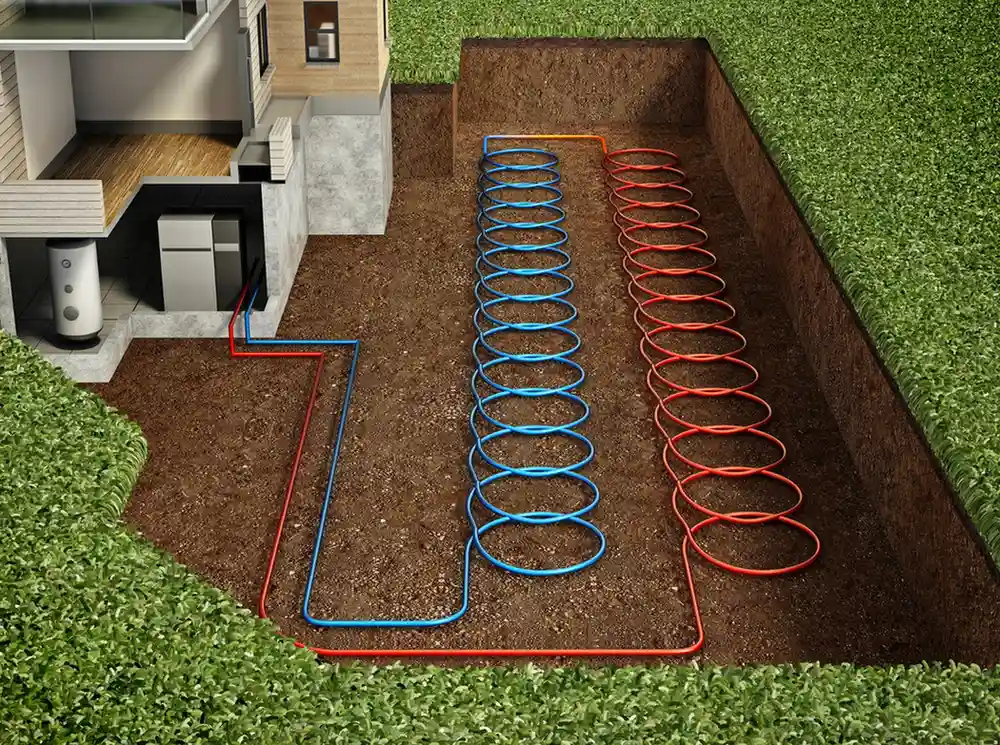
- Ground Loop Installation: This is the critical infrastructure buried underground. Depending on your property layout, we install either a vertical or horizontal loop system made of high-density polyethylene piping. This piping circulates a water-based solution to transfer heat.
- Heat Pump Unit: We install the indoor geothermal heat pump unit, which replaces your traditional furnace and air conditioner. This unit typically sits in your basement, crawlspace, or utility closet and runs quieter than a standard refrigerator.
- Ductwork Modification: To maximize airflow and efficiency, we assess your existing ductwork. In many cases, we modify the plenum and supply ducts to accommodate the specific airflow requirements of geothermal heating and cooling.
- Flow Center and Plumbing: We install the pumping module (flow center) that circulates the fluid through the ground loops and connects it to the heat pump unit. This includes all necessary purging and pressure testing.
- Desuperheater Connection: If selected, we connect a desuperheater to your water heating system. This component utilizes waste heat from the geothermal unit to preheat your domestic hot water, providing virtually free hot water during the cooling season.
- Thermostat and Zoning Controls: We install intelligent control systems that allow you to monitor and manage the temperature efficiently. This often includes zoning capabilities to heat or cool specific areas of the home independently.
How the Installation Process Works
A geothermal installation is a construction project that requires precise coordination between excavation, drilling, and HVAC technical work. We follow a strict protocol to ensure the integrity of the loop field and the performance of the interior equipment. The timeline varies based on the loop type and soil conditions, but the sequence remains consistent to guarantee quality.
- Site Evaluation and Load Calculation: The process begins with a Manual J load calculation to determine the exact heating and cooling requirements of your specific home layout. We analyze the soil conditions, geology, and available land area in Whiting to decide between vertical or horizontal loop configurations.
- Loop Field Design and Permitting: Once the load is determined, engineers design the loop field to ensure it provides adequate heat transfer. We handle all necessary permitting and utility locating services to ensure safe digging.
- Excavation and Drilling: For vertical loops, drilling rigs bore deep holes (often 150–300 feet) to insert the U-bend piping. For horizontal loops, trenches are excavated to lay the pipework. This is the most labor-intensive phase and involves heavy machinery.
- Loop Fusion and Burial: The pipe sections are thermally fused—not glued—to create a single, continuous loop with no potential for underground leaks. Once tested for pressure integrity, the loops are buried, and the ground is backfilled.
- Interior Equipment Installation: While the exterior work progresses, technicians remove the old HVAC equipment and install the new geothermal heat pump. This involves electrical connections, condensate drain lines, and ductwork integration.
- System Flushing and Charging: The ground loop is flushed to remove any debris or air pockets. It is then charged with an antifreeze solution (typically propylene glycol and water) to prevent freezing during Indiana winters.
- Start-Up and Calibration: The system is powered on, and technicians adjust the blower speeds, water flow rates, and refrigerant pressures to match the manufacturer's specifications. We verify that the temperature rise and drop across the coil meet performance standards.
When to Replace Traditional HVAC with Geothermal
Deciding between repairing an aging gas furnace or AC unit and upgrading to geothermal involves looking at long-term value rather than just immediate sticker price. Traditional systems have a lifespan of 15 to 20 years, whereas the underground loop of a geothermal system is designed to last over 50 years, with the indoor unit lasting 20 to 25 years.
You should consider moving to geothermal if you encounter the following scenarios:
- Repeated Component Failures: If you are frequently replacing blower motors, compressors, or heat exchangers, the cumulative cost of repairs often outweighs the monthly savings of a new high-efficiency system.
- High Utility Bills: If your heating bills spike aggressively during the freezing months or cooling costs soar in July, a geothermal system can stabilize these costs. Because it moves heat rather than generating it, it delivers 3 to 4 units of energy for every 1 unit of electricity consumed.
- New Home Construction or Major Renovation: Installing geothermal during construction is the most cost-effective timing. You can incorporate the cost into the mortgage, leading to immediate positive cash flow due to utility savings exceeding the incremental mortgage cost.
- Uneven Temperatures: Traditional forced-air systems often blast hot air and then shut off, causing temperature swings. If your home has hot and cold spots that standard zoning hasn't fixed, the continuous, low-level operation of geothermal provides more consistent comfort.
- Carbon Footprint Concerns: If reducing reliance on fossil fuels is a priority, geothermal eliminates on-site combustion. This removes the risk of carbon monoxide poisoning and significantly lowers your home's greenhouse gas emissions.
Managing Local Installation Factors
Installing geothermal systems in this region requires specific knowledge of local geology, climate, and regulations. Conditions in Whiting, IN, dictate how we approach the loop design and installation schedule to ensure the system operates efficiently through sub-zero winters and humid summers.
- Soil and Hydrology Conditions: The thermal conductivity of the soil significantly impacts loop design. Clay-heavy soil conducts heat differently than sandy soil. We assess the specific ground makeup to determine the total length of pipe required. High water tables can actually benefit thermal transfer, making some local properties ideal for vertical loops.
- Permitting and Utilities: Digging requires strict adherence to local codes. We coordinate with local building departments to secure permits for excavation and mechanical work. Crucially, we manage the "811" utility marking process to avoid conflicts with underground gas, water, or electric lines.
- Frost Line Considerations: In Northern Indiana, the frost line can penetrate deeply. Horizontal loops must be buried well below this line to ensure the fluid circulates through soil that maintains a constant temperature (typically around 50–55°F) and does not freeze.
- Electrical Service Upgrades: Geothermal systems run entirely on electricity. While they are efficient, the initial startup amperage may require an evaluation of your home's electrical panel. If your current service is 100 amps, an upgrade to 200 amps might be necessary to support the heat pump and auxiliary backup heat strips.
- Seasonal Installation Windows: While interior work can happen year-round, loop installation is weather-dependent. Heavy snow or deep freezes can delay excavation. Planning your installation for spring, summer, or early autumn ensures the exterior work proceeds without weather-related interruptions.
Understanding Efficiency and Performance Ratings
When evaluating geothermal options, technical specifications help quantify the return on investment. Unlike gas furnaces rated by AFUE (Annual Fuel Utilization Efficiency), geothermal systems utilize COP (Coefficient of Performance) for heating and EER (Energy Efficiency Ratio) for cooling.
- Coefficient of Performance (COP): This measures heating efficiency. A standard high-efficiency gas furnace has an AFUE of 96-98%, meaning for every dollar spent on gas, 96 to 98 cents goes to heat. A geothermal system typically has a COP of 3.0 to 5.0. This means for every dollar of electricity used, the system delivers three to five dollars' worth of heat.
- Energy Efficiency Ratio (EER): This measures cooling efficiency. While standard air conditioners might have a SEER rating of 13 to 16, geothermal systems often boast EER ratings between 20 and 30. This drastic difference results in substantial savings during humid summers.
- Desuperheater Efficiency: The optional hot water generator adds to the system's overall efficiency. By capturing waste heat from the compressor that would otherwise be rejected into the ground, it provides a "free" energy source for your water heater, further reducing your electric or gas bill.
System Longevity and Maintenance Requirements
One of the primary advantages of geothermal technology is its durability. Because the outdoor components are buried and the indoor components are protected from the elements, the wear and tear are significantly lower than conventional air-source heat pumps or AC units that sit exposed in the yard.
Maintenance for these systems is straightforward but essential for maintaining the warranty and efficiency:
- Filter Changes: Just like a standard furnace, the air filter needs regular replacement to ensure proper airflow and protect the indoor coil.
- Loop Pressure Monitoring: Periodically checking the pressure of the loop field ensures there are no slow leaks and that the pumps are operating correctly.
- Condensate Line Cleaning: Ensuring the drain line is clear prevents water damage and bacterial growth during the cooling season.
- Duct Inspection: Leaky ducts can undermine the efficiency of even the best geothermal system. We inspect and seal ductwork to ensure the conditioned air reaches your living spaces.
Mr.Freeze Heating & Cooling ensures that every system we deploy meets these rigorous standards for longevity and performance.
Secure Your Energy Independence
Transitioning to geothermal heating and cooling is a decisive step toward energy independence and long-term financial savings. It transforms your property into a highly efficient environment that resists the volatility of energy markets and seasonal temperature extremes. By utilizing the constant thermal energy beneath your feet, you secure a comfort solution that lasts for decades.
Invest in a system that pays you back every month through lower utility bills and increased property value. Eliminate the noise of outdoor condensers and the safety risks of fossil fuels.
Ready to upgrade to the most efficient heating and cooling technology available? Contact our team today to schedule your comprehensive geothermal assessment.