
Is Inconsistent Temperature Compromising Your Wine Investment?
Maintaining the delicate balance of temperature and humidity for a wine cellar in Griffith can be difficult due to the region's humid continental climate. Fluctuating weather patterns, ranging from freezing winters to humid summers, threaten the chemical stability of fine wines if the environment is not strictly controlled. Mr.Freeze Heating & Cooling provides specialized installation and service solutions designed to counteract these external variables and protect your collection. Call us at [Insert Phone Number] or Contact us online to schedule a consultation.
- Achieve precise climate control that maintains steady temperatures for collections ranging from 50 to over 5,000 bottles.
- Lower long-term energy expenses with modern, high-efficiency cooling units designed for continuous low-load operation.
- Secure expert installation from licensed technicians who understand the specific vapor barrier and insulation requirements of Indiana homes.
We back our installations with comprehensive manufacturer warranties and offer flexible financing options to ensure your investment is protected immediately.
Protect Your Precious Wine Collection With Professional Cooling Solutions
Wine is a living organic compound that evolves over time. Its preservation requires an environment that mimics the stable conditions of natural underground caves. In Griffith, IN, relying on standard air conditioning or passive cooling is rarely sufficient. Standard HVAC systems are designed to cool air quickly and strip moisture to ensure human comfort. However, wine requires higher humidity levels (between 50% and 70%) to keep corks expanded and prevent oxidation. If a cooling system removes too much moisture, corks dry out, air enters the bottle, and the wine spoils.
Conversely, the humid summers in this region can lead to excess moisture if the cellar is not properly sealed and conditioned. This can result in mold growth on labels and corks, effectively ruining the resale value and aesthetic of the collection. Professional wine cellar cooling differs fundamentally from standard refrigeration. It utilizes specialized evaporative coils that maintain a temperature differential conducive to higher humidity retention.
Implementing a dedicated system ensures that the temperature remains consistently between 55°F and 58°F. This specific range dictates the rate at which wine ages. Too hot, and the wine cooks, flattening the flavor profile. Too cold, and the aging process halts entirely, potentially causing tartrate crystals to precipitate. Investing in the correct infrastructure now prevents the heartbreak of opening a prized vintage only to find it vinegarized due to environmental inconsistency.
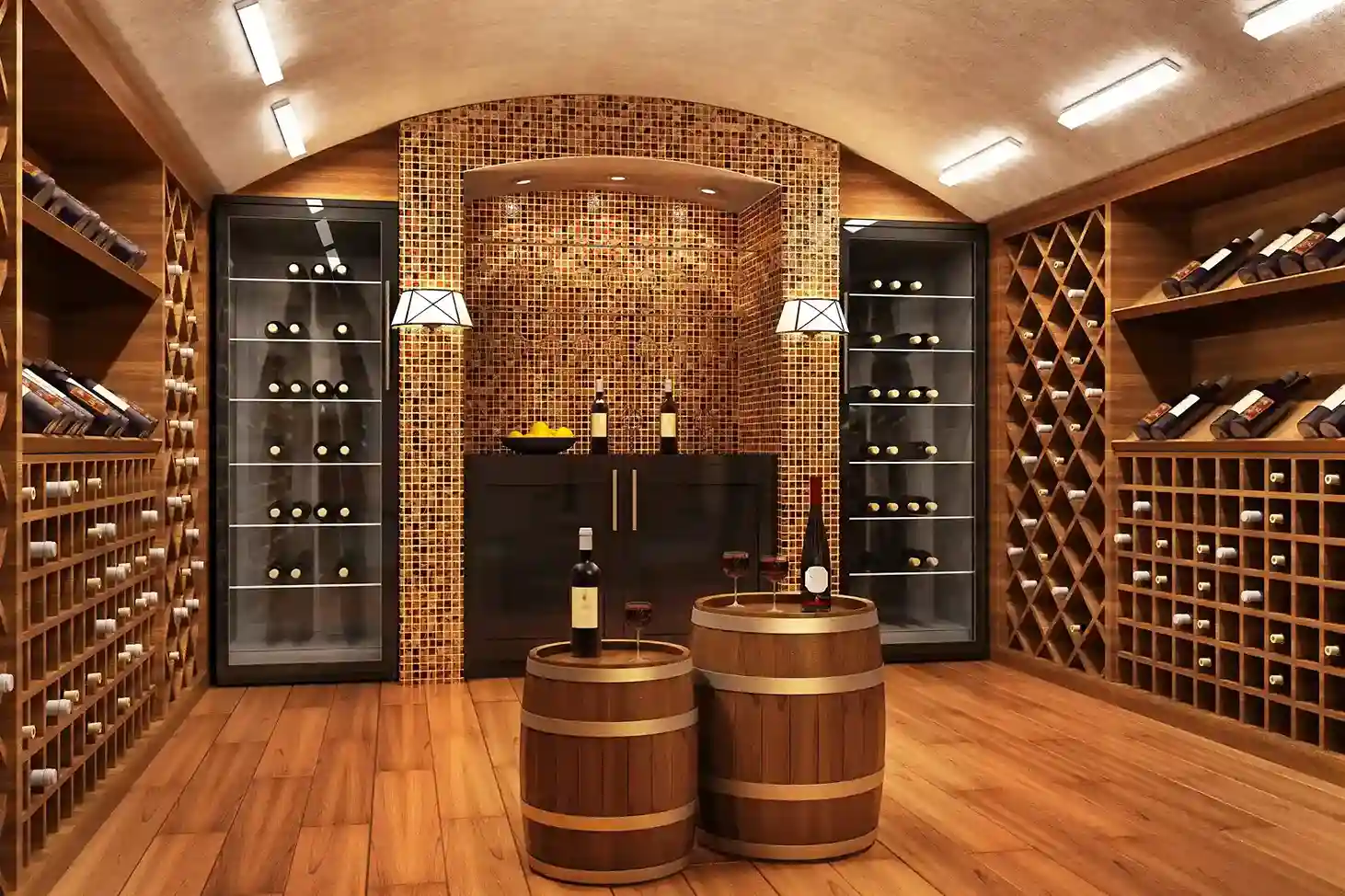
What You Get with Our Tailored Solutions
When you commission a dedicated cooling solution, you are purchasing more than a piece of hardware; you are investing in an engineered ecosystem. Our approach involves assessing the structural reality of your home and matching it with equipment that delivers reliable performance without excessive noise or energy waste.
- Self-Contained Through-the-Wall Systems: These are ideal for smaller to medium-sized cellars where budget and ease of installation are priorities. The unit mounts between the studs of the cellar wall, exhausting heat into an adjacent climate-controlled room. This minimizes the need for extensive ductwork and offers a streamlined aesthetic.
- Ducted Split Cooling Systems: For collectors who demand silence and invisibility, split systems are the superior choice. The evaporator coil is placed inside or near the cellar, while the noisy compressor and condensing unit are located remotely, often outdoors or in a mechanical room. This removes heat and noise from the living space entirely and allows for maximum storage capacity within the cellar itself.
- Ducted Self-Contained Units: These units offer a hybrid approach, capable of being installed up to 25 feet away from the cellar. Using insulated ducting, they supply conditioned air to the room and return warm air to the unit. This is an excellent solution for glass-walled cellars where visible equipment would detract from the visual appeal of the display.
- Humidification Integration: In addition to temperature control, many high-end systems now integrate active humidification. If the ambient humidity in your Griffith home drops significantly during the winter months, an integrated humidifier adds moisture back into the cellar air, ensuring cork integrity is never compromised.
Step-by-Step Guide on Setting Up Your Wine Cellar Cooling System
Proper execution of a wine cellar project requires strict adherence to a construction sequence. Skipping steps or ignoring building science usually leads to equipment failure or structural damage due to condensation.
- Heat Load Calculation: The process begins with a formal calculation of the thermal load. This involves analyzing the cubic footage of the room, the R-value of the insulation, the type of lighting used, the glass exposure, and the frequency of door openings. This calculation determines the exact BTU (British Thermal Unit) capacity required. Undersizing a unit leads to constant running and burnout; oversizing leads to short cycling and poor humidity control.
- Framing and Vapor Barrier Installation: Before any cooling equipment is installed, the room must be sealed. A high-quality vapor barrier (typically 6-mil polyethylene) is applied to the warm side of the insulation (the outside of the cellar walls and ceiling). This is the most critical step in Griffith, as it prevents warm, moist air from migrating into the cool cellar environment, where it would condense into water inside the walls, causing rot and mold.
- Insulation Application: Once the vapor barrier is secure, high R-value insulation is installed. Closed-cell spray foam is often recommended as it acts as both an insulator and a secondary vapor barrier. The goal is to maximize thermal resistance to reduce the workload on the cooling unit.
- Rough-In of Electrical and Drain Lines: Dedicated electrical circuits are run to the unit location to prevent breaker trips. Additionally, a condensate drain line is installed. Wine cooling units naturally produce water as they cool the air; this water must be drained away via gravity or a condensate pump to a suitable drain location.
- Unit Installation and Ducting: The cooling unit is set in place. For ducted systems, insulated flexible or rigid ducting is connected to supply and return registers. The technicians ensure that airflow is optimized to prevent "hot spots" in the corners of the room.
- System Testing and Calibration: After physical installation, the system is pressurized and tested. Technicians verify refrigerant levels, check for leaks, and calibrate the thermostat. The system is allowed to run for a specific break-in period to ensure it holds the set temperature and humidity levels accurately before any wine is loaded into the room.
Choosing Between Different Cooling System Size and Features
Selecting the right unit involves balancing technical requirements with aesthetic preferences and budget. The "best" unit is subjective to the constraints of the building and the goals of the collector.
- Evaluating Bottle Capacity and Room Volume: Manufacturers often rate units by bottle count, but this can be misleading. A 500-bottle room with glass walls requires significantly more cooling power than a 500-bottle room with solid insulated walls. We focus on cubic footage and thermal loss rather than just bottle count to ensure the unit can handle peak summer heat loads.
- Noise Level Considerations: Wine cellars are often located near entertainment areas or dining rooms. Decibel levels matter. Through-the-wall units typically operate between 50 and 60 decibels (similar to a conversation). Split systems, with the compressor located remotely, can result in a virtually silent cellar environment. Mr.Freeze Heating & Cooling technicians help you weigh the acoustic impact of each option.
- Maintenance and Accessibility: Consider how easy the unit is to service. Filters need to be cleaned or replaced regularly. Units installed in hard-to-reach ceiling cavities or tight crawl spaces may incur higher service costs down the line. We recommend units with accessible service ports and washable filters.
- Digital Controls and Monitoring: Modern cooling units come equipped with Wi-Fi-enabled thermostats and alarm systems. These features allow you to monitor your cellar’s conditions remotely via a smartphone app. You can receive alerts if the temperature spikes or if the door is left ajar, providing peace of mind when you are away from home.
- Aesthetic Integration: For display cellars, the look of the equipment is paramount. Some units can be hidden behind decorative grilles or integrated into the racking furniture. We help select grilles and registers that match the wood stain or metal finish of your cellar design.
Local Expertise and Regulations around Installation
Installing a climate-controlled environment involves navigating local building codes and understanding the regional environment.
- Electrical Permits and Dedicated Circuits: In Indiana, permanent electrical installations typically require adherence to specific codes. Wine cooling units generally require a dedicated 15 or 20-amp circuit to ensure safe operation and prevent interference with other home appliances. Professional installation ensures all wiring meets the National Electrical Code (NEC) and local amendments.
- Vapor Barrier and Building Envelope: The local climate dictates the necessity of the vapor barrier. In drier climates, this might be less critical, but in our region, the vapor pressure differential between the conditioned cellar and the ambient home air is significant. Improper sealing is not just a code violation in some contexts; it is a guarantee of structural failure. We adhere to strict building science principles to ensure the envelope is tight.
- Condensate Management: Local codes also dictate how condensate water is handled. It cannot simply be dumped into a crawl space or onto a walkway. It must be routed to a sanitary drain or a condensate pump that discharges to an approved location. This prevents water damage and slip hazards.
- HVAC Compatibility: If the wine cooling system interacts with the home's existing HVAC ductwork (which is generally discouraged but sometimes attempted), it requires careful damper installation to prevent the systems from fighting each other. We ensure complete separation or properly engineered integration to maintain system efficiency.
Proof & Differentiators
When you are protecting an investment worth thousands or even tens of thousands of dollars, the credentials of your service provider matter.
- Specialized Refrigeration Certification: Wine cellar cooling is closer to commercial refrigeration than residential air conditioning. Our team possesses the specific certifications and training required to handle the refrigerants and pressure loads associated with these specialty units.
- Repair vs. Replace Assessment: When an existing unit fails, we provide an honest assessment of its condition. If a compressor has failed on an older unit, it is often more cost-effective to replace the system with a newer, more efficient model. However, if the issue is a simple capacitor or fan motor, we perform the repair to get you back up and running quickly.
- Preventative Maintenance Plans: Mechanical systems degrade without care. We offer scheduled maintenance plans that include cleaning condenser coils, checking refrigerant pressures, and inspecting drain lines. Regular maintenance prevents emergency failures during heatwaves and extends the lifespan of your equipment.
- Same-Day Emergency Response: If a cooling unit fails in July, the temperature in a wine cellar can rise dangerously fast. We prioritize emergency calls for wine cellar systems to prevent spoilage. Our local presence ensures we can reach your property quickly to stabilize the environment.
Your wine collection deserves the highest standard of care. Don't let equipment failure or poor installation jeopardize years of collecting.
Protect your investment with professional cooling installation and service. Contact us today to schedule your assessment.
Preserve Your Collection With Precision Climate Control
A fine wine collection depends on one thing above all else—consistency. In Griffith’s fluctuating climate, even minor temperature or humidity swings can undo years of careful aging and significantly reduce the value of your investment. A professionally designed and installed wine cellar cooling system provides the stable, cave-like environment your bottles require to mature exactly as intended. Mr.Freeze Heating & Cooling brings the specialized expertise, proper load calculations, and code-compliant installation needed to protect your collection with confidence. Don’t leave your wine vulnerable to seasonal extremes—Contact us today to schedule your wine cellar cooling consultation and secure your investment with a solution built for long-term preservation.