
Feeling the Chill? Switch to Geothermal for Seamless Year-Round Comfort
Tired of skyrocketing energy bills and inefficient heating during Indiana’s frosty winters? Discover how our geothermal systems provide sustainable warmth with lower utility costs. Homeowners in Highland know that the fluctuation between freezing winters and humid summers can wreak havoc on traditional HVAC systems, but the ground beneath your feet offers a stable, efficient solution. Call us today to schedule a site evaluation or ask about financing options to upgrade your home comfort.
Mr.Freeze Heating & Cooling specializes in designing and installing high-performance geothermal heat pumps that utilize the earth's constant temperature to regulate your home's climate.
- Reduce heating costs by up to 50% with our efficient geothermal solutions.
- Enjoy consistent, eco-friendly heating and cooling, regardless of outside temperatures.
- Achieve peace of mind with our full-service installation and lifetime system support.
Backed by a comprehensive warranty and flexible financing options to ease your transition, our team ensures your investment pays dividends in comfort and savings for decades to come.
Comprehensive Geothermal Installation and System Integration
When you invest in a geothermal system, you are purchasing more than just a heating and cooling unit; you are investing in a complete infrastructure upgrade that alters how your property utilizes energy. Unlike traditional furnaces that burn fuel to create heat, or air-source heat pumps that struggle when the temperature drops below freezing, geothermal systems transfer existing heat. This process requires precise engineering and a clear understanding of what is included in your installation package.
Understanding the Ground Loop System
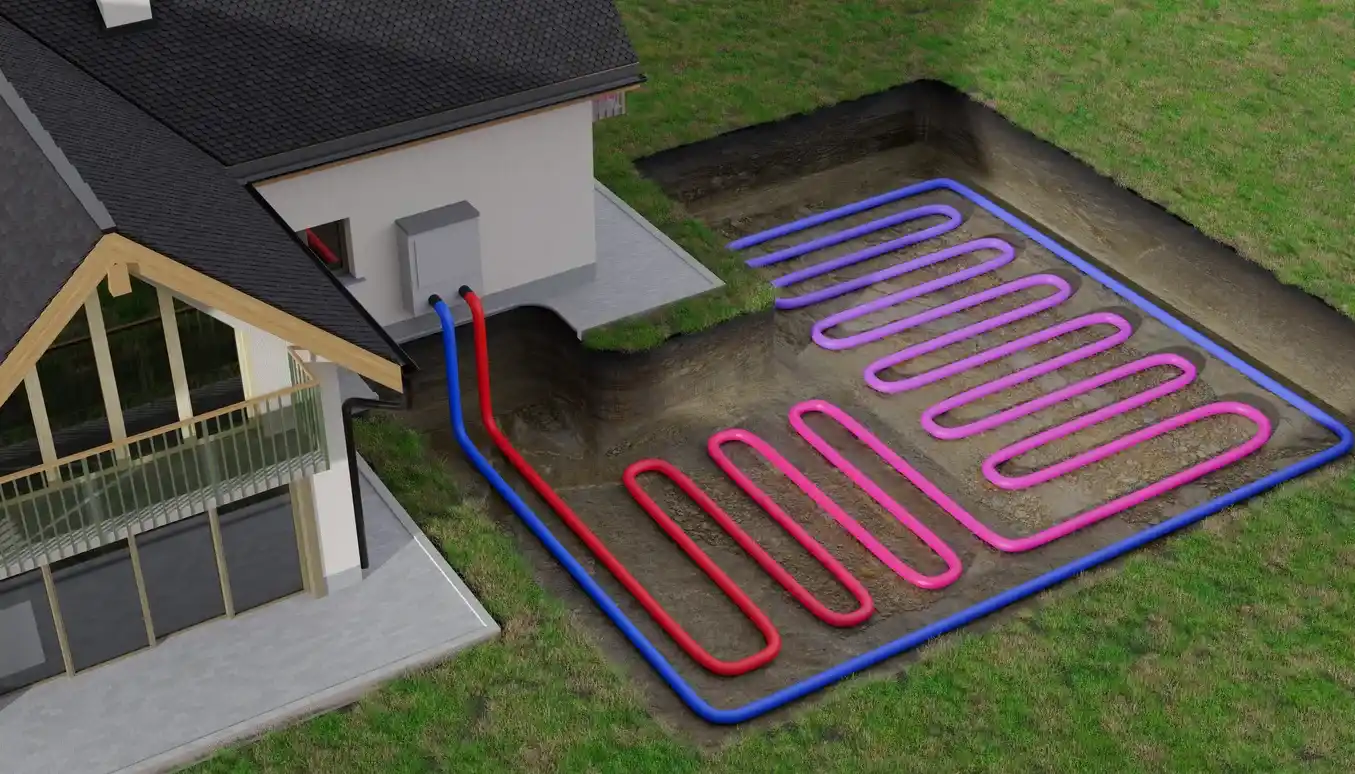
The core of your new system is the ground loop. This is a network of high-density polyethylene pipes buried underground on your property.
- Vertical Loops: Ideal for properties in Highland with limited yard space. We drill deep boreholes to insert the piping, minimizing the surface area disturbance.
- Horizontal Loops: If you have extensive land, this option involves digging trenches to lay the pipes. It is often more cost-effective where space allows.
- Pond/Lake Loops: For properties adjacent to a body of water, this configuration uses the water at the bottom of the lake for heat exchange, requiring no drilling or trenching.
The Geothermal Heat Pump Unit
Inside the home, the equipment looks similar to a standard furnace but operates differently. The heat pump unit connects to the ground loop and your ductwork. It includes the compressor, heat exchanger, and air handler. We size this unit specifically for the square footage and insulation levels of your home to ensure it runs at peak efficiency without short-cycling.
Ductwork and Air Quality Integration
Your installation includes a full assessment of your existing ductwork. Geothermal systems move a higher volume of air at a lower velocity compared to gas furnaces. This results in more even temperatures and less noise, but it requires ductwork that can handle the flow. We modify or seal existing ducts to prevent air loss and often integrate air purification systems or humidifiers directly into the new setup to maximize indoor air quality.
How the Installation and Replacement Process Works
Switching to geothermal is a construction project that involves excavation and precise mechanical work. We manage every phase of the project to ensure minimal disruption to your daily life. The timeline varies based on the type of loop field required, but the workflow remains consistent to guarantee quality.
- Site Evaluation and Load Calculation:
The process begins with a Manual J load calculation. We measure your home’s thermal characteristics—windows, insulation, and square footage—to determine the exact heating and cooling load. Simultaneously, we analyze the geology of your property in Highland. Soil type, rock depth, and water table levels dictate whether a vertical or horizontal loop is the most viable option.
- System Design and Engineering:
Once the data is collected, we design the loop field. This involves calculating the length of pipe needed to extract sufficient heat during winter and dissipate enough heat during summer. We also design the interior mechanical room layout, ensuring the heat pump is accessible for future maintenance.
- Excavation and Loop Installation:
For the exterior work, heavy machinery is brought in to drill boreholes or dig trenches. The piping is fused together thermally, creating a seal that is stronger than the pipe itself, effectively eliminating the risk of leaks. Once the pipe is laid, it is pressure-tested before being covered to ensure integrity.
- Interior Connection and Unit Placement:
Technicians install the heat pump unit inside your home. We connect the ground loop piping to the unit and hook up the electrical components and thermostat controls. If your home utilizes a desuperheater for hot water generation—a common add-on that uses waste heat to warm your water—we plumb that connection as well.
- System Charging and Final Commissioning:
The loop is filled with a water and antifreeze solution that facilitates heat transfer. We purge the system of air and debris, then power up the unit. Our technicians perform a series of tests to verify airflow, temperature differentials, and energy consumption, ensuring the system meets manufacturer specifications.
When to Switch: Replacement vs. Repair
Deciding between repairing an aging HVAC system or upgrading to geothermal involves analyzing long-term return on investment (ROI) rather than just upfront costs. While geothermal installation is a significant capital improvement, the operational mechanics often justify the switch when specific conditions are met.
Analyzing Energy Bills and Inefficiency
If your current heating bills have increased steadily despite moderate usage, your existing system is losing efficiency. Gas furnaces and standard air conditioners lose performance capability as they age. If you are facing a repair that costs more than 50% of the value of the unit, or if your equipment is over 15 years old, pouring money into repairs provides diminishing returns. Geothermal systems operate at 300% to 400% efficiency, meaning for every unit of electricity used, three to four units of heat are delivered. This massive efficiency gap makes replacement the logical financial choice for long-term homeowners.
The Frequency of Breakdowns
Consistent breakdowns indicate that major components like compressors or heat exchangers are failing. In Highland, where winter temperatures can drop dangerously low, reliability is non-negotiable. If you find yourself calling for service multiple times a season, the system is at the end of its lifecycle. A new geothermal system resets the clock on reliability and drastically reduces the likelihood of emergency failures.
Future-Proofing Your Home Value
Installing a geothermal system increases property value. Prospective buyers view the low utility costs and long lifespan of the ground loop (often 50+ years) as a major asset. If you plan to stay in your home for at least five to seven years, the energy savings combined with federal tax incentives usually cover the cost difference between a standard replacement and a geothermal upgrade.
Local Considerations for Highland Homeowners
Operating a geothermal system in Northwest Indiana requires specific attention to local climate patterns and regulations. The geology and weather in Highland influence how these systems are designed and permitted.
- Soil Conductivity and Frost Lines:
The soil composition in our region varies from sandy to clay-heavy. Clay soils are excellent for geothermal conductivity, allowing for efficient heat transfer. However, the design must account for the local frost line depth. We ensure all horizontal loops are buried well below the frost line to prevent the ground around the pipes from freezing, which would halt heat exchange and potentially damage the system.
- Permitting and Code Compliance:
Geothermal installations involve ground penetration and electrical work, both of which require specific permits from local building departments. We handle the submission of all necessary documentation to ensure the loop field meets environmental safety standards and that the electrical connections adhere to code. This includes verifying that the drilling or trenching does not interfere with municipal utility lines or easements.
- Utility Rebates and Tax Incentives:
Homeowners in this area often qualify for significant financial incentives. The federal government offers a robust tax credit for geothermal heat pump installations, covering a percentage of the total project cost including labor and site preparation. Additionally, local utility providers may offer rebates for switching to high-efficiency electric heating. We assist you in identifying and documenting these eligibility requirements to maximize your savings.
- Seasonality Management:
Our climate demands a system that handles extremes. In winter, the system extracts heat from the ground. In summer, the cycle reverses, dumping heat from your home back into the earth. Because the ground temperature remains relatively constant (around 55°F) year-round, the system does not have to work as hard as an air-source unit that fights against 95°F ambient air in July or -10°F air in January. This thermal stability is the key to comfort in our region.
Why Specialist Installation Matters
Geothermal technology is far more complex than standard HVAC. It requires expertise in thermodynamics, geology, and plumbing, in addition to traditional refrigeration mechanics. A system that is poorly designed—specifically an undersized loop field—will result in the ground freezing around the pipes, rendering the system useless when you need it most.
We prioritize the engineering phase to prevent these failures. By calculating the exact thermal conductivity of your soil and the heat loss of your structure, we guarantee a system that performs as promised. We do not use "rule of thumb" estimates; we use data.
Furthermore, we focus on the long-term maintainability of the system. Geothermal units have fewer moving parts than traditional furnaces and are not exposed to the elements, which naturally extends their lifespan. However, they still require specialized checks, such as monitoring loop pressure and antifreeze levels. Our service approach ensures that once your system is in the ground, it remains a "set it and forget it" solution for your home comfort.
Upgrade to Geothermal Today!
Mr.Freeze Heating & Cooling is committed to delivering advanced heating solutions that make sense for your wallet and the environment. If you are ready to stop renting your energy from the utility company and start owning your comfort source, the time to act is now.
Take control of your home’s energy future. Contact us immediately to discuss your geothermal installation options.