
Is Your AC Struggling Against Highland's Seasonal Swings?
As temperatures climb this summer, don’t let a faulty AC impair your comfort. If you are dealing with unexpected breakdowns or inadequate cooling, it is time to get expert help; contact us immediately to schedule service or inquire about available financing options. Mr.Freeze Heating & Cooling understands that waiting for relief during a heatwave is not an option.
- Quickly restore your comfort with our same-day AC repair services.
- Improve energy efficiency and reduce bills with a comprehensive AC tune-up.
- Extend the lifespan of your equipment with our expert maintenance solutions.
All services are backed by licensed professionals and include warranty protection for your peace of mind.
What to Expect From Professional AC Service
When your air conditioning unit fails to perform, the issue often stems from a specific mechanical or electrical failure that requires precise diagnostics. Professional service moves beyond simple filter changes to address the root causes of inefficiency and breakdowns. Residents in Highland depend on their cooling systems to manage high humidity levels as much as the heat, meaning a partially functioning unit can lead to uncomfortable, sticky indoor environments even if the air feels somewhat cool.
Comprehensive Diagnostics and Repair
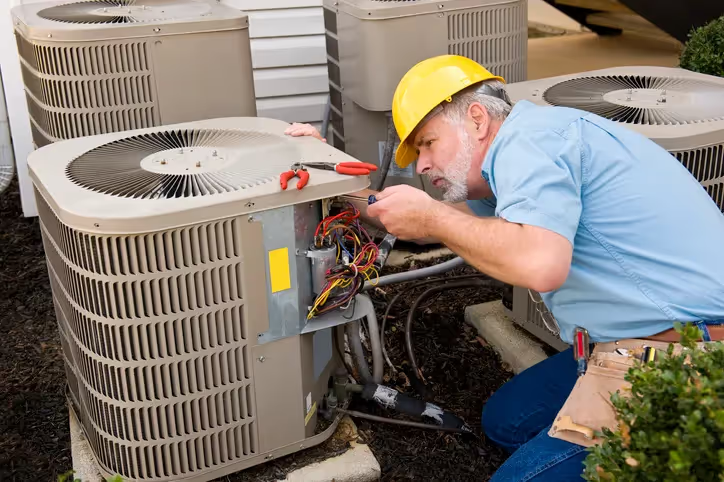
Effective service begins with a thorough evaluation of the system. Technicians examine the entire cooling loop to identify where the failure occurred. This process involves checking refrigerant levels, inspecting electrical connections, and ensuring the thermostat is communicating correctly with the condenser and air handler.
- Refrigerant Level Inspection: Low refrigerant often indicates a leak rather than simple evaporation. Technicians locate the source of the leak, repair the line, and recharge the system to manufacturer specifications to restore cooling power.
- Electrical Component Testing: Capacitors, contactors, and relays are high-wear items. A failing capacitor can prevent the compressor from starting, while a bad contactor can cause the unit to run continuously. Testing these prevents sudden shutdowns.
- Compressor Analysis: As the heart of the system, the compressor must maintain specific pressure levels. Technicians measure amperage and pressure to ensure the compressor is not overheating or struggling to pump refrigerant.
- Condensate Drain Cleaning: A clogged drain line can trigger safety switches that shut down the unit to prevent water damage. clearing these lines ensures proper moisture removal, which is critical during humid Indiana summers.
Preventative Maintenance and Tune-Ups
Routine maintenance is designed to catch small issues before they evolve into expensive repairs. A tune-up optimizes the system for peak performance, ensuring that the energy consumed translates directly into cooling power.
- Coil Cleaning: Both the evaporator and condenser coils must be free of dust and debris. Dirty coils inhibit heat transfer, forcing the system to run longer and harder to achieve the desired temperature.
- Blower Motor Inspection: The blower motor circulates air throughout the home. Technicians lubricate moving parts and check the belt tension (if applicable) to ensure consistent airflow and reduce noise.
- Thermostat Calibration: An uncalibrated thermostat can lead to short-cycling or temperature drifts. Verifying calibration ensures that the temperature set is the temperature achieved.
Understanding the AC Installation and Replacement Process
There comes a point where repair is no longer the most economical or effective option. Installing a new air conditioning system is a multi-step process that requires strict adherence to industry standards and local building codes. A proper installation ensures the new unit operates at its rated SEER (Seasonal Energy Efficiency Ratio) and provides reliable comfort for years.
System Sizing and Selection
Installing a unit that is too large or too small for the home is a common error that leads to inefficiency. An oversized unit will cool the space too quickly, shutting off before it has removed the necessary humidity. An undersized unit will run continuously without ever reaching the set temperature.
- Load Calculation: Technicians perform a Manual J load calculation. This takes into account the square footage, insulation levels, window orientation, and local climate data to determine the exact cooling capacity required.
- Efficiency Ratings: Homeowners choose between various SEER ratings. Higher SEER units cost more upfront but offer significant savings on monthly utility bills through advanced features like variable-speed compressors.
The Installation Workflow
Once the correct unit is selected, the physical installation follows a structured protocol to ensure safety and performance.
- Site Preparation: The area around the outdoor condenser is leveled and cleared. If the existing pad is cracked or sinking, it is replaced to provide a stable foundation.
- Ductwork Modification: In many cases, the transition capabilities of the existing ductwork must be adjusted to fit the new air handler. This ensures proper airflow and static pressure.
- Refrigerant Line Brazing: Technicians braze the copper refrigerant lines using nitrogen to prevent oxidation inside the pipes. This step is critical for preventing future blockages in the expansion valve.
- Vacuum and Charge: Before releasing the refrigerant, a vacuum pump removes all moisture and air from the lines. This prevents acid formation and ensures the system runs on pure refrigerant.
- Final Commissioning: The system is powered on, and technicians measure temperature splits (the difference between supply and return air) to verify the unit is cooling effectively.
Deciding Between Repair and Replacement
Determining whether to invest in another repair or opt for a full system replacement is a significant financial decision. This choice usually relies on a combination of the unit's age, repair frequency, and overall efficiency.
The 50% Rule
A general guideline used in the industry is the 50% rule. If the cost of the necessary repair approaches or exceeds 50% of the value of the system (or the cost of a new unit), replacement is generally the wiser financial move. Investing heavy capital into a degrading asset often yields diminishing returns.
Age of the Equipment
Air conditioning units typically last between 10 and 15 years.
- Under 10 Years: Unless the repair is catastrophic (like a blown compressor out of warranty), repair is usually the standard recommendation.
- Over 15 Years: Even if the unit is running, its efficiency has likely degraded significantly. Replacement offers immediate energy savings and reliability.
Refrigerant Type
Older units utilize R-22 (Freon), a refrigerant that has been phased out due to environmental regulations.
- Cost Implications: R-22 is becoming exponentially more expensive and difficult to source. If an older unit develops a refrigerant leak, the cost to recharge it often makes replacement the only logical option.
- New Standards: Modern systems use R-410A or newer refrigerants, which are more environmentally friendly and readily available.
Frequency of Breakdowns
If a homeowner finds themselves calling for service multiple times in a single season, the system has likely become unreliable. Chronic issues suggest that internal components are failing in succession. Replacing the unit eliminates the stress of unpredictable breakdowns and the cumulative cost of frequent service calls.
Navigating Local Climate and Requirements
Operating an air conditioning system in Highland, IN, presents specific challenges due to the regional climate. The operational window for AC units here is intense, with high demand placed on systems during the peak summer months.
Managing Humidity and Temperature Swings
The local climate is characterized by warm, humid summers. The humidity requires the AC to act as a dehumidifier as much as a cooler.
- Latent Load Removal: Systems must run long enough to pull moisture out of the air. If a system is short-cycling, the home will feel clammy and warm, regardless of the thermostat setting.
- Transitional Seasons: During spring and fall, temperatures can fluctuate wildly. Systems must be maintained to handle sudden startups after dormant periods. The shift from heating to cooling requires a system that is clean and chemically balanced to handle the load change.
Permits and Compliance
HVAC work is not unregulated. Proper adherence to local codes is mandatory for safety and future property sales.
- Permitting: Major installations and replacements typically require a permit from the local building department. This ensures the installation meets safety standards regarding electrical connections and structural integrity.
- Electrical Codes: Modern units often have different electrical requirements than older models. Ensuring the breaker box and disconnect switches meet current code requirements prevents fire hazards.
Utility Considerations
Local energy providers often incentivize high-efficiency upgrades.
- Rebate Programs: Homeowners upgrading to high-SEER systems may be eligible for rebates from utility companies. These programs are designed to reduce the overall load on the electrical grid during peak summer usage.
- Grid Reliability: A well-maintained unit draws less amperage, putting less strain on the home’s electrical system and the local grid, which is particularly important during heatwaves when brownouts are a risk.
Why Choose Specialized Cooling Experts
Selecting the right service provider is as important as the equipment itself. The difference between a quick fix and a long-term solution lies in the expertise of the technician. Mr.Freeze Heating & Cooling brings a level of attention to detail that ensures your home remains comfortable regardless of the outside temperature.
Technical Certification and Training
Modern HVAC systems are complex machines involving advanced electronics and variable-speed motors.
- Ongoing Education: Technicians undergo continuous training to stay current with the latest manufacturer technologies and diagnostic techniques.
- Proper Tooling: precise diagnosis requires specialized tools, such as digital manifolds and micron gauges. Specialized experts invest in the best equipment to ensure accuracy.
Truck Stock and Availability
The efficiency of a repair often depends on part availability.
- Well-Stocked Vehicles: Service vehicles should carry a wide inventory of universal parts, including capacitors, contactors, and motors. Routine maintenance increases the likelihood of a "one-trip" repair, restoring comfort immediately without waiting for parts orders.
- Emergency Responsiveness: Air conditioning failures rarely happen at convenient times. A dedicated service provider offers clear communication and rapid deployment protocols to address urgent cooling loss.
Warranty and Workmanship
Reputable providers stand behind their work.
- Labor Warranties: Beyond the manufacturer’s parts warranty, a service guarantee covers the labor involved in the repair or installation. This protects the homeowner from defects in workmanship.
- Licensed and Insured: Professional service includes liability insurance and worker’s compensation coverage. This protects the homeowner from liability in the event of an accident during the service call.
Call Us Now!
When the heat becomes unbearable, you need a solution that is fast, reliable, and technically sound. Do not compromise on your indoor comfort or the longevity of your cooling system.
Secure your comfort for the season—schedule your professional AC service or consultation today.