
Heat Pump Malfunctions During Highland’s Temperature Extremes?
Facing unexpected heat pump failures during Highland's bitter winters or humid summers can be stressful and disruptive to your daily life. At Mr.Freeze Heating & Cooling, we understand the urgency required to restore your comfort and offer prompt, reliable repairs to get your system running immediately. Contact us now to schedule a diagnostic visit or inquire about financing options for major repairs.
- Get same-day repairs from certified technicians who understand local climate demands.
- Benefit from 24/7 emergency service during extreme weather events when you need it most.
- Ensure your heat pump runs efficiently year-round with our comprehensive system restoration.
All services come with a robust warranty and guidance on possible Indiana utility rebates for qualifying repairs.
What You Can Expect From Our Repair Service
When your heat pump stops working effectively, you need a solution that goes beyond a quick patch. Our diagnostic process is designed to identify the root cause of the failure rather than just treating the symptom. Heat pumps are complex systems that handle both heating and cooling, meaning they endure twice the wear and tear of a standard furnace or air conditioner. Because of this, the components require a rigorous inspection to ensure they can handle the workload required for a home in Highland.
Upon arrival, our technicians perform a complete system audit. We utilize advanced diagnostic tools to measure refrigerant levels, airflow static pressure, and electrical consumption. This allows us to pinpoint issues that may not be visible to the naked eye, such as a micro-leak in the refrigerant line or a failing compressor capacitor. We focus on restoring the system to manufacturer specifications, ensuring that the unit not only runs but runs at the efficiency level you paid for when it was installed.
You will receive a clear, written explanation of the issue. We do not deal in vague estimates or guesswork. If a part needs to be replaced, we explain why it failed and if there are underlying issues that caused that failure. For example, a burnt-out compressor is often a symptom of another problem, such as restricted airflow or incorrect refrigerant charge. By addressing the primary cause, we prevent the issue from recurring weeks or months later.
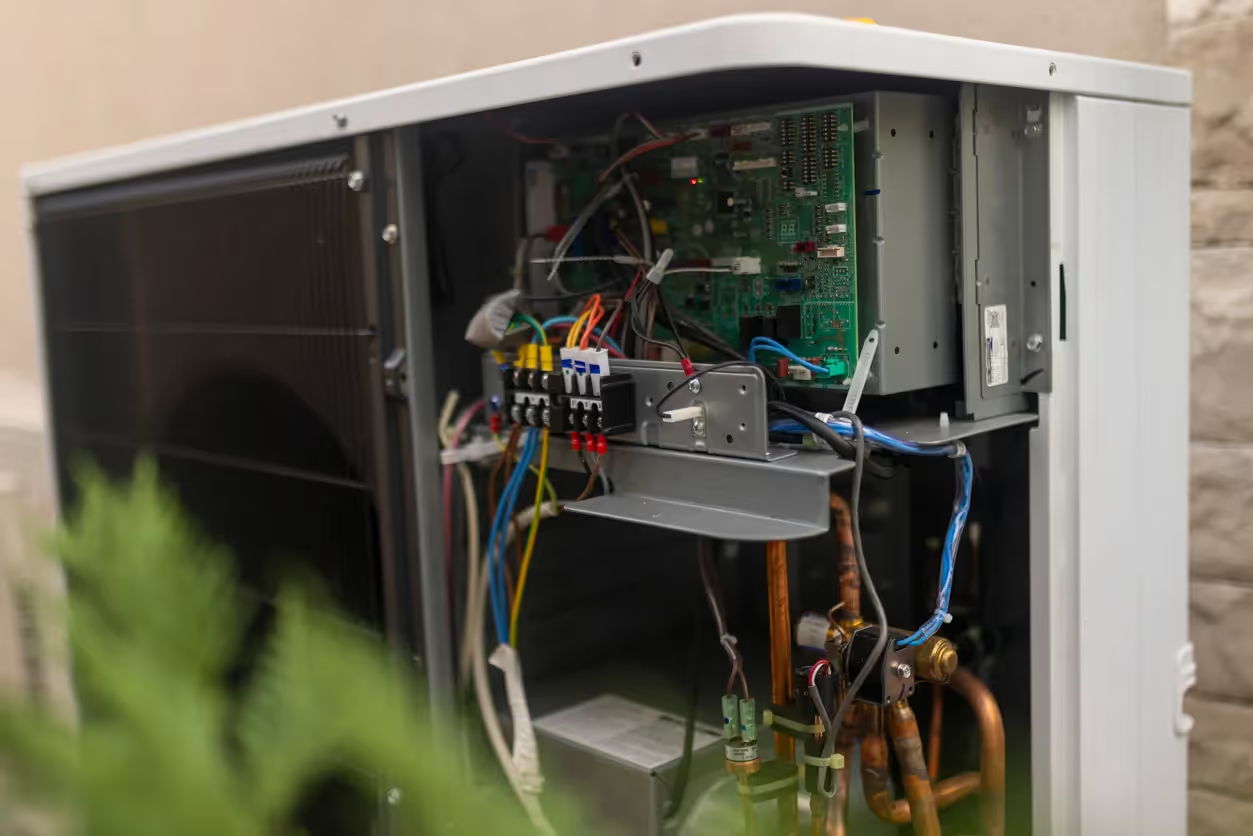
Comprehensive Component Inspection
Our repair scope covers every critical component of your heat pump system. We ensure that no stone is left unturned during the diagnostic phase.
- Thermostat Communication: We verify that your thermostat is correctly sending signals to the air handler and the outdoor unit. In many cases, wiring degradation or calibration errors cause the system to behave erratically.
- Refrigerant Charge: Proper refrigerant levels are vital for heat transfer. We check for leaks and recharge the system to the exact factory specifications to ensure optimal heating and cooling capacity.
- Reversing Valve Operation: This component is unique to heat pumps and is responsible for switching between heating and cooling modes. A stuck valve is a common failure point that we test immediately.
- Electrical Connections: Loose or corroded wires can cause intermittent failures or dangerous shorts. We tighten and clean all connections and measure voltage and amperage to ensure safety.
- Blower Motor and Fan: We assess the condition of the indoor blower and outdoor fan motor. If these are struggling, the system cannot move air effectively, leading to frozen coils or overheating.
- Defrost Board Logic: In the winter, your heat pump must defrost its outdoor coils to prevent ice buildup. We test the sensors and control board to ensure this cycle activates correctly.
The Heat Pump Repair Process
Restoring your home's comfort involves a systematic approach. We do not skip steps, as doing so puts the longevity of your equipment at risk. Our technicians follow a strict protocol from the moment they arrive at your property.
- Initial Assessment and Safety Check: The technician begins by turning off power to the unit to safely inspect internal components. We listen for unusual noises, check for odors indicating burning wires, and visually inspect the outdoor unit for physical damage or debris blockage.
- Diagnostic Testing: Using specialized gauges and multimeters, we test the system's vital signs. We measure the temperature drop across the indoor coil and the pressure of the refrigerant. We also test the capacitance of the start and run capacitors, which are critical for starting the compressor and fan motors.
- Problem Identification and Quote: Once the issue is isolated, we provide a flat-rate quote for the repair. You will know the exact cost before any work begins. We explain the necessary parts and the labor involved so you can make an informed decision.
- Execution of Repairs: With your approval, we proceed with the repair. Our trucks are stocked with common parts, allowing us to complete most repairs on the spot. If a specialized part is needed, we leverage our local supply network to source it as quickly as possible.
- System Verification and Testing: After the repair is complete, we do not just leave. We cycle the system through both heating and cooling modes (weather permitting) to verify the repair holds. We check the airflow and measure the temperature output to confirm the system is conditioning the air effectively.
- Site Cleanup: We treat your home with respect. Any debris, old parts, or packaging materials are removed from the site. We leave the workspace as clean as we found it.
Recognizing When Repair Is Required
Homeowners often ignore minor signs of distress in their HVAC equipment, hoping the issue will resolve itself. With heat pumps, delaying service usually leads to more extensive damage. Recognizing the early warning signs can save you from a complete system breakdown during the peak of winter or summer.
Diminished Airflow or Temperature Issues
If the air coming from your vents feels lukewarm when it should be hot, or room temperature when it should be cool, the heat pump is not completing the heat transfer process. This is often due to a refrigerant leak or a compressor that is losing compression. In Highland, where humidity can be high, a system that isn't cooling effectively will leave your home feeling sticky and uncomfortable, even if the thermostat reads the correct temperature.
Strange Noises
Heat pumps function relatively quietly. If you hear grinding, screeching, or rattling noises, something is wrong. Grinding often indicates a bearing failure in a motor. Screeching can signal a loose belt or high refrigerant pressure. A distinct "whooshing" sound that lasts too long may indicate a problem with the defrost valve.
Short Cycling
If your unit turns on and off frequently without reaching the set temperature, it is short cycling. This puts immense stress on the compressor and drives up your energy bills. It can be caused by a dirty air filter, a malfunctioning thermostat, or an oversized unit, but frequently it indicates a safety switch is tripping to protect the unit from damage.
Ice Buildup
In the winter, a small amount of frost on the outdoor unit is normal. However, if the entire unit is encased in a block of ice, the defrost cycle has failed. This prevents the unit from pulling heat from the outside air. In the summer, ice on the indoor coil indicates low refrigerant or low airflow, both of which require immediate professional attention.
Auxiliary Heat Running Constantly
Heat pumps have a backup electric resistance heater (auxiliary heat) for extremely cold days. If you notice the "AUX" light on your thermostat stays on even when it is not bitterly cold outside, your primary heat pump has failed, and your system is running on the backup strips. This is the most expensive way to heat your home and indicates the heat pump needs immediate repair.
Decision Guide: Repair vs. Replacement
Deciding whether to sink money into a repair or invest in a new system is a major financial decision. We provide honest assessments based on the condition of your current unit. There are specific metrics we use to help you determine the most cost-effective path forward.
- The 50% Rule: If the cost of the repair approaches or exceeds 50% of the value of a new system, replacement is generally the better financial move. Investing half the cost of a new unit into an old one often results in diminishing returns.
- System Age: Heat pumps generally last between 10 and 15 years. If your system is over 12 years old and facing a major repair like a compressor replacement, the technology inside is likely obsolete. Newer models offer significantly higher efficiency ratings (SEER2 and HSPF2), which can lower monthly utility bills enough to offset the installation cost over time.
- Frequency of Breakdowns: If you have required repairs more than once in the last two years, the system is becoming unreliable. Frequent breakdowns indicate that multiple components are reaching the end of their lifecycle simultaneously.
- Efficiency Drop: Older heat pumps lose efficiency as coils degrade and compressors wear. If you have noticed a steady increase in your electric bills despite normal usage, the system is no longer converting energy to heat effectively. Replacing it with a modern, high-efficiency unit can resolve this immediately.
- Refrigerant Type: Older systems utilize R-22 refrigerant (Freon), which has been phased out. If your older unit has a leak, sourcing R-22 is incredibly expensive. Upgrading to a system that uses R-410A or newer eco-friendly refrigerants is a smarter long-term strategy.
Operating Heat Pumps in Local Conditions
Operating a heat pump in this region presents specific challenges due to the wide variance in weather. Highland experiences four distinct seasons, requiring a system that is versatile and robust. The transition from freezing winters to hot, humid summers means your heat pump never truly gets an "off" season.
Dealing with Humidity
During the summer, the primary job of your heat pump is not just cooling the air, but removing moisture. High humidity levels common in the Midwest can make 75 degrees feel like 85 degrees. If your heat pump is short-cycling or low on refrigerant, it will cool the air quickly but fail to dehumidify it, leading to a clammy indoor environment. Our repairs ensure the dehumidification cycle is functioning correctly.
The Challenge of Freezing Temperatures
While modern heat pumps are efficient at low temperatures, they do work harder as the thermometer drops. When the temperature dips significantly below freezing, the system relies on the defrost cycle and auxiliary heat. Ensuring the outdoor sensors are calibrated correctly is essential for preventing the outdoor unit from turning into a block of ice during a snowstorm. We specifically check the drainage of the outdoor unit to ensure melting snow and ice can flow away freely, preventing refreezing that damages the coil.
Electrical Infrastructure
Heat pumps, particularly the backup heating elements, draw a significant amount of electrical load. We verify that your home’s electrical panel and the disconnect box near the unit are in good condition. Loose connections or undersized breakers can cause fire hazards or nuisance tripping during peak load times, such as the coldest night of the year.
Permits and Utility Requirements
Repairs involving refrigerant handling require EPA-certified technicians. Furthermore, if a repair turns into a system replacement, local building codes in Lake County dictate specific clearance and electrical requirements. We adhere to all local codes and regulations, ensuring that any work performed on your property is safe, legal, and eligible for any available manufacturer warranties or utility rebates.
Why Technical Expertise Matters
In an industry crowded with generalists, Mr.Freeze Heating & Cooling focuses on the technical precision required for modern HVAC systems. Heat pumps are far more sophisticated than standard AC units. They require a deep understanding of thermodynamics and electrical controls. A technician who only understands basic air conditioning will miss the nuances of a heat pump's reversing cycle or defrost logic.
We invest heavily in training and tooling. Our trucks are equipped with the latest diagnostic technology, allowing us to see inside the system's operation in ways that were impossible a decade ago. This commitment to technical excellence means we solve problems faster and more accurately. We do not learn on your dime; we arrive ready to fix the problem.
When you choose us, you are choosing a partner who values your comfort and your time. We provide transparent communication throughout the process, from the initial phone call to the final handshake. You will never be left wondering when a technician will arrive or how much the bill will be.
Call Us Now!
Don't let a malfunctioning heat pump compromise your comfort or safety. Whether you are facing a complete system shutdown or inefficient performance, professional help is available.
Restore your home's comfort today. Contact us to schedule your heat pump repair immediately.