
Suspect Poor Indoor Air Quality? Get Tested Fast
Are you concerned about the air quality in your home or office? Unexplained allergies, lingering odors, or excessive dust in your Highland, IN property often point to hidden airborne contaminants that require professional assessment. Fast, reliable air quality testing can identify harmful pollutants and provide peace of mind, so contact us today to schedule your assessment or inquire about our available financing options.
When you cannot see what you are breathing, you cannot fix the problem. Our testing services are designed to provide data-driven insights so you can make informed decisions about your indoor environment.
- Accurate, comprehensive air quality reports delivered swiftly.
- Services performed by certified and experienced technicians.
- Guidance and solutions for improving your indoor air quality.
We ensure every test is scheduled with flexible appointments to suit your timetable, minimizing disruption to your day.
Why Air Quality Testing is Essential for Your Health
Breathing is an automatic process, but the quality of the air you breathe should never be taken for granted. In tightly sealed modern homes, pollutants often become trapped indoors, creating concentrations of contaminants that are significantly higher than outdoor air levels. Without professional testing, these invisible threats can circulate through your HVAC system indefinitely, aggravating respiratory conditions and contributing to long-term health issues.
The primary reason to invest in professional testing is to identify specific pathogens and chemical compounds that standard home kits miss. Volatile Organic Compounds (VOCs), which off-gas from furniture, paint, and cleaning supplies, can accumulate to dangerous levels. Biological pollutants, such as mold spores, bacteria, and dust mites, thrive in environments where humidity levels fluctuate. In Highland, where we experience distinct seasonal shifts, the risk of indoor pollution changes throughout the year. Winter necessitates closing windows and running heating systems, which recirculates stale air, while humid summers create the perfect breeding ground for biological growth.
Testing provides a baseline. It moves you from guessing about the cause of headaches, fatigue, or congestion to knowing exactly what is in your air. This is not just about comfort; it is about safety. Identifying elevated levels of carbon monoxide, radon, or formaldehyde requires specialized equipment and trained interpretation. By pinpointing the exact source and type of contamination, you can implement targeted strategies to eliminate the risk rather than wasting money on generic air purifiers that may not address the root cause.
What's Included in Your Air Quality Test?
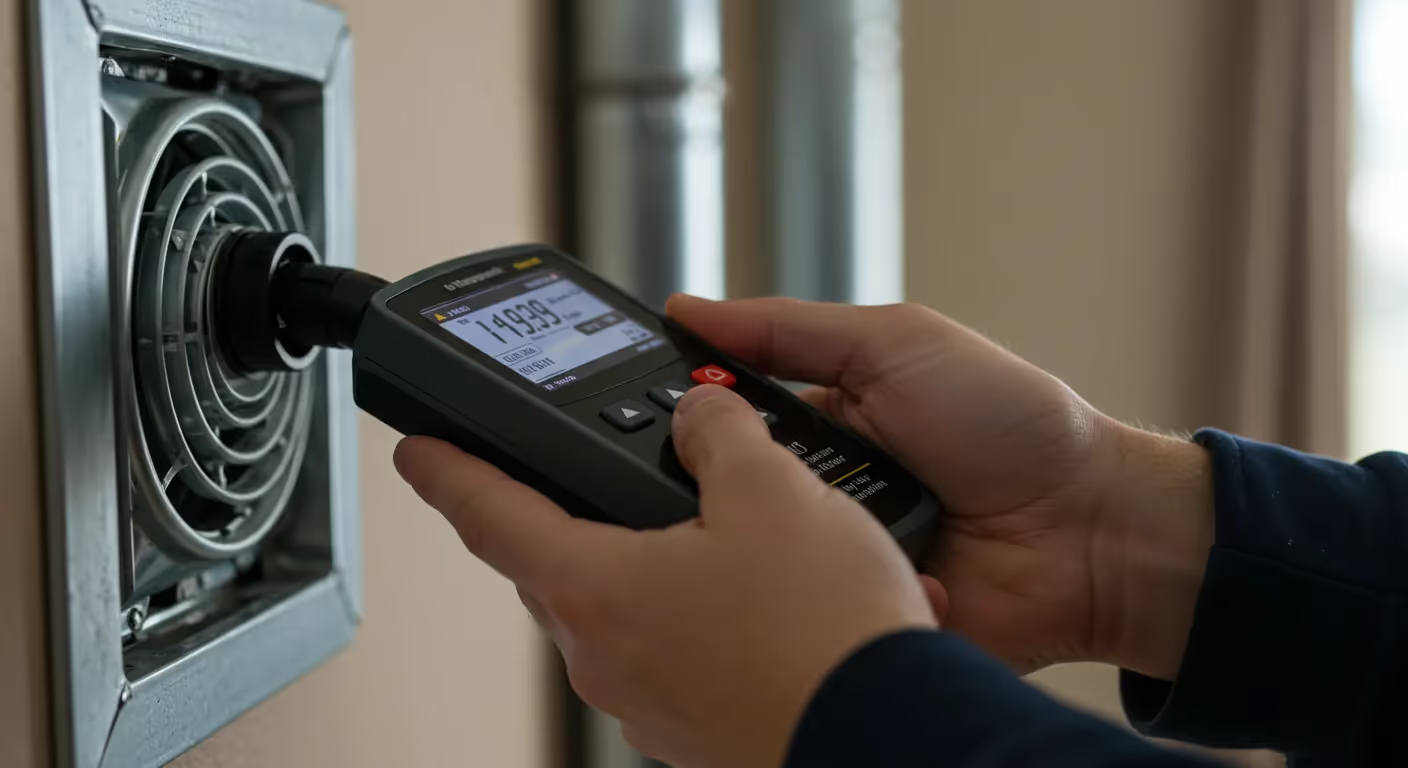
When you commission a professional air quality test, you are paying for comprehensive data collection and analysis. Unlike over-the-counter monitors that provide a simple pass/fail reading, our service delivers a granular breakdown of the specific particulates and gases present in your environment. Mr.Freeze Heating & Cooling ensures that every test covers the critical metrics required to assess the health of your home’s atmosphere.
Your assessment includes a detailed analysis of the following elements:
- Particulate Matter Analysis (PM2.5 and PM10): We measure microscopic particles that can penetrate deep into the lungs. This includes dust, smoke, soot, and liquid droplets suspended in the air.
- Volatile Organic Compounds (VOCs): We test for chemical vapors emitted by household products and building materials, which are common drivers of "Sick Building Syndrome."
- Biological Growth Assessment: The testing protocol looks for the presence of mold spores and bacteria that may be circulating through your ductwork or growing in hidden damp areas.
- Humidity and Temperature Mapping: We analyze the relative humidity levels in different zones of the property to identify areas that may encourage mold growth or cause structural damage.
- Ventilation Effectiveness: The test evaluates how effectively your current HVAC system exchanges stale indoor air with fresh outdoor air.
- Carbon Dioxide and Carbon Monoxide Levels: We monitor combustion byproducts to ensure your gas appliances are venting correctly and not leaking poisonous gases into living spaces.
Following the physical testing, you receive a full report. This document interprets the raw data, comparing your home’s levels against EPA standards and industry benchmarks. It does not just list problems; it highlights specific areas of concern and prioritizes them based on severity. This allows you to understand exactly what is in your air and helps structure a plan for remediation if necessary.
Our Air Quality Testing Process: What to Expect
We have streamlined our testing procedures to be thorough yet unobtrusive. We understand that you need answers quickly, but accuracy is our priority. The process is designed to capture a representative sample of your indoor air under normal living conditions. This ensures that the results reflect the air you breathe every day, rather than an artificial snapshot.
Initial Consultation and Visual Inspection:
First, the technician arrives to discuss your specific concerns, such as allergy symptoms or specific odors.
The expert conducts a visual walkthrough of the property, checking for visible signs of moisture, mold, or ventilation blockages in Highland homes.
Potential pollution sources, such as attached garages, basements, or recently renovated rooms, are noted for targeted testing.
Equipment Setup and Data Collection:
Next, calibrated air sampling equipment is strategically placed in high-traffic zones and areas of concern.
The devices run for a set duration to collect air samples, utilizing pumps and impaction plates to capture particulates and spores.
Real-time monitors are used to log fluctuations in humidity, temperature, and CO2 levels over the testing period.
Laboratory Analysis and Reporting:
Once the onsite collection is complete, physical samples are sent to an accredited laboratory for microscopic analysis.
The data is compiled into a comprehensive report that translates technical metrics into understandable language.
Finally, the technician reviews the results with you, explaining any anomalies and answering questions about the findings.
This structured approach ensures that no variable is overlooked. From the moment the technician steps through your door to the final delivery of the report, the focus remains on gathering actionable data.
Identifying Critical Air Quality Issues and Remedies
Once the results are in, the next step is determining the appropriate course of action. Not every issue requires a complete HVAC overhaul. In many cases, specific problems have specific, cost-effective solutions. The goal is to match the remedy to the diagnosis. If your test results indicate high levels of particulate matter, the solution differs entirely from a home suffering from high VOCs or humidity issues.
When the report shows elevated biological contaminants or mold spores, immediate action is usually necessary to prevent structural damage and health risks. This often involves source control, such as repairing leaks, followed by the installation of UV germicidal lights within the HVAC system to neutralize airborne pathogens.
- High Particulate Matter: If the main issue is dust, dander, and pollen, the remedy typically involves upgrading your filtration media. Moving from a standard 1-inch filter to a 4-inch media cabinet or installing a HEPA whole-home filtration system can drastically reduce these physical irritants.
- Excessive Humidity: High moisture levels in Highland summers often lead to clammy air and mold growth. If the test reveals sustained humidity above 50%, a whole-home dehumidifier is the correct intervention to manage moisture independently of the cooling cycle.
- Chemical Vapors and Odors: High VOC readings suggest that your home is retaining chemicals. In this scenario, filtration is less effective than ventilation. An Energy Recovery Ventilator (ERV) or Heat Recovery Ventilator (HRV) helps swap stale, chemical-laden indoor air with fresh outdoor air without losing your heating or cooling energy.
- Dryness and Static: In winter, low humidity can crack wood furniture and dry out sinus passages. If the test shows humidity dropping below 30%, a whole-home humidifier is recommended to introduce necessary moisture back into the airflow.
Understanding the distinction between these issues is crucial. Buying an air purifier will not fix a humidity problem, and a dehumidifier will not remove dust. The testing data allows you to invest your money exactly where it is needed to solve the specific deficiency in your home’s atmosphere.
Local Air Quality Guidelines and Compliance in Indiana
Environmental factors in Indiana play a significant role in how indoor air quality is managed. The local climate creates specific challenges that homeowners must navigate to maintain a healthy indoor environment. In our region, we face a "dual-threat" climate: humid, hot summers and freezing, snowy winters. Each season places different pressures on your home’s building envelope and HVAC system.
During the winter months, homes in Highland are sealed tight to conserve heat. While this is excellent for energy efficiency, it traps pollutants inside. The lack of natural ventilation means that anything released into the air—from cooking fumes to pet dander—stays there. Furthermore, the operation of gas furnaces entails a risk of back-drafting if the home is too negatively pressurized. Testing ensures that your combustion appliances are venting safely and that the carbon monoxide levels remain at zero.
In the summer, the focus shifts to moisture control. Indiana summers can be incredibly humid. If your air conditioning system is oversized or short-cycling, it may cool the air quickly but fail to remove adequate moisture. This results in high indoor relative humidity, which promotes the growth of dust mites and mold. Local guidelines often recommend maintaining indoor humidity between 30% and 50% year-round to inhibit biological growth.
Additionally, we monitor for regional specifics such as radon gas, which is prevalent in many parts of Indiana due to soil composition. While standard HVAC maintenance covers the mechanical operation of your system, air quality testing ensures compliance with broader health standards recommended by the EPA and local housing authorities. Understanding these local variables ensures that the solutions provided are not just generic fixes, but are tailored to the specific environmental load of the region.
Certified Quality: Our Commitment to Excellence and Safety
Your family’s health depends on the accuracy of our findings. That is why we do not rely on guesswork or high-pressure sales tactics. We rely on science. Our commitment to excellence means using industrial-grade equipment that is regularly calibrated to ensure precision. We believe that data should drive decisions, not fear.
We employ technicians who are trained in the latest Indoor Air Quality (IAQ) protocols. This includes understanding the physics of airflow, the biology of mold growth, and the chemistry of household pollutants. When we enter your home, we treat it with respect, ensuring that our testing process is clean, quiet, and efficient. We provide you with the objective truth about your indoor environment, empowering you to make the best choices for your household.
Schedule Your Air Quality Test Today
Whether you are looking to protect a newborn, manage severe asthma, or simply ensure your home is as healthy as possible, professional testing is the first step. Don't let invisible pollutants compromise your comfort or safety.
Take control of your indoor environment today. Contact Mr.Freeze Heating & Cooling to schedule your comprehensive air quality test and breathe easier tomorrow.