
Facing Unexpected Geothermal System Breakdowns?
When your geothermal system fails, it disrupts your home comfort and can lead to high emergency repair costs, especially during the extreme weather shifts common in Indiana. Residents in St. John and Portage often face these issues right when heating or cooling demands are at their peak. Mr. Freeze Heating & Cooling understands the urgency of these situations and offers rapid, reliable solutions to restore your ground-source heat pump functionality. Contact us immediately to schedule a diagnostic visit or inquire about our flexible financing options.
- Same-day service availability to minimize downtime and discomfort.
- Transparent pricing and available financing to ease unexpected costs.
- Expert installations ensuring maximized efficiency and durability.
All services are fully licensed with extended warranties and attractive financing options to ensure your investment is protected.
Immediate Relief for Geothermal System Failures
Geothermal heat pumps are robust, but when they malfunction, the loss of efficiency is immediate and noticeable. Unlike standard HVAC units, a geothermal breakdown often involves complex interactions between the ground loop, the flow center, and the heat pump unit itself. Homeowners in Portage and St. John require technicians who understand the specific hydraulic and thermodynamic principles driving these systems.
When a system goes down, troubleshooting must go beyond swapping out a thermostat. The issue often lies in loop pressure drops, circulation pump failures, or heat exchanger fouling. Our approach focuses on identifying the root cause instantly to prevent cascading failures. Whether the system is short-cycling during a humid summer afternoon or failing to extract sufficient heat during a sub-freezing winter night, the goal is restoration of the heat exchange process.
Common indicators that you need immediate professional intervention include:
- Rapid fluctuation in loop pressure: If the pressure gauge on your flow center drops significantly, it may indicate a leak in the ground loop or a need for repressurization.
- Loss of heating capacity: If the air coming from vents is tepid while the auxiliary heat is running constantly, the heat pump is not extracting energy from the ground efficiently.
- Noisy operation: Grinding or rattling sounds usually point to compressor strain or circulation pump issues that require immediate attention to prevent total seizure.
- High energy bills: One of the main benefits of geothermal is efficiency; a sudden spike in utility costs suggests the system is relying entirely on backup resistance heating.
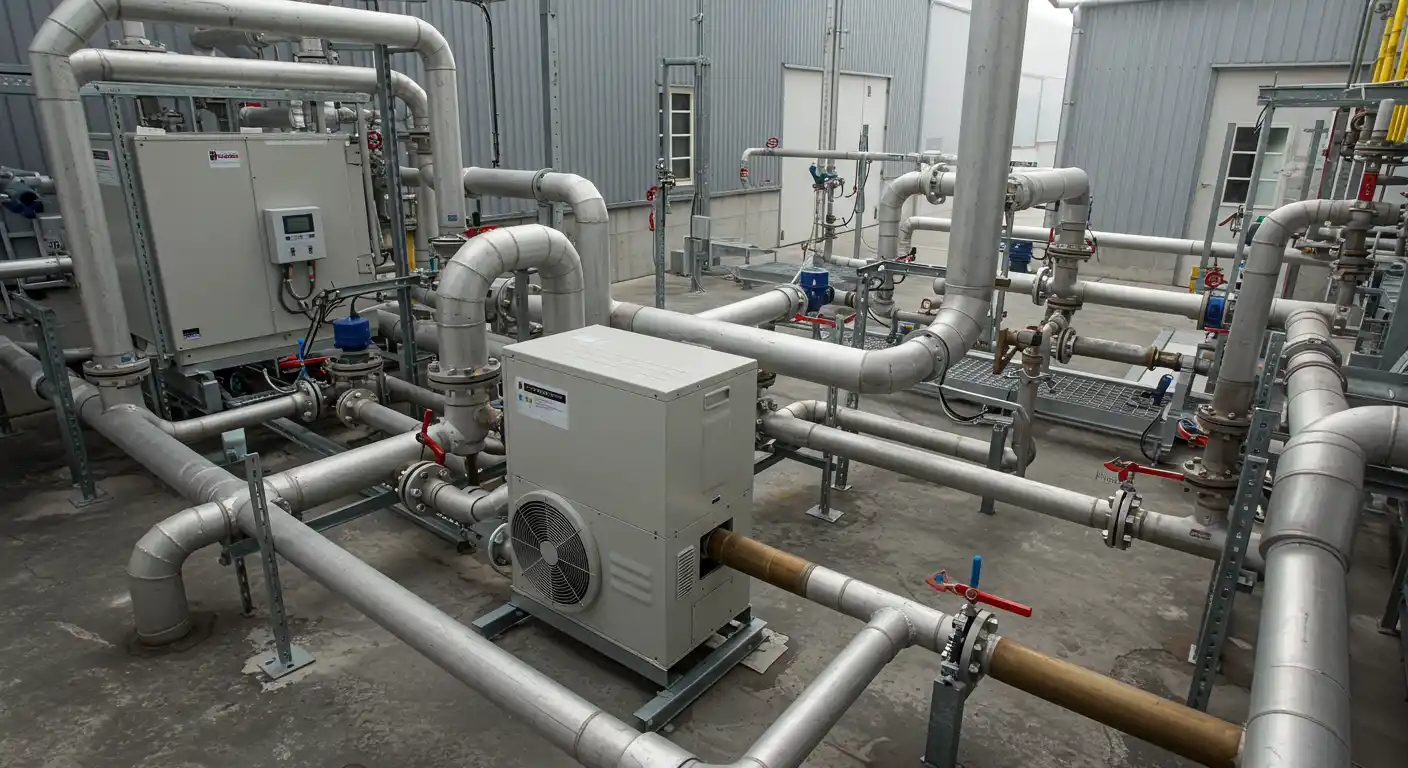
Comprehensive Geothermal Services: What We Offer
We provide a full spectrum of geothermal services designed to address every stage of your system’s lifecycle. From diagnosing hydraulic issues to executing full-scale replacements, the focus remains on technical precision.
Emergency Geothermal Repair
Breakdowns rarely happen at convenient times. Our repair protocols involve a thorough analysis of the desuperheater, coaxial heat exchangers, and electrical components. Technicians arrive equipped to handle refrigerant leaks, replace faulty reversing valves, and flush flow centers. The objective is to restore the Coefficient of Performance (COP) to manufacturer specifications so your system runs as efficiently as intended.
New System Design and Installation
Installing a geothermal system is a major construction project that requires geological understanding and precise load calculations. We handle the entire scope, from sizing the heat pump to designing the loop field.
- Vertical Loops: Ideal for properties with limited land area, involving deep boreholes to access stable ground temperatures.
- Horizontal Loops: A cost-effective solution for properties with extensive acreage, where trenches are dug to lay the piping.
- Pond/Lake Loops: If a water source is available, this method utilizes the thermal properties of water for highly efficient heat exchange.
Preventative Maintenance and Loop Flushing
Over time, the antifreeze solution (typically propylene glycol or methanol) in your ground loop can degrade, or air bubbles can become trapped, reducing heat transfer. Maintenance services include checking the pH of the heat transfer fluid, flushing the loop to remove air pockets, and verifying that the flow rate meets the Gallons Per Minute (GPM) requirement for your specific unit size.
Your Step-by-Step Guide to Geothermal Installation
Transitioning to a geothermal system or replacing an aging unit involves a systematic process. This is not a simple "drop-in" appliance installation; it is an integration of your home with the local geology. We follow a rigid protocol to ensure the system performs efficiently for decades.
- Site Analysis and Load Calculation: First, technicians assess your property’s soil conductivity, available land space, and the heating/cooling load requirements of the structure. This data dictates whether a vertical or horizontal loop is necessary.
- Loop Field Design: Next, the engineering team designs the loop field, calculating the total length of high-density polyethylene (HDPE) pipe needed to support the heat pump’s capacity.
- Excavation and Boring: Specialized drilling rigs or excavators are brought in to create the boreholes or trenches. This is the most labor-intensive phase and is coordinated to minimize disruption to the landscape.
- Loop Installation and Grouting: The pipe is inserted into the ground. For vertical loops, the boreholes are sealed with thermally enhanced grout to ensure efficient heat transfer between the soil and the pipe.
- Manifold and Flow Center Connection: The exterior pipes are brought to a central manifold and then routed through the foundation to the interior flow center.
- Heat Pump Installation: The indoor unit is installed and connected to the ductwork, the electrical panel, and the flow center. Mr. Freeze Heating & Cooling technicians ensure all connections are leak-free and insulated.
- System Flushing and Charging: The loops are flushed to remove debris and air, then charged with the appropriate antifreeze solution and pressurized.
- Start-Up and Commissioning: Finally, the system is powered on. Technicians measure water temperatures entering and leaving the unit, air temperature differentials, and refrigerant pressures to verify the system is operating at peak efficiency.
Deciding Between Geothermal Repair or Replacement
Geothermal systems are long-term investments. The indoor heat pump typically lasts 20 to 25 years, while the underground loop field can last 50 years or more. However, components do fail, and homeowners must decide whether to invest in repairs or upgrade to a modern unit.
When to Repair
If the system is under 15 years old and the ground loop is intact, repair is usually the most logical path. Issues like a failed capacitor, a burnt-out blower motor, or a minor refrigerant leak are serviceable. If the cost of the repair is less than 50% of the value of a new unit, and the equipment has been well-maintained, keeping the existing unit running is cost-effective.
When to Replace
Replacement becomes the smarter financial move when major components fail on an aging unit.
- Compressor Failure: If the compressor fails on a unit older than 15 years, the cost of replacement parts and labor often approaches the cost of a new, more efficient unit.
- Loop Field Issues: If the original loop field was undersized or installed incorrectly, simply replacing the heat pump won't solve the efficiency problem. In some cases, the loop field needs modification or expansion during a system replacement.
- Efficiency Gains: Modern geothermal units offer higher Energy Efficiency Ratios (EER) and Coefficient of Performance (COP) ratings. Upgrading can significantly lower monthly utility bills, offsetting the installation cost over time.
- Incentives: Federal tax credits and local utility rebates often apply only to the installation of new, Energy Star-rated equipment. These financial incentives can make full replacement more attractive than sinking money into an old system.
Local Compliance and Seasonal Considerations for Geothermal Systems
Operating in St. John and Portage, IN requires adherence to specific local codes and an understanding of the regional climate. The freeze line in Northern Indiana dictates how deep horizontal loops must be buried to prevent the fluid from freezing or the ground from heaving.
Permitting and Regulations
Geothermal installations involve ground excavation, which triggers the need for specific permits.
- Excavation Permits: Local municipalities require approval for digging trenches or drilling boreholes to ensure no damage is done to public infrastructure.
- Utility Marking: Before any ground is broken, 811 must be called to locate underground gas, electric, and water lines. This is a critical safety step managed during the project planning phase.
- Environmental Protections: Vertical loop wells must be grouted correctly to prevent groundwater contamination. We adhere strictly to Indiana Department of Natural Resources (DNR) and local county health department regulations regarding aquifer protection.
Seasonal Performance
The climate in this region shifts dramatically.
- Winter Operation: During sub-zero cold snaps, the system relies on the thermal energy stored deep underground. If the loop field is undersized, the loop temperature can drop too low, causing the system to lock out or rely heavily on expensive auxiliary electric heat. Accurate sizing is critical for Indiana winters.
- Summer Dehumidification: Summers in Portage can be humid. A properly sized two-stage or variable-speed geothermal unit runs for longer cycles at lower speeds, which provides superior dehumidification compared to standard air conditioners that blast cold air and shut off quickly.
Why Choose Us? Our Commitment to Excellence
Selecting a contractor for geothermal work is different from hiring a standard HVAC tech. The complexity of ground loops and hydronics requires specialized training and certification.
- IGSHPA Accredited Procedures: We follow the installation standards set by the International Ground Source Heat Pump Association to ensure loop integrity and system longevity.
- Specialized Tooling: From butt-fusion tools for joining HDPE pipes to high-volume purge carts for flushing loops, we own and maintain the specific equipment necessary for geothermal work.
- Warranty Support: We navigate the warranty registration process for you, ensuring that both the equipment and the labor are covered according to manufacturer's terms.
- Engineering Focus: Every installation is backed by Manual J (load calculation) and Manual S (equipment selection) protocols to ensure the system matches the specific thermal needs of your home.
We focus on the technical details so you can focus on comfort. Whether it is a routine pressure check or a complete system retrofit, the work is performed with precision and respect for your property. Get the efficiency and reliability you expect from your investment. Secure your appointment now to ensure your geothermal system is ready for the season ahead.
Restore Your Comfort Now
If your geothermal system isn't working as efficiently as it should, or if you're facing a sudden breakdown, don't wait for the problem to escalate. Mr. Freeze Heating & Cooling provides rapid, reliable geothermal services, ensuring that your system runs at peak performance year-round. Whether you need urgent repairs, a full system upgrade, or preventative maintenance, we have you covered. Our experts will diagnose the issue quickly and restore your comfort without delay. Call us to get started!