
Efficient Heating & Cooling Solutions for Your Northern Indiana Home
Struggling with inconsistent temperatures and high energy bills is a common frustration for homeowners in St. John and Portage, especially given the distinct seasonal swings we experience. Discover the benefits of ductless installation for seamless, year-round comfort and contact us today to schedule your assessment or discuss financing options.
When traditional HVAC systems fail to reach every corner of your home, or when renovations leave you without necessary ductwork, a ductless mini-split system offers a precise solution.
- Reduce your energy consumption with high-efficiency units designed to minimize waste.
- Experience customized comfort in every room with multi-zone capabilities that allow individual thermostat control.
- Enjoy quiet operation and minimal installation disruption compared to traditional central air retrofits.
Backed by full warranties, flexible financing options, and all necessary permits taken care of for you, this upgrade ensures long-term peace of mind.
What You Receive With a Professional Ductless Installation
Choosing a ductless mini-split system changes the way you manage your home’s climate. Unlike window units that are noisy and inefficient, or central systems that lose energy through leaky ductwork, a ductless setup provides direct air delivery. Mr. Freeze Heating & Cooling ensures that every component installed is selected based on the specific load calculation of your living space.
The scope of a standard installation includes the mounting of indoor air-handling units and the placement of the outdoor compressor/condenser. These systems are heat pumps, meaning they possess the ability to reverse their operation. In the humid summers of Portage, they extract heat and humidity from your home. During the freezing winters of Northern Indiana, they extract heat from the outside air—even at very low temperatures—and pump it indoors.
The hardware package typically includes:
- Indoor Air Handlers: These are sleek, wall-mounted, floor-mounted, or ceiling-recessed units that circulate air within a specific zone.
- Outdoor Condenser: A compact unit placed outside the home that connects to indoor units via refrigerant lines.
- Line Sets and Cabling: Insulated copper tubing that carries refrigerant and power between the indoor and outdoor components.
- Control Interface: Handheld remotes or wall-mounted thermostats that allow for programmable schedules and specific temperature settings for each zone.
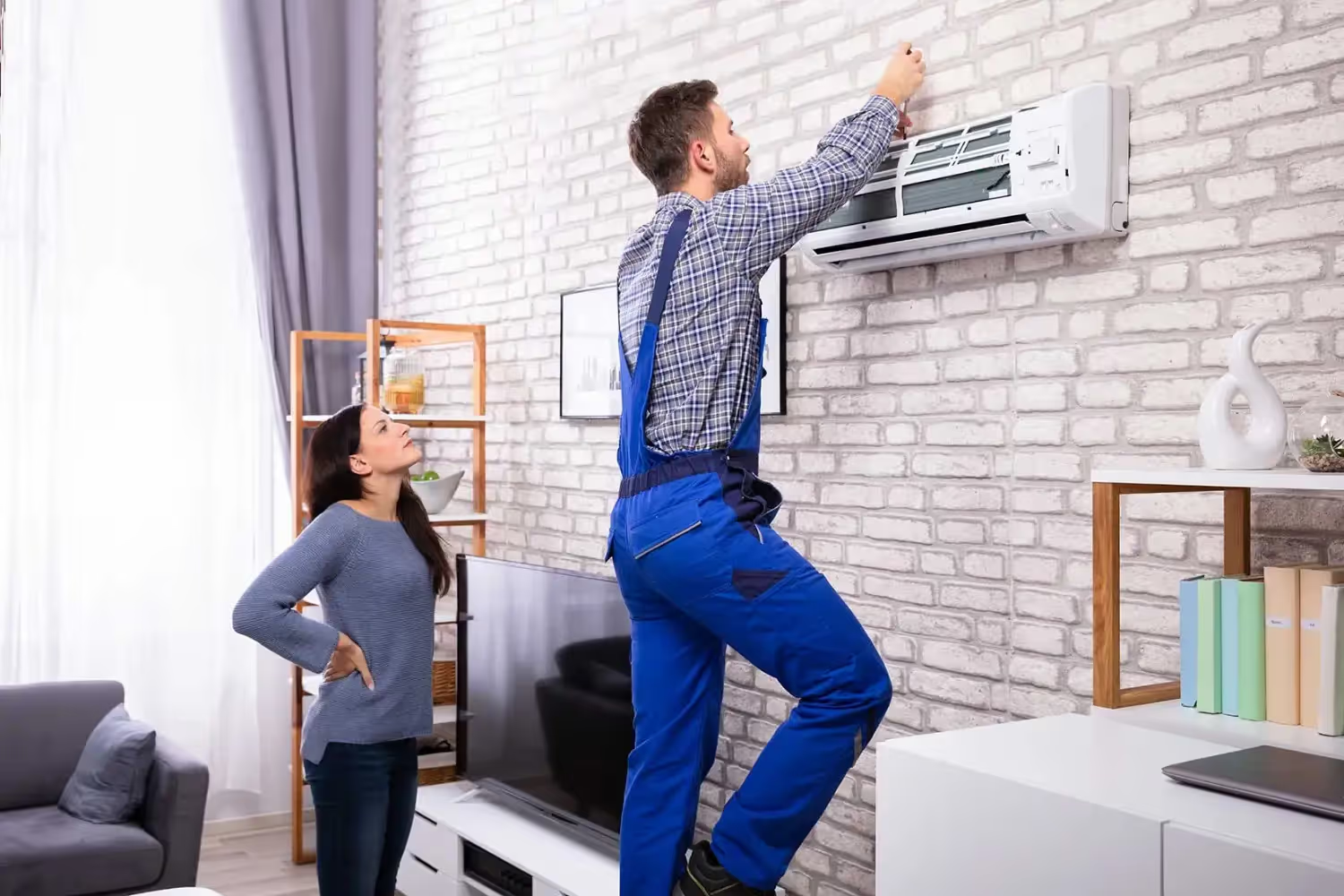
Modern ductless systems are equipped with inverter technology. This allows the compressor to speed up or slow down based on current demand rather than shutting off and turning on completely. This modulation maintains a consistent temperature without the energy spikes associated with traditional HVAC start-up cycles.
The Installation Process: From Assessment to Operation
A ductless installation is significantly less invasive than installing a central air system, but it requires technical precision to ensure efficiency and longevity. The process is designed to be quick, often completed within a single day for single-zone applications, with minimal disruption to your daily routine in St. John.
Site Evaluation and Load Calculation
The process begins with a technical assessment. Technicians measure the square footage, insulation levels, window placement, and sun exposure of the room or rooms requiring treatment. This data is used to perform a Manual J load calculation, ensuring the unit selected has the correct BTU capacity. An undersized unit will run constantly and fail to heat or cool, while an oversized unit will short-cycle, leading to humidity issues and wear.
Mounting the Indoor Unit
Once the optimal location is determined—usually high on an interior wall for best air distribution—a mounting plate is secured to the wall studs. This ensures the unit is stable and vibration-free. The location must allow for proper drainage and airflow.
Drilling the Conduit Path
One of the main advantages of ductless systems is the minimal structural impact. A small hole, approximately three inches in diameter, is drilled through the exterior wall. This hole serves as the conduit for the refrigerant lines, drainage tube, and electrical wiring. Technicians seal this opening thoroughly to prevent drafts or moisture entry.
Connecting the Line Sets
The refrigerant lines are run from the indoor unit through the wall to the exterior. These lines are carefully insulated to prevent energy loss and condensation. The drain line is also routed to ensure condensate flows away from the home’s foundation properly.
Installing the Outdoor Condenser
The outdoor unit is placed on a concrete pad or mounted to the side of the house using brackets. It must be elevated sufficiently to avoid being buried by heavy snowfalls common in Northern Indiana winters. The unit requires clearance for airflow to operate efficiently.
Electrical and Refrigerant Finalization
Technicians connect the power supply and control wiring. The system is then pressure-tested to check for leaks. Once the lines are verified to be sealed, the refrigerant is released into the system.
System Testing and Walkthrough
The final step involves powering up the system and testing both heating and cooling modes. Technicians verify that the condensate drain is working and that the airflow is unobstructed. You are then guided through the operation of the remote control or smart thermostat interface.
Deciding Between Repair and Replacement
Homeowners often struggle with the decision to repair an existing heating and cooling setup or to invest in a new ductless installation. There are specific scenarios where replacing or supplementing your current system with ductless technology is the financially sound choice.
The "Rule of 5000"
A common industry benchmark is the Rule of 5000. Multiply the age of your current equipment by the estimated repair cost. If the total exceeds $5,000, replacement is generally the better investment. For example, if you have a 12-year-old window unit or central system requiring a $500 repair (12 x 500 = 6,000), the money is better spent on a modern, high-efficiency ductless system.
Energy Efficiency Limitations
Older HVAC systems often operate at a SEER (Seasonal Energy Efficiency Ratio) of 10 or 12. Modern ductless mini-splits often achieve SEER2 ratings of 20 to 30. If your energy bills in Portage are steadily climbing despite moderate usage, your current equipment may be approaching the end of its useful life. Switching to high-efficiency ductless units can reduce cooling costs by up to 30% simply by eliminating duct losses.
Zoning Requirements
If you have a central system that works fine for the first floor but leaves upstairs bedrooms sweltering in July or freezing in January, repair is not the solution. This is a design flaw in the ductwork or system balance. A ductless unit acts as a perfect supplement, allowing you to treat that specific problem area without replacing the entire central system or tearing open walls to fix ducts.
Renovations and Additions
When adding a sunroom, converting a garage, or finishing a basement, extending existing ductwork is often cost-prohibitive and technically difficult. It can also put too much strain on your existing central furnace or AC. Installing a ductless system for the new space is an independent solution that guarantees comfort without compromising the rest of the home’s airflow.
Critical Local Considerations: Climate and Codes
Operating HVAC equipment in Northern Indiana requires specific attention to environmental factors and local regulations. The equipment selected must be rated for low-ambient heating to handle the sub-freezing temperatures often experienced in the region.
Winter Performance
Standard heat pumps may lose efficiency when temperatures drop to freezing. For homes in St. John and surrounding areas, it is vital to install "hyper-heat" or cold-climate capable ductless systems. These units are engineered to provide 100% heating capacity even when outdoor temperatures drop to 5°F or lower, ensuring you remain warm during intense winter storms.
Permitting and Compliance
Installing a ductless system involves electrical work and refrigerant handling, both of which are regulated activities.
- Electrical Permits: Dedicated circuits are usually required for the outdoor unit to prevent overloading your home’s electrical panel. Professional installation ensures compliance with the National Electrical Code (NEC) and local municipal requirements in Portage and St. John.
- Refrigerant Handling: Only EPA-certified technicians are legally allowed to handle and charge refrigerant. Improper handling is not only illegal but can damage the compressor and void the manufacturer's warranty.
Utility Rebates and Incentives
Local utility providers, such as NIPSCO and Indiana Michigan Power, often offer rebates for upgrading to high-efficiency electric heat pumps. These incentives are designed to lower the peak load on the grid. Additionally, federal tax credits under the Inflation Reduction Act may be available for heat pump installations that meet specific efficiency tiers (SEER2 and HSPF2 ratings). Mr. Freeze Heating & Cooling assists in identifying qualifying equipment so you can maximize your return on investment.
Seasonal Maintenance
Given the humid continental climate, outdoor units must be kept clear of debris in summer and snow/ice in winter. The high humidity in summer means the condensate drain lines must be checked regularly to prevent algae buildup and clogs. Regular professional maintenance ensures that the heat exchange coils remain clean, preserving the unit's efficiency.
Technical Superiority and Installation Standards
The difference between a functional system and a high-performance system lies in the installation quality. While the hardware is important, the layout and execution of the install dictate comfort levels and lifespan.
Correct Sizing and Placement
Guesswork in HVAC leads to humidity issues. If a unit is too large for a room, it cools the air so quickly that it shuts off before it has removed the moisture. This results in a cold, clammy room. Professional installers use precise calculations to match the BTU output to the room size. Furthermore, placement is strategic; units are positioned to avoid blowing air directly on occupants while ensuring optimal circulation throughout the space.
Refrigerant Line Integrity
The number one cause of ductless system failure is refrigerant leaks due to poor flaring or connection practices. Nitrogen pressure testing and micron gauge evacuation are non-negotiable steps in a professional installation. These procedures ensure the system is completely sealed and free of moisture or non-condensables before refrigerant is introduced.
Electrical Safety
Ductless systems require specific voltage and amperage dedicated circuits. Connecting these powerful appliances to existing shared circuits can create fire hazards or trip breakers constantly. Licensed professionals ensure that the wire gauge and breaker size match the manufacturer's specifications perfectly.
Warranty Protection
Most manufacturers of ductless systems offer warranties ranging from 5 to 12 years. However, these warranties are almost universally contingent upon professional installation by a licensed contractor. DIY or handyman installations often void these protections immediately. By choosing a reputable service provider, you ensure that your investment is protected against component failure.
Get a Code-Compliant Ductless Solution Now
Achieving true climate control requires more than just buying a unit; it requires a partner who understands the local climate and technical requirements. Mr. Freeze Heating & Cooling delivers precise, code-compliant installations that maximize comfort and minimize energy spend.
Ready to take control of your home’s comfort? Contact us today to schedule your ductless consultation.