
Is Your Indoor Air Affecting Your Family’s Health?
Concerned about the air quality in your home? You are not alone—many residents in the Northwest Indiana area face air quality issues, especially with seasonal changes that trap pollutants indoors. Invisible contaminants such as mold spores, volatile organic compounds (VOCs), and excessive humidity can silently impact your health, leading to respiratory issues, fatigue, and aggravated allergies.
Contact us today to schedule a professional assessment or apply for financing to improve your home environment.
Residents in St. John and Portage often attribute headaches or congestion to seasonal allergies, but the root cause frequently lies within the ductwork or the general circulation of the home. Professional testing eliminates the guesswork, providing concrete data on what you are breathing every day.
Our approach ensures you get immediate answers and a clear path forward:
- Identify and mitigate pollutants like mold, pollen, and VOCs effectively and swiftly.
- Receive a comprehensive air quality report and personalized improvement recommendations.
- Ensure your indoor environment is safe and healthy for your family all year round.
All testing is conducted by certified technicians with adherence to state health regulations and industry standards.
Comprehensive Air Quality Assessments: What to Expect
When you commission an air quality test, you are purchasing certainty. The goal is not just to find problems but to establish a baseline for your home’s health. Modern homes are built tighter to improve energy efficiency, but this construction style often traps pollutants inside, creating a concentration of contaminants that is significantly higher than outdoor air.
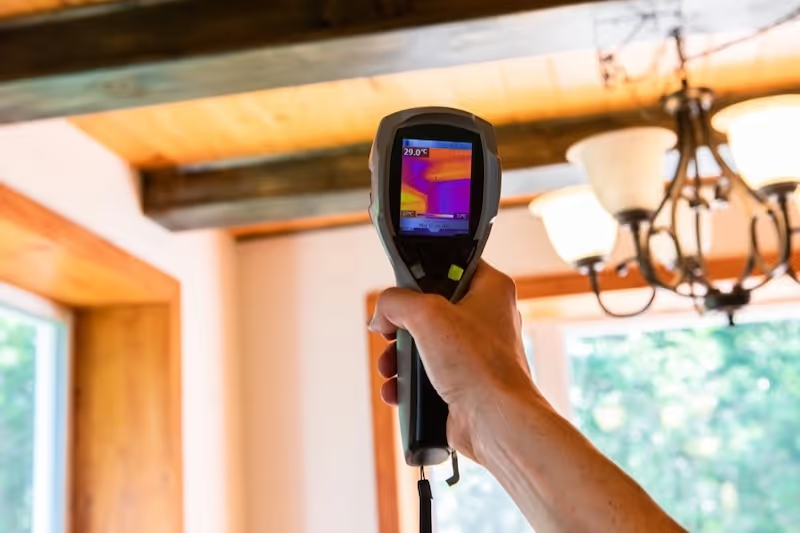
A professional assessment goes far beyond a simple visual check. It involves the use of calibrated industrial equipment designed to detect microscopic particles and invisible gases. This process provides a detailed breakdown of the particulate matter in your living space.
The Scope of Detection
The assessment focuses on specific categories of pollutants that commonly plague residential properties. Understanding these categories helps homeowners make informed decisions about remediation.
- Biological Pollutants: This category includes mold spores, pollen, pet dander, and dust mites. High humidity levels, common in the region during summer months, often accelerate biological growth within HVAC systems or damp basements.
- Volatile Organic Compounds (VOCs): These are gases emitted from certain solids or liquids. Paints, cleaning supplies, building materials, and even new furniture can off-gas chemicals like formaldehyde. Long-term exposure to VOCs is linked to various health complications.
- Combustion Byproducts: If you use gas appliances, fireplaces, or have an attached garage, carbon monoxide and nitrogen dioxide are potential risks. Testing ensures that your ventilation systems are effectively removing these dangerous gases.
- Particulate Matter (PM2.5 and PM10): These are tiny particles suspended in the air. They can bypass the body’s natural defenses and enter the lungs. Sources include cooking smoke, burning candles, and outdoor dust infiltrating the home.
The Assessment Report
Following the physical testing, the primary deliverable is a detailed report. This document does not simply list chemical concentrations; it interprets the data against health safety standards. You receive a clear analysis of which areas in your home are compromised and specific recommendations for fixing them. This might include suggestions for humidity control, filtration upgrades, or ventilation improvements.
The Air Quality Testing Process
Mr.Freeze Heating & Cooling follows a rigorous, systematic protocol to ensure accuracy and repeatability. We do not rely on guesswork. The process is designed to minimize disruption to your daily routine while gathering the most accurate data possible regarding your indoor environment.
- Initial Consultation and Walkthrough: The technician begins by discussing any specific symptoms family members are experiencing, such as persistent coughs or headaches. A visual inspection of the home identifies potential problem areas, such as visible mold, condensation on windows, or blocked vents.
- Monitor Placement and Sampling: Specialized air monitoring equipment is strategically placed in key areas of the home, usually in high-traffic zones like the living room and bedrooms. This equipment runs for a set duration to capture a representative sample of the air. In some cases, surface swabs may be taken if mold growth is suspected.
- HVAC System Inspection: Since the heating and cooling system acts as the lungs of the home, it is inspected thoroughly. The technician checks the filter status, the condition of the ductwork, and looks for signs of biological growth on the evaporator coil.
- Data Analysis: The collected samples and monitor readings are analyzed. For biological samples, this may involve laboratory analysis to identify specific mold species. Digital monitors provide immediate data regarding particulate counts and VOC levels.
- Results and Strategy Session: Once the data is processed, the findings are reviewed with you. The focus shifts from detection to solution. You are presented with a roadmap for remediation, which prioritizes the most critical issues first.
Identifying When to Test vs. When to Upgrade Equipment
Homeowners often struggle to decide whether they need a simple test or an equipment overhaul. While testing provides information, it does not fix the problem itself. Understanding where you stand in the decision cycle can save time and money.
Indications That Testing is the Priority
Testing is the correct first step when the source of the problem is unknown or when health symptoms are ambiguous.
- Unexplained Health Symptoms: If family members feel sick inside the house but better when they leave, this is a strong indicator of "Sick Building Syndrome." Testing confirms if the house is the cause.
- Real Estate Transactions: Before buying a home in Portage or St. John, testing ensures you are not inheriting a mold problem or a home with severe VOC issues.
- Musty Odors Without Visible Source: If there is a persistent smell that cleaning cannot remove, air quality testing can pinpoint hidden mold or moisture issues behind walls or under floors.
- Post-Remediation Verification: If you have recently had mold removed or water damage repaired, testing confirms that the air is clean and the remediation was successful.
Indications That Equipment Upgrades Are Necessary
In some scenarios, the problem is obvious, and the budget is better spent on immediate solutions rather than testing what is already known.
- High Humidity Levels: If windows are consistently foggy or the air feels heavy, the solution is almost certainly a whole-home dehumidifier. Testing will confirm high humidity, but the fix remains the same.
- Excessive Dust: If you are dusting furniture daily, your filtration system is failing. Upgrading to a high-efficiency media filter or an electronic air cleaner is the direct solution.
- Stale Air in Newer Homes: If the home feels stuffy and odors linger for hours, the property likely lacks fresh air exchange. Installing an Energy Recovery Ventilator (ERV) or Heat Recovery Ventilator (HRV) helps introduce fresh air without energy loss.
- Visible Mold Growth: If mold is clearly visible on walls or vents, the immediate need is remediation and humidity control, rather than a test to confirm the presence of mold.
Local Factors Impacting Indoor Air in Northwest Indiana
The distinct climate of Northwest Indiana plays a massive role in indoor air quality challenges. Living near Lake Michigan introduces specific variables that residents in other climates do not face.
The Lake Effect and Humidity
The proximity to the lake creates significant humidity fluctuations. In the summer, high dew points can lead to moisture accumulation inside the home, creating an ideal breeding ground for dust mites and mold. Even with air conditioning, standard units often struggle to remove enough moisture to keep indoor relative humidity below the recommended 50%. This makes supplemental dehumidification a common necessity for homes in this region.
Winter Inversion and Sealed Homes
Winters in St. John are cold and snowy, leading residents to keep windows tightly shut for months at a time. While this preserves heat, it also eliminates natural ventilation. Pollutants generated indoors—from cooking, cleaning, and heating—have nowhere to go. This "winter inversion" effect inside the home causes pollutant levels to spike during the heating season. Carbon monoxide safety and proper ventilation become critical during these months.
Regional Pollen and Allergens
The Midwest is known for high pollen counts in the spring and fall. Ragweed and tree pollen can easily infiltrate homes through open doors, clothing, and even standard HVAC filters. For residents with seasonal allergies, standard filtration is often insufficient. Understanding the local pollen calendar helps in timing filter changes and scheduling system maintenance to ensure the home remains a sanctuary from outdoor allergens.
Regulatory and Safety Codes
Adhering to guidelines set by the Indiana Department of Environmental Management (IDEM) is crucial for maintaining safe indoor environments. Local codes often dictate specific ventilation requirements for new construction and renovations. Professional testing ensures that your home complies with these safety standards, particularly regarding radon gas, which is a known issue in certain geological areas of Indiana.
Why Professional Testing Over DIY Kits
With the availability of consumer-grade air quality monitors and mail-in mold kits, many homeowners attempt to diagnose issues themselves. However, these DIY solutions often lead to incomplete data and false peace of mind.
Accuracy and Calibration
Consumer monitors typically use low-cost sensors that are prone to drift and interference. They may detect a spike in particles but fail to distinguish between harmless dust and dangerous spores. Professional equipment is regularly calibrated and capable of detecting contaminants at much lower concentrations with higher specificity.
Chain of Custody and Lab Analysis
Mail-in kits often suffer from user error during collection. If a sample is contaminated by handling, the results are useless. Professional technicians follow strict chain-of-custody protocols to ensure that the sample analyzed in the lab is exactly what was collected from your air. This legal-grade reliability is essential if you need to prove unsafe conditions to a landlord, builder, or insurance company.
Interpretation of Data
A number on a screen is meaningless without context. A DIY kit might report a certain spore count, but without knowing what is "normal" for the specific season and region, you cannot make an informed decision. Professionals interpret the data based on building science principles. They understand how airflow, pressure differentials, and thermal bypasses contribute to air quality issues, allowing them to recommend structural or mechanical fixes rather than just identifying a symptom.
Holistic House Approach
A DIY kit tests a single point in time. A professional assessment considers the house as a system. The technician looks at the interaction between the HVAC system, the building envelope, and lifestyle factors. This holistic approach ensures that the root cause is addressed. For example, high VOC readings might be traced back to a specific attached garage leak rather than a product inside the home.
Securing Your Home’s Air Quality
Your home should be a safe haven, not a source of illness. Ignoring signs of poor air quality can lead to long-term health consequences for you and your family. Whether you are dealing with unexplained allergies, musty odors, or simply want to ensure your home is safe for a new baby, professional testing provides the clarity you need.
By identifying the exact pollutants present, you can invest in the right solutions—whether that is improved ventilation, better filtration, or humidity control. Don't leave your respiratory health to chance or rely on guesswork. Take control of your indoor environment today. Contact our team to schedule your comprehensive air quality test.