
Unreliable Heating or Cooling Driving Up Your Energy Costs?
Dealing with unexpected heat pump breakdowns or inefficiency can disrupt your comfort and escalate your energy bills immediately. At Mr.Freeze Heating & Cooling, we understand the urgency of restoring your system and provide rapid, reliable solutions. Contact us today to schedule your service or ask about our financing options.
A malfunctioning heat pump in the variable climate of Northwest Indiana leads to inconsistent indoor temperatures and excessive strain on your electrical system. Whether you are located in St. John or Portage, IN, ignoring minor irregularities often results in complete system failure during the peak of winter or summer. We prioritize restoring your home’s thermal regulation through:
- Guaranteed same-day service availability to restore your comfort quickly.
- Professional maintenance plans designed to enhance efficiency and prolong system life.
- Transparent pricing structures with financing options to fit your budget.
- All services are backed by a 1-year warranty with detailed service logs to meet manufacturer maintenance requirements.
Comprehensive Heat Pump Services for Year-Round Comfort
Heat pumps are sophisticated systems that handle both heating and cooling, meaning they endure double the workload of a standard furnace or air conditioner. Because they run year-round, the wear and tear on components such as the compressor and the reversing valve is significant. Effective service goes beyond a simple filter change; it requires a deep technical understanding of thermodynamics and electrical controls.
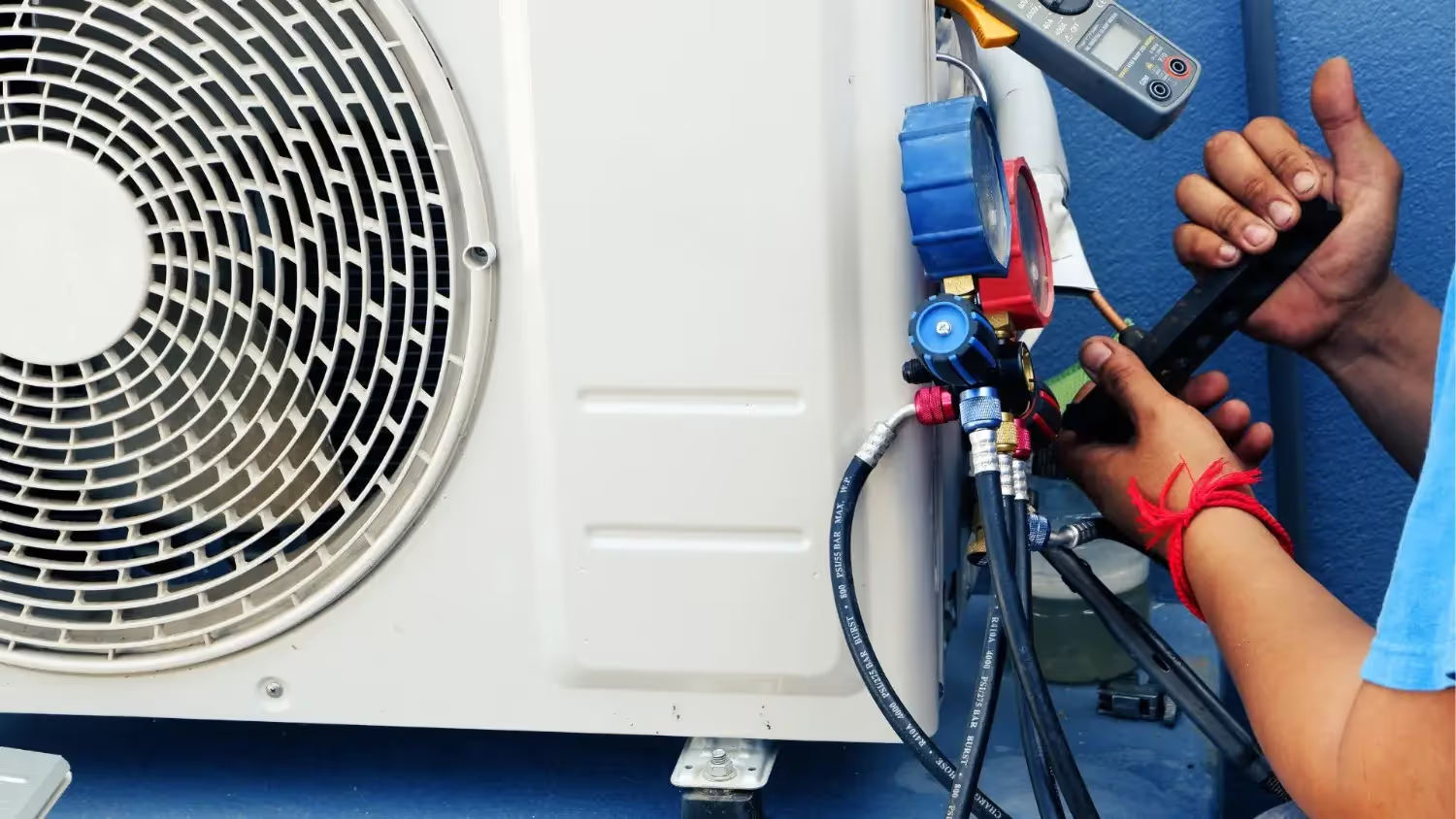
When you book a service appointment, the objective is to bring the system back to factory specifications. A technician does not simply guess at the problem. We utilize advanced diagnostic tools to measure airflow, refrigerant pressures, and electrical draw. This data-driven approach ensures that the root cause of the inefficiency is addressed, rather than just treating the symptom.
Your service visit typically includes a rigorous inspection of the following critical components:
- Refrigerant Charge Verification: Incorrect refrigerant levels—whether too high or too low—drastically reduce efficiency and can cause the compressor to overheat or the coils to freeze. We measure superheat and subcooling levels to ensure the charge is exact.
- Reversing Valve Testing: This component is what distinguishes a heat pump from an AC unit. It switches the flow of refrigerant to change between heating and cooling modes. If this valve sticks, the system will not switch modes.
- Electrical Connection Tightening: Vibrations from normal operation can loosen electrical connections over time. Loose connections create resistance, leading to arcing, burnt wires, and potential component failure.
- Coil Cleaning and Inspection: The outdoor coil is exposed to elements in Portage and St. John, collecting dirt, leaves, and debris. A dirty coil cannot exchange heat effectively, forcing the system to run longer to reach the set temperature.
- Defrost Board Analysis: In winter, the outdoor unit will naturally frost over. The defrost board controls the cycle to melt this ice. If this board fails, the unit becomes a block of ice and stops heating your home.
- Blower Motor Performance: We inspect the blower motor and belt (if applicable) to ensure air is being circulated at the correct velocity. Poor airflow can trigger safety limit switches that shut the system down.
The Heat Pump Service Process
Understanding what happens during a professional service call helps homeowners make informed decisions. We have refined our workflow to be efficient and transparent, ensuring minimal disruption to your daily routine while maximizing the technical accuracy of the repair or maintenance.
- First, the technician performs a complete system run-through upon arrival. This involves turning the thermostat to call for heating and cooling to observe the startup sequence, listening for abnormal noises, and checking the cycle times. This initial assessment often reveals immediate issues before tools are even applied.
- Next, we conduct a safety and electrical audit. Power is disconnected to the unit to safely inspect capacitors, contactors, and relays. The capacitor is tested to ensure it holds the correct microfarad rating; a weak capacitor is a common cause of compressor failure.
- Then, the focus shifts to the refrigeration cycle. Gauges are attached to the service ports to read high and low-side pressures. This step is crucial for detecting leaks. If a leak is suspected, electronic leak detectors or UV dye may be used to pinpoint the escape point.
- After diagnostics are complete, the technician provides a detailed report of findings. You receive a clear explanation of what is working, what is failing, and what requires immediate attention. A flat-rate quote is presented for any necessary repairs, so there are no surprises on the final bill.
- Upon approval, the repair or maintenance task is executed using OEM or high-quality aftermarket parts. This might involve replacing a burnt-out contactor, adding refrigerant, or clearing a clogged condensate drain line.
- Finally, the system is tested again under load. We ensure the temperature difference (Delta T) between the supply and return air is within the correct range. The workspace is cleaned, and the technician updates the service log, which is vital for maintaining manufacturer warranties.
Deciding Between Heat Pump Repair and System Replacement
One of the most difficult decisions for homeowners is determining when a repair is no longer a wise investment. While our goal is always to repair when feasible, there are mathematical and practical tipping points where replacement becomes the more economical choice. This is especially true for heat pumps, which have a shorter average lifespan than gas furnaces due to their year-round operation.
We help you navigate this decision using concrete criteria rather than guesswork:
- The 50% Rule: If the cost of the repair approaches 50% of the value of a new system, replacement is generally the better option. Investing heavily in an old system often leads to "throwing good money after bad" as other components begin to fail shortly after.
- System Age: The average lifespan of a heat pump is 10 to 15 years. If your unit is over 12 years old and requires a major repair—such as a compressor or reversing valve replacement—it is usually time to upgrade. Modern systems offer significantly higher efficiency ratings.
- Frequency of Breakdowns: If you have required repairs more than twice in the last two years, the system is demonstrating a pattern of unreliability. Frequent breakdowns are not only costly but also pose a risk of failure during extreme weather events.
- Efficiency Ratings (SEER2 and HSPF2): Older units likely have SEER ratings of 10 or 12. New standards require significantly higher efficiency. upgrading to a high-efficiency unit can reduce energy consumption by 20% to 40%, offsetting the monthly cost of a new installation.
- Refrigerant Type: If your older system utilizes R-22 refrigerant (Freon), repair costs will be astronomical due to the phase-out of this chemical. Leaks in R-22 systems almost always justify replacement with a modern R-410A or R-454B system.
- Comfort Issues: If your current heat pump struggles to keep up with the thermostat settings, leaves cold spots in the house, or makes excessive noise, a new system with variable-speed technology can resolve these comfort complaints permanently.
Managing Local Climate Demands in Northwest Indiana
The climate in our service area presents specific challenges for heat pump operation. In St. John and Portage, IN, we experience a dual-threat environment: high humidity in the summer and freezing temperatures with lake-effect snow in the winter. Your equipment must be calibrated to handle these extremes.
Winter Performance and the Defrost Cycle
In our region, the most critical winter function of a heat pump is its defrost cycle. As the unit extracts heat from the outdoor air, moisture on the coil freezes. If the defrost control board or sensors are not calibrated correctly, the unit will turn into a block of ice, potentially crushing the coil fins and halting heat production. We specifically check the balance point—the temperature at which the heat pump can no longer maintain the indoor temperature without auxiliary heat. Ensuring your backup heating source (electric strips or a dual-fuel gas furnace) activates correctly is a safety necessity.
Summer Humidity Control
Portage summers can be incredibly humid. A heat pump that is short-cycling (turning on and off too quickly) will cool the air but fail to remove humidity, leading to a clammy indoor environment and potential mold growth. Correctly sizing the system and setting the blower speed is essential for effective dehumidification. We check the condensate drain lines aggressively in this region, as algae growth is common in humid conditions and can cause water damage if lines become blocked.
Snow Clearance and Airflow
Local installation and maintenance must account for snowfall accumulation. Outdoor units should be elevated on snow legs or stands to prevent them from being buried in a drift. During our service visits, we evaluate the immediate area around the condenser to ensure vegetation or structures are not impeding airflow, which is critical for the heat exchange process.
Why Professional Diagnostics Matter
The difference between a quick fix and a lasting solution lies in the quality of the diagnostics. Modern heat pumps are integrated with complex circuit boards and sensors. Mr.Freeze Heating & Cooling technicians employ industry-leading diagnostic protocols that go beyond visual inspection. We utilize digital manifolds for precise pressure readings and combustion analyzers for dual-fuel systems to ensure safety and efficiency.
Inaccurate diagnostics lead to parts-changing, where components are swapped out hoping the problem resolves, costing the homeowner time and money. Professional service identifies the sequence of failure. For example, a compressor failure might be the result of a restricted thermal expansion valve (TXV). Simply replacing the compressor without addressing the TXV will result in another blown compressor. We focus on systemic health, ensuring that electrical, mechanical, and airflow systems are working in unison.
Our technicians are also trained in the specific permit and code requirements for St. John and Portage. Whether it involves electrical disconnect placement or refrigerant handling standards, we ensure your system remains compliant with local regulations. This attention to detail protects your home insurance validity and ensures the safety of your household.
Ensuring Long-Term System Reliability
Maintaining a heat pump is an investment in the longevity of your home’s infrastructure. Neglected systems drop in efficiency by roughly 5% per year, resulting in higher operational costs and a shortened lifespan. By addressing wear and tear proactively, you prevent catastrophic failures during the days you need your system the most.
We focus on delivering results that impact your bottom line: lower energy bills, fewer repairs, and extended equipment life. Whether you are facing a sudden breakdown or looking to optimize an aging system, our team is equipped to handle the technical demands of modern HVAC equipment.
Don’t Leave Efficiency to Chance: Secure Expert Heat Pump Service Now
Secure the efficiency and reliability of your heating and cooling system today. Click below to schedule your professional heat pump service.
Schedule Your Service Now