
Immediate AC Installation Solutions
Facing a total system breakdown during the height of a humid summer creates an urgent need for professional intervention to restore safety and comfort. If your cooling system has failed, contact us immediately to schedule an assessment or apply for financing to expedite your replacement. Residents in Portage and St. John encounter distinct seasonal shifts, where high humidity levels can make a home uninhabitable without a functioning air conditioner. Waiting on a slow response time isn't an option when the indoor temperature begins to climb. Mr.Freeze Heating & Cooling provides decisive, rapid installation services to ensure your home returns to a safe temperature without delay.
- Certified technicians are available for rapid response to assess and install your new system.
- Transparent pricing structures ensure you understand the full cost of the project with no unexpected fees.
- Comprehensive warranties accompany every installation, securing your investment for the long term.
All installations meet strictly enforced local building codes and come with robust financing options to make the decision easier.
What to Expect From Professional AC Installation
Choosing to install a new air conditioning system is a significant investment in your property and your daily comfort. The scope of a professional installation goes far beyond simply swapping out one metal box for another. A correct installation ensures that the equipment operates at the efficiency rating advertised by the manufacturer. You need a system that manages the specific airflow and thermal characteristics of your home.
When you authorize a replacement, the focus shifts to selecting the right equipment capacity and efficiency level. Modern standards, including SEER2 requirements, dictate that new units must meet higher energy efficiency benchmarks. This transition often results in lower monthly utility bills, but it requires precise matching of the condenser and the evaporator coil.
The service includes the complete removal and environmentally safe disposal of your old unit. Refrigerants from older systems, which may be hazardous to the environment, are captured and reclaimed according to EPA regulations. The workspace is prepped to prevent damage to your property, and the new unit is leveled and secured to minimize vibration and noise.
Key inclusions in the installation scope involve:
- Site Preparation: Technicians prepare the outdoor pad and indoor utility area to accommodate new equipment dimensions.
- System Sizing: Performing load calculations to ensure the unit is neither too large (causing short-cycling) nor too small (running continuously).
- Ductwork Inspection: Checking existing ducts for leaks or disconnects that could undermine the efficiency of the new air conditioner.
- Electrical Safety: Verifying that the existing electrical panel and circuit breakers can safely handle the amperage of the new unit.
- Condensate Management: Installing or upgrading drain lines and pumps to prevent water damage from condensation.
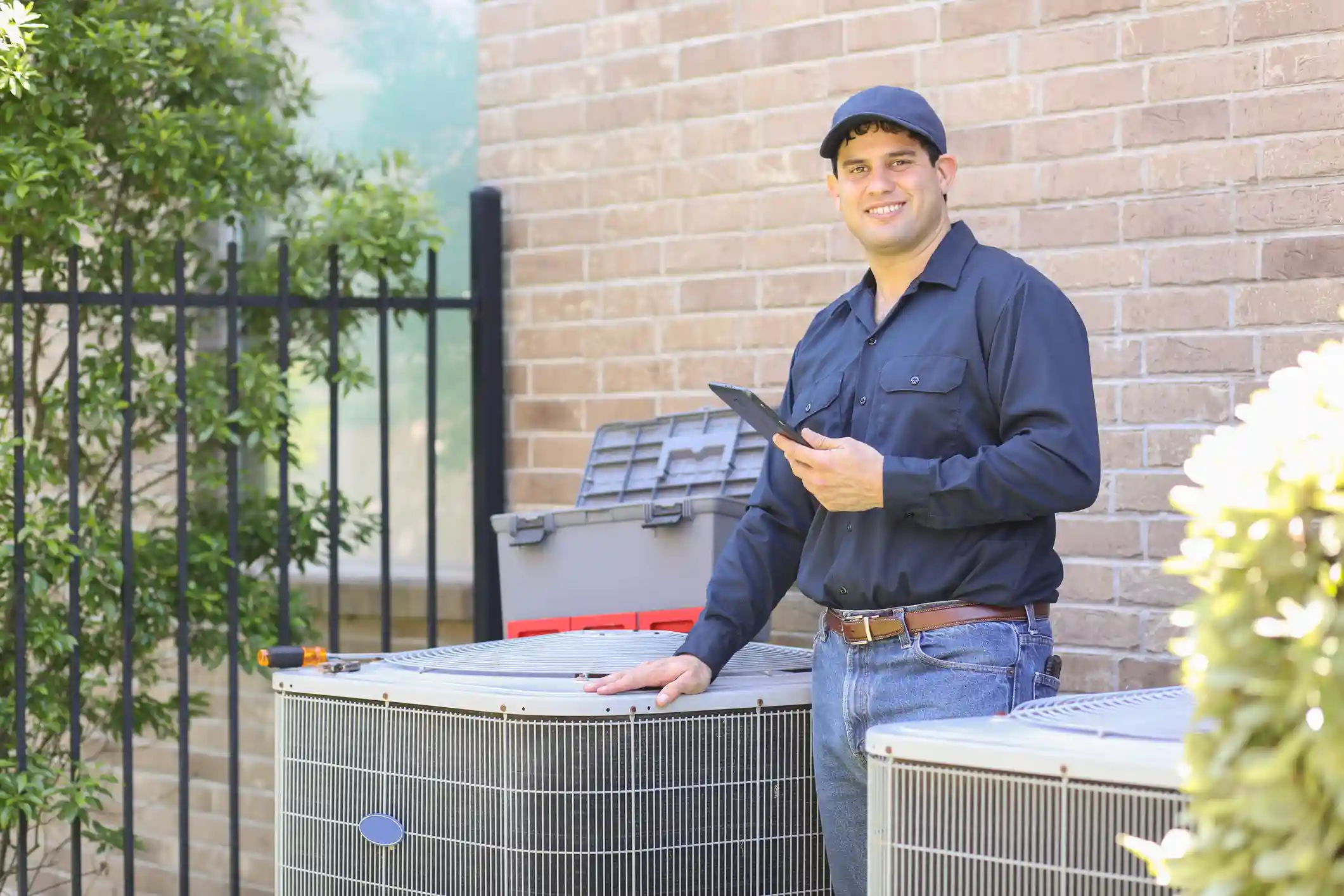
The Installation Process Step-by-Step
A systematic approach to installation reduces the risk of future breakdowns and ensures the longevity of the system. This process is linear and handled entirely by licensed professionals who understand the intricacies of HVAC mechanics.
- Initial Assessment and Sizing: The process begins with a Manual J load calculation. This mathematical formula considers the square footage, insulation levels, window orientation, and local climate data for areas like Portage and St. John. This step determines the exact BTU capacity required to cool your home efficiently. Guessing on size leads to humidity issues and premature equipment failure.
- Protecting Your Property: Before any heavy lifting occurs, technicians lay down drop cloths and wear protective shoe coverings. The goal is to leave the home exactly as it was found, with the exception of the new climate control system.
- Disconnecting the Old System: Power is shut off at the breaker panel and the disconnect box. Technicians recover the refrigerant from the existing lines to prevent atmospheric venting. The old condenser and indoor coil are disconnected from the electrical supply, refrigerant lines, and ductwork before being removed from the premises.
- Equipment Placement and Connection: The new outdoor condenser is positioned on a stable, level pad to ensure proper airflow and drainage. Indoors, the new evaporator coil is fitted to the furnace or air handler. The copper refrigerant lines are brazed (soldered) together using nitrogen to prevent oxidation inside the pipes, which is a critical step for system longevity.
- Electrical and Thermostat Wiring: High-voltage wiring is connected from the disconnect box to the unit, adhering to all safety codes. Low-voltage control wiring is run to the thermostat. If a new smart thermostat is part of the package, it is installed and programmed during this phase.
- System Charging and Commissioning: Once the physical connections are made, a vacuum pump removes moisture and air from the refrigerant lines. The system is then charged with the precise amount of refrigerant specified by the manufacturer. Technicians measure subcooling and superheat levels to verify the system is cooling effectively.
- Final Performance Test: The system runs through a full cycle. Technicians check the temperature drop across the coil (the difference in temperature between air entering and leaving the system) to confirm it falls within the manufacturer’s specifications.
Deciding Between Repair and Replacement
Determining whether to sink more money into an aging unit or invest in a new system is a financial calculation based on asset value and reliability. While repairs can solve immediate issues, they often act as temporary bandages on a system that is reaching the end of its useful life.
The 50% rule is a standard metric for this decision. If the cost of the repair approaches 50% of the value of a new system, replacement is generally the more fastidious financial choice. This is especially true if the current unit is out of warranty, meaning you are paying full price for parts and labor.
Age is the second critical factor. Air conditioners in the Northwest Indiana region typically last between 10 to 15 years. If your unit is over 10 years old and facing a major component failure—such as a blown compressor or a leaking coil—replacement offers a better return on investment. Older units often utilize R-22 refrigerant, which has been phased out and is now prohibitively expensive to restock.
Efficiency ratings also play a major role in this decision. Older systems may have SEER ratings of 10 or 12. Modern units start at higher efficiency baselines. upgrading can result in immediate reductions in energy consumption, effectively paying back a portion of the installation cost over time through utility savings.
Consider replacement if:
- The system requires frequent repairs, indicating that internal components are failing in succession.
- Your home has hot and cold spots, suggesting the current unit is no longer capable of distributing air effectively.
- Humidity levels remain high indoors even when the AC is running, a sign the compressor is losing efficiency.
- The unit makes excessive noise, such as grinding or squealing, which often points to severe mechanical wear.
Regional Considerations: Permits and Climate
Operating an HVAC system in Portage and St. John requires specific attention to local climate patterns and regulations. The humid continental climate means that summer isn't just hot; it is wet. An air conditioner is essentially a dehumidifier. If the unit is not sized correctly for the region's specific humidity load, the home will feel clammy and uncomfortable, even if the thermostat reads a low temperature.
Local municipalities enforce building codes to ensure safety and energy efficiency. Installing an AC unit involves high-voltage electricity and pressurized gases, making it a regulated activity.
- Permit Acquisition: Most AC replacements require a permit from the local building department. This ensures the installation meets safety standards regarding electrical connections and clearance distances.
- Code Compliance: Regulations may dictate specific requirements for outdoor disconnect boxes, fuse sizes, and working clearance around the unit. Failure to adhere to these codes can complicate the future sale of a home or lead to fines.
- Utility Rebates: Local utility providers often offer rebates for upgrading to high-efficiency systems. These programs require proper documentation and installation by licensed contractors to qualify.
Mr.Freeze Heating & Cooling handles the logistical aspects of these requirements, ensuring that the installation complies with all municipal codes in St. John and Portage. This compliance protects the homeowner from liability and ensures the manufacturer’s warranty remains valid.
Technical Efficiency and Air Quality Differentiators
Modern air conditioning relies on advanced engineering to deliver comfort. Understanding the technical differentiators helps in selecting a system that provides consistent cooling without waste.
SEER2 Ratings Explained
SEER2 (Seasonal Energy Efficiency Ratio 2) is the updated standard for measuring AC efficiency. It offers a more realistic calculation of how a unit performs under real-world conditions, including higher static pressure in ductwork. A higher SEER2 rating indicates a more efficient unit. While base models meet federal minimums, higher-tier models offer variable-speed technology.
Variable-Speed vs. Single-Stage
Standard "single-stage" air conditioners operate at full capacity whenever they are on. They blast cold air until the thermostat is satisfied, then shut off. This leads to temperature swings. Variable-speed or multi-stage units can run at lower capacities, maintaining a more consistent temperature and removing more humidity from the air because they run for longer, gentler cycles.
Filtration and Air Quality
The installation process is the ideal time to address indoor air quality. The standard 1-inch filter found in most systems provides basic protection for the equipment but does little for air quality. Upgrading to a 4-inch media cabinet or integrating a whole-home air purifier during installation can significantly reduce allergens and dust.
Smart Thermostat Integration
New installations often include the integration of smart thermostats. These devices allow for remote monitoring and scheduling, ensuring the AC is not cooling an empty house. They also provide maintenance alerts, reminding you when to change filters or schedule a tune-up.
Securing Your Comfort
A functioning air conditioner is essential for navigating the summer months in Indiana. Delays in replacement can lead to property damage from humidity and discomfort for your family. By choosing a professional installation, you ensure that the system is sized correctly, installed safely, and backed by warranty protection. The focus is on long-term reliability and immediate relief from the heat.
Don’t Delay Climate Control: Schedule Your Expert Estimate or Service Now
For a precise assessment and compliant installation that prioritizes your home's specific needs, take action now. Secure your installation date and restore your indoor climate control.
Contact us to schedule your estimate or service appointment today.