
Efficient Home Heating with Geothermal Systems
Tackling rising heating costs and fluctuating utility bills requires a smarter approach to home comfort. Geothermal systems in Hobart provide a sustainable, highly efficient, and cost-effective solution for homeowners looking to decouple themselves from volatile fossil fuel prices. For immediate scheduling or to discuss financing options for your installation, contact us today or call our office directly.
Mr.Freeze Heating & Cooling specializes in the design and implementation of ground-source heat pumps that leverage the stable temperature of the earth to regulate your home’s climate. Unlike traditional furnaces that burn fuel to create heat, our systems transfer existing heat, offering efficiency levels that gas or electric furnaces cannot match.
- Reduce heating costs significantly with high-efficiency geothermal heat pumps that operate independently of outdoor air temperatures.
- Enjoy consistent temperatures year-round with eco-friendly technology that handles both the humid summers and freezing winters typical of Indiana.
- Benefit from long-term savings with low maintenance needs and equipment lifespans that far exceed conventional HVAC units.
Supported with a 30% tax credit, expert installation, and comprehensive warranties, this investment secures your home’s comfort for decades.
Comprehensive Geothermal Installation Services
When you choose to upgrade your property with a geothermal system, you are purchasing a complete climate control infrastructure, not just a unit in a box. The scope of work involves precise engineering to match the specific geological and architectural requirements of your property. We handle every aspect of the project, ensuring that the transition from standard HVAC to ground-source heating is seamless.
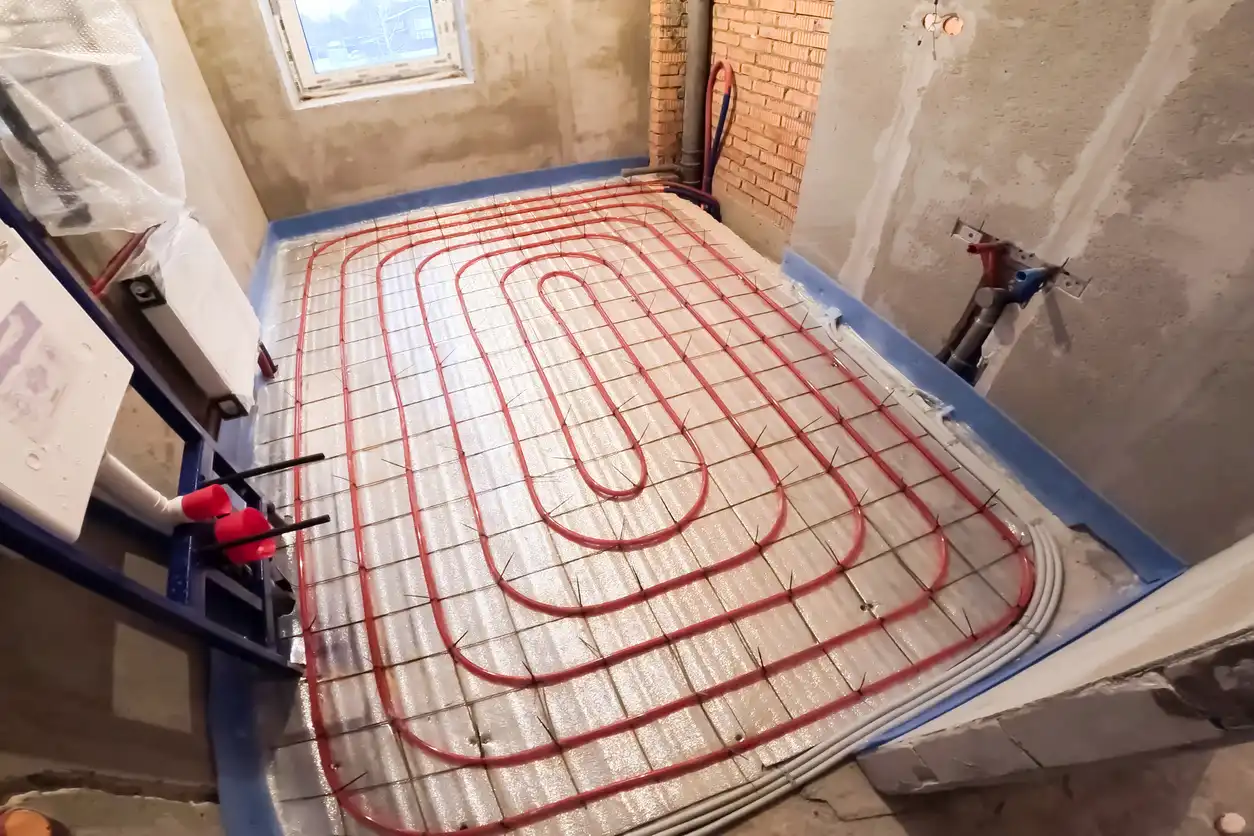
A standard installation package includes the calculation, excavation, and integration of three main components:
- The Ground Loop System: This is the network of high-density polyethylene pipes buried underground. We design the loop configuration—whether vertical or horizontal—based on your available land area and soil conditions.
- The Heat Pump Unit: Located inside your home, typically in a basement or utility closet, this unit replaces your furnace and air conditioner. It houses the compressor and heat exchanger that moves energy between the ground loop and your home’s air distribution system.
- Distribution System Integration: We connect the heat pump to your existing ductwork. In cases where ductwork modification is necessary to accommodate the different airflow characteristics of geothermal, those adjustments are included.
- Desuperheater Installation: Whenever possible, we include a desuperheater connection. This component captures waste heat from the cooling process in the summer (or heating process in winter) to pre-heat your domestic hot water, further reducing utility expenses.
The timeline for installation varies based on the complexity of the excavation but typically spans several days to a week. The goal is to establish a system that operates quietly and efficiently, removing the noise associated with outdoor A/C compressors and the safety risks associated with combustion appliances.
Understanding the Installation Process
Installing a geothermal system is a construction project that requires specialized equipment and technical expertise. We adhere to a strict process to ensure the integrity of the ground loop and the efficiency of the interior equipment.
Site Evaluation and Load Calculation:
The process begins with a Manual J load calculation to determine exactly how much heating and cooling your home requires. We also assess the geology of your property in Hobart to determine the thermal conductivity of the soil. This data dictates the length and depth of the ground loops needed to support the system.
Excavation and Loop Insertion:
Once the design is finalized, the physical work begins. For properties with ample acreage, horizontal loops are installed in trenches four to six feet deep. For smaller lots, vertical drilling rigs bore holes several hundred feet deep. The pipes are inserted and fused together thermally to create a leak-proof, closed-loop system.
Grouting and Backfilling:
After the pipes are laid, vertical boreholes are filled with a specialized thermally enhanced grout. This material ensures maximum heat transfer between the earth and the fluid circulating in the pipes. Trenches are backfilled and graded to return the landscape to its original elevation.
Interior Connection and startup:
Technicians run the loop piping through the foundation wall and connect it to the heat pump unit. The system is flushed to remove debris and filled with a water and antifreeze solution. We then connect the electrical components and the thermostat.
Final Testing:
The system undergoes rigorous pressure testing and flow rate verification. We measure the temperature difference (Delta T) across the coil to ensure the unit is extracting and rejecting heat according to manufacturer specifications.
Deciding Between Repair and Replacement
Homeowners with existing HVAC systems or older geothermal units often face the decision of whether to repair a failing component or invest in a full system replacement. While repairs can offer a short-term fix, there are specific benchmarks where replacement becomes the more financially sound strategy.
Age of the Equipment:
Traditional air-source heat pumps and furnaces usually last 15 to 20 years. If your current system is approaching this age and facing a major repair—such as a compressor failure or cracked heat exchanger—replacement is often the better route. Geothermal heat pumps last significantly longer (20-25 years), and the ground loops can last over 50 years.
Frequency of Breakdowns:
If you are calling for service multiple times a year, the cumulative cost of repairs will quickly eclipse the monthly financing cost of a new system. A system that struggles to maintain the set temperature during extreme cold snaps is a sign of declining efficiency or improper sizing.
Rising Energy Bills:
As equipment ages, it loses efficiency. If your utility bills are creeping up despite normal usage, your current system is likely working overtime to produce the same results. Switching to geothermal can reduce heating and cooling costs by up to 70% compared to resistance heating or propane, offering an immediate return on investment.
Environmental Goals:
If your goal is to reduce your carbon footprint, replacing a gas or oil furnace with an all-electric geothermal system eliminates onsite fossil fuel combustion. This is a decisive factor for many homeowners looking to modernize their home’s energy profile.
Regional Considerations for Geothermal Performance
Operating a heating system in Northwest Indiana requires specific attention to local climate and regulatory conditions. The region experiences distinct seasonality that makes geothermal an ideal choice, but also dictates how the system must be installed.
Handling Extreme Winters:
Winter temperatures frequently drop between 20°F and 40°F, with cold snaps dipping much lower. Unlike air-source heat pumps, which lose efficiency as the outside air gets colder, the earth’s temperature below the frost line remains constant (around 50-55°F). This allows the system to provide consistent heat without relying heavily on expensive auxiliary electric heat strips.
Soil Conditions:
The soil composition in this area supports excellent thermal conductivity, which is crucial for heat transfer. However, specific water table levels and rock formations can influence drilling depth. Local expertise ensures that the loop design accounts for these geological realities.
Permitting and Code Compliance:
Drilling and excavation require adherence to local building codes and utility regulations. This includes proper setbacks from property lines, septic systems, and water wells. We manage the permitting process to ensure all ground modifications are legal and documented.
Utility Incentives:
Homeowners in this area often have access to specific rebates and incentives. The federal government offers a substantial tax credit (Investment Tax Credit) of 30% for qualified residential geothermal installations. Local utility providers may also offer rebates for upgrading to high-efficiency electric heating, further offsetting the initial installation cost.
Why Specialized Installation Matters
The efficiency of a geothermal system is entirely dependent on the quality of the installation. A heat pump attached to a poorly designed ground loop will never perform at its rated efficiency and may fail prematurely. You need a partner who understands thermodynamics, fluid dynamics, and local geology.
Mr.Freeze Heating & Cooling ensures that every system is sized correctly. An oversized unit will short-cycle, leading to humidity issues and wear on the compressor, while an undersized unit will fail to keep up with winter demand. We utilize industry-standard protocols to match the equipment to your home’s thermal envelope.
Our approach prioritizes the long-term integrity of the system. We use fusion-welded pipe connections underground, eliminating mechanical joints that could corrode or leak over time. Our focus on technical precision means your system is built to run virtually maintenance-free, requiring only standard filter changes and periodic check-ups to verify fluid pressure and chemistry.
By choosing a specialized provider, you secure access to:
- Correct Loop Sizing: Ensuring the ground heat exchanger is large enough to handle the peak heating and cooling loads of your specific structure.
- Proper Ductwork Modification: Ensuring your air distribution system is compatible with the lower-temperature, higher-volume airflow typical of geothermal units to maximize comfort.
- Electrical Safety: verifying that your home’s electrical service can support the new equipment, including upgrades to panels if necessary.
Investing in geothermal technology transforms how your home uses energy. It moves you away from the monthly volatility of fuel prices and into a stable, predictable, and highly efficient method of climate control.
Take the Next Step Toward Energy Independence
If you are ready to eliminate high heating bills and enjoy the superior comfort of a ground-source system, now is the time to act. We provide detailed assessments to help you understand the specific costs and savings associated with your property.
Secure your consultation today to explore your geothermal options.