Eliminate Cooling Inefficiencies and Prevent Unexpected System Failures
When the humidity spikes in Hobart and your air conditioning unit struggles to keep up, the resulting discomfort is immediate and the financial impact of inefficiency begins to compound instantly. An unmaintained system does not merely run longer; it works harder against friction, dirt, and electrical resistance, driving up utility bills while inching closer to a total breakdown during the hottest weeks of the year. Mr.Freeze Heating & Cooling restores your system’s capacity to handle the summer load through rigorous, technical maintenance that prioritizes longevity and performance.
Contact us today to schedule your comprehensive system tune-up or inquire about our flexible financing options for system upgrades.
We provide the reliability you need through:
- Rapid response scheduling to address efficiency drops before they become emergencies.
- Comprehensive system restoration designed to lower amperage draws and reduce monthly energy costs.
- Transparent, upfront pricing on all maintenance tiers with clear financing availability.
All services are backed by robust warranties and financing plans to ease your mind, ensuring your home remains cool without disrupting your budget.
Comprehensive AC Maintenance: What We Do Today
Air conditioning maintenance is often mistaken for a simple filter change, but true preventative service involves a deep mechanical and electrical inspection of the entire cooling infrastructure. A system left unchecked for a year or more can lose up to 5% of its efficiency annually. Our technicians reverse this degradation by systematically addressing the components that suffer the most wear and tear during the humid summers common to Lake County.
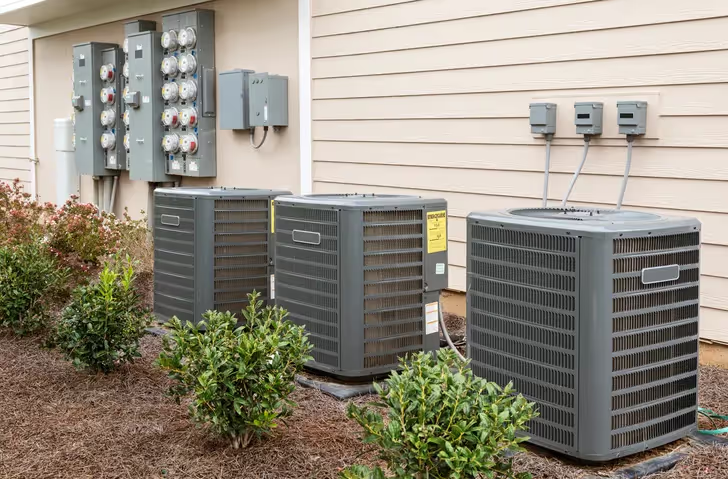
When we arrive at your property, the goal is to return the unit to factory specifications. This process involves stripping away the debris that insulates heat and correcting the electrical variances that threaten your compressor.
Scope of Maintenance Services:
- Condenser Coil Cleaning: The outdoor unit is exposed to elements, collecting dirt, grass clippings, and pollen. This debris creates a blanket over the coils, preventing heat release. We chemically clean these coils to ensure maximum heat rejection.
- Evaporator Coil Inspection: Located inside the air handler, this coil absorbs heat. Even a thin layer of dust here acts as an insulator, freezing the coil and blocking airflow. We inspect and clean this component to prevent ice formation.
- Refrigerant Level Verification: Incorrect refrigerant charges—whether too low due to leaks or too high due to amateur service—cripple efficiency. We measure superheat and subcooling to ensure the charge is exact.
- Electrical Connection Tightening: Vibration loosens wires over time. Loose connections cause arcing and pitting, which can burn out motors and compressors. We tighten and test all voltage and amperage draws.
- Condensate Drain Clearing: A clogged drain line can cause water damage to your home and increase humidity levels indoors. We flush the line to ensure proper moisture removal.
- Thermostat Calibration: We verify that your thermostat reads temperature accurately and communicates correctly with the condenser and blower motor to prevent short-cycling.
- Lubrication of Moving Parts: Friction is the enemy of efficiency. We lubricate motor bearings to reduce resistance and electricity consumption.
The Maintenance Process: Step-by-Step System Restoration
Understanding how we execute a maintenance visit helps homeowners distinguish between a quick visual check and a professional tune-up. We follow a strict protocol designed to uncover hidden issues that typically go unnoticed until the system fails completely. This methodical approach ensures that when you turn the thermostat down, the system responds instantly.
Our technician workflow proceeds as follows:
- Initial System Assessment: The technician begins by operating the system to listen for irregular sounds, measure airflow at the supply registers, and check the temperature drop across the evaporator coil. This baseline data indicates how well the system is currently performing.
- Power Down and Safety Check: We disconnect power to the unit to safely inspect internal components. This includes checking the capacitor rating against the manufacturer’s specifications, as a weak capacitor is a leading cause of compressor failure.
- Debris Removal and Cleaning: We open the outdoor cabinet to remove leaves and organic matter from the base of the unit. The condenser coils are then sprayed with a specialized cleaner that foams out embedded dirt from between the aluminum fins.
- Electrical Analysis: The contactor is inspected for pitted surfaces that could cause sticking. We measure the amperage draw of the compressor and fan motor. High amp draws indicate the motor is struggling and may need attention before it burns out.
- Blower Motor Inspection: The blower wheel must be clean and balanced. Dust buildup on the blades acts like weights, throwing the wheel off balance and damaging the motor bearings. We inspect the blower assembly for cleanliness and stability.
- Final Operation Test: After reassembling the unit and restoring power, we run the system for a sustained period. We verify the refrigerant pressures have stabilized and that the air coming from your vents is within the target temperature range.
Why Routine Maintenance Prevents Costly Repairs vs. Replacement
The decision to invest in maintenance is ultimately a financial calculation. The cost of a tune-up is a fraction of the cost of an emergency repair, and significantly less than a premature system replacement. Homeowners in Hobart often face the dilemma of whether to keep repairing an aging unit or to invest in a new one. Routine maintenance provides the data needed to make that decision intelligently.
Neglect is the primary cause of early HVAC retirement. A system rated for 15 years may fail in 8 if the compressor is consistently overheating due to dirty coils. Regular service keeps the system running within its design parameters, extending its operational life. However, there comes a point where replacement is the more economical choice.
When to Pivot from Maintenance to Replacement:
- The 50% Rule: If the cost of a necessary repair approaches 50% of the value of a new system, replacement is generally the wiser investment.
- Refrigerant Type: If your system utilizes R-22 (Freon), which has been phased out, repair costs involving refrigerant will be exorbitant. Upgrading to a system that uses R-410A or newer refrigerants is financially prudent.
- Frequency of Breakdowns: If you require repairs more than once a season despite regular maintenance, the internal components are likely fatigued beyond reliability.
- Energy Bills: If your utility costs are rising despite stable usage and regular tune-ups, the unit’s SEER rating (efficiency) is likely too low compared to modern standards. New systems can reduce cooling costs by 20-40%.
- Compressor Integrity: If the compressor—the heart of the system—fails or shows signs of hard starting, replacement is usually recommended over repair due to the labor and part cost.
Navigating Local Climate and HVAC Requirements
Operating an air conditioner in Hobart requires specific attention to the regional climate and local regulations. The humidity generated by proximity to Lake Michigan places a heavier latent load on AC units compared to drier climates. Your system must run long enough not just to cool the air, but to dehumidify it. Short-cycling systems, often caused by oversized units or dirty sensors, fail to remove moisture, leading to a clammy indoor environment and potential mold growth.
Regional and Regulatory Considerations:
- Humidity Management: Maintenance ensures the evaporator coil gets cold enough to condense moisture effectively. If the coil is dirty, it cannot dehumidify the home, making 75 degrees feel like 85 degrees.
- Winter to Summer Transition: After a harsh Indiana winter, outdoor units have often been subjected to snow, ice, and road salt. The start-up procedure in spring is critical to ensure that corrosion hasn't damaged the electrical contacts or the coil fins.
- Permitting and Codes: For residents considering replacement or major repairs involving refrigerant lines, local codes mandate compliance with current energy efficiency standards (SEER2). Proper handling and disposal of refrigerants are strictly regulated to protect the environment.
- Electrical Grid Demands: During heatwaves, the local grid is under stress. A well-maintained unit draws less power, reducing the risk of tripping breakers or damaging sensitive electronics during brownouts.
Professional Standards and Service Guarantees
The difference between a functioning system and an optimized system lies in the skill of the technician. Modern HVAC equipment involves complex electronics, variable speed motors, and precise refrigerant metering devices. Mr.Freeze Heating & Cooling employs technicians who are rigorously trained to handle these complexities. Relying on general handymen or uncertified individuals for AC maintenance can void manufacturer warranties and lead to safety hazards, including electrical fires or refrigerant leaks.
Our Approach to Quality Assurance:
- NATE-Certified Technicians: We prioritize North American Technician Excellence (NATE) certification, ensuring our team has demonstrated real-world working knowledge of HVAC systems.
- Diagnostic Accuracy: We do not guess. We use calibrated gauges and digital multimeters to diagnose issues based on data, not intuition.
- Warranty Preservation: Most manufacturer warranties require proof of annual maintenance by a licensed professional. Our detailed service records provide the documentation needed to keep your warranty valid.
- Respect for Property: Our technicians use drop cloths and shoe covers to protect your home. We leave the workspace as clean as we found it, removing all discarded filters and debris.
- Comprehensive Reporting: You receive a full report of the system’s health, including any potential issues to watch for in the future. This transparency allows you to budget for future repairs or replacement without surprise expenses.
Secure Your Summer Comfort Now
Waiting for a heatwave to test your air conditioner is a strategy that often leads to sweaty, sleepless nights and high emergency service fees. Proactive maintenance is the only way to ensure your system is ready to combat the heat and humidity characteristic of the region. By addressing minor wear and tear now, you secure lower energy bills, improved indoor air quality, and the peace of mind that comes with a reliable cooling system.
Don't let a neglected system dictate your comfort level this season. Mr.Freeze Heating & Cooling is ready to optimize your equipment for peak performance and longevity.
Take control of your home climate today.