
Suffering From High Home Humidity?
Are you tired of the discomfort and health issues caused by high indoor humidity? Whole home dehumidification might be the solution you need to restore comfort and protect your property. Contact us today to schedule an assessment or apply for our flexible financing options.
- Enhance your home's air quality by reducing moisture levels effectively.
- Protect your family from allergens such as mold spores and dust mites.
- Enjoy a more comfortable living environment with regulated humidity.
Rely on our licensed professionals, offering same-day installation with comprehensive warranties.
The Impact of Uncontrolled Moisture in Your Home
Living in Hobart means dealing with a humid continental climate that brings distinct challenges throughout the year. While winters are cold, the summers often bring heavy, moisture-laden air that infiltrates living spaces. When indoor humidity rises above 50%, your home becomes a breeding ground for biological contaminants. You might notice a "sticky" feeling on your skin even when the air conditioner is running, or a musty odor that lingers in basements and crawl spaces.
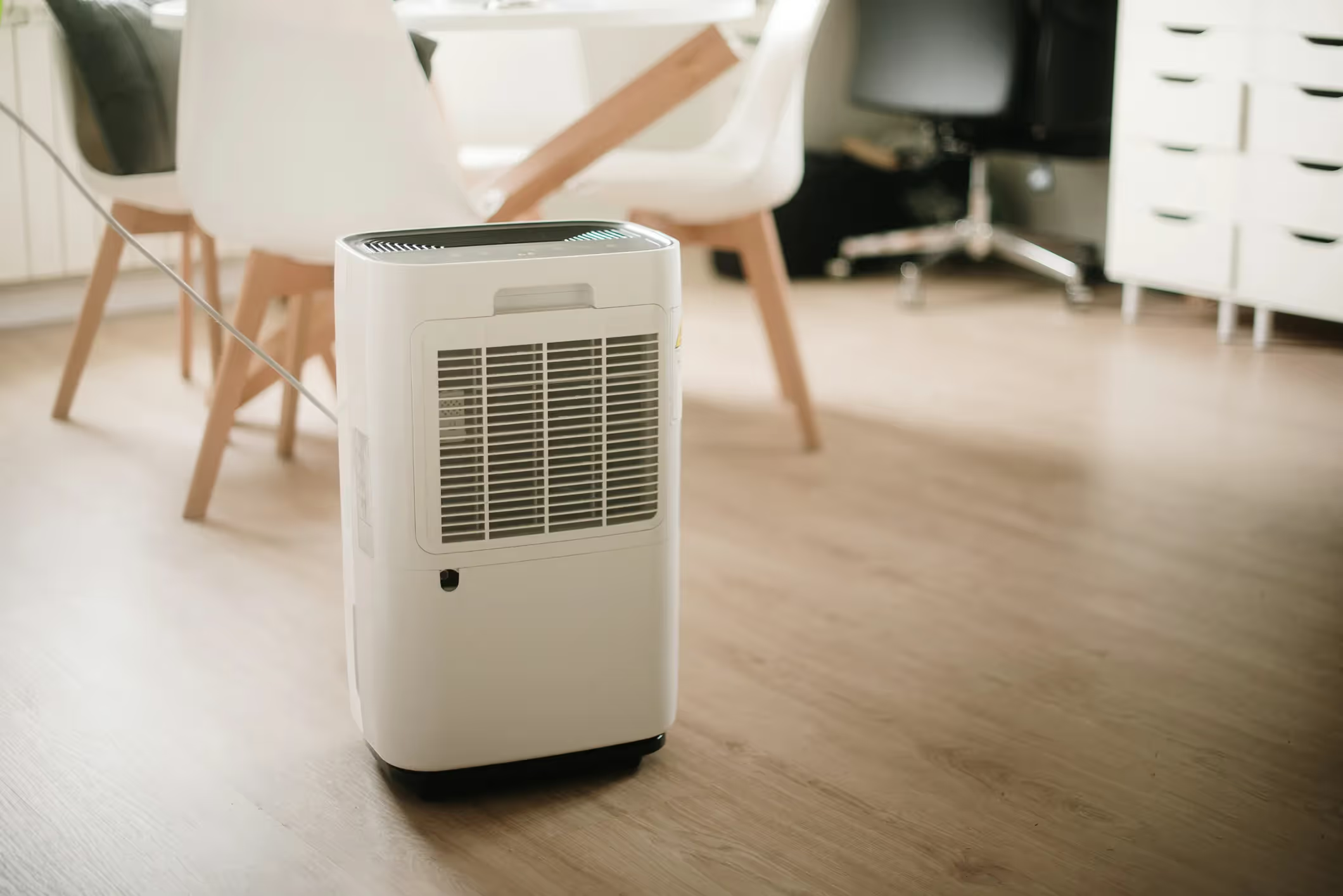
Mr.Freeze Heating & Cooling understands that standard air conditioners are designed primarily to lower temperature, with dehumidification being a secondary byproduct. In extreme summer weather, an AC unit may cool the house to the set temperature quickly but shut off before it has removed enough moisture. This results in a cold, clammy environment. A dedicated whole-home dehumidifier works in conjunction with your HVAC system to treat the air specifically for moisture content, ensuring your home remains dry and comfortable regardless of the weather outside.
What You Get With a Whole Home Dehumidification System
Installing a whole-home system is a significant upgrade from using portable, single-room units. A whole-home unit is integrated directly into your central heating and cooling system, treating 100% of the air circulating through your ductwork. When you choose a professional installation, you are investing in a permanent solution that operates automatically and requires minimal user intervention.
Key inclusions in a professional installation typically involve:
- High-Capacity Dehumidifier Unit: Equipment sized specifically for the square footage and cubic volume of your home, capable of removing significantly more pints of water per day than retail portable units.
- Dedicated Return Ducting: Strategically placed intake ducts that pull moist air from the most problematic areas of the house to the dehumidifier.
- Supply Integration: Connection points that feed the dried, filtered air back into your home’s supply stream.
- Merv Filtration: Many systems come with upgraded air filtration that captures dust and particulates as air passes through the drying cycle.
- Automated Drainage: Hard-piped drainage lines that eliminate the need to manually empty water buckets; condensate is routed directly to a floor drain or condensate pump.
- Smart Control: Installation of a dedicated humidistat or integration with your existing smart thermostat to allow for precise humidity percentage settings.
How the Installation Process Works
The installation of a whole-home dehumidifier is a technical process involving HVAC, electrical, and plumbing skills. It is not a plug-and-play appliance. The goal is to create a seamless loop where air is treated without disrupting the airflow or static pressure of your existing furnace or air handler.
The typical workflow for a new system setup includes:
- Load Calculation and Sizing: The technician evaluates the total volume of the home and the severity of moisture intrusion (e.g., loose construction vs. tight construction) to determine the required Pints Per Day (PPD) capacity.
- Site Preparation: The installation area, usually in a basement, crawl space, or utility closet near the central HVAC unit, is cleared and prepped. Leveling pads or suspension kits are set up to hold the unit securely.
- Ductwork Modification: The installer cuts into the existing supply and return plenums. They install bypass dampers or dedicated duct runs to route air through the dehumidifier. This step is critical for ensuring that the dehumidifier does not restrict airflow to the AC or furnace.
- Electrical Connection: A dedicated circuit may be run to power the unit, ensuring it does not overload the existing HVAC breaker. Low-voltage wiring is connected to the thermostat or humidistat to control cycle times.
- Drainage Setup: A PVC drain line is constructed with a P-trap to prevent sewer gas backflow. This line is routed to a nearby floor drain, sump pump, or outside location. If gravity drainage isn't possible, a condensate pump is installed to push water up and out.
- System Commissioning: The unit is powered on and tested. The technician verifies static pressure, checks for air leaks in the new ductwork, and calibrates the humidity sensors to ensure accuracy.
Comparing Repair vs. Replacement for Existing Units
If you already have a dehumidification system that is underperforming, you face the decision of whether to invest in repairs or replace the unit entirely. Dehumidifiers operate under high stress, constantly switching between heating and cooling cycles internally to pull moisture from the air. Over time, components wear out.
Consider replacement over repair in the following scenarios:
- Compressor Failure: The compressor is the heart of the system. If it seizes or fails, the cost of the part and labor usually approaches the cost of a brand-new unit with a fresh warranty.
- Refrigerant Leaks: Finding and fixing a leak in the coil, followed by recharging the refrigerant, is labor-intensive and expensive. Old coils often develop multiple pinhole leaks due to formicary corrosion.
- Age of the Unit: Most whole-home dehumidifiers have a service life of 8 to 12 years. If your unit is approaching this age and requires a major repair, replacement is the more fiscally responsible choice.
- Electrical Logic Board Failure: If the proprietary control board fails on an out-of-warranty unit, sourcing the part can be difficult and costly.
- Inefficiency: Older units consume more electricity to remove the same amount of water as modern, Energy Star-rated models. Upgrading can lower monthly operating costs.
Navigating Local Factors for Humidity Control
Residents in this region must account for specific environmental factors that influence how a dehumidifier is installed and operated. The local climate swings from freezing winters to tropical-feeling summers require a system that is robust but also capable of lying dormant during dry months without degrading.
- Basement and Crawl Space Focus: In many local homes, the primary source of humidity is not just the outside air but moisture migrating through the foundation. Treating the basement or crawl space is often critical to controlling the humidity levels in the upper floors.
- Ventilation Codes: Local building codes may require specific ventilation rates for gas-burning appliances. When installing a dehumidifier that ties into ductwork, care must be taken not to depressurize the mechanical room, which could cause back-drafting of water heaters or furnaces.
- Condensate Management: Because freezing temperatures are common in winter, any drain lines routed to the exterior must be carefully insulated or designed to prevent freezing, although the unit will likely not run during the coldest months.
- Electrical Permits: Modifications to the home's electrical panel to accommodate the dehumidifier often require adherence to local municipal electrical codes. Professional installers handle the permitting process to ensure compliance and safety.
Why Whole-Home Solutions Outperform Portables
Many homeowners attempt to solve humidity problems with portable units purchased from big-box stores. While these can be effective for a single room, they are inefficient for controlling the environment of an entire house.
- Energy Efficiency: Whole-home units remove more water per kilowatt-hour of electricity consumed compared to portable units.
- Noise Reduction: Portable units are noisy because the compressor and fan sit directly in your living space. A whole-home system is located away from living areas, usually in the basement or attic, making it virtually silent.
- Maintenance: Portable units require you to empty a bucket daily or twice daily. If you forget, the unit shuts off, and humidity rises immediately. Whole-home systems drain automatically.
- Air Circulation: A portable unit only treats the air in its immediate vicinity. A whole-home system utilizes the HVAC blower to pull air from every room, ensuring uniform humidity levels upstairs and downstairs.
- Filtration: Portable units typically have flimsy mesh filters. Whole-home systems often use pleated media filters that improve indoor air quality by trapping smaller particles.
Optimizing Your Home’s "Latent Load"
In HVAC terms, "sensible load" refers to the temperature of the air, while "latent load" refers to the moisture content. Modern, energy-efficient homes in Hobart often have high latent loads because they are well-insulated. This traps moisture generated from cooking, showering, and breathing inside the home.
An air conditioner must run for a specific duration to effectively remove this latent heat. However, on days with mild temperatures but high humidity—common in the shoulder seasons of spring and fall—the AC won't run long enough to dry the air. This is where a whole-home dehumidifier becomes essential. It can run independently of the cooling cycle, removing moisture without over-cooling the house. This capability allows you to set your thermostat a few degrees higher in the summer while feeling just as cool, as dry air promotes better evaporation from the skin.
Ensuring Long-Term Performance
Once your system is installed, maintaining it is straightforward but necessary to ensure it continues to protect your home from mold and moisture damage. Neglect can lead to reduced efficiency and potential water damage if drain lines clog.
- Filter Changes: The air filter on the dehumidifier should be checked every 3 to 6 months and replaced as needed. A clogged filter restricts airflow and can cause the coil to freeze.
- Drain Line Cleaning: Algae and biological growth can form in the drain line over time. Flushing the line with a vinegar solution or specialized cleaner annually prevents blockages.
- Grille Cleaning: If the system pulls air through a dedicated return grille, keep this grille free of dust and debris.
- Annual Inspection: Have the refrigerant levels and electrical connections checked during your routine HVAC maintenance visits.
Mr.Freeze Heating & Cooling ensures that every installation is set up for easy maintenance access, helping you get the maximum lifespan out of your investment.
Conclusion
Controlling indoor humidity is about more than just comfort; it is about preserving the structural integrity of your home and the health of its inhabitants. Excess moisture can warp wood floors, damage drywall, and foster the growth of allergens. By choosing a whole-home dehumidification strategy, you take control of your indoor environment, ensuring it remains dry, healthy, and comfortable year-round.
Don't let humidity compromise your home comfort any longer. Contact us today to discuss your options for whole home dehumidification.