
Concerned About Indoor Air Quality in Your Home?
Discovering the quality of your indoor air can be vital for your health and comfort, yet many homeowners in Hobart remain unaware of potential airborne pollutants that might be lurking indoors. Unexplained allergies, persistent odors, or excessive dust accumulation often signal that the air circulating through your vents contains contaminants that require identification through professional analysis. Contact us today to schedule a comprehensive air quality assessment and breathe easier in your home.
When you choose professional testing, you gain actionable data rather than relying on guesswork regarding your home's environment.
- Get fast, reliable air quality testing within 24 hours to address immediate concerns.
- Receive comprehensive reports covering mold spores, Volatile Organic Compounds (VOCs), and common allergens.
- Access practical advice and remediation solutions tailored to your specific home environment and HVAC system configuration.
Our services are ensured with certified technicians and backed up by industry-leading warranties to guarantee precise results.
What to Expect from Our Air Quality Testing Services
Indoor air quality (IAQ) testing is a diagnostic service designed to make the invisible visible. Homeowners often assume their HVAC filters catch everything, but microscopic particulates, gases, and biological growth often bypass standard filtration. The primary goal of our service is to provide a detailed baseline of what you and your family breathe daily. This is not a generic inspection; it is a data-driven analysis using calibrated equipment to measure specific pollutant levels against safety standards.
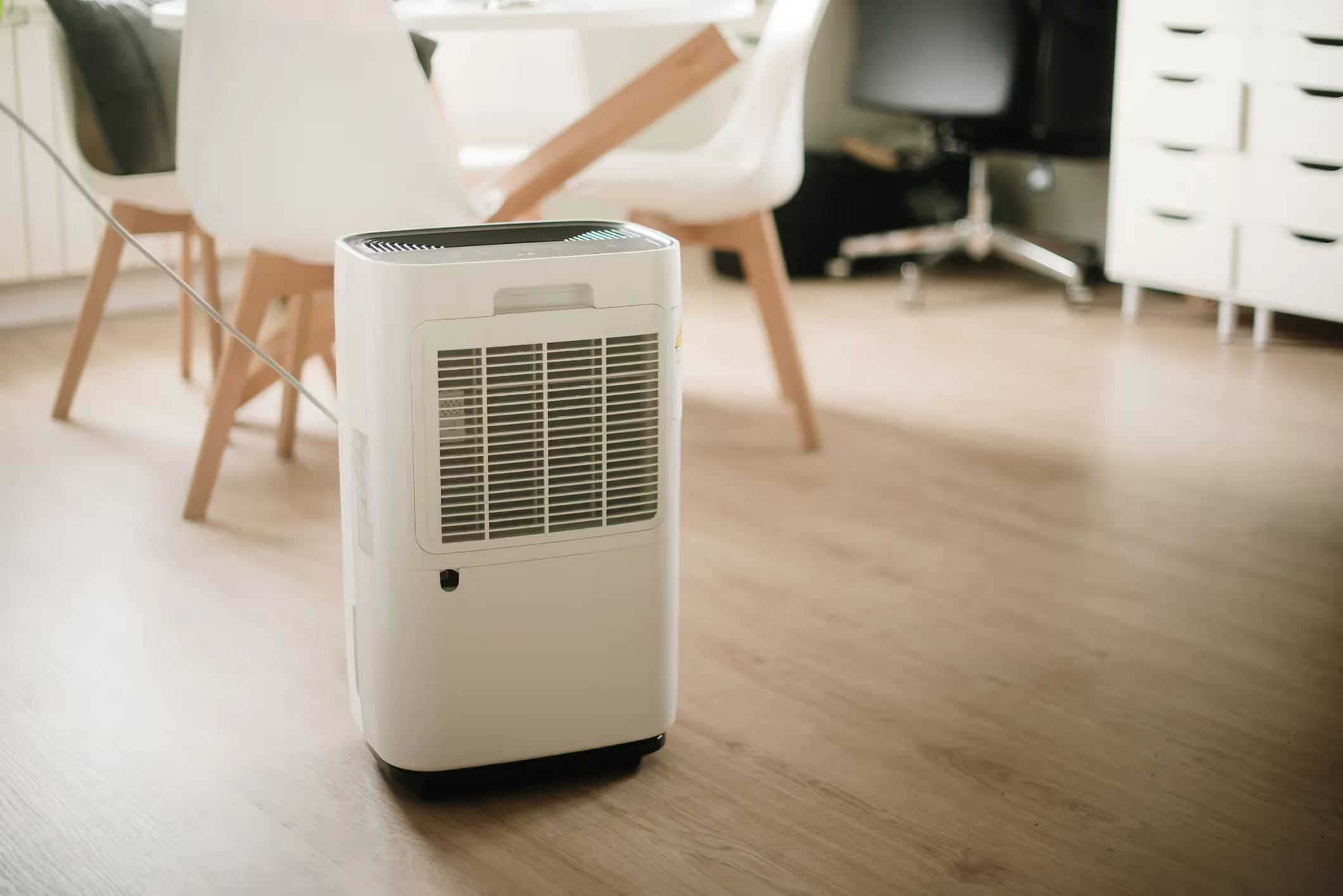
The scope of our testing covers a wide range of potential irritants. We look for particulate matter (PM2.5 and PM10), which includes fine dust, smoke, and pet dander that can penetrate deep into the lungs. We also measure humidity levels, as excess moisture is the precursor to mold growth, while overly dry air can exacerbate respiratory issues. Furthermore, our equipment scans for chemical pollutants, often released by household cleaning products, paint, new furniture, or building materials off-gassing in the home.
Upon completion of the physical testing, you receive a detailed breakdown of the findings. This report does not merely list numbers; it interprets them in the context of residential health standards. We identify "hot spots" in the home where circulation may be poor or where pollutant sources are concentrated. This enables you to make informed decisions about necessary interventions, whether that involves duct cleaning, humidity control, or the installation of advanced purification hardware.
How We Test for and Identify Air Quality Issues
Our testing process is systematic and minimally invasive, designed to gather accurate samples without disrupting your daily routine. We utilize distinct methodologies depending on whether the concern is general preventative maintenance or a specific reaction to a smell or health symptom. The technicians at Mr.Freeze Heating & Cooling follow a strict protocol to ensure sample integrity and result accuracy.
The assessment typically follows this progression:
- Initial Consultation and Visual Inspection: The technician begins by walking through the property to identify visible signs of moisture, mold, or dust buildup. This step includes checking ventilation points, the HVAC unit itself, and areas with high humidity like basements or crawlspaces.
- Equipment Calibration and Setup: We deploy specialized air sampling monitors in key areas of the home, usually in the most frequented rooms and near the intake vents. These devices are calibrated to detect specific particle sizes and chemical concentrations.
- Active Air Sampling: The equipment runs for a set duration, pulling air through distinct filters or sensors. This captures airborne spores, particulates, and gases that represent the average air quality in the living space.
- Surface Sampling (If Necessary): If visible growth or heavy dust is observed, swab or tape lift samples may be collected to identify the specific type of mold or allergen present on surfaces.
- Data Analysis and Reporting: The collected data and samples are analyzed to determine the concentration of pollutants. We then compile these findings into a clear, easy-to-understand report that highlights problem areas and prioritized recommendations.
Deciding Between Air Quality Improvement Options: Filtering vs. Whole-System Upgrades
Once testing reveals the state of your indoor environment, the next logical step is determining the appropriate solution. The data provided by the test dictates whether you need a simple maintenance adjustment or a permanent upgrade to your HVAC infrastructure. Not every air quality issue requires a heavy-handed approach; sometimes, the solution is as simple as changing habits or filtration grades.
When Improved Filtration is Sufficient:
- The test reveals high levels of large particulate matter like dust, pollen, or pet dander.
- Airflow measurements indicate that the HVAC system is moving air correctly, but the current filter MERV rating is too low to capture common allergens.
- The issues are seasonal, peaking only during spring pollen releases or dry winter months.
- In these cases, upgrading to a higher efficiency media filter or increasing the frequency of filter changes often resolves the problem without significant equipment installation.
When Whole-Home Purification or Ventilation is Required:
- The test detects high levels of Volatile Organic Compounds (VOCs), odors, or chemical vapors that standard physical filters cannot trap.
- Biological contaminants like viruses, bacteria, or mold spores are present, requiring UV germicidal lights or oxidizing purifiers to neutralize them.
- Humidity readings are consistently out of the ideal 30-50% range, necessitating whole-home humidifiers or dehumidifiers to prevent mold growth or structural damage.
- The home is tightly sealed for energy efficiency, trapping stale air inside, which suggests the need for an Energy Recovery Ventilator (ERV) to introduce fresh outdoor air without losing thermal energy.
Understanding Hobart's Air Quality Norms and Testing Regulations
The local climate in Hobart, IN, significantly influences the types of indoor air quality issues homeowners face. We experience a distinct four-season climate, which creates a cycle of different risks throughout the year. During the cold winters, average lows drop to around 15°F, causing residents to seal their homes tightly to conserve heat. While this is excellent for energy bills, it traps indoor pollutants, CO2, and viral particles inside, leading to what is often called "Sick Building Syndrome." Testing during winter often focuses on ventilation efficiency and carbon monoxide safety.
Conversely, our summers bring high humidity and temperatures reaching the upper 80s. This moisture is the primary fuel for biological growth. Homes in the region that lack proper dehumidification often see spikes in mold spore counts during July and August. Testing during these months is critical for checking humidity control and ensuring that cooling systems are not accidentally breeding contaminants in the condensate lines or ductwork.
Local regulations and guidelines, such as those referenced by the Indiana Department of Environmental Management (IDEM), emphasize the importance of maintaining safe indoor environments, particularly regarding radon and particulate matter. While residential testing is largely voluntary, adhering to these standards ensures that your home remains safe for long-term occupancy and maintains its resale value. Our testing protocols are aligned with these regional expectations to provide results that are legally and scientifically sound.
Common Indoor Pollutants Detected Through Professional Testing
Understanding what we look for helps homeowners realize the value of professional diagnostics. It is rarely just "dust." The composition of the air inside a modern home can be complex, containing a mixture of biological and chemical elements that interact with your respiratory system.
Volatile Organic Compounds (VOCs):
- These are emitted as gases from certain solids or liquids. VOCs include a variety of chemicals, some of which may have short- and long-term adverse health effects.
- Common sources include paints and lacquers, paint strippers, cleaning supplies, pesticides, building materials and furnishings, office equipment such as copiers and printers, correction fluids and carbonless copy paper, graphics and craft materials including glues and adhesives, permanent markers, and photographic solutions.
- Testing identifies elevated VOC levels that indicate a need for better ventilation or removal of the source material.
Biological Pollutants:
- This category includes mold, bacteria, viruses, pollen, and animal dander.
- Mold is particularly concerning in our region due to humidity fluctuations. It releases spores that can trigger asthma attacks and allergic reactions.
- Bacteria and viruses can circulate through HVAC systems, spreading illness among family members. Testing can determine if your HVAC system is acting as a reservoir for these pathogens.
Combustion Byproducts:
- Carbon monoxide (CO) and nitrogen dioxide (NO2) are colorless, odorless gases that can be fatal in high concentrations.
- These usually originate from gas stoves, furnaces, fireplaces, or attached garages.
- While standard detectors catch lethal levels, professional air quality testing can detect low-level chronic exposure that causes headaches, dizziness, and fatigue over time.
Why Choose Us? Certifications, Testimonials, and Local Commitment
Selecting the right partner for air quality testing is about trust and technical expertise. You need a team that understands the science of building envelopes and the specific environmental challenges of the local area. We do not use scare tactics to sell equipment; we use data to provide solutions.
Our commitment involves:
- Advanced Diagnostic Tools: We invest in industrial-grade particle counters and gas detectors that provide precise readings, far superior to DIY home test kits.
- Certified Expertise: Our technicians undergo rigorous training in environmental safety and HVAC system dynamics. We understand how airflow, pressure, and thermal dynamics affect air quality.
- Holistic Approach: We look at the house as a system. We don't just identify a pollutant; we investigate the root cause, whether it is a leaky duct, a drainage issue, or inadequate ventilation.
- Clear Communication: We translate complex environmental data into plain English. You will understand exactly what is in your air and what your options are.
Call Now
Ensuring the safety of the air you breathe is a fundamental aspect of home maintenance. With the extreme seasonal shifts in Hobart, monitoring your indoor environment is the best way to protect your family from respiratory issues and ensure your HVAC system is not circulating contaminants. Mr.Freeze Heating & Cooling is dedicated to providing honest, accurate testing and effective solutions for a healthier home.
Take control of your indoor environment today. Contact us to schedule your professional air quality test.