Struggling with Heating Issues? Instant Help Available!
Dealing with a broken furnace during Hobart's freezing winters can be more than inconvenient; it can be a hazard to your home and family. When you need fast, reliable heating service to combat sub-zero temperatures, Mr.Freeze Heating & Cooling is ready to restore your comfort immediately. Contact us now to schedule emergency repair or discuss our flexible financing options.
A heating failure in the middle of January requires a service provider who understands the urgency of the situation. You cannot afford to wait days for a technician when pipes are at risk of freezing and indoor temperatures are dropping rapidly. We provide comprehensive heating solutions designed to get your system running efficiently, regardless of the make or model.
- Experienced technicians are on-call 24/7 to handle all heating emergencies without delay.
- We offer rapid response times with same-day service availability to restore warmth quickly.
- You receive transparent pricing with no hidden fees—get your upfront estimate now.
- All services are fully licensed, insured, and come with a comprehensive warranty for your peace of mind.
Reliable Heating Solutions Delivered Today
When you request service, the primary goal is diagnosing the root cause of the failure accurately and executing a permanent fix. Modern heating systems are complex, integrating electrical controls, gas combustion, and airflow management. A technician does not simply guess; they utilize advanced diagnostic tools to isolate issues within the ignition system, the blower motor, or the heat exchanger.
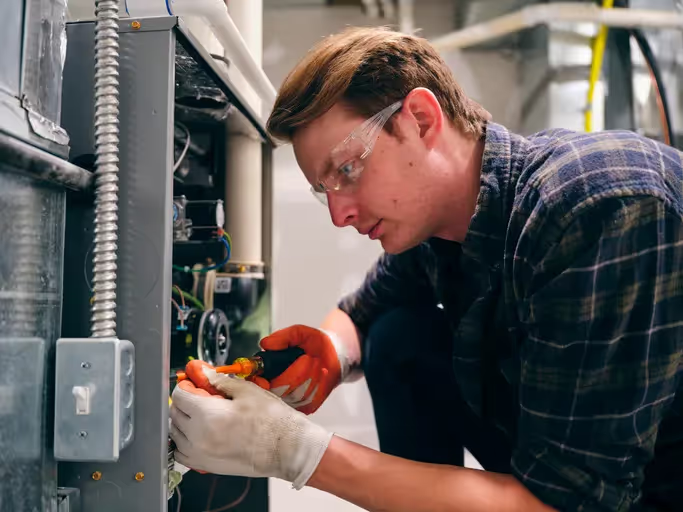
Residents in Hobart, IN require heating systems that can handle the heavy lifting required by a humid continental climate. Service appointments focus on restoring the unit to manufacturer specifications. This ensures that the system not only generates heat but does so safely, without leaking carbon monoxide or wasting fuel.
Comprehensive Diagnostic and Repair Scope
Upon arrival, the service includes a full safety and performance inspection. Technicians systematically check the following components to identify why the system is underperforming or has shut down completely:
- Thermostat Calibration: ensuring the command center of your heating system is reading temperatures accurately and communicating correctly with the furnace board.
- Ignition System Testing: inspecting the pilot light, hot surface ignitor, or spark ignition system to ensure the fuel is lighting reliably every time.
- Blower Motor Analysis: checking the amp draw and capacitor status of the blower motor to prevent airflow restrictions that lead to overheating.
- Safety Switch Verification: testing limit switches, rollout switches, and pressure switches that are designed to shut the unit down if dangerous conditions are detected.
- Flame Sensor Cleaning: removing carbon buildup from the flame sensor, a common cause of intermittent cycling where the furnace turns on and off repeatedly.
Immediate Repair Implementation
Once the issue is identified, the focus shifts to immediate repair. Service trucks are stocked as mobile warehouses, carrying a wide inventory of universal parts, including ignitors, control boards, gas valves, and capacitors. This preparation minimizes the need for follow-up visits and ensures that heat is restored during the initial appointment whenever possible.
The Heating Installation and Replacement Process
There comes a point where a heating system is beyond viable repair or simply too inefficient to operate economically. Installing a new system is a major construction project that affects the comfort and energy efficiency of a home for the next 15 to 20 years. The installation process is strictly regulated and follows a specific technical sequence to ensure optimal performance.
Sizing and Load Calculation
The most critical step in installation is not the physical placement of the unit, but the engineering that happens beforehand. A "rule of thumb" approach to sizing is outdated and results in short-cycling or inadequate heating.
- Technicians perform a Manual J load calculation, which considers the square footage, insulation levels, window types, and orientation of the home.
- The specific heating requirements of the property are determined to select a unit with the exact BTU output needed.
- Ductwork is inspected to ensure it can handle the airflow requirements of the new, likely more powerful, system.
Removal and Site Preparation
Proper removal of the old unit is essential to protect the home and prepare the infrastructure for the new equipment.
- Technicians disconnect gas lines and electrical wiring safely, adhering to local safety codes.
- The old unit is removed and hauled away for proper disposal or recycling.
- The area is cleaned, and the plenum (the box connecting the furnace to the ductwork) is modified or rebuilt to ensure an airtight seal with the new unit.
System Installation and Commissioning
The physical installation involves connecting the new furnace to the existing infrastructure with precision.
- The new unit is leveled to ensure proper drainage for high-efficiency condensing furnaces.
- Flue pipes are installed or upgraded to PVC if moving from a standard efficiency (80%) to a high-efficiency (90%+) system, ensuring acidic condensate drains correctly.
- Gas lines are reconnected and tested for leaks using electronic sniffers.
- The system is fired up, and technicians adjust the gas pressure at the manifold to match the manufacturer's specifications.
- A final temperature rise test is conducted to verify that the air heating up across the heat exchanger falls within the safe operating range.
Critical Decision Guide: When to Replace vs. Repair
Homeowners often face the difficult choice between investing in a repair or putting that money toward a new system. This decision should be based on data and financial logic rather than emotion. While Mr.Freeze Heating & Cooling provides both services, understanding the thresholds for replacement can save significant money in the long run.
The 50% Investment Rule
A standard industry benchmark is the 50% rule. If the cost of the repair approaches or exceeds 50% of the value of a new system, replacement is generally the wiser financial move. For example, replacing a cracked heat exchanger or a failed compressor in an older unit is labor-intensive and expensive. If the unit is already out of warranty, those funds are better utilized as a down payment on a system that resets the warranty clock.
System Age and Efficiency
Heating systems have a finite lifespan. In the harsh winters typical of this region, a furnace generally lasts between 15 and 20 years.
- If the system is over 15 years old and requires a minor repair, it is nearing the end of its reliable service life.
- Older units likely operate at 60% to 70% AFUE (Annual Fuel Utilization Efficiency), meaning 30 to 40 cents of every dollar spent on gas is wasted up the flue.
- Modern systems operate between 95% and 98% AFUE. Replacing an aging unit can result in immediate monthly utility savings that help offset the installation cost.
Safety Concerns
Certain failures constitute an immediate safety hazard that dictates replacement.
- Cracked Heat Exchanger: This is the component that separates the combustion gases from the breathing air. A crack can allow carbon monoxide to leak into the home. In almost all cases involving an old unit, a cracked heat exchanger necessitates immediate replacement of the furnace.
- Recurring Electrical Failures: If a unit is repeatedly burning out control boards or motors, it often indicates an underlying systemic issue or cleaner power requirements that an older unit cannot support.
Local Considerations for Hobart Residents
Operating a heating system in Northwest Indiana involves specific challenges related to the climate and local infrastructure. Understanding these local factors helps in maintaining system longevity and ensuring compliance with regulations.
Permitting and Code Compliance
Any significant HVAC work, particularly furnace replacement, typically requires a permit from the City of Hobart or Lake County building departments.
- Permits ensure that the installation meets current safety codes regarding gas piping, electrical connections, and venting.
- Professional providers handle the application and inspection process, ensuring the homeowner is not liable for unpermitted work during a future home sale.
Utility Provider Integration
Most homes in Hobart utilize NIPSCO (Northern Indiana Public Service Company) for natural gas and electricity.
- High-efficiency upgrades often qualify for rebates offered by utility providers to incentivize energy reduction.
- Technicians can assist in identifying equipment that meets the specific AFUE criteria required to claim these rebates.
- Service work must account for the specific gas pressure delivery common in the area to ensure the furnace burns cleanly.
Winter Weather Impact
With average annual snowfall around 30 inches and temperatures frequently dipping below freezing, the external components of a heating system require attention.
- High-efficiency furnaces use PVC intake and exhaust pipes that exit the side of the home. These must be kept clear of snow drifts to prevent the system from shutting down due to air blockage.
- The freeze-thaw cycle common in late winter can affect the condensate lines of high-efficiency units. Ensuring these lines are properly insulated and routed to a drain that will not freeze is a critical part of the installation and maintenance process in this region.
Proof of Performance and Service Differentiators
Choosing a heating partner is about more than just fixing a machine; it is about trusting a team to enter your home and secure your safety. We prioritize technical excellence and respect for the homeowner’s property above all else.
Technical Expertise and Certification
Technicians undergo rigorous training to stay current with the rapidly evolving HVAC technology. Modern systems utilize variable-speed blowers, modulating gas valves, and communicating thermostats. We ensure our team is certified to handle these advanced systems, reducing the risk of misdiagnosis. This technical proficiency allows for the servicing of all major brands, ensuring that warranty terms are upheld during repairs and maintenance.
Warehouse on Wheels
Efficiency is driven by preparation. Service vehicles are stocked with a vast array of parts to cover the most common heating failures. This inventory management strategy reduces downtime for the homeowner. Instead of waiting for parts to be ordered or for a technician to drive to a supply house, the necessary component is often already in the driveway. This approach supports the goal of completing the repair in a single visit.
Respect for Property
Heating work can be messy, but the mess should never be left behind.
- Technicians utilize shoe covers and drop cloths to protect flooring and carpets from snow, mud, and debris.
- Work areas are cleaned thoroughly after the job is complete.
- Old equipment and packaging materials are removed from the site, leaving the home exactly as it was found, only warmer.
Operational Transparency
Homeowners receive clear, written explanations of the work performed. Whether it is a simple sensor cleaning or a complex heat exchanger replacement, the details of the service, the parts used, and the labor involved are communicated openly. This transparency builds a relationship based on trust, ensuring that you understand exactly what you are paying for and why it is necessary for the health of your heating system.
Restore Comfort and Safety This Winter
When the temperature drops and your furnace fails to keep up, you need a solution that is fast, professional, and built to last. Do not gamble with your comfort or safety during the winter months. Reach out to our team today to secure your appointment and restore warmth to your home.