
Immediate Heat Pump Repair: Fix It Right, Fast!
Is your heat pump failing just when you need it most, leaving your home uncomfortably cold or sweltering hot? You need a quick, reliable fix that lasts, so call us immediately to schedule a technician or apply for financing today.
- Enjoy same-day service with our certified technicians.
- Get all repairs under warranty—no surprises later.
- 24/7 availability to handle emergencies at any time.
Licensed and insured – Local expertise with full warranty on all services.
Restoring Comfort to Your Home Without Delay
When a heat pump malfunctions, the temperature inside your Hobart home can shift rapidly, putting your comfort and safety at risk. Unlike a standard furnace or air conditioner, a heat pump works year-round to move heat rather than generate it. When this system fails, it affects both your heating and cooling capabilities, making a swift resolution critical. You cannot afford to wait for parts to be ordered or for a technician to guess at the problem. You need a focused, analytical approach that identifies the root cause immediately.
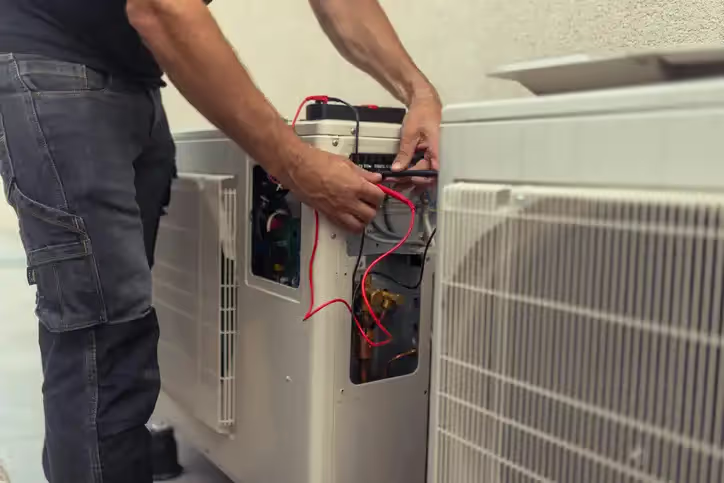
Mr.Freeze Heating & Cooling arrives prepared to handle the specific mechanical and electrical challenges associated with modern heat pump systems. Whether the unit is frozen over, blowing lukewarm air, or making grinding noises, the goal is to restore full functionality in a single visit whenever possible. Technicians carry fully stocked trucks with universal parts, capacitors, contactors, and refrigerant to address common failures on the spot.
A failing heat pump often exhibits specific symptoms that require immediate attention. If the system is stuck in one mode—heating but not cooling, or vice versa—it often indicates a reversing valve issue. If the outdoor unit is covered in ice and not entering the defrost cycle, the system is unable to extract heat effectively. Short cycling, where the unit turns on and off rapidly, puts immense strain on the compressor and drives up energy bills. Addressing these issues immediately prevents catastrophic compressor failure and ensures your home returns to a stable temperature.
Our Systematic Approach to Diagnosing and Fix Heat Pumps
A heat pump is a complex piece of machinery that relies on a precise balance of refrigerant pressure, airflow, and electrical voltage. Guesswork leads to recurring problems. Professional repair requires a methodical diagnostic process to isolate the fault. This ensures that the repair fixes the actual problem, not just a symptom.
Comprehensive Electrical Analysis:
The technician begins by testing the electrical supply to both the indoor air handler and the outdoor condenser. This includes checking voltage, amperage draw on the compressor, and the integrity of the wiring. Loose connections or failing capacitors are common culprits that can stop a system dead in its tracks.
Refrigerant Charge Verification:
Heat pumps require a precise refrigerant charge to operate efficiently. A system that is low on refrigerant cannot absorb or release heat effectively. Gauges are attached to measure subcooling and superheat levels, determining if there is a leak that needs to be sealed before recharging the system.
Airflow and Blower Inspection:
Proper airflow is non-negotiable for heat pump performance. The technician inspects the blower motor, fan belt (if applicable), and air filter. Blocked airflow can cause the indoor coil to freeze in summer or the outdoor coil to freeze in winter, triggering safety switches that shut the system down.
Reversing Valve and Defrost Control Testing:
The reversing valve is the heart of the heat pump's dual functionality. The technician tests the solenoid to ensure it shifts correctly between heating and cooling modes. Additionally, the defrost control board and sensors are tested to ensure the unit can melt ice accumulation during freezing weather.
Thermostat and Control Calibration:
Sometimes the issue lies in the communication between the thermostat and the unit. The technician verifies that the thermostat is sending the correct signals for first-stage heating, second-stage heating (auxiliary heat), and cooling.
Final System Performance Test:
Once the repair is complete, the system is run through a full cycle. Output temperatures are measured at the supply and return vents to verify that the temperature split is within manufacturer specifications.
Common Heat Pump Failures and Solutions
Understanding what goes wrong helps in making informed decisions about repairs. Heat pumps in the Hobart area work hard due to the distinct seasonal shifts, leading to specific wear and tear patterns.
Frozen Outdoor Unit:
While a light frost is normal in winter, a unit encased in solid ice indicates a failure in the defrost cycle. This could be due to a bad defrost timer, a faulty sensor, or a stuck reversing valve. If left unaddressed, the expanding ice can crush the coil fins and damage the fan blades.
Auxiliary Heat Running Constantly:
If your thermostat constantly shows "AUX" or "EM Heat" even when it is not extremely cold outside, the heat pump is not keeping up. This is an inefficient way to heat a home and usually points to a compressor issue or low refrigerant charge.
Blowing Cold Air in Heat Mode:
If the air coming from the vents feels cold, the unit may have gone into defrost mode (which is normal for short periods) or the compressor may not be running. If the auxiliary heat strips fail to engage during the defrost cycle, you will feel cold air circulating.
Strange Noises:
Grinding, screeching, or rattling sounds are never normal. Screeching often indicates a motor bearing failure or a loose belt. Grinding usually points to a more serious issue with the compressor. Rattling can be as simple as loose panels or debris in the outdoor unit.
Leaking Water:
In the summer, a clogged condensate drain can cause water to back up and overflow from the indoor unit. In winter, water pooling around the outdoor unit is normal as ice melts, but if it refreezes and creates a hazard, drainage improvements may be necessary.
Making the Right Call: When to Repair and When to Replace
Deciding between repairing a current unit or investing in a new system is a financial and practical calculation. There is a tipping point where throwing money at an old system stops making sense.
The 50% Rule:
If the cost of the repair approaches 50% of the value of a new system, replacement is generally the better financial move. Major component failures, such as a blown compressor or a cracked coil out of warranty, often fall into this category.
System Age Considerations:
Heat pumps generally last between 10 and 15 years. If your unit is over 12 years old and requires a significant repair, reliability becomes a major concern. Older units are also likely to use R-22 refrigerant, which is phased out and extremely expensive to replenish.
Frequency of Breakdowns:
If you have required multiple repairs in the last two years, the system is likely nearing the end of its lifespan. Constant minor repairs add up quickly and result in cumulative downtime that disrupts your life.
Energy Efficiency Trends:
Older heat pumps often have a SEER rating of 10 or 12. Modern systems start at 14 and go much higher. Replacing an aging unit can result in immediate monthly savings on utility bills, effectively subsidizing the cost of the new installation over time.
Comfort Consistency:
If the current unit struggles to maintain the set temperature, leaves humidity levels high in the summer, or creates hot and cold spots throughout the house, a modern variable-speed system will provide a significant upgrade in comfort.
Mr.Freeze Heating & Cooling technicians provide honest assessments based on the condition of the specific unit. The focus is on data, not sales pressure. You will receive a clear breakdown of the cost to repair versus the cost to replace, allowing you to make the decision that fits your budget and long-term plans.
Navigating Local Climate Challenges and Regulations
Operating a heat pump in Hobart presents unique challenges due to the regional climate. The winters bring freezing temperatures and lake-effect snow, while summers can be hot and humid. These extremes demand a system that is perfectly tuned.
Snow Accumulation Management:
In this region, outdoor units must be kept clear of snow drifts. If snow blocks the airflow around the condenser, the system suffocates. Technicians check the placement of the unit to ensure it is elevated enough to stay above average snowfall and advise on keeping the perimeter clear.
Low-Ambient Performance:
Standard heat pumps lose efficiency as the temperature drops below freezing. For this area, ensuring the auxiliary heat strips (electric resistance heating) are functioning correctly is vital for the coldest days of January and February.
Permitting and Code Compliance:
Major repairs involving refrigerant lines or system replacements may require adherence to local building codes. Professional service providers handle all necessary permits and ensure that electrical connections meet the current National Electrical Code (NEC) standards for safety.
Utility Requirements:
Local utility providers sometimes offer rebates or have specific requirements for high-efficiency connections. Ensuring your system meets these standards can help you qualify for available incentives and ensures compatibility with the local grid load.
Technical Expertise You Can Rely On
Choosing the right service provider means looking for technical proficiency and operational transparency. The difference between a temporary patch and a long-term solution lies in the training of the technician and the quality of the parts used.
Advanced Diagnostic Tools:
Technicians utilize digital manifolds and electronic leak detectors to pinpoint issues with high accuracy. This eliminates the trial-and-error approach that wastes time and money.
Stocked Mobile Warehouses:
Trucks arrive loaded with the most common OEM and universal parts. The objective is to complete the repair during the initial appointment, reducing the need for follow-up visits and extended downtime.
Refrigerant Handling Certification:
Handling refrigerant requires EPA Section 608 certification. This ensures that refrigerant is recovered, recycled, and charged according to federal environmental regulations, protecting both the ozone layer and the efficiency of your system.
Warranty Protection:
Repairs come with labor and parts warranties. If a replaced component fails within the warranty period, it is addressed without additional cost to the homeowner. This guarantees accountability and quality workmanship.
Respect for Property:
Technicians use shoe covers and drop cloths to protect flooring and maintain a clean workspace. All debris and failed parts are removed from the site upon completion of the job.
Secure Your Comfort Today
A broken heat pump is an emergency that disrupts your entire home. Whether it is the dead of winter or the peak of summer, you need a solution that restores your environment to a comfortable temperature immediately. Do not settle for delays or vague diagnostic guesses. You deserve a clear explanation of the problem, a firm quote for the repair, and a technician who respects your time and property.
Mr.Freeze Heating & Cooling is ready to diagnose and repair your system now. Restore efficiency and peace of mind with a professional repair that stands the test of time — request service.
Schedule your heat pump repair now for same-day service.