
Experience Sustainable Comfort with Geothermal Heating
Frustrated with high heating bills and erratic temperatures during the harsh winters and humid summers in Griffith? Discover the reliable efficiency of geothermal systems that utilize the earth's constant temperature to stabilize your home environment, drastically reducing your reliance on fossil fuels. Contact us today to schedule a site assessment or inquire about our available financing options for system installation.
- Significant cost savings on monthly heating and cooling bills.
- Eco-friendly technology that drastically reduces your residential carbon footprint.
- Reliable and consistent indoor comfort regardless of the weather outside.
Backed with comprehensive warranties and expert support to navigate federal incentives, our team ensures your transition to geothermal is seamless and financially sound. Mr.Freeze Heating & Cooling specializes in designing ground-source solutions tailored to the specific soil conditions and climate of our region.
What You Get With a Geothermal Installation
Switching to a geothermal heat pump is more than just swapping out a box; it is a long-term infrastructure investment for your property. When you initiate this project, you are purchasing a system designed to last generations. The underground loop field has a life expectancy of over 50 years, while the indoor handling unit typically lasts 20 to 25 years—significantly longer than conventional furnaces or air conditioners.
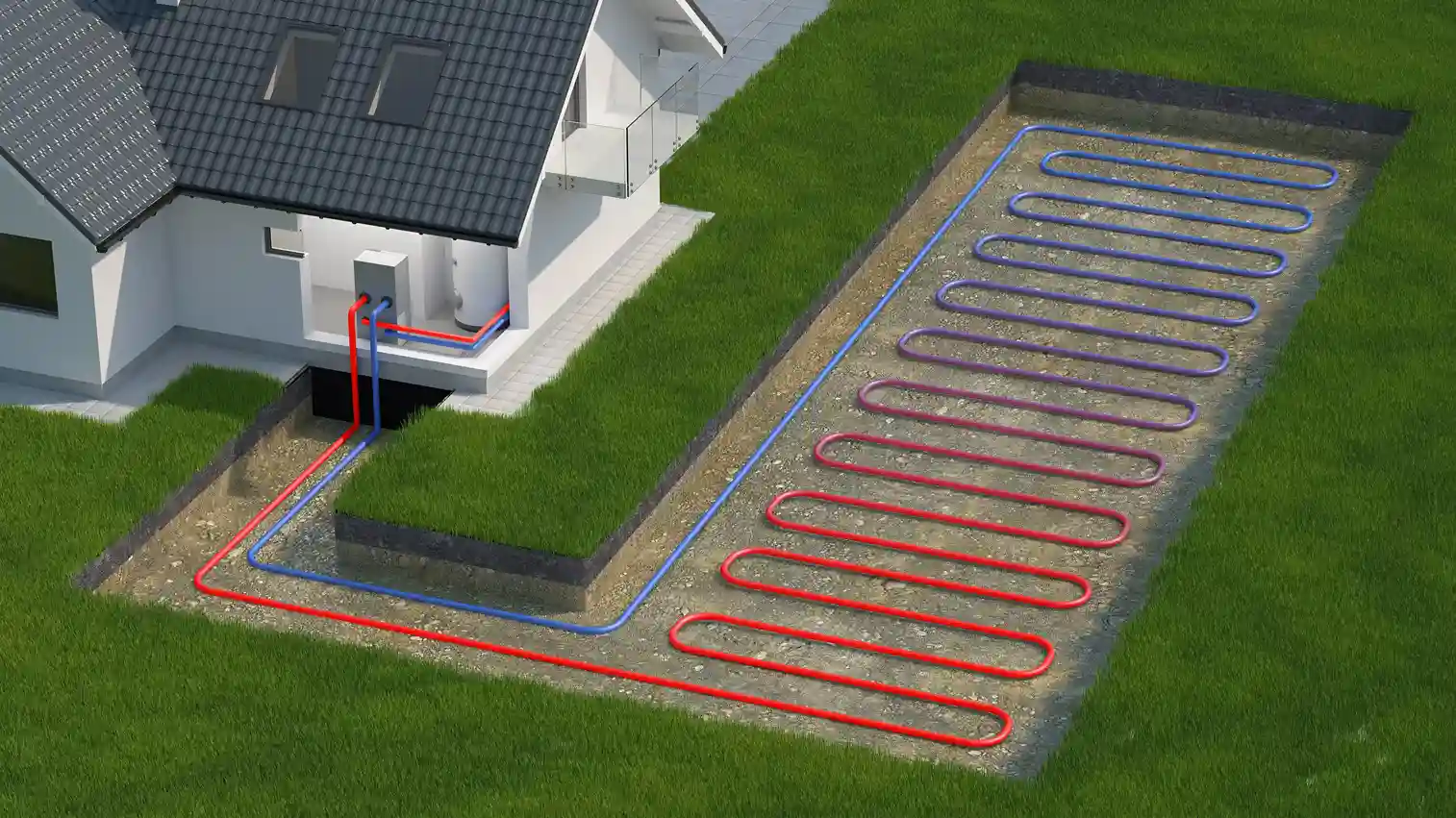
The scope of a geothermal installation involves two distinct components: the earth loop and the indoor heat pump unit. The earth loop is a system of high-density polyethylene pipes buried underground, which circulates water and an antifreeze solution to exchange heat with the ground. The indoor unit functions similarly to a standard furnace but uses the fluid from these pipes rather than burning gas or resisting electricity to generate temperature changes.
Current installation packages cover the complete excavation or drilling required for the loop field. This includes the fusion of pipe connections to ensure a leak-proof system, the flushing and purging of the lines to remove air and debris, and the final connection to your ductwork. You also receive a comprehensive Manual J load calculation. This engineering step ensures the system is perfectly sized for your home’s square footage and insulation levels, preventing the common issues of short-cycling or inadequate climate control.
Understanding the Installation Process
Installing a geothermal system requires precise coordination between excavation and HVAC technical work. The process is methodical and designed to minimize disruption while maximizing thermal conductivity.
- Site Evaluation and Loop Design: First, technicians conduct a thorough survey of your property in Griffith to determine the most effective loop configuration. Soil composition is tested to measure thermal conductivity—how well the ground absorbs and releases heat. Based on the available land area, a decision is made between a horizontal loop (requires more land, trenches are 4-6 feet deep) or a vertical loop (requires less land, boreholes are drilled 150-400 feet deep).
- Excavation and Loop Insertion: For horizontal systems, trenchers excavate lines where the piping is laid out in wide distinct patterns. For vertical systems, a drilling rig creates deep boreholes. The high-density piping is inserted into these holes. A critical step here is "grouting." A special thermally conductive grout is pumped into the borehole to seal it and ensure efficient heat transfer between the pipe and the surrounding earth, while also protecting groundwater aquifers.
- Manifold Connection and Trenching: The individual loops from the trenches or boreholes are brought to a header or "manifold" system. This consolidates the flow into supply and return lines that run into the home's foundation. All underground pipe joints are heat-fused, creating a single continuous piece of plastic that is virtually impervious to leaks or root intrusion.
- Interior Unit Installation: Inside the home, the old furnace and air conditioner are removed. The new geothermal heat pump unit is installed and connected to the existing ductwork. If your home utilizes radiant floor heating, the water-to-water geothermal unit is plumbed into the manifold for the floor system. Electrical connections are upgraded to support the new unit, and a thermostat capable of managing the stages of geothermal heating is installed.
- System Flushing and Commissioning: Before the system is turned on, the entire loop field is flushed with a high-velocity pump to remove any construction debris or air pockets. The antifreeze solution is added to the water to prevent freezing during the coldest winter months. Finally, the system is started, and technicians measure pressures, temperatures, and flow rates to verify it is performing according to the manufacturer's specifications.
When to Repair vs. Replace Your Geothermal System
While geothermal systems are robust, they eventually encounter mechanical wear or require decisions regarding upgrades. Knowing when to invest in a repair or opt for a full replacement of the indoor unit helps protect your wallet and comfort.
Repair Signals
- Minor Component Failures: Issues with capacitors, contactors, or fan motors are routine repairs. If the unit is under 10 years old and the repair cost is less than 50% of a new unit, repair is the logical choice.
- Thermostat Calibration Issues: Sometimes the problem isn't the heat pump but the control interface. If the system runs but doesn't hit target temps, a control board or thermostat swap often resolves it.
- Flow Center Pumps: The pumps that move water through the ground loop can wear out over time. Replacing a flow center pump is a standard maintenance task and does not require replacing the whole system.
Replacement Signals
- Compressor Failure: The compressor is the heart of the heat pump. If it fails and the unit is out of warranty (typically over 10 years old), replacement is usually more cost-effective due to the high labor and part costs associated with compressor change-outs.
- Refrigerant Leaks: Older units may use phased-out refrigerants (like R-22). If a significant leak occurs in an obsolete unit, topping it off is expensive and temporary. Upgrading to a modern unit with R-410A or newer refrigerants is necessary.
- Loop Issues vs. Unit Issues: It is vital to distinguish between the two. The ground loop rarely needs replacement. If your system is underperforming, it is almost always the indoor mechanical unit. You can replace the indoor heat pump while keeping the existing ground loop, which saves a massive portion of the installation cost.
- Efficiency degradation: If your electrical usage has spiked despite maintenance, the heat exchanger may be fouled or the compressor valves worn. A new unit can offer significantly higher Coefficient of Performance (COP) ratings, lowering monthly bills immediately.
Operational Considerations for Griffith Residents
Operating a geothermal system in Indiana requires understanding local environmental factors and regulatory requirements. The geology and climate of our area directly influence how these systems are engineered and maintained.
- Soil and Hydrology: Griffith sits on a mix of soil types that can vary from sandy to clay-heavy. Clay soils are generally excellent for geothermal conductivity because they hold moisture well, which aids in heat transfer. Sandy soils may require longer loops or specific grout mixtures to achieve the same efficiency. High water tables in certain parts of the region are actually beneficial for geothermal efficiency, as water transfers heat better than dry earth.
- Permitting and Code Compliance: Installation involves ground penetration, which triggers specific local code requirements. Permits must be secured from the local building department before drilling or excavation begins. This ensures that the loop field does not interfere with municipal utility lines, septic systems, or property boundaries. Additionally, because the system interacts with the ground, there are environmental regulations regarding the grouting of boreholes to protect local aquifers from contamination.
- Electrical Infrastructure: Geothermal systems run entirely on electricity. While they consume far less energy than electric resistance heating, the initial startup of the compressor requires a specific amperage. Older homes in the area with 100-amp service may need an electrical panel upgrade to accommodate the heat pump, especially if an auxiliary electric heat strip is installed for emergency backup during extreme sub-zero cold snaps.
- Federal Incentives: Homeowners should be aware of the current federal tax credit landscape. Under the Inflation Reduction Act, geothermal heat pump installations typically qualify for a 30% tax credit. This is a dollar-for-dollar reduction in federal income tax owed, not just a deduction. This credit applies to the total cost of the project, including labor, site preparation, and equipment. Documentation of the system’s Energy Star certification is required to claim this credit.
Why Geothermal is the Superior Choice
For homeowners looking at the bottom line and long-term asset value, geothermal offers a return on investment that conventional HVAC cannot match.
- Unmatched Efficiency: The most efficient gas furnaces are roughly 98% efficient. A geothermal heat pump can reach efficiencies of 400% to 500%. For every one unit of electricity used to power the system, it moves four to five units of heat energy from the ground into your home. This thermodynamic advantage remains constant even when the outside air temperature drops below freezing, unlike air-source heat pumps which lose efficiency as the air gets colder.
- Safety and Air Quality: Because there is no combustion involved, there is zero risk of carbon monoxide poisoning from the heating unit. There are no pilot lights, no fumes, and no need to vent exhaust gases. This creates a safer indoor environment and eliminates the need for flue maintenance.
- Noise Reduction: Geothermal units operate quietly. There is no noisy outdoor condenser unit with a fan blade whirring outside your bedroom window. The indoor unit runs with a hum comparable to a refrigerator, and the outdoor component—the ground loop—is completely silent and invisible. Mr.Freeze Heating & Cooling ensures that every aspect of this high-performance technology is implemented correctly. From the fusion of the pipe joints to the calibration of the blower motor, the focus is on precision.
- Predictable Energy Costs: By decoupling your heating costs from the fluctuating prices of propane, oil, and natural gas, you gain budget stability. The temperature of the earth is free and infinite; you only pay for the electricity to move that heat. This shields you from geopolitical spikes in fuel prices.
- Increased Property Value: Homes equipped with geothermal systems often command a premium in the real estate market. Buyers recognize the value of low utility bills and long-lifespan equipment. The presence of a functioning ground loop is a permanent property improvement, similar to a swimming pool or a paved driveway, but with financial returns.
Secure Your Home’s Efficiency
Transitioning to geothermal energy is a decisive step toward energy independence and modernized home comfort. The process requires skilled excavation, precise load calculations, and expert mechanical installation to ensure the loop field performs efficiently for decades. Whether you are replacing an aging furnace or building a new home, the geology in Griffith is well-suited for this technology.
Take control of your utility costs and eliminate the noise and inefficiency of traditional HVAC. Contact Mr.Freeze Heating & Cooling today to schedule your comprehensive geothermal evaluation.