
Effective Humidity Control with Whole Home Dehumidifiers
Tackling high humidity levels in your home requires a robust strategy, especially when facing the muggy summers and damp seasonal transitions common in Griffith, IN. Relying on portable units often results in uneven moisture control and high energy bills, whereas whole home dehumidification provides a continuous, integrated solution for superior air quality. Contact us today to schedule a consultation or discuss financing options for your system installation.
Mr.Freeze Heating & Cooling specializes in integrating advanced moisture control systems directly into your existing HVAC infrastructure. This approach ensures that every room in your property maintains consistent humidity levels, protecting both your family and your property structure.
- Eliminate Microbial Growth: Drastically reduce the potential for mold and mildew development in basements, crawl spaces, and living areas.
- Enhance Indoor Comfort: Maintain ideal humidity levels between 30% and 50% to eliminate that "sticky" feeling without over-cooling the home.
- Improve Energy Efficiency: Dry air feels cooler, allowing you to raise your thermostat setting and lower overall cooling costs.
All installations are fully compliant with local building codes, backed by extensive manufacturer warranties, and we offer flexible financing options to ensure your home protection is affordable.
Dehumidifier Options and Installation: What to Expect
When you decide to invest in whole-home dehumidification, you are choosing a system that works in tandem with your central heating and cooling equipment. Unlike standalone units that treat a single room, these systems treat the air for the entire building envelope.
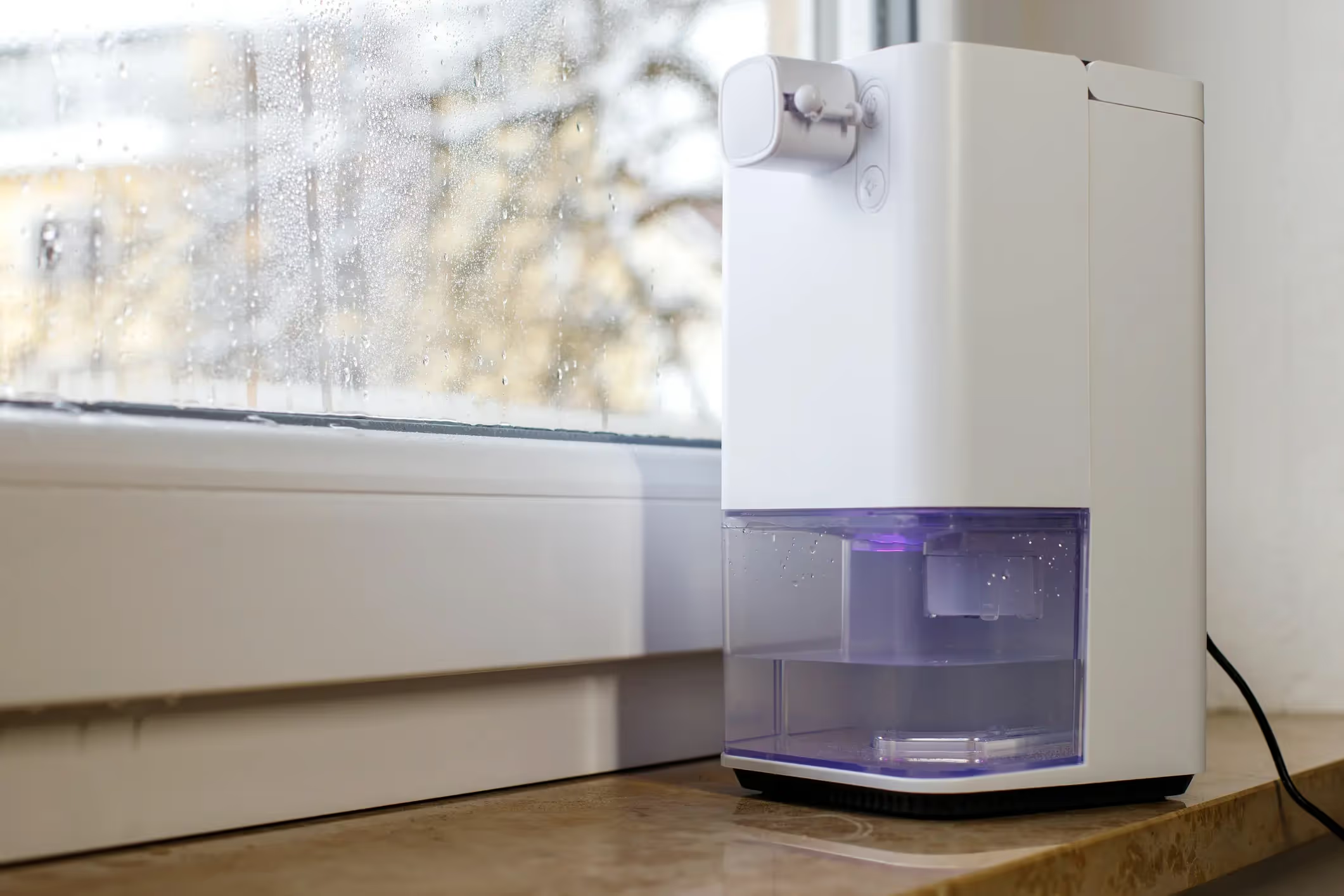
System Capacity and Sizing
Selecting the right unit depends heavily on the square footage of your home and the tightness of your building envelope. Units are typically rated by the number of pints of water they can remove from the air per day.
- Capacity Ratings: Residential units generally range from 70 to 130 pints per day. A professional load calculation ensures the unit is powerful enough to handle peak summer humidity without short-cycling.
- Basement vs. Whole Home: While some homeowners specifically target basements where moisture intrusion is highest, the most effective approach connects the unit to the main supply and return ductwork. This circulates dry air to upper floors that may also suffer from high latent heat.
Integration with HVAC Systems
The installation involves physically ducting the dehumidifier into your furnace or air handler system.
- Dedicated Return: Ideally, a dedicated return pulls moist air from the most humid part of the house (often the basement or main floor central area).
- Supply Injection: Once the air is dried, it is injected back into the supply stream to be distributed through your vents.
- On-Demand Operation: These systems can run independently of your air conditioner. This is critical during "shoulder seasons" in Griffith—spring and fall—when the temperature is mild (requiring no AC) but the humidity remains high.
Trusted Brands and Technology
We prioritize equipment from industry leaders such as AprilAire and Honeywell. These manufacturers provide units with aluminum corrosion-resistant coils and advanced logic boards that communicate seamlessly with smart thermostats. Investing in these tier-one brands ensures longevity and part availability for future maintenance.
Step-by-Step Dehumidifier Installation Process
A professional installation is not merely plugging in a device; it requires electrical, plumbing, and sheet metal work. Our process ensures the system is safe, code-compliant, and optimized for performance.
- Site Assessment and Load Calculation:
- First, technicians assess the existing HVAC layout, measuring the plenum space and identifying the best location for the unit (usually suspended from the joists or pad-mounted near the furnace).
- Next, we calculate the moisture load based on the home’s volume and infiltration rate.
- Ductwork Modification:
- Technicians cut into the existing supply and return plenums to install bypass dampers or dedicated ducting.
- We seal all connections with mastic or foil tape to prevent air leakage, ensuring 100% of the treated air reaches your living space.
- Drainage Setup:
- Dehumidifiers generate significant amounts of water. We install a hard-piped drainage system, routing the condensate to a floor drain or a condensate pump.
- Safety switches are installed to shut off the unit automatically if a blockage occurs in the drain line, preventing water damage.
- Electrical and Control Wiring:
- The unit requires a dedicated electrical circuit or hard-wiring into the existing HVAC disconnect, depending on the model’s amperage requirements.
- Finally, we wire the dehumidifier to your thermostat or install a separate digital humidistat. This allows for "set it and forget it" operation, where the system automatically detects rising moisture levels and engages.
Replacement vs. Repair: Choosing the Right Option for Home Dehumidifiers
Dehumidifiers are mechanical systems with compressors, fans, and sensors. Over time, components wear out. Making the decision between repairing an existing unit or upgrading to a modern system depends on several critical factors.
When to Repair
If your system is relatively new and the issue is minor, repair is often the most cost-effective path.
- Sensor Calibration: If the humidity reading is slightly off, a sensor recalibration or replacement is a quick fix.
- Minor Electrical Issues: Loose wiring or a failed capacitor are inexpensive repairs that restore function immediately.
- Drainage Clogs: Algae buildup in the drain line is a common maintenance issue that does not require system replacement.
When to Replace
There are specific scenarios where pouring money into repairs yields diminishing returns.
- Compressor Failure: The compressor is the heart of the system. If it seizes or fails, the cost of the part and labor often approaches the cost of a brand-new unit with a fresh warranty.
- Refrigerant Leaks: Leaking coils in older units can be expensive to locate and repair. Furthermore, older units may use outdated refrigerants that are becoming costly and difficult to source.
- Age of the Unit: Most whole-home dehumidifiers have a service life of 10 to 15 years. If your unit is over 10 years old and facing a major repair, replacement is generally the wiser financial move.
- Energy Efficiency: Modern units are significantly more efficient (removing more liters of water per kilowatt-hour) than models from a decade ago. Upgrading can lower your monthly utility bills, offsetting the installation cost over time.
Understanding Local Climate Effects on Dehumidification Needs
The climate in Griffith, IN, presents unique challenges that make humidity control essential for structural preservation and comfort. The region experiences four distinct seasons, but the hydrological cycle creates moisture pressure year-round.
- Summer Saturation:
- During the peak of summer, dew points often rise above 70°F. Your air conditioner removes some moisture, but its primary job is cooling. When the AC reaches the set temperature, it shuts off, often leaving the air clammy. A whole-home dehumidifier continues to run, removing that latent heat without over-cooling the space.
- Spring Thaw and Basement Moisture:
- With average annual precipitation around 36 inches, plus snowmelt, the ground surrounding your foundation becomes saturated in the spring. Hydrostatic pressure forces moisture through concrete foundations into basements and crawl spaces.
- Without mechanical dehumidification, this rising dampness travels up into the main living areas, warping wood floors and creating an environment ripe for mold spores.
- The "Shoulder Season" Factor:
- In late spring and early autumn, outdoor temperatures are often mild (60°F–70°F), meaning the AC doesn't run. However, it can still be raining or humid. This is the prime time for indoor humidity to spike unchecked. A dedicated dehumidifier bridges this gap, keeping the home dry even when the HVAC system is idle.
Permitting and Local Codes
Operating in this region requires adherence to specific mechanical and electrical codes.
- Electrical Safety: Installations involving new circuits require compliance with the National Electrical Code (NEC) as adopted by local municipalities.
- Condensate Disposal: Local plumbing codes dictate how condensate must be handled to prevent cross-contamination or improper discharge. We handle all necessary compliance checks to ensure your installation meets strict safety standards.
Why Choose Us? Our Certifications and Customer Reviews
Selecting a contractor for your indoor air quality needs is a decision that impacts your home’s long-term health. Mr.Freeze Heating & Cooling brings technical expertise and a customer-centric approach to every job.
Technical Expertise and Certification
We employ licensed HVAC professionals who undergo regular training on the latest indoor air quality technologies.
- Sizing Accuracy: We do not guess. We use industry-standard manuals to calculate the exact moisture removal requirements for your specific home layout.
- Brand Authority: As authorized installers for major brands, we have access to priority support and proprietary diagnostic tools that general handymen do not.
Detailed Workmanship
Our installation standards go beyond basic functionality.
- Sealed Systems: We ensure all duct connections are airtight to prevent energy loss.
- Clean Job Sites: Our technicians use drop cloths and shoe covers, leaving your mechanical room as clean as they found it.
- Customer Education: We don't just leave the manual; we walk you through the controls, showing you how to adjust settings for different seasons and how to change filters.
Transparency and Trust
We believe in clear communication regarding costs and timelines.
- Upfront Pricing: You will receive a detailed quote outlining the scope of work, equipment model, and labor costs before any work begins.
- Warranty Support: We register your equipment warranty for you and stand behind our labor. If an issue arises post-installation, we are your single point of contact for resolution.
Controlling the humidity in your home is an investment in your property’s longevity and your family’s respiratory health. By managing moisture effectively, you protect hardwood flooring, drywall, and electronics while creating a more comfortable living environment year-round.
Take control of your indoor climate today. Contact us to schedule your whole home dehumidifier installation assessment.
Take Control of Moisture for Lasting Comfort and Protection
Excess humidity is more than a seasonal annoyance—it’s a long-term threat to your home’s comfort, efficiency, and structural integrity. In a climate like Griffith, IN, relying on temporary solutions leaves moisture problems unresolved and energy costs climbing. A professionally installed whole-home dehumidifier provides consistent, reliable moisture control that protects your property, improves indoor air quality, and enhances everyday comfort. Mr.Freeze Heating & Cooling delivers expertly sized, code-compliant dehumidification systems backed by strong warranties and flexible financing options, ensuring your investment pays off for years to come. Don’t let humidity compromise your home—Contact us today to schedule your whole-home dehumidifier consultation and restore balance to your indoor environment.