A malfunctioning mini-split system leaves your home vulnerable to the freezing lows of a Griffith winter or the oppressive humidity of an Indiana summer. You need a technical team that can diagnose the failure immediately and restore your indoor comfort without unnecessary delays. Contact us today to schedule an emergency repair or to inquire about our financing options for major system overhauls.
When you engage professional support for a ductless breakdown, you receive a focused, results-driven service designed to minimize downtime. The goal is to turn a chaotic breakdown into a resolved mechanical issue as quickly as possible.
- Immediate response protocols with 24/7 availability for critical failures.
- Expert technicians with specialized training in inverter technology and ductless zoning.
- Full restoration of heating and cooling capabilities backed by labor guarantees.
- All services are supported by industry-leading warranties and clear, upfront financing options.
What to Expect From a Professional Ductless Repair Service
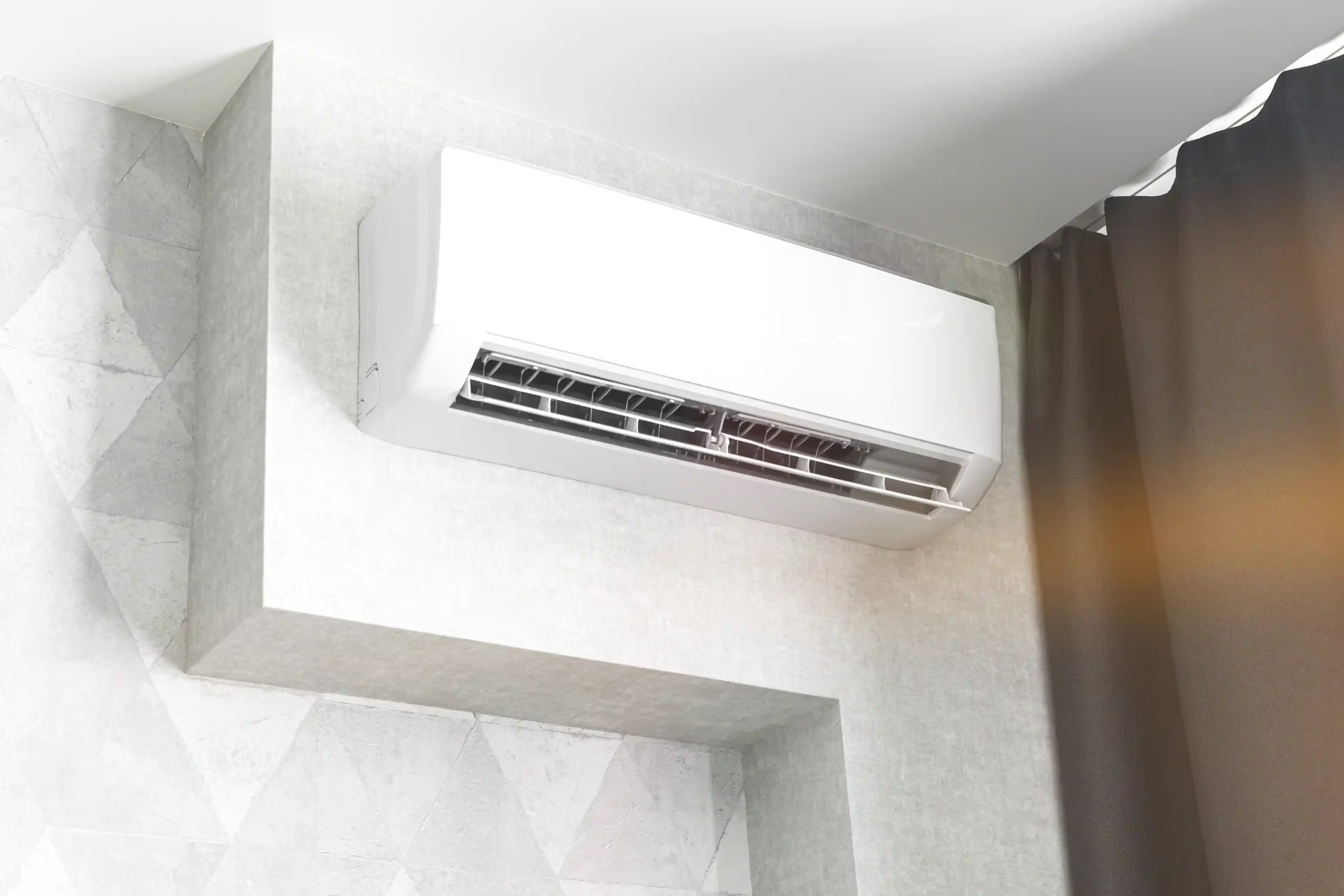
When a ductless system fails, the issue often lies within the sophisticated electronics or the refrigerant cycle specific to inverter-driven heat pumps. Unlike standard central air systems, ductless units rely on complex communication between the indoor air handler and the outdoor compressor. A professional repair service begins with a comprehensive diagnostic evaluation to pinpoint the exact source of the malfunction rather than simply swapping out parts.
In the Griffith area, where temperature fluctuations are severe, technicians look for specific stress points in the system. The diagnostic phase involves testing the electrical voltage entering the inverter board, checking refrigerant pressures against the manufacturer's sub-cooling and super-heat charts, and inspecting the condensate drainage system. Because these units do not use ductwork, the airflow issues are localized to the blower wheel and filters, which are inspected for debris buildup that could trigger error codes or ice formation.
Residents in Indiana rely on these systems for both heating and cooling, meaning the reversing valve—the component that switches the unit between modes—is a frequent point of inspection. If your unit is blowing cold air when set to heat, or vice versa, this valve is often the culprit. Technicians carry the specific diagnostic tools required to test the solenoid coils and ensure the valve is shifting correctly.
Once the root cause is identified, you are presented with a clear scope of work. This includes a breakdown of the required parts, the estimated labor time, and a fixed price for the repair. This transparency ensures you can make an informed decision before any wrench is turned. Mr.Freeze Heating & Cooling ensures that technicians arrive with fully stocked service vehicles, aiming to complete the majority of repairs in a single visit to get your home back to a comfortable temperature immediately.
Step-by-Step Restoration of Your Ductless System
Restoring a ductless mini-split to optimal performance requires a methodical approach. Professional technicians follow a strict protocol to ensure safety, efficiency, and long-term reliability.
- Site Protection and Safety Check:
- Technicians begin by protecting the work area around the indoor unit with drop cloths and wearing shoe covers to keep your home clean.
- Power is safely disconnected at the breaker and the outdoor disconnect box to prevent electrical hazards during the repair.
- The system is inspected for any loose wiring or burnt connections that could pose a fire risk.
- Component Isolation and Testing:
- The outer casing of the indoor or outdoor unit is removed to access internal components.
- Using multimeters, the technician tests the resistance of the compressor windings and the fan motor to ensure they are within factory specifications.
- Control boards are examined for burn marks, popped capacitors, or error codes flashing on the LED display.
- Refrigerant Circuit Inspection:
- Gauges are attached to the service ports to measure the system's operating pressures.
- If a leak is suspected, an electronic leak detector or nitrogen pressure test is used to locate the breach in the line set or coils.
- Refrigerant is recovered or topped off strictly according to EPA regulations and weight specifications provided by the manufacturer.
- Drainage and Airflow Cleaning:
- The condensate drain line is flushed to remove algae or blockages that cause water leaks inside the home.
- Filters and blower wheels are cleaned to restore proper airflow and heat exchange efficiency.
- The condensate pump, if present, is tested for proper operation to ensure water is being removed effectively.
- System Verification and Calibration:
- Power is restored, and the system is run through a full operational cycle in both heating and cooling modes (weather permitting).
- Temperature splits—the difference between the air entering and leaving the unit—are measured to verify the unit is cooling or heating effectively.
- The remote control or wall thermostat is checked for proper communication with the unit.
Repair vs. Replace: Making a Financial Decision
Homeowners often face the difficult choice between repairing an aging unit or investing in a new system. This decision should be based on mathematical logic and the long-term condition of the equipment, rather than emotional urgency.
One effective method for evaluating this decision is the "$5,000 Rule." Multiply the age of your equipment (in years) by the estimated cost of the repair. If the total exceeds $5,000, replacement is generally the more fastidious financial choice. For example, if your system is 12 years old and the repair costs $500, the total is $6,000, suggesting that money would be better spent on a modern, more efficient unit.
Indicators that Repair is the Right Choice:
- The system is under 10 years old and has been well-maintained.
- The warranty is still active, covering major components like the compressor or parts.
- The repair cost is less than 50% of the cost of a new system.
- The breakdown is a minor electrical issue or a single component failure rather than a catastrophic system blowout.
- You plan to move within the next year or two and need the system functional for the sale.
Indicators that Replacement is Necessary:
- The unit utilizes R-22 refrigerant, which is phased out and extremely expensive to replace.
- You have experienced frequent breakdowns requiring multiple service calls in the last two years.
- The heat pump struggles to keep up with the Griffith winters, indicating lost compression or efficiency.
- The compressor has failed, or the heat exchanger is cracked (these are major, costly repairs).
- Your energy bills have spiked significantly despite normal usage, signaling internal wear.
Local Climate Challenges and Operational Requirements
Operating a ductless system in Griffith involves dealing with specific environmental challenges that influence how repairs are handled. The region experiences cold winters with lows dipping into the teens, and hot, humid summers reaching the 90s. This dual-season demand puts significant strain on heat pumps, which must work year-round without the downtime that separate furnace and AC systems might get.
- Winter Operation and Defrost Cycles: During the freezing Indiana winters, ductless heat pumps must occasionally enter a "defrost cycle" to melt ice off the outdoor coil. If a sensor fails or the reversing valve sticks, the unit may turn into a block of ice, ceasing to provide heat. Repairs in this season often focus on sensors, control boards, and ensuring the outdoor unit is elevated above snow drifts to maintain airflow. Technicians ensure that the pan heater—if equipped—is functional to prevent ice damage to the fan blades.
- Summer Humidity and Drainage: High humidity in the summer months means the unit is pulling significant moisture out of the air. This condensate must drain away effectively. In gravity-fed systems, a clog can cause water to back up and damage drywall. In systems with pumps, the mechanical pump can fail, triggering a safety switch that shuts the whole system down. Service calls in July and August frequently involve clearing biological growth from drain lines and replacing failed condensate pumps.
- Permits and Electrical Codes: Modifying or repairing HVAC systems often intersects with local building codes. Major repairs involving electrical disconnects or refrigerant handling must adhere to safety standards. Licensed professionals ensure that any wire replacements meet the amperage requirements and that breaker sizes are appropriate for the unit's draw. Ensuring your system is compliant protects your home insurance validity and ensures safety.
Technical Expertise and Differentiators in Ductless Service
Not every HVAC technician is qualified to work on ductless mini-split systems. These units utilize inverter-driven compressors and complex electronic communication boards that differ significantly from traditional single-stage central air conditioners. Choosing a general handyman or an unspecialized contractor can lead to misdiagnosis, voided warranties, and recurring issues.
- Inverter Technology Knowledge: Ductless systems modulate their speed to match the heating or cooling load, much like a dimmer switch. This requires sophisticated DC voltage conversion and variable frequency drives. Technicians must understand how to test DC voltage and troubleshoot communication errors between the indoor and outdoor heads. A standard contactor test used on a central AC will not work here.
- Parts Availability: Because ductless brands often use proprietary parts, access to a supply chain is critical. Professional service providers maintain relationships with major manufacturers to source control boards, stepper motors, and sensors quickly. This reduces the time you spend waiting for a part to ship while your home is uncomfortable.
- Warranty Preservation: Most manufacturers require proof of professional service to honor their warranties. Attempting DIY repairs or hiring unlicensed help can void the 5-to-10-year parts warranty that protects your investment. Professional repair includes detailed documentation of the work performed, preserving your coverage.
Ensuring Long-Term Comfort and Efficiency
A broken ductless system disrupts your life, but the solution should be straightforward and reliable. By choosing a specialized service provider, you ensure that the complex electronics and refrigerant systems in your mini-split are handled with precision. Whether it is a frozen coil in January or a leaking drain in August, the goal is always the same: restoring your comfort efficiently and effectively.
Don’t let a malfunction compromise your home environment. Secure a repair solution that prioritizes technical accuracy and customer transparency. Contact Mr.Freeze Heating & Cooling today to schedule your service and restore your system to peak performance.