
Unsure About Your Indoor Air Quality? Let's Clear It Up
Are you concerned about invisible pollutants affecting the health and comfort of your home or office environment in Griffith, IN? Unexplained allergies, lingering odors, or excessive dust are often signs that your indoor environment requires a professional assessment to ensure your space is safe for your family or employees. Contact us now to schedule a comprehensive indoor air quality test and get the answers you need.
Identifying the root cause of poor air quality is the first step toward a healthier living space. Mr.Freeze Heating & Cooling provides thorough testing services designed to detect contaminants that standard inspections miss. We move quickly to analyze your environment and provide data-backed solutions.
- Quick and professional air testing performed by certified technicians.
- Detailed, easy-to-understand reports identifying specific pollutants and their sources.
- Actionable recommendations for maintaining optimal indoor air health and humidity levels.
Licensed professionals with extensive expertise, ensuring compliance with all local health standards and safety protocols.
What You Get Today: Scope and Timeline
When you schedule an air quality assessment, you are purchasing certainty. We do not simply walk through the home and guess; we utilize calibrated, industrial-grade equipment to measure particulate matter, volatile organic compounds (VOCs), humidity levels, and biological growth potential. The goal is to provide a baseline of your current indoor environment against health standards.
Our process is designed to be minimally invasive while gathering maximum data. Upon arrival at your property in Griffith or the surrounding area, our technicians assess the layout of your HVAC system, potential ingress points for moisture, and airflow patterns. This physical audit complements the digital data we collect.
You can expect the following during the service appointment:
- Visual Inspection: A thorough examination of ductwork, vents, basements, and crawlspaces to locate visible mold, water damage, or ventilation blockages.
- Real-Time Data Collection: Usage of laser particle counters and hygrometers to get immediate readings on dust load and relative humidity.
- Sample Collection: If necessary, air or surface samples are collected for laboratory analysis to identify specific mold species or chemical compounds.
- HVAC System Analysis: Checking the filtration and ventilation efficiency of your current heating and cooling equipment.
Most on-site testing is completed within a few hours. While real-time data on particulates and humidity is available immediately, detailed biological reports regarding mold species typically require laboratory processing time. We provide a clear timeline for these results so you know exactly when to expect your full report.
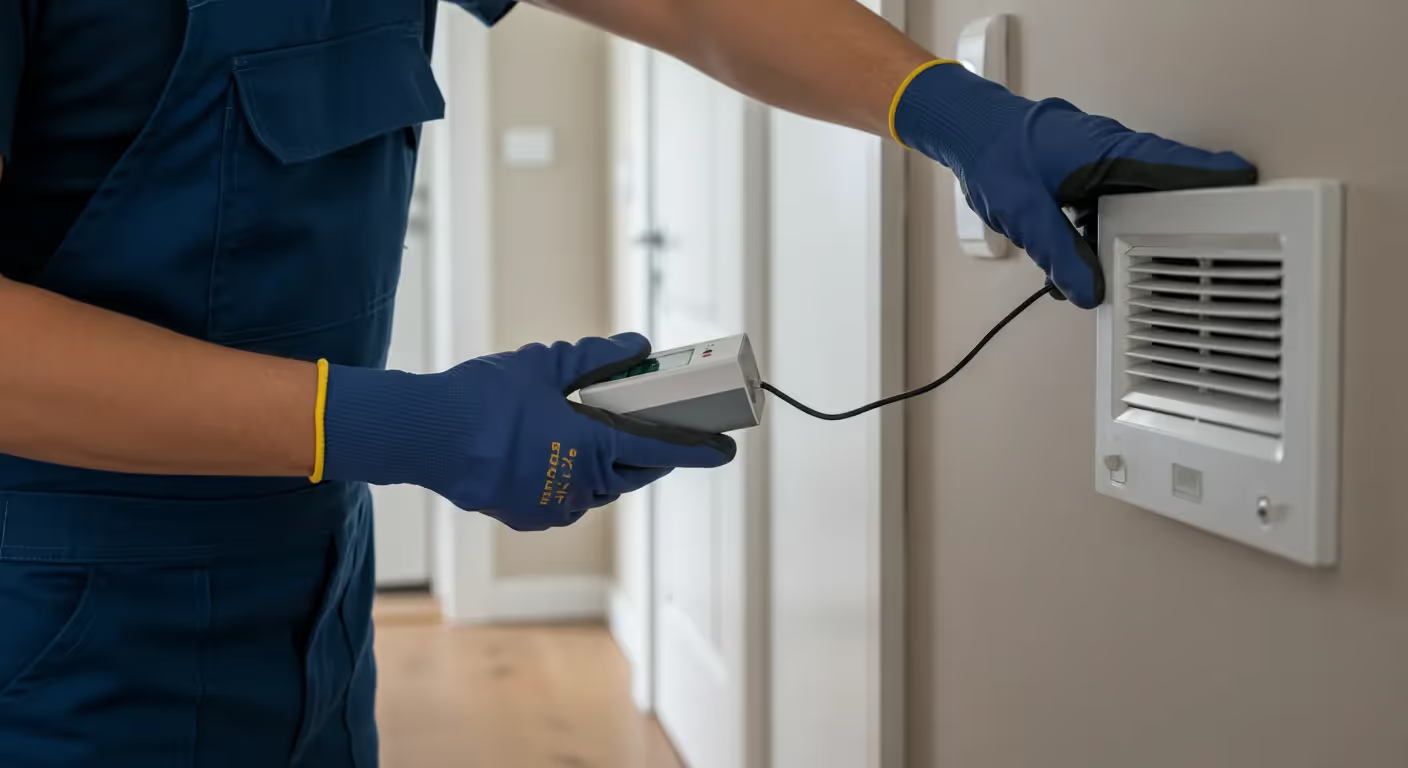
How Our Air Quality Test Works
We follow a systematic approach to ensure no variable is overlooked. Indoor air quality is dynamic, changing with the weather, occupancy, and HVAC usage. Our methodology accounts for these fluctuations to give you an accurate picture of your home's health.
- Initial Consultation and Walkthrough: We start by discussing your specific concerns. Whether you have noticed musty smells, increased allergy symptoms, or condensation on windows, this information helps us target the testing. We inspect the home’s perimeter and interior specifically looking for drainage issues or envelope leaks that contribute to poor air quality.
- Diagnostic Testing and Sampling: Using specialized equipment, we measure the concentration of pollutants in the air. This involves setting up air sampling pumps in strategic locations—usually the areas where you spend the most time, such as bedrooms and living rooms, as well as high-risk areas like basements. We also take an outdoor control sample. This is crucial for comparison; it allows us to determine if the indoor spore or particle count is higher than the natural outdoor environment, which is a primary indicator of an indoor contamination source.
- HVAC and Ventilation Assessment: Your heating and cooling system is the lungs of your home. We check the blower, the coil, and the ductwork. If the system is dirty or if the filter is bypassed, the HVAC unit serves as a distribution network for pollutants. We verify that fresh air intake is adequate and that exhaust fans in bathrooms and kitchens are functioning correctly to remove moisture.
- Lab Analysis and Reporting: Samples are sent to an accredited laboratory for analysis. Once the results are finalized, we compile a comprehensive report. This document explains not just what was found, but how much was found and whether those levels constitute a health risk based on current industry standards.
- Consultation on Solutions: The final step is the solution phase. We review the report with you and propose specific remedial actions. This might range from simple filtration upgrades to the installation of whole-home air purification or humidity control systems.
Identifying Common Indoor Pollutants and Their Sources
Understanding what we are testing for helps you make informed decisions about your property. In the humid continental climate of Indiana, specific pollutants are more prevalent due to the distinct seasonal shifts between freezing winters and humid summers.
- Biological Pollutants (Mold and Bacteria): High humidity during Griffith summers often leads to moisture accumulation in basements, crawlspaces, and attics. If humidity exceeds 60% for prolonged periods, mold growth becomes likely. Our testing identifies the presence of mold spores in the air, differentiating between common outdoor molds and problematic water-damage indicators like Stachybotrys (black mold).
- Volatile Organic Compounds (VOCs): VOCs are chemicals emitted as gases from certain solids or liquids. Common sources include paints, cleaning supplies, pesticides, building materials, and new furniture. In modern, tightly sealed homes, these chemicals can accumulate to toxic levels. Our testing detects elevated VOC levels that could be causing headaches, dizziness, or respiratory irritation.
- Particulate Matter (Dust, Dander, and Pollen): Particulates are classified by size. PM2.5 (fine particles) are of particular concern as they can penetrate deep into the lungs. Sources include combustion from cooking, pet dander, and outdoor pollution infiltrating the home. Winter heating can stir up settled dust, keeping it suspended in the breathing zone if filtration is inadequate.
- Carbon Monoxide and Combustion Gases: Any home with gas appliances (furnaces, water heaters, stoves) is at risk for combustion gas leaks. While standard detectors alert to life-threatening levels, low-level chronic exposure can still cause health issues. We verify that your appliances are drafting correctly and not back-drafting into the living space.
- Radon: While often treated as a separate test, it is a critical component of air quality. Radon is a colorless, odorless radioactive gas that comes from the natural breakdown of uranium in soil. Indiana soils can have high radon potential, making testing essential for long-term health safety.
Assessing the Impact of Local Climate on Your Home
The weather in Griffith and the surrounding region plays a massive role in your indoor air quality strategy. We tailor our testing and recommendations based on the season and local climate data.
- Winter Challenges: During the freezing months, homes are sealed tight to conserve heat. This lack of ventilation means that indoor pollutants are trapped and recirculated. Humidity often drops too low, drying out mucous membranes and making you more susceptible to viruses. Conversely, if a humidifier is not maintained, it can pump bacteria into the air. Our testing checks for this balance.
- Summer Challenges: The primary enemy in summer is humidity. When warm, moist air enters the home and meets cool surfaces (like air conditioned drywall or ductwork), condensation occurs. This creates the perfect breeding ground for mold and dust mites. Testing during the summer often focuses heavily on moisture management and dew point analysis.
- Shoulder Seasons: Spring and fall bring high pollen counts. If your home has air leaks (infiltration), outdoor allergens will bypass your filters and settle indoors. Our assessment includes checking the "tightness" of your home envelope to see if outdoor pollutants are entering uncontrolled.
Why Professional Testing Beats DIY Kits
It is common for homeowners to consider over-the-counter DIY test kits sold at hardware stores. While these can provide a simple "yes or no" regarding the presence of mold, they lack the nuance and accuracy required for a real solution.
- Accuracy and Calibration: DIY kits often yield false positives or false negatives. They typically use "settle plates" which only collect heavy particles that fall out of the air. They miss the light, buoyant spores and fine particulates that you actually breathe. Mr.Freeze Heating & Cooling uses pump-driven air sampling that captures a precise volume of air, providing a scientifically valid concentration count.
- Context and Interpretation: A DIY lab report might tell you "mold is present." This is not helpful, as mold is present in every home to some degree. The question is whether the indoor levels are higher than outdoor levels and if the species found are toxic. A professional interprets the data in context, distinguishing between normal background ecology and an active infestation.
- Source Identification: A kit cannot tell you why you have a problem. It cannot identify a leaking pipe behind a wall or a disconnected duct in the attic. Our technicians combine the test results with a physical investigation to find the moisture source or ventilation failure causing the issue.
- Chain of Custody: For real estate transactions or landlord-tenant disputes, DIY results are rarely accepted as proof. Our testing follows a strict chain of custody and utilizes accredited laboratories, ensuring the results are defensible and recognized by insurance companies and other third parties.
Local Compliance and Regulation Information
When addressing indoor air quality, it is important to understand the standards that apply to your property. While there are no federal laws setting standards for mold in residential buildings, there are guidelines and best practices that we adhere to strictly.
- IDEM and EPA Guidelines: We follow protocols aligned with the Indiana Department of Environmental Management (IDEM) and EPA recommendations for indoor air quality. This includes standards for ventilation rates and moisture control to prevent biological growth.
- Real Estate Disclosures: In Indiana, sellers are required to disclose known hazardous conditions, including mold or lead paint. Professional testing provides the documentation necessary to satisfy these disclosure requirements or to negotiate remediation before a property sale closes.
- Occupational Standards: For our commercial clients in Griffith, we look at OSHA and ASHRAE standards regarding fresh air intake and CO2 levels to ensure employee safety and productivity. High CO2 levels often indicate poor ventilation, leading to lethargy and "Sick Building Syndrome."
Interpreting Your Results and Next Steps
Once the analysis is complete, we provide a roadmap for improvement. We do not leave you with a problem; we provide the solution.
- Filtration Upgrades: If particulate counts are high, we may recommend upgrading to high-efficiency media filters or HEPA filtration systems that capture smaller particles than standard 1-inch furnace filters.
- Humidity Control: For high humidity issues, whole-home dehumidifiers are often the best solution to permanently inhibit mold growth. Conversely, steam humidifiers can correct dry winter air.
- Ventilation Solutions: If your home is too tight and CO2 or VOC levels are high, we may suggest an Energy Recovery Ventilator (ERV) or Heat Recovery Ventilator (HRV). These devices exchange stale indoor air for fresh outdoor air without losing your heating or cooling energy.
- Air Purification: For biological contaminants like viruses, bacteria, and mold spores, we often recommend UV germicidal lights or oxidizing air purifiers that install directly into your ductwork, treating the air as it passes through the system.
Prioritize Your Health with Reliable Data
Ignoring signs of poor air quality can lead to long-term health issues and structural damage to your property. Whether you are noticing physical symptoms or simply want to ensure your home is as safe as possible, professional testing is the only way to know for sure.
We provide the expertise, the technology, and the local knowledge necessary to diagnose your home’s environment accurately. Don't guess with your health. Get the facts, understand the source, and implement a permanent solution.
Trust Mr.Freeze Heating & Cooling to restore the safety and comfort of your indoor environment.
Take control of the air you breathe. Schedule your professional air quality test today.