
Handling the harsh winters and sultry summers of Griffith can be a challenge for outdated HVAC hardware. A modern heat pump offers an energy-efficient solution to keep your home comfortable all year round by transferring heat rather than generating it. Contact Mr.Freeze Heating & Cooling today to discuss financing options and schedule your system evaluation.
- Experience reduced energy bills with high-efficiency heating and cooling technology.
- Secure year-round comfort with a single, consolidated system for every season.
- Receive professional installation within a day, minimizing disruption to your routine.
All installations are compliant with local regulations and come with comprehensive warranties and flexible financing options.
Why Heat Pumps Are Essential for Local Homes
Homeowners in this region face a unique climate challenge: humid continental weather patterns that swing from sub-freezing temperatures in January to high humidity and heat in July. Traditional setups often require maintaining two separate systems—a furnace for the winter and an air conditioner for the summer. A heat pump streamlines this by performing both functions. In the summer, it acts exactly like an air conditioner, removing heat from your home. In the winter, it simply reverses the cycle, extracting ambient heat from the outdoor air and moving it inside.
For residents in Griffith, the efficiency of a heat pump is the primary driver for installation. Because the system moves heat rather than burning fossil fuels to create it, the coefficient of performance (COP) is significantly higher than traditional gas furnaces. Even when temperatures drop towards freezing, modern heat pump technology can extract heat energy effectively.
- Energy Efficiency: By transferring heat, these systems can deliver up to three times more heat energy than the electrical energy they consume.
- Dehumidification: During the humid summers, heat pumps naturally dehumidify indoor air better than standard central air conditioning units, improving indoor air quality.
- Safety: Heat pumps do not burn fossil fuels directly, eliminating the risk of carbon monoxide leaks associated with older or malfunctioning gas furnaces.
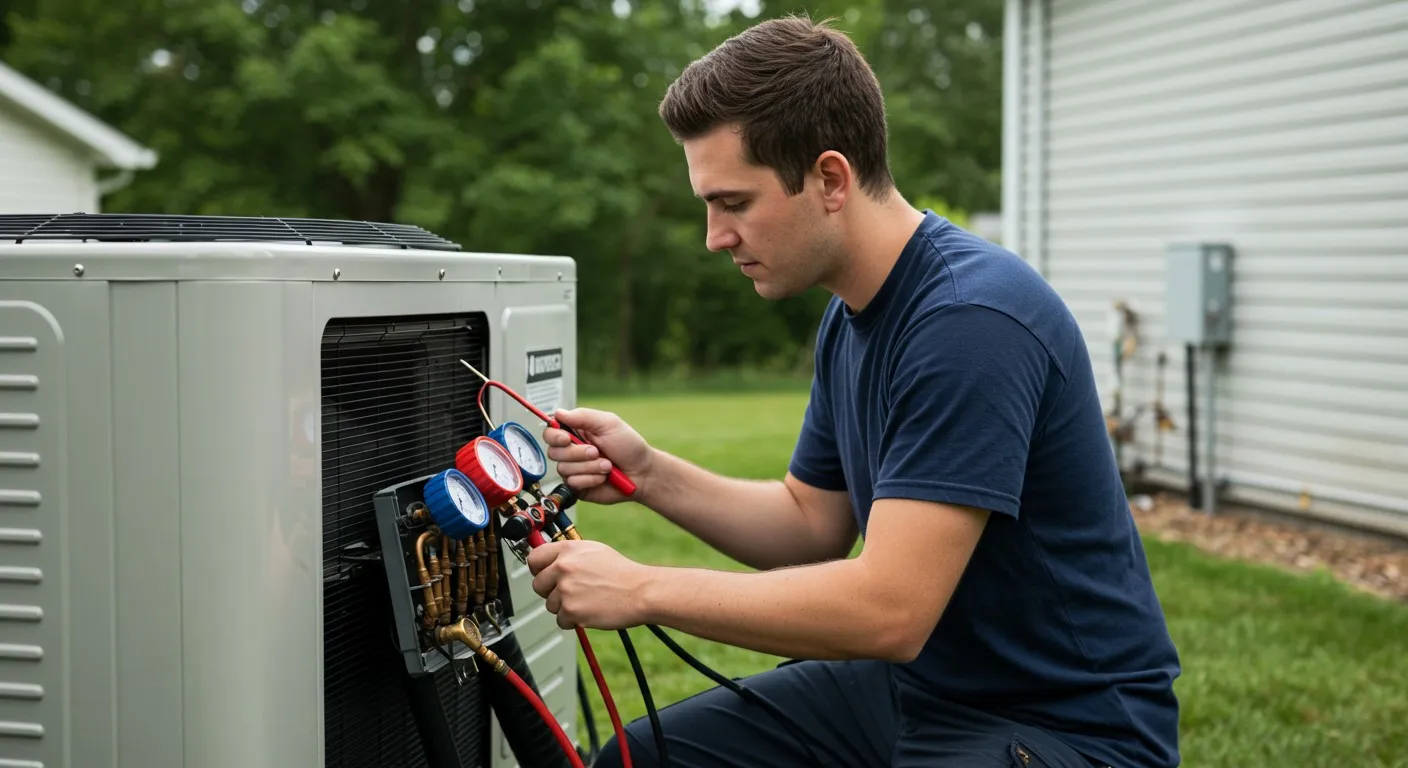
Today's Heat Pump Installation: Fast, Efficient, and Tailored
Modern installation is a data-driven process designed to maximize the lifespan of the unit and the comfort of the home. It is no longer acceptable to simply swap out an old box for a new one based on a guess. The process begins with a precise load calculation. Technicians analyze your home's square footage, insulation levels, window quality, and orientation to determine the exact heating and cooling load required. This ensures the new system is neither undersized (running constantly without reaching the set temperature) nor oversized (short-cycling and wearing out components prematurely).
The scope of a standard installation involves the complete removal of existing equipment and the integration of the new indoor air handler and outdoor compressor. For homes currently utilizing gas furnaces, this may involve capping gas lines and upgrading electrical circuits to handle the amperage requirements of the heat pump.
- Load Calculation: Performing a Manual J calculation ensures the unit is sized perfectly for your specific home layout.
- Ductwork Inspection: Existing ducts are evaluated for leaks or resizing requirements to handle the airflow of a modern system.
- Equipment Selection: You select from units with high SEER2 (cooling efficiency) and HSPF2 (heating efficiency) ratings to maximize long-term savings.
- Thermostat Integration: Installation includes upgrading to smart thermostats that can manage the complex staging of heat pump cycles.
Your Installation Day: What to Expect
When you commit to a new system, the goal is to restore comfort to your home as quickly as possible. Professional crews arrive with a plan to execute the changeout with minimal intrusion. The focus is on technical precision, as the quality of the installation is just as important as the brand of equipment installed. A poorly installed top-tier unit will perform worse than a correctly installed mid-range unit.
The process follows a strict technical sequence to ensure system integrity:
- First, the technicians prepare the workspace, laying down drop cloths and floor protectors to ensure your home remains clean throughout the process.
- Next, power is disconnected from the existing HVAC equipment for safety, and the old refrigerant is recovered according to EPA guidelines.
- Then, the old indoor air handler and outdoor condenser are disconnected and physically removed from the property.
- Following removal, the new indoor coil or air handler is positioned and sealed to the existing supply and return plenum to prevent air leakage.
- Next, the outdoor unit is set on a level composite pad or snow stand, ensuring proper clearance for airflow and maintenance access.
- Technicians then connect the copper refrigerant lines, brazing the joints while flowing nitrogen through the lines to prevent oxidation and contaminants inside the system.
- Once connected, a vacuum pump is used to remove all moisture and air from the lines, verified by a micron gauge to ensure a perfectly sealed system.
- Finally, the refrigerant charge is weighed in to factory specifications, and the system is tested in both heating and cooling modes to verify operation.
Deciding Between Heat Pump Repair and Replacement
Determining whether to repair an aging system or invest in a new installation is a common dilemma. While repairs can offer a short-term fix, they often delay the inevitable and can cost more over time due to inefficiency and repeated breakdowns. At Mr.Freeze Heating & Cooling, we help homeowners analyze the long-term viability of their current setup before recommending a replacement.
There are specific markers that indicate a system has reached the end of its useful service life. If your current unit is over 10 to 15 years old, it is likely operating at a much lower efficiency than when it was new. Furthermore, if the system uses R-22 refrigerant (Freon), which has been phased out, repair costs for refrigerant leaks can be astronomically high, making replacement the only financial logic.
- The 50% Rule: If the cost of the repair approaches 50% of the value of a new system, replacement is the smarter financial move.
- Rising Energy Bills: A sudden or steady increase in utility costs without a change in usage patterns indicates the internal components are wearing out.
- Frequent Breakdowns: If you have required service calls more than twice in the last two years, the system is becoming unreliable.
- Uneven Temperatures: Significant hot or cold spots in different rooms suggest the compressor or blower motor can no longer maintain pressure.
- Noise Levels: excessive grinding, rattling, or squealing usually points to severe mechanical failure in the motor or compressor.
Adapting Your Heat Pump Installation to Local Climate
For homes in Griffith, a standard "off-the-shelf" installation is rarely sufficient due to regional weather specifics. The installation must be adapted to handle deep freezes and potential snow accumulation. While heat pumps are incredibly efficient, the efficiency drops as the temperature plummets. Therefore, system design must account for "balance points"—the outdoor temperature at which the heat pump needs assistance.
To address this, installations often include backup heating sources. This can be in the form of electric resistance heat strips located in the air handler, or a "dual fuel" approach where a gas furnace takes over when temperatures drop below a certain threshold.
- Snow Elevation: The outdoor unit is elevated on "snow legs" or a stand. This prevents snow accumulation from blocking the airflow and allows meltwater from defrost cycles to drain away freely without refreezing around the unit.
- Defrost Controls: Modern systems are configured with demand-defrost boards. These monitor frost buildup on the outdoor coil during winter and only trigger a defrost cycle when necessary, preserving energy.
- Auxiliary Heat: Sizing the electric heat strips correctly is vital. They must be powerful enough to keep the house warm during the coldest nights but staged correctly so they don't turn on when the heat pump alone could do the job.
- Electrical Capacity: Older homes in the area may require a panel upgrade or dedicated circuits to handle the amperage draw of electric backup heat if switching from a gas-only system.
- Permitting: All major HVAC replacements in the area require proper permitting to ensure electrical and mechanical safety codes are met. This includes verifying disconnect box placement and wire sizing.
Trusted in Griffith: Our Expertise and Certifications
Choosing the right contractor is the final piece of the puzzle. The longevity and efficiency of your heat pump depend entirely on the skill of the installer. A compliant installation involves more than just mechanical skills; it requires an understanding of thermodynamics, airflow dynamics, and high-voltage electrical systems.
We prioritize technical certification and ongoing training. Our teams are equipped with the latest digital gauges and diagnostic tools to ensure your system is calibrated to the manufacturer's exact specifications. We do not cut corners on materials; from the insulation on the refrigerant lines to the quality of the brazing rods, every detail is chosen for durability. By adhering to strict installation protocols, we protect your manufacturer warranty and ensure your system delivers the comfort you paid for.
When you are ready to upgrade your home comfort system, rely on Mr.Freeze Heating & Cooling to deliver a seamless, high-performance installation.
Secure your home's comfort for every season—schedule your heat pump installation consultation today.