
Are you struggling with rooms that are too hot or cold, despite having a central air system running full blast? Ductless systems offer targeted comfort for specific zones in your home, providing energy-efficient temperature control without the need for invasive renovations. Contact us today to discuss your installation options or inquire about our available financing plans.
Mr.Freeze Heating & Cooling specializes in solving airflow and temperature inconsistencies for homeowners in Griffith. By bypassing traditional ductwork, these systems deliver conditioned air directly to the living spaces where you need it most.
- Achieve precise temperature control in every room without extensive ductwork.
- Enjoy quiet operation and significant energy savings compared to window units.
- Quick installation by certified technicians — ready to cool or heat immediately.
All installations are fully licensed, include a comprehensive warranty, and come with flexible financing options.
What to Expect from a Modern Ductless Mini-Split System
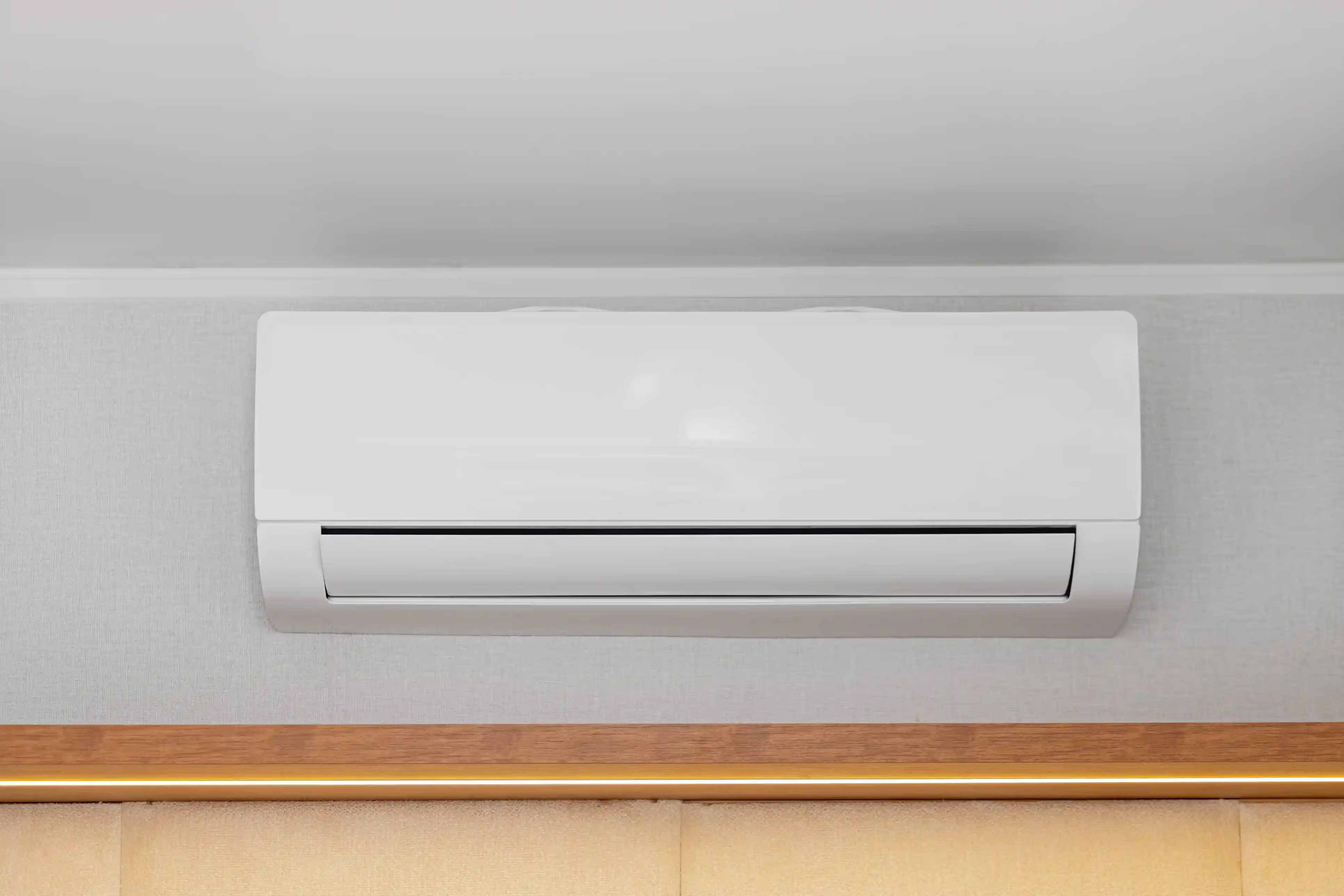
When you invest in a ductless mini-split system, you are purchasing more than just an air conditioner; you are installing a sophisticated heat pump capable of managing your home's climate year-round. These systems are designed to provide both heating and cooling, making them a versatile solution for additions, garages, or older homes with boiler systems. A standard installation includes one or more indoor air-handling units connected to a single outdoor compressor.
The immediate benefit of this technology is "zoning." Unlike central HVAC systems that treat the entire house as a single unit, ductless systems allow you to operate different rooms at different temperatures. If the master bedroom needs to be 68 degrees while the living room remains at 72, a multi-zone ductless setup accommodates this effortlessly. This capability significantly reduces energy waste, as you are no longer paying to condition unoccupied spaces.
Current market inventory includes systems with variable-speed inverter technology. Unlike traditional compressors that turn on and off abruptly—causing temperature swings and energy spikes—inverter compressors ramp up or down smoothly to maintain a consistent temperature. This results in ultra-quiet operation, often indistinguishable from a whisper, and lower monthly utility bills.
Hardware components typically included in your installation proposal involve:
- The outdoor condenser unit, sized appropriately for the thermal load of the space.
- The indoor evaporator unit(s), available in wall-mounted, floor-mounted, or ceiling-cassette styles.
- Insulated refrigerant lines (line sets) that connect the indoor and outdoor components.
- Communication cables and electrical wiring.
- A remote control or wall-mounted thermostat interface.
- Exterior line set covers to protect piping and ensure a clean aesthetic on the side of your home.
The Step-by-Step Installation Workflow
Professional installation follows a strict protocol to ensure the longevity of the equipment and the safety of your home. While ductless systems are less invasive than central air retrofits, they require specialized tools and handling of high-pressure refrigerants. The process is streamlined to minimize disruption to your daily routine.
- Site Assessment and Load Calculation: The process begins with a technical evaluation of the space. Technicians calculate the cooling and heating load (measured in BTUs) required for the specific room. Factors such as window size, insulation quality, and room orientation affect this calculation. Proper sizing is critical; an oversized unit will short-cycle and fail to dehumidify, while an undersized unit will run constantly without reaching the target temperature.
- Mounting the Indoor Unit: Technicians install a mounting plate on the interior wall. This plate must be perfectly level and secured to wall studs to support the weight of the unit. For wall-mounted units, a location is chosen that allows for optimal air distribution while maintaining clearance from ceilings and corners.
- Drilling the Conduit Hole: A single hole, typically three inches in diameter, is drilled through the exterior wall. This hole accommodates the refrigerant lines, condensate drain tube, and electrical wiring. To prevent water intrusion, the hole is drilled with a slight downward slope toward the outside, and a sleeve is inserted to protect the wall structure.
- Positioning the Outdoor Unit: The outdoor condenser is placed on a composite pad on the ground or mounted to the exterior wall using sturdy brackets. Ground placement requires a level, stable surface that is elevated enough to avoid being buried by snow drifts during Griffith winters. Wall brackets are often preferred to keep the unit clear of debris and landscaping.
- Connecting the Line Sets: Refrigerant lines are run from the outdoor unit to the indoor unit through the drilled hole. These copper lines are carefully bent to avoid kinking, which can restrict refrigerant flow. The lines are insulated to prevent energy loss and condensation buildup. A protective cover (line hide) is installed on the exterior of the house to shield the pipes from UV rays and weather damage.
- Electrical and Drainage Connections: A dedicated electrical circuit is usually required for the outdoor unit. Licensed electricians run the necessary power from your main panel to a disconnect box near the condenser. Communication wires are connected between the indoor and outdoor units. Simultaneously, the condensate drain line is routed to ensure gravity pulls moisture away from the home’s foundation.
- Pressure Testing and Vacuuming: Before releasing refrigerant, the system is pressure-tested with nitrogen to check for leaks. Once the pressure holds, a vacuum pump removes all moisture and air from the lines. This step is non-negotiable; moisture inside the system can mix with oil to form acid, which destroys the compressor.
- System Startup and Commissioning: The refrigerant valves are opened, and the system is powered on. Technicians test all modes of operation—cooling, heating, fan speeds, and vane oscillation. They measure the temperature differential between the intake and output air to verify the system is performing within manufacturer specifications.
Deciding Between Repair, Retrofit, or Ductless Installation
Homeowners often face a choice between repairing an aging window unit, extending existing ductwork, or opting for a new ductless installation. Understanding the long-term value and performance differences helps in making the right decision for your property.
- Efficiency vs. Window Units: Window air conditioners are notoriously inefficient and noisy. They block natural light, pose security risks by leaving windows unlocked, and often leak air around the frame. If you are relying on multiple window units to cool a home, the electricity cost often exceeds the monthly payment for a high-efficiency ductless system. Ductless units provide higher SEER (Seasonal Energy Efficiency Ratio) ratings, meaning you get more cooling power for every dollar spent on electricity.
- Cost vs. Ductwork Extension: Extending central air ducts to a new addition, attic conversion, or finished basement is expensive and labor-intensive. It often involves cutting into drywall, losing closet space to chases, and potentially unbalancing the pressure of your existing HVAC system. Ductless installation bypasses these issues entirely, providing a dedicated solution for the new space without straining your main furnace or air conditioner.
- Targeted Comfort vs. Whole-Home Systems: If you have "problem rooms" that are always hotter or colder than the rest of the house, a central system cannot fix this without expensive zoning dampers. A ductless unit solves this immediately by treating that specific room independently. This is ideal for home offices containing heat-generating electronics or sunrooms with large glass exposures.
- Heating Capability: Unlike standard AC units, ductless heat pumps provide efficient heating. If you have a room that currently relies on dangerous space heaters or inefficient electric baseboards, a ductless system acts as a safer, cheaper primary heat source.
Local Considerations for Griffith Installations
Operating a heat pump in Indiana requires specific attention to regional climate data. The local weather patterns influence both equipment selection and installation practices.
- Humidity Control: Summers in this region bring high humidity levels. An oversized AC unit will cool a room too quickly, shutting off before it has a chance to remove moisture from the air. This leads to a cold, clammy feeling. Correctly sized ductless units run for longer cycles at lower speeds, effectively acting as dehumidifiers while cooling the space.
- Low-Ambient Heating: Winter temperatures in Griffith frequently drop below freezing. Older heat pump technology struggled to extract heat from cold air, often relying on expensive electric heat strips as backup. Modern "hyper-heating" ductless systems are designed to operate efficiently even when outdoor temperatures drop well below zero. It is crucial to select a unit rated for low-ambient heating to ensure comfort during January and February.
- Electrical Codes and Permits: Local building codes dictate specific requirements for electrical work. A dedicated circuit is almost always mandatory to prevent overloading your home's electrical panel. Professional installers handle the permitting process, ensuring that the disconnect box, wire gauge, and breaker size meet all municipal safety standards.
- Condensate Management: During the heating cycle, the outdoor unit will produce water (condensate) as it defrosts. In freezing weather, this water can turn to ice on walkways or driveways if not routed correctly. Installers must position the outdoor unit and its drainage to prevent ice hazards and ensure the unit does not freeze itself into a block of ice, which would restrict airflow.
Why Professional Execution is Critical
While DIY kits exist, the complexity of refrigerant handling and high-voltage electrical work makes professional installation necessary for safety and performance. A system installed without proper vacuuming or torque specifications on the flare nuts will likely leak refrigerant within the first year.
Professional technicians utilize micrometer-level gauges to ensure the system is sealed tight. They also have the tools to ensure the wall unit is perfectly level; if the indoor unit is slightly tilted, condensate water may not drain properly, leading to water damage on your interior walls.
Furthermore, manufacturer warranties are strictly tied to professional installation. Most major brands will void the warranty if the equipment was not installed by a licensed HVAC contractor. Mr.Freeze Heating & Cooling ensures that all paperwork is filed correctly, protecting your investment for up to 12 years depending on the manufacturer.
Choosing a specialized contractor ensures that the aesthetic of your home is respected. High-quality line set covers are used to blend the exterior piping with your siding, and interior work is performed with drop cloths and dust control measures to leave your home as clean as it was before the work began.
Secure Your Comfort Today
Ductless systems provide a flexible, efficient, and powerful solution for homes facing temperature challenges. Whether you need to cool a single bedroom or condition an entire home without ductwork, the technology offers superior performance and lower operating costs. Don't let the seasons dictate your comfort indoors.
Take control of your home's climate with a professional installation from Mr.Freeze Heating & Cooling.
Ready to upgrade your home comfort? Contact us now to schedule your site evaluation.