
Eliminate Hot and Cold Spots for Consistent Home Comfort
Living with uneven temperatures in your home is not just uncomfortable; it creates unnecessary strain on your HVAC equipment and increases monthly utility bills. You should not have to choose between freezing in the living room just to get the upstairs bedroom cool enough to sleep. If you are ready to correct airflow imbalances and achieve precise temperature control, contact us today to schedule an assessment or discuss financing options for a new system.
Homeowners in Dyer often face the challenge of trying to heat or cool a multi-story home with a single thermostat. This usually results in significant temperature variances between floors or specific rooms facing the sun. Our HVAC zoning systems solve this by dividing your home into distinct areas, each controlled by its own thermostat, allowing the central system to direct air only where it is needed.
- Ensure every room in the house maintains your desired temperature with independent zone controls.
- Reduce energy waste and lower utility costs by only conditioning occupied spaces.
- Experience a professional installation process designed to integrate seamlessly with your existing ductwork.
All zoning installations are backed by comprehensive labor and parts warranties and are performed in strict adherence to local building codes.
Efficient Climate Control Where You Need It Most
An HVAC zoning system is the most effective engineering solution for homes that suffer from thermal stratification or inconsistent airflow. Standard HVAC systems operate on an "all or nothing" basis, blasting air to the entire house until a single thermostat—usually located in a hallway—is satisfied. This leaves basements cold, upper floors hot, and perimeter rooms uncomfortable.
By implementing a zoning system, we modify the ductwork to include motorized dampers. These dampers act like traffic signals for your air, opening and closing based on the specific needs of each zone. When a zone needs heating or cooling, the dampers open to that specific area while closing off others that are already at the target temperature. This eliminates the need to manually close vents, which is often ineffective and can actually damage your blower motor due to increased static pressure.
Residents in Dyer, IN often find that zoning is particularly effective for homes with high ceilings, large windows, or finished basements and attics. Instead of overworking the central unit to combat heat gain in one specific room, the system intelligently diverts capacity. This targeted approach not only fixes the comfort issue but also significantly reduces the runtime of your furnace or air conditioner. Less runtime translates directly to reduced wear and tear on mechanical components, extending the lifespan of your primary heating and cooling equipment.
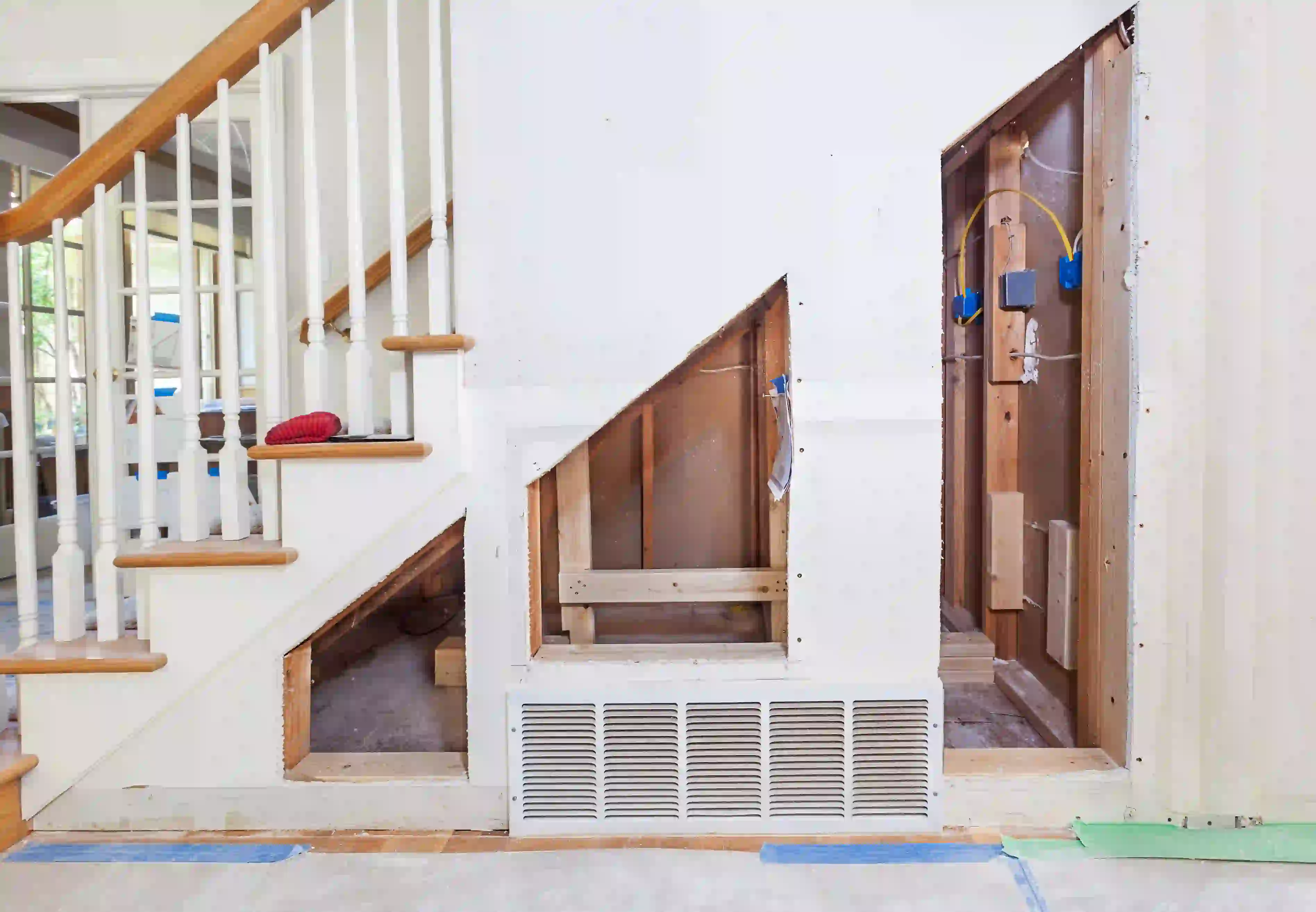
Complete Installation Services: What's Included and When
When you commission an HVAC zoning installation, you are investing in a significant upgrade to your home’s air distribution infrastructure. This is not merely adding a gadget; it is a retrofitting process that transforms how your current system manages airflow. The scope of work is comprehensive and covers all necessary mechanical and electrical modifications.
The installation package typically includes the following components and services:
- Zone Control Panel: The "brain" of the system, mounted near your furnace or air handler, which coordinates between the thermostats, dampers, and the HVAC unit.
- Motorized Dampers: Heavy-duty, electrically operated valves installed inside your existing ductwork to physically regulate airflow to different zones.
- Additional Thermostats: Installation of dedicated thermostats for each new zone, wired back to the main control panel.
- Bypass Damper: A critical component that manages excess air pressure (static pressure) when only one small zone is calling for air, preventing damage to the blower motor.
- Discharge Air Temperature Sensor: A safety sensor that prevents the coil from freezing or the heat exchanger from overheating during low-load conditions.
- Transformer Upgrade: If necessary, a higher capacity transformer to power the additional dampers and control board.
Timeline expectations for this project depend on the complexity of your ductwork accessibility. In many cases, a retrofit can be completed within a single day. If the ductwork requires extensive modification or if access is limited (such as in finished ceilings), the timeline may extend to two days. You will receive a clear timeline estimate after the initial site evaluation.
Step-by-Step: Your HVAC Zoning System Installation
A successful zoning installation relies heavily on proper planning and airflow calculation. It is not enough to simply cut holes in ducts; the physics of airflow must be respected to ensure the system runs quietly and efficiently. Mr.Freeze Heating & Cooling follows a rigorous protocol to ensure the integrity of your HVAC system remains intact while adding zoning capabilities.
- System Design and Load Calculation: The process begins with a manual J load calculation and an assessment of your ductwork. We determine where the zones should be separated (e.g., upstairs vs. downstairs, or sleeping vs. living areas). We also verify that your current blower motor can handle the variable static pressure that zoning introduces.
- Ductwork Modification and Damper Installation: Technicians access the main trunk lines of your ductwork. Sections of the duct are opened to insert the motorized dampers. These are typically placed as close to the furnace or air handler as possible to control the largest volume of air.
- Bypass Damper Implementation: To protect your equipment, a bypass damper is installed between the supply and return plenums. If only one zone is calling for air, the bypass damper recirculates the excess air back into the return, maintaining safe static pressure levels and preventing the system from becoming noisy.
- Wiring and Control Integration: Low-voltage wiring is run from each damper to the central control panel. New thermostat lines are run to the designated zones. The control panel is then wired to the HVAC unit itself. This stage requires precision to ensure the panel logic correctly interprets calls for heat, cool, and fan usage.
- System Balancing and Commissioning: Once hardware is in place, the system is powered on. Technicians perform a balancing procedure, adjusting the bypass damper and checking temperature differentials. We verify that when Zone A calls for cooling, only Zone A receives airflow, and the equipment cycles off appropriately when the setpoint is reached.
Deciding Between HVAC Repair and Zoning Upgrades
Homeowners often grapple with whether they need a full zoning system or if a repair or simple adjustment will suffice. Understanding the limitations of your current setup is key to making the right financial decision.
Consider an upgrade to a zoning system if:
- You have a multi-story home: Heat naturally rises, making the second floor significantly hotter than the ground floor in summer. A single thermostat on the first floor cannot accurately sense or correct the temperature upstairs. No amount of standard repair can change the laws of physics; zoning allows the system to treat the upstairs as a separate entity.
- You have unused rooms: If you have guest rooms or areas that are rarely used, heating or cooling them to the same temperature as your living room is a waste of money. Zoning allows you to set these areas to an "economy" mode.
- You have expansive glass exposure: Rooms with large, south-facing windows gain heat rapidly. A single-zone system will overcool the rest of the house trying to satisfy that one hot room. Zoning targets only the affected area.
Consider sticking with repair or maintenance if:
- The issue is a dirty filter or blocked vent: Sometimes, poor airflow is simply due to lack of maintenance. If airflow is weak everywhere, rather than uneven, a standard service call may resolve the issue.
- Duct leakage is the primary culprit: If your ducts are leaking air into the attic or crawlspace, zoning will not fix the efficiency loss. In this case, duct sealing or repair is the priority before considering zoning.
- Your insulation is inadequate: If a room is cold because it lacks insulation, blowing more hot air into it is an inefficient patch. Addressing the building envelope is the correct first step.
Local Permits and Seasonal Tips for Dyer, IN
Operating an HVAC system in Dyer requires attention to the specific seasonal extremes of the region. The area experiences significant heating degree days (HDD) in winter and high humidity during the cooling degree days (CDD) of summer. This drastic variance puts a unique load on HVAC systems.
Permits and Regulations:
Modifying the electrical controls and ductwork of a heating system may require adherence to specific local building codes. Compliance ensures safety, particularly regarding the electrical load and the proper venting of gas furnaces when airflow patterns are altered. Professional installation guarantees that all work meets the requirements for Lake County and surrounding municipalities, ensuring no issues arise during future home inspections or sales.
Humidity Control:
In our region, summer humidity can be oppressive. A standard air conditioner dehumidifies only when it runs. If your system is oversized or if a single zone cools down too quickly, the unit shuts off before it has removed enough moisture. Zoning systems help with this by allowing for longer, lower-capacity run times in specific zones, which pulls more moisture out of the air.
Winter Freeze Protection:
During the deep freezes common in Northern Indiana, ensuring that perimeter rooms do not drop below safe temperatures is vital to prevent pipe bursts. Zoning allows you to keep plumbing-heavy zones (like kitchens and bathrooms) warmer without overheating the rest of the house.
Why Choose Us: Real Results and Engineering Precision
The difference between a functional zoning system and one that causes equipment failure lies in the engineering. Improperly designed systems often suffer from high static pressure, which leads to noisy ducts and premature blower motor failure. We prioritize the physics of airflow, ensuring that every damper, bypass, and sensor is calibrated to the specific static pressure requirements of your home’s equipment.
We do not believe in guesswork. Our approach involves precise measurements of your current duct capacity and load requirements. We utilize high-quality, commercial-grade dampers and control boards designed to withstand years of continuous operation. Furthermore, we provide clear, upfront explanations of how your new system works, ensuring you are fully comfortable operating the controls before we leave the premises.
If you are tired of adjusting vents manually and fighting over the thermostat, it is time to upgrade to a solution that works. Mr.Freeze Heating & Cooling is ready to help you achieve balanced comfort throughout your entire home.
Take control of your home’s climate today. Contact us to schedule your zoning system evaluation.