
Is Your Indoor Air Affecting Your Family's Health?
Are you experiencing persistent allergies, dust issues, or odd smells at home that standard cleaning just won't fix? It might be time to consider a professional IAQ service to assess and improve your indoor environment; contact us today to schedule a comprehensive air quality evaluation.
Residents in Dyer and the surrounding areas often underestimate the density of pollutants trapped inside their homes, ranging from microscopic particulate matter to volatile organic compounds. Mr.Freeze Heating & Cooling provides targeted solutions to identify these invisible threats and neutralize them effectively.
- Receive a comprehensive assessment of your home's air quality within 24 hours.
- Implement solutions that tackle allergens, mold, and airborne toxins effectively.
- Enjoy a healthier living environment with optimal humidity and clean air.
All services are performed by certified professionals with full compliance to local codes.
Comprehensive Indoor Air Quality Solutions for Your Home
When you invest in indoor air quality (IAQ) services, you are purchasing more than just a piece of hardware; you are investing in a systematic approach to environmental control. Modern homes are built to be airtight for energy efficiency, but this seals in contaminants. A professional intervention involves integrating advanced purification and ventilation technology directly into your existing HVAC infrastructure to treat 100% of the air flowing through your home, rather than just a single room.
Whole-Home Air Purification Systems
Standard 1-inch furnace filters are designed primarily to protect the equipment, not your lungs. They capture large dust bunnies but allow microscopic particles to pass through. Professional purification involves the installation of media air cleaners or electronic air purifiers.
- Media Air Cleaners: These high-efficiency cabinets attach to your furnace and use thick, pleated filters with high MERV ratings. They physically trap smaller particles like pet dander, pollen, and mold spores that standard filters miss.
- Electronic Air Cleaners: These systems use electrostatic energy to charge particles as they enter the filter, causing them to stick to oppositely charged plates. This is effective for capturing smoke and incredibly fine dust.
UV Germicidal Light Installation
Biological growth is a primary concern in humid environments. Mold and bacteria thrive in the dark, damp environment of an AC coil.
- Coil Sterilization: UV lights are mounted directly inside the HVAC system, shining constantly on the cooling coil. This prevents mold and slime from forming on the equipment, which keeps those spores from blowing into your living space.
- Air Stream Sterilization: Other UV systems are installed in the supply ductwork to kill airborne bacteria and viruses as they circulate through the system.
Humidity Control Systems
Controlling humidity is as important as filtration. Air that is too damp encourages mold; air that is too dry spreads viruses and cracks wood furniture.
- Whole-Home Dehumidifiers: In the summer, your AC removes some moisture, but often not enough to maintain the ideal 30-50% range. A dedicated dehumidifier works with your HVAC system to pull gallons of excess water out of the air daily.
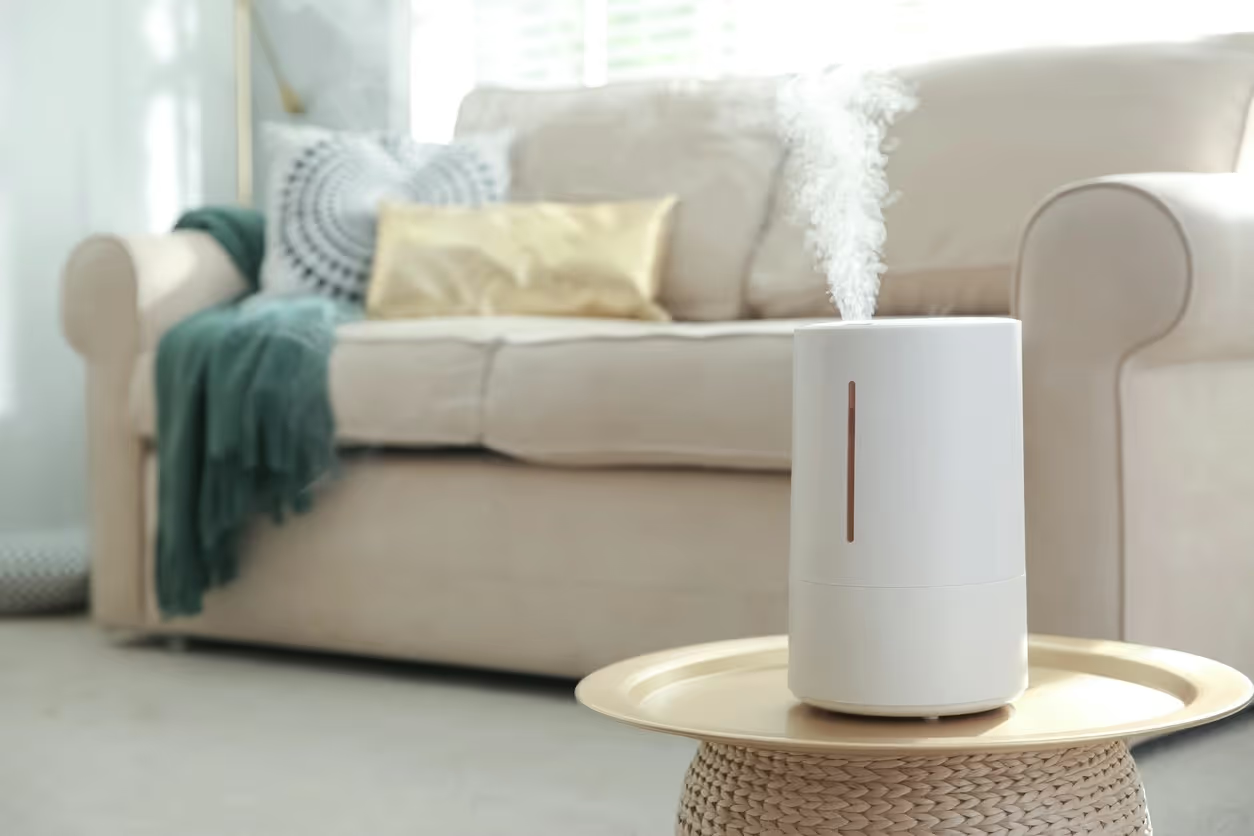
- Whole-Home Humidifiers: During winter, heating systems dry out the air. Integrated humidifiers add moisture back in the form of vapor, improving respiratory health and preventing static electricity.
Energy Recovery Ventilators (ERVs)
If your home feels stale, it is likely due to a lack of fresh air. Opening a window isn't always an option due to temperature or outdoor allergens. ERVs exchange stale indoor air with fresh outdoor air while transferring heat and moisture energy. This keeps the air fresh without putting extra load on your air conditioner or furnace.
The Installation and Integration Process
Integrating air quality systems requires precision and a deep understanding of airflow dynamics. Simply plugging in a unit is not sufficient for whole-home protection. The process follows a strict technical protocol to ensure the new components work seamlessly with your current heating and cooling equipment.
Initial Air Assessment and Diagnostics
The process begins with data. Technicians use specialized monitors to detect particulate levels (PM2.5 and PM10), humidity levels, Volatile Organic Compounds (VOCs), and carbon dioxide levels.
- Technicians perform a static pressure test on your ductwork to ensure the system can handle the added resistance of high-efficiency filters.
- Visual inspection of the ductwork identifies leakage points where attic or crawlspace air might be infiltrating the supply.
- The load calculation determines the correct size for humidifiers or dehumidifiers based on the square footage and tightness of the building envelope.
System Selection and Layout
Based on the diagnostics, a specific suite of products is selected. The layout is planned to maximize efficiency.
- For UV lights, the mounting location is measured to ensure maximum exposure to the cooling coil without damaging other internal components.
- For humidifiers, the water supply line and drainage route are mapped out to prevent leaks and ensure consistent operation.
- For ventilators, intake and exhaust locations on the exterior of the home are chosen to prevent cross-contamination from plumbing vents or exhaust pipes.
Mechanical and Electrical Integration
Installation involves cutting into the supply or return plenums—the metal boxes attached to your furnace. This requires metalworking skills to ensure an airtight seal.
- Technicians cut precise openings in the ductwork to accommodate the new equipment.
- High-voltage electrical connections are hardwired into the HVAC system’s power supply, adhering to safety codes.
- Low-voltage control wiring is connected to the thermostat or a dedicated controller, allowing the furnace blower to activate whenever the IAQ equipment needs to run.
Verification and Calibration
Once installed, the system is tested.
- Technicians verify that the pressure drop across new filters is within the manufacturer's specifications to prevent strain on the blower motor.
- Humidity sensors are calibrated to ensure the system engages exactly when moisture levels drift outside the set range.
- The technician verifies that the system cycles correctly with the HVAC unit and operates independently if required.
Deciding Between Repair, Retrofit, or Replacement
Homeowners often face the decision of whether to clean existing components, retrofit new technology, or replace the entire system. Understanding when to move from maintenance to installation is critical for long-term air quality.
When Duct Cleaning is Not Enough
Duct cleaning removes accumulated dust, but it does not prevent new dust from entering.
- If you find yourself needing duct cleaning every year, the issue is likely inadequate filtration. In this case, retrofitting a high-efficiency media cabinet is the correct solution, rather than repeated cleaning expenses.
- If odors persist immediately after cleaning, the source may be biological growth on the coil or VOCs off-gassing in the home. This requires UV sterilization or carbon filtration, not just vacuuming.
Portable vs. Integrated Units
Many homeowners start with portable room purifiers. While effective for small spaces, they are insufficient for an entire house.
- Move to an integrated whole-home system if you find yourself buying multiple portable units for different rooms. The cost of filter replacements for multiple portable units often exceeds the maintenance of a single whole-home system.
- If noise is a factor, integrated systems are superior. Portable units rely on noisy fans in the room; integrated systems utilize the central blower, which is quieter and more powerful.
Assessing HVAC Age and Compatibility
Sometimes, the existing HVAC equipment is too old or incompatible with modern IAQ solutions.
- If your furnace blower motor is a standard "single-stage" motor, it may not run often enough to filter the air effectively. Variable-speed motors allow for constant, low-level air circulation, which is ideal for filtration.
- If you are planning to replace your AC or furnace soon, that is the ideal time to install IAQ components. The labor cost is often lower when done concurrently with a system changeout, as the ductwork is already being modified.
Local Considerations for Air Quality in Dyer
Environmental factors in Indiana specifically dictate which IAQ strategies are most effective. The local climate swings heavily between extremes, creating distinct challenges for maintaining healthy indoor air.
Dealing with High Humidity
The region experiences a humid continental climate, and summers in Dyer can see dew points rise significantly. High outdoor humidity infiltrates the home, making surfaces damp.
- Standard air conditioners are designed to cool the air, not necessarily to dry it. When the temperature drops quickly but humidity remains, the AC shuts off, leaving the house cold and clammy.
- This environment is prime breeding ground for mold in basements and crawlspaces. Localized dehumidification is often a requirement, not a luxury, to protect the structural integrity of the home and the health of the occupants.
Winter Dryness and Viral Spread
Conversely, winters bring cold air that holds very little moisture. When your furnace heats this air, the relative humidity can drop below 20%.
- This dryness causes wood floors and trim to crack and separate.
- Medically, dry air causes mucous membranes to dry out, lowering the body's natural defense against airborne viruses, which are prevalent during the colder months. Installing a bypass or steam humidifier is essential for comfort and health during the heating season.
Permit and Code Compliance
Modifying your HVAC system to include IAQ devices involves adherence to local building and electrical codes.
- Electrical work for hardwired humidifiers or UV lights must meet the National Electrical Code (NEC) standards as adopted by local municipalities.
- Plumbing connections for water-fed systems require proper shut-off valves and backflow prevention to protect the potable water supply.
- Professional technicians ensure that all installations meet these rigorous standards, avoiding issues during future home inspections or insurance claims.
Technical Expertise and Certified Solutions
Improving indoor air quality is a science that requires more than off-the-shelf products. It requires an understanding of building science, thermodynamics, and particulate dynamics.
Measurement-Based Solutions
Professional service providers do not guess; they measure. Utilizing industrial-grade particle counters and hygrometers ensures that the proposed solution actually addresses the specific contaminants present in the home. Whether the issue is 0.3-micron viral particles or 10-micron pollen grains, the filtration technology must be matched to the pollutant size.
Advanced Filtration Technology
Access to professional-grade equipment means access to higher standards.
- HEPA Bypass Systems: For homes with severe allergy sufferers, hospital-grade HEPA filtration can be installed in a bypass configuration to scrub the air to 99.97% efficiency without choking the furnace airflow.
- PCO (Photocatalytic Oxidation): This advanced technology uses UV light reacting with a catalyst (often titanium dioxide) to break down complex molecules like VOCs and odors into harmless water vapor and carbon dioxide.
System Preservation
Mr.Freeze Heating & Cooling focuses on solutions that extend the life of your heating and cooling equipment. By removing dust before it hits the blower and coil, you reduce the thermal stress on the motor and maintain the heat transfer efficiency of the coils. Cleaner systems run cooler, last longer, and use less energy.
Because Your Family Deserves Better Indoor Air
Take control of the air you breathe. Ensure your home is a safe haven from outdoor pollutants and indoor allergens — schedule service today. Call now to book your professional Indoor Air Quality assessment and installation.