
Eliminate the Risk of Unexpected System Failures
Keeping a home comfortable throughout the year requires more than just adjusting the thermostat; it demands a proactive approach to mechanical health to avoid total system shutdown. Homeowners in Dyer often face the stress of unforeseen breakdowns during the peak of summer heat or the depth of winter freezes, situations that are almost entirely preventable with the right oversight. Contact Mr. Freeze Heating & Cooling today at our local number to secure your system’s reliability and performance.
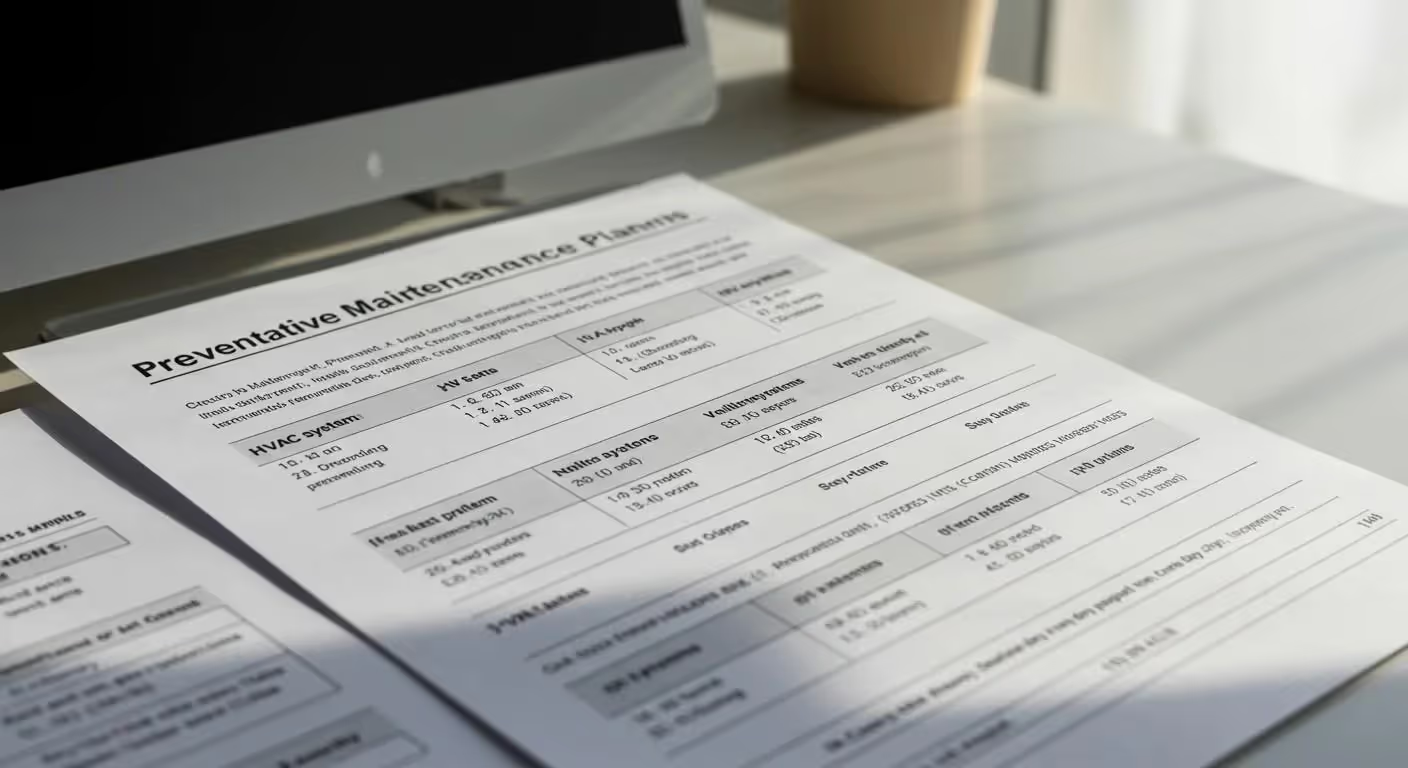
The uncertainty of whether your heating or cooling system will last through the season is a burden you do not need to carry. Our Premium Maintenance Plans are designed to shift the responsibility of equipment longevity from your shoulders to our certified professionals. By sticking to a rigorous schedule of inspections and tune-ups, we ensure that small wear-and-tear issues are resolved before they evolve into catastrophic, expensive repairs.
- Comprehensive safety inspections that identify hazardous leaks or electrical faults before they endanger the home.
- Performance optimization that restores factory-level efficiency, directly lowering monthly energy consumption.
- Priority service status that places you at the front of the line during high-demand weather events.
- Backed by clear documentation and service warranties, providing absolute transparency regarding the health of your HVAC system.
The Scope of Professional HVAC Maintenance
A premium maintenance plan is not merely a quick visual check; it is a deep, technical audit of your climate control infrastructure. Modern heating and cooling systems are complex machines involving high-voltage electricity, combustible gases, and high-pressure refrigerants. Neglecting any one of these components can lead to efficiency loss or complete failure. Our program is structured to cover every critical component, ensuring that the system operates exactly as the manufacturer intended.
When you enroll in a maintenance agreement, you are purchasing the assurance that your equipment is being monitored by experts who understand the distinct mechanical requirements of both modern and aging systems. This service is comprehensive, covering the distinct needs of your air conditioning unit in the spring and your furnace or boiler in the autumn. We meticulously clean, calibrate, and test the equipment to ensure it can handle the workload required to keep your indoor environment stable.
Cooling Season Optimization
Before the humidity settles into Dyer, our technicians perform a thorough revitalization of your air conditioning system. This process focuses on heat rejection and airflow, the two pillars of effective cooling.
- Condenser Coil Cleaning: We remove dirt, pollen, and debris from the outdoor unit’s coils. Dirty coils trap heat, causing the compressor to work harder and increasing electricity usage.
- Refrigerant Level Verification: We measure refrigerant pressure and temperatures (superheat and subcooling). Incorrect levels reduce cooling capacity and can burn out the compressor.
- Electrical Component Analysis: We tighten all electrical connections and measure voltage and amperage on motors. Loose connections create heat and can lead to arc faults or component failure.
- Condensate Drain Inspection: We clear the condensate drain line to prevent water backups, which can trigger safety switches that shut down the unit or cause water damage to the home structure.
- Thermostat Calibration: We verify that the thermostat is reading indoor temperatures accurately and cycling the unit correctly to maintain consistent comfort.
- Capacitor Testing: We test start and run capacitors. weak capacitors are a leading cause of compressor and fan motor failures during heatwaves.
Heating Season Safety and Efficiency
As temperatures drop, the focus shifts to safe combustion and heat distribution. The heating maintenance protocol is designed to prevent carbon monoxide leaks and ensure the system can maintain warmth without short-cycling.
- Heat Exchanger Inspection: We inspect the heat exchanger for cracks or corrosion. This is a critical safety step, as a compromised exchanger can allow exhaust gases, including carbon monoxide, to mix with indoor air.
- Burner Assembly Cleaning: We remove soot and rust from the burners to ensure smooth ignition and proper flame sensing.
- Ignition System Testing: We check the hot surface ignitor or pilot light assembly for proper operation, ensuring the furnace lights reliably every time heat is called for.
- Blower Motor Assessment: We inspect the blower wheel for dust buildup and check the motor’s amperage. A dirty blower reduces airflow, stressing the heat exchanger and reducing comfort.
- Flue Pipe and Venting Check: We verify that all exhaust venting is clear of obstructions and properly drafted to expel combustion gases safely outside.
- Safety Limit Control Testing: We cycle the furnace to ensure that high-limit switches and flame rollout sensors are functioning correctly to shut the unit down in case of malfunction.
The Logistics of Routine HVAC Care
Understanding how maintenance is delivered helps homeowners plan their year and maximize the benefits of the service. The process is designed to be non-intrusive yet thorough, providing you with a clear picture of your system's condition without disrupting your daily routine.
Upon arrival, the technician begins with a discussion regarding any specific comfort issues or noises you may have noticed. This feedback helps direct the inspection toward potential problem areas. Following this, the technician proceeds with the multi-point inspection and tune-up. This involves accessing the internal components of the furnace and air conditioner, requiring clear access to the mechanical room and the outdoor unit.
Once the physical work is complete, the focus turns to reporting. You receive a detailed account of exactly what was checked, cleaned, and tested. If a component is found to be near the end of its lifecycle—such as a fraying belt or a pitting contactor—this is brought to your attention immediately. This reporting structure allows you to make informed decisions about repairs on your own timeline, rather than being forced into an emergency decision when the part fails at 2:00 AM on a Sunday.
Included in this logistical framework is priority scheduling. Maintenance plan members are given precedence over non-members during peak service times. When a blizzard hits or a heatwave spikes, and call volumes surge, your status ensures that your needs are addressed rapidly.
Optimizing Your Investment: Repair vs. Replace
One of the primary functions of a premium maintenance plan is to extend the life of your current system. However, even the best-maintained equipment eventually reaches a point of diminishing returns. Our maintenance visits serve as a diagnostic timeline, helping you evaluate when it is financially prudent to repair a unit versus when it is strategic to replace it.
When Maintenance and Repair is the Right Path
- Mid-Lifecycle Equipment: If your system is under ten years old and generally reliable, maintenance is the key to pushing it to a 15 or 20-year lifespan.
- Minor Component Wear: Replacing inexpensive parts like capacitors, contactors, or sensors is standard operating procedure and far more cost-effective than system replacement.
- Maintainable Efficiency: If the unit’s efficiency ratings are still close to its original specifications after a tune-up, keeping the unit running is usually the best financial decision.
- Warranty Preservation: Many manufacturer warranties require proof of annual maintenance to remain valid. Sticking to the plan ensures you do not void this coverage.
When Replacement Becomes Necessary
- Major Component Failure: If a compressor fails or a heat exchanger cracks on an out-of-warranty unit, the cost of repair often approaches 50% of the cost of a new system.
- Obsolete Refrigerant: Older units utilizing R-22 refrigerant are becoming prohibitively expensive to repair due to the scarcity of the refrigerant. If an older unit develops a leak, replacement is often the only viable option.
- Chronic Inefficiency: If energy bills continue to rise despite regular maintenance, the technology within the unit may simply be outdated compared to modern standards.
Tailored to Local Climate Conditions
The weather in Dyer presents a specific set of challenges that generic maintenance checklists often miss. The region experiences a significant freeze-thaw cycle during the winter and high humidity levels during the summer. These environmental factors accelerate wear on outdoor equipment and demand specific attention during maintenance visits.
In the winter, the freeze-thaw cycle can cause the ground beneath the condenser pad to shift, potentially straining refrigerant lines. Snow and ice accumulation can also block airflow if not managed. Our winter inspections take into account the placement of the unit and the integrity of the pad to prevent structural damage to the connections.
During the summer, humidity control is just as important as temperature control. An air conditioner that is short-cycling due to a dirty filter or incorrect refrigerant charge will fail to dehumidify the home effectively. This leads to a clammy indoor environment and increases the risk of mold growth in ductwork. Our cooling maintenance specifically targets the system’s ability to pull moisture from the air, ensuring that the indoor climate remains dry and comfortable.
Furthermore, local building codes and utility requirements change over time. Our technicians stay updated on local regulations to ensure that your system not only runs well but remains compliant with current safety standards. We verify that venting and electrical connections meet the rigorous demands of the local infrastructure.
The Strategic Advantage of Professional Oversight
Choosing a premium maintenance plan is a strategic decision to protect one of the most valuable assets in your home. While DIY filter changes are helpful, they cannot replicate the diagnostic capabilities of a certified professional equipped with industrial-grade tools. Mr. Freeze Heating & Cooling provides the technical expertise required to analyze pressure differentials, electrical loads, and combustion efficiency.
We do not employ generic handymen; our team consists of specialists trained in the thermodynamics and electrical systems of HVAC equipment. When we manage your maintenance, we build a service history for the unit. This historical data allows us to predict failures before they happen based on trends in the system’s performance. For example, a motor that draws slightly more amps each year is a motor that is failing; we can spot this trend and intervene before the motor seizes.
This level of detailed care translates to lower operational costs. A clean, calibrated system requires less energy to do its job. Over the course of a year, the savings on utility bills can significantly offset the cost of the maintenance plan itself. Additionally, the extended lifespan of the equipment defers the capital expense of replacement, allowing you to get the maximum return on your initial installation investment.
By formalizing your maintenance through a structured plan, you eliminate the guesswork. You no longer need to remember when to call for service or wonder if your system is safe to operate. We manage the schedule, we manage the technical details, and you enjoy uninterrupted comfort.
Secure Your System’s Future
Waiting for a breakdown is a costly and stressful strategy. Take control of your home’s climate and financial predictability by investing in a service that prioritizes prevention over reaction. Ensure your heating and cooling systems are ready for whatever the weather brings — contact our team today.
Join our Premium Maintenance Plan today to guarantee year-round comfort and safety.