
Restore Comfort with Reliable Heat Pump Solutions
Is your heat pump failing to keep up with the Indiana cold or struggling to combat the humidity? Mr. Freeze Heating & Cooling offers rapid, reliable services to get your system back in peak condition for homeowners in Dyer. Call us today to schedule your service or inquire about our flexible financing options.
A malfunctioning heat pump in Lake County creates immediate discomfort and safety concerns, especially when temperatures drop near freezing. You require a solution that addresses the root cause of the inefficiency rather than a temporary patch. Our approach ensures your system operates correctly regardless of the season.
- Achieve optimal comfort with same-day heat pump repairs and services.
- Enhance system efficiency and lower your energy bills with our comprehensive maintenance plans.
- Enjoy peace of mind with our transparent pricing and extended warranties.
All services are fully insured, with flexible financing options available to meet your budget needs.
Immediate Relief for Heat Pump Issues
Heat pumps are versatile systems that handle both heating and cooling, meaning they run almost year-round. This constant operation can lead to wear and tear that manifests in specific, urgent problems. When a system fails in the middle of a Dyer winter or a humid summer afternoon, the priority is restoring functionality immediately.
Homeowners frequently encounter systems that blow cold air when set to heat. This often indicates a problem with the reversing valve, the component responsible for switching the unit between heating and cooling modes. If this valve sticks, the system cannot change functions, leaving you without the necessary temperature control. Another common issue involves the outdoor unit freezing over. While a light frost is normal during a defrost cycle, a unit encased in solid ice suggests an issue with the defrost control board, refrigerant levels, or airflow restrictions.
Electrical failures also trigger immediate service needs. Heat pumps rely on complex wiring to communicate between the thermostat, the air handler, and the outdoor compressor. Loose connections, tripped breakers, or failing capacitors can cause the system to shut down completely or cycle on and off rapidly—a condition known as short cycling. Short cycling not only fails to condition the home but also places immense strain on the compressor, leading to premature failure if not addressed quickly.
We address these urgent triggers with precision. Our diagnostic process isolates whether the failure is mechanical, electrical, or airflow-related. By identifying the specific failure point—whether it is a burnt-out contactor or a refrigerant leak—we provide a repair path that restores the system to manufacturer specifications.
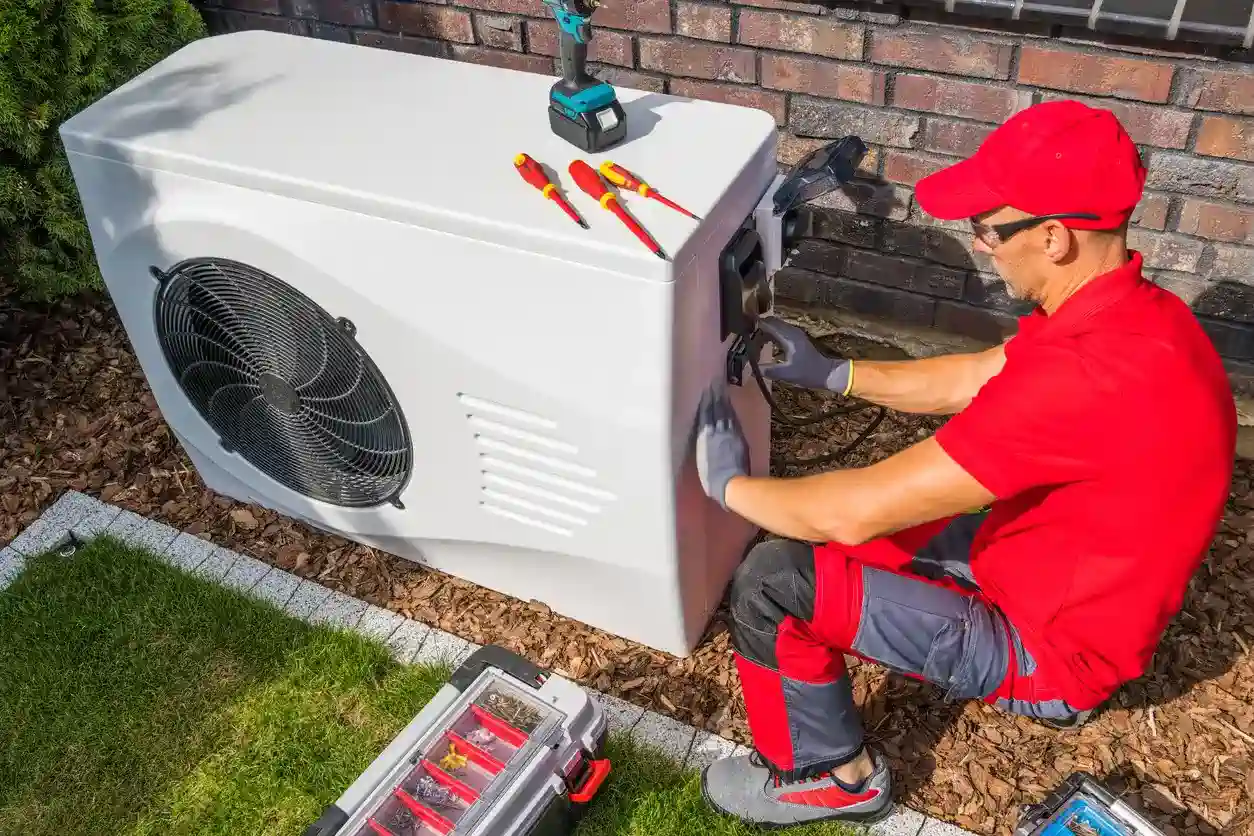
Our Heat Pump Services: What to Expect
When you engage professional assistance for your climate control system, you expect a comprehensive scope of work that leaves no component unchecked. Our service protocols are designed to be thorough, transparent, and focused on longevity. We do not simply swap parts; we analyze the entire system's performance to ensure it can handle the local climate demands.
Diagnostic and Repair Protocols
- The technician begins with a full system assessment, checking thermostat calibration and communication with the main unit.
- We inspect the air filter and ductwork static pressure to ensure airflow is not restricted, as poor airflow is a leading cause of compressor failure.
- The refrigerant charge is measured against the manufacturer’s sub-cooling and superheat charts; incorrect levels significantly reduce efficiency and capacity.
- Electrical components, including the capacitor, contactor, and wiring connections, are tested for voltage drops or signs of pitting and burning.
- Once the issue is identified, we provide a clear explanation of the repair required, including the scope of labor and parts.
Preventative Maintenance Plans
- Seasonal maintenance is critical for heat pumps in Indiana due to the dual-season workload.
- Technicians clean the outdoor coils to remove dirt, leaves, and cottonwood debris that block heat transfer.
- The condensate drain line is flushed to prevent water backups that can trigger safety switches or cause water damage.
- The defrost cycle is manually tested to ensure the system can effectively melt ice accumulation during winter operation.
- Supplemental heat strips (emergency heat) are tested to verify they engage when the outdoor temperature drops below the heat pump's balance point.
Performance Tuning
- Beyond basic fixes, we optimize the system for energy efficiency.
- Blower motor speeds are adjusted to match the ductwork capabilities, ensuring quiet operation and proper air mixing.
- Refrigerant levels are fine-tuned to ensure the highest possible Heat Seasonal Performance Factor (HSPF) and Seasonal Energy Efficiency Ratio (SEER).
- Thermostat settings are reviewed to ensure the auxiliary heat lockout is set correctly, preventing expensive electric heat strips from running unnecessarily.
Step-by-Step Approach to Heat Pump Installation
Installing a new heat pump or replacing an aging unit is a complex process that requires strict adherence to technical standards. A proper installation dictates the efficiency and lifespan of the unit for years to come. In Dyer, where weather patterns fluctuate drastically, sizing and installation precision are non-negotiable.
Sizing and Load Calculation
- The process begins with a Manual J load calculation. This engineering calculation determines exactly how much heating and cooling capacity the home requires based on square footage, insulation levels, window types, and orientation.
- Guessing the size often results in oversized units that short cycle or undersized units that run continuously without reaching the set temperature.
- We verify the compatibility of the existing ductwork to handle the airflow requirements of the new system.
Site Preparation and Removal
- The existing equipment is safely disconnected. Technicians recover any old refrigerant according to EPA regulations to prevent environmental contamination.
- The installation site, usually a pad for the outdoor unit, is leveled and stabilized. A level unit is essential for the proper lubrication of the compressor.
- A new disconnect box and electrical whip are often installed to ensure the power supply meets current safety codes.
System Connection and Commissioning
- The indoor air handler and outdoor condenser are set in place.
- Refrigerant lines are brazed using nitrogen purging. This step prevents oxidation inside the copper lines, which can clog the sensitive metering devices in the new unit.
- A vacuum pump is used to evacuate air and moisture from the lines, reaching a deep vacuum (typically below 500 microns) to ensure a pure, sealed system.
- The system is charged with the precise amount of refrigerant specified by the manufacturer.
- Technicians test the system in both heating and cooling modes, verifying the operation of the reversing valve and the auxiliary heat strips.
Final Walkthrough
- The new thermostat is programmed to the homeowner's preferences.
- Technicians explain how to operate the system, how to change filters, and what maintenance will be required.
- Warranty registration details are processed to ensure coverage on parts and the compressor.
Deciding Between Repair or Replacement
Homeowners often face a difficult choice when an older heat pump malfunctions: is it better to invest in a repair or upgrade to a modern system? Making the right financial and comfort decision involves analyzing the age of the unit, the cost of repairs, and the potential energy savings.
The Age and Frequency Factor
- Heat pumps typically last between 10 and 15 years. If your unit is approaching or has surpassed this range, major component failures are likely to become more frequent.
- If the system requires repairs more than once a year, the cumulative cost of service calls often outweighs the monthly payments on a new, warrantied system.
- Units that use older, phased-out refrigerants (like R-22) are prohibitively expensive to repair due to the scarcity of the refrigerant.
The "50% Rule"
- A common industry standard is the 50% rule: if the cost of the repair approaches 50% of the value of the system (or the cost of a new unit), replacement is generally the smarter financial move.
- Expensive components like compressors or reversing valves often trigger this threshold.
- Investing thousands of dollars into an old unit does not reset its clock; other parts remain old and prone to failure.
Efficiency and Technology Gains
- Modern heat pumps offer significantly higher efficiency ratings compared to models from a decade ago.
- Look at the SEER2 (cooling efficiency) and HSPF2 (heating efficiency) ratings. Upgrading from a 10 SEER unit to a 16 SEER2 unit can reduce cooling costs by nearly 40%.
- Newer systems often feature variable-speed compressors. Unlike single-stage units that run at 100% capacity or off, variable-speed units adjust their output to match the heating or cooling demand. This results in more consistent temperatures, better humidity control, and lower energy usage.
- In colder climates, cold-climate heat pump technology allows units to extract heat from the air even when temperatures drop well below freezing, reducing reliance on expensive electric resistance backup heat.
Local Compliance and Seasonal Advice
Operating a heat pump in Dyer requires specific attention to local regulations and the unique climate challenges of the region. Indiana winters can test the limits of standard heat pumps, while the summers demand high dehumidification capabilities.
Permits and Utility Coordination
- HVAC installations and significant alterations typically require permits to ensure compliance with local building and safety codes. This protects the homeowner by verifying that the electrical connections and structural supports meet safety standards.
- Mr. Freeze Heating & Cooling ensures all necessary paperwork is filed correctly with the local municipality.
- We coordinate with local utilities, such as NIPSCO, regarding potential rebates. High-efficiency heat pumps often qualify for utility rebates or federal tax credits, but these programs require specific documentation and proof of installation by a certified contractor.
Managing the Defrost Cycle
- Residents must understand the difference between a defrost cycle and a frozen unit. In winter, frost builds up on the outdoor coil. The system periodically reverses to "cooling" mode (without blowing cold air inside) to heat the outdoor coil and melt the ice.
- Homeowners may see steam rising from the outdoor unit during this process; this is normal operation, not smoke.
- It is vital to keep the outdoor unit clear of snow drifts. If snow blocks the airflow, the system cannot extract heat from the air, causing it to run inefficiently or shut down on a safety limit.
Summer Humidity Control
- In the summer, the heat pump acts as an air conditioner. Because this region experiences high humidity, it is crucial that the system runs long enough to pull moisture from the air.
- Oversized units cool the air too quickly and shut off before dehumidifying, leaving the home feeling cold but clammy. Proper sizing ensures the unit runs long enough to balance both temperature and humidity.
Dual Fuel Considerations
- For this region, many homeowners opt for a "dual fuel" or hybrid system. This setup pairs an electric heat pump with a gas furnace.
- The heat pump handles the heating during moderate winter days (typically above 30-40 degrees), which is the most efficient method.
- When temperatures plummet to extreme lows, the system automatically switches to the gas furnace, which provides hotter, more consistent heat during deep freezes. This configuration maximizes efficiency while ensuring comfort during the coldest nights.
Why Choose Mr. Freeze? Our Credentials Speak Volumes
Selecting a service provider is about trust and technical competence. You need a partner who understands the specific thermal dynamics of homes in this area and stands behind their work.
- Certified Expertise: Our technicians undergo rigorous training and hold industry certifications. We stay updated on the latest heat pump technologies, including inverter-driven compressors and smart thermostat integration.
- Local Understanding: We understand the local housing stock and the specific challenges posed by the regional climate. We know why certain rooms in local homes tend to be colder and how to address those specific airflow imbalances.
- Transparent Communication: You will never be pressured into a sale. We present the data—measurements, electrical readings, and costs—so you can make an informed decision for your home.
- Commitment to Safety: Every service call includes safety checks on electrical connections and, if applicable, carbon monoxide checks for hybrid systems. Your safety is as important as your comfort.
Get Immediate Heating & Cooling Service
When your comfort is compromised, you need a team that acts fast and fixes it right the first time. Contact us today to secure your home’s temperature and efficiency for the seasons ahead.