
Eliminate High Energy Bills and Uneven Comfort with a New Heat Pump
Facing rising heating costs or a furnace that cannot keep up with the deep freeze of a Dyer winter is a stressful reality for many homeowners. If your current system leaves cold spots in your home or your utility bills are climbing despite average usage, a modern heat pump installation offers a dual-fuel capable, energy-efficient solution. Mr. Freeze Heating & Cooling specializes in transitioning homes to these high-performance systems to ensure year-round climate control. Contact us today or apply for financing to secure your installation date.
- Lower your monthly utility expenses by utilizing energy-efficient heat transfer technology.
- Maintain consistent indoor temperatures regardless of the fluctuating Indiana weather.
- Experience a streamlined, professional installation process that respects your property and timeline.
All installations are fully permitted, backed by comprehensive labor warranties, and financing options are available for qualified homeowners.
What to Expect from Your Heat Pump Installation — Timeline and Process
Installing a heat pump is a significant upgrade to your home’s infrastructure. Unlike a simple component swap, this process involves integrating a sophisticated system that handles both heating and cooling. For residents in Dyer, where seasons swing violently between humid summers and freezing winters, the installation must be calibrated perfectly to handle both loads.
When you move forward with an installation, the timeline is structured to minimize disruption to your daily life. Most residential installations are completed within a single day. However, complex jobs requiring significant ductwork modification or electrical panel upgrades may extend into a second day. The process begins long before the truck arrives at your driveway. It starts with a load calculation.
A professional installer does not guess the size of the unit based on square footage alone. We perform a Manual J load calculation. This assessment factors in the insulation levels of your attic and walls, the number and orientation of windows, the height of your ceilings, and even the heat generated by appliances and occupants. This ensures the heat pump is sized exactly for your home’s thermal envelope. An undersized unit will run constantly and fail to reach set temperatures, while an oversized unit will short-cycle, leading to humidity issues and premature wear.
On the day of installation, the focus shifts to the physical transition. You can expect a crew to arrive with floor protection to safeguard your home. The workspace around your indoor air handler and outdoor condenser site will be cleared. If you are switching from a traditional furnace and AC combo to a heat pump, or perhaps a dual-fuel "hybrid" system, the existing equipment will be disconnected, removed, and disposed of according to EPA regulations.
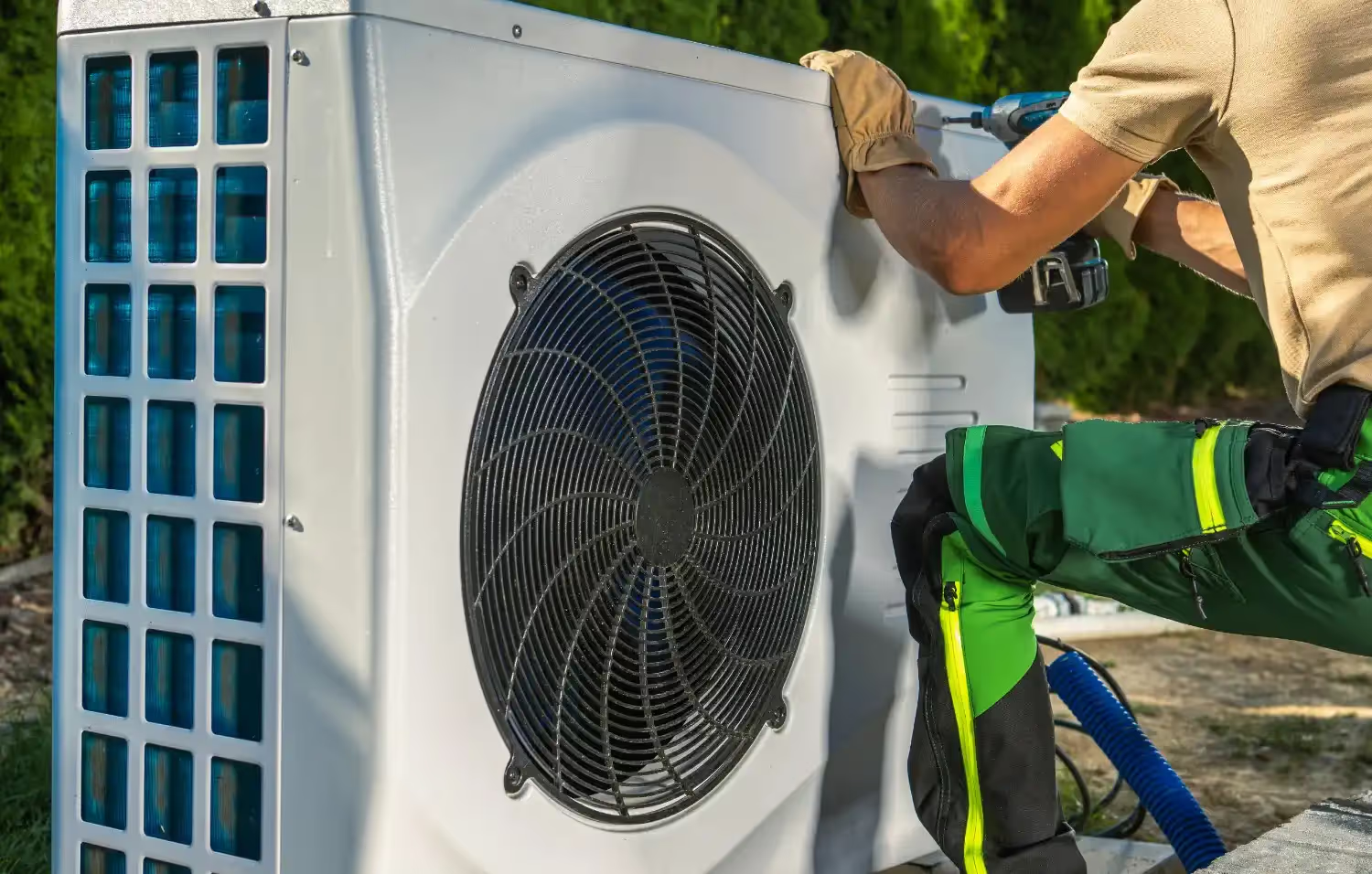
Heat Pump Installation Step-by-Step: What Happens on Installation Day
The installation of a heat pump requires expertise in electrical high voltage, low voltage controls, refrigerant thermodynamics, and airflow management. It is a precise sequence of events designed to ensure the longevity of the equipment.
Here is exactly how the installation day unfolds:
- Site Preparation and Protection: The team lays down drop cloths and wears shoe covers to protect flooring. We shut off gas and electrical supplies to the existing HVAC equipment to ensure safety. The area around the outdoor pad is cleared of debris or overgrowth to ensure proper airflow for the new unit.
- Removal of Existing Equipment: Technicians recover any remaining refrigerant from your old air conditioner or heat pump into a recovery cylinder, ensuring nothing vents into the atmosphere. The old outdoor condenser and indoor air handler (or furnace coil) are disconnected and removed from the property.
- Indoor Unit Installation: The new indoor evaporator coil and air handler are set in place. If this is a dual-fuel system retaining a gas furnace for backup heat, the coil is mounted precisely on top of the furnace. The plenum (the transition between the unit and ductwork) is sealed with mastic or foil tape to prevent air leakage, which is critical for system efficiency.
- Outdoor Unit Placement: The new outdoor heat pump is positioned on a composite pad. This pad is leveled to ensure the compressor operates quietly and oil lubricates the system correctly. In our region, we also ensure the unit is elevated sufficiently (using snow legs or a stand) to prevent snow accumulation from blocking airflow during the winter months.
- Refrigerant Line Set Connection: Copper refrigerant lines connect the indoor and outdoor units. These lines are brazed using nitrogen flow. Flowing nitrogen through the lines while brazing prevents oxidation and soot buildup inside the copper, which protects the sensitive valves and compressor of the new heat pump.
- Electrical and Control Wiring: High-voltage wiring is connected to a safety disconnect box near the outdoor unit. Low-voltage control wires are run to the thermostat. Modern heat pumps often communicate digitally with the thermostat to modulate fan speeds and compressor output, requiring specialized wiring configurations.
- Pressure Testing and Vacuum: Once the lines are sealed, the system is pressurized with nitrogen to check for leaks. After verifying the system is sealed, a vacuum pump removes all moisture and non-condensable gases from the lines. This step is non-negotiable; moisture inside the system creates acid that destroys the compressor.
- System Startup and Commissioning: The refrigerant is released, and the system is powered on. Technicians measure superheat and subcooling levels to fine-tune the refrigerant charge. We test the defrost cycle, auxiliary heat engagement, and cooling mode to ensure all functions operate correctly before leaving.
Deciding Between Heat Pump Repair or Replacement
Homeowners often grapple with whether to sink more money into an aging system or invest in a new one. While repairs can sometimes extend the life of a unit, there comes a tipping point where replacement is the more financially viable option.
Age of the Equipment
Heat pumps generally last between 10 and 15 years. If your unit is approaching or has surpassed the 12-year mark, major component failures (like a compressor or reversing valve) are usually signals that the system has reached the end of its useful life.
The Cost of Repair vs. System Value
HVAC professionals often use the "50% Rule." If the cost of the repair is 50% or more of the value of the system (or the cost of a new system), replacement is the smarter choice. Additionally, if you are calling for repairs more than once a year, those service call fees and parts costs are eroding the capital you could be investing in a reliable new unit with a warranty.
Refrigerant Type
Older systems use R-22 (Freon), which has been phased out and is prohibitively expensive to restock. If your older unit has a refrigerant leak, repairing it is rarely cost-effective. Modern systems use R-410A or newer, eco-friendly refrigerants like R-454B, which are compliant with current environmental standards.
Energy Efficiency and Technology
Heat pump technology has advanced rapidly. Older units typically have SEER (Seasonal Energy Efficiency Ratio) ratings of 10 or 12. Modern units start at 14 or 15 and go up to 20+. Furthermore, older units are often single-stage, meaning they run at 100% capacity or not at all. New variable-speed or inverter-driven heat pumps can ramp up and down to match the exact heating or cooling load, drastically reducing energy consumption and eliminating temperature swings.
Permits and Local Regulations for Installing Heat Pumps
Installing HVAC equipment involves compliance with local building codes and safety standards. In Dyer and the surrounding Lake County areas, replacing a heating and cooling system is considered a major renovation that requires permitting.
Permitting Requirements
The Town of Dyer requires permits for HVAC replacements to ensure the installation meets safety codes regarding electrical connections, gas piping (for dual fuel systems), and venting. A professional contractor manages this administrative burden. We apply for the permit, schedule the required inspections, and ensure the work passes. Unpermitted work can complicate future home sales and may lead to insurance claims being denied if a fire or water damage event is traced back to the equipment.
Electrical Considerations
Heat pumps often have specific electrical requirements. Older homes may have 60-amp or 100-amp service panels that are already maxed out. A new high-efficiency heat pump might require a dedicated circuit with a specific amperage. Part of our site assessment involves verifying your electrical panel can support the new equipment, and coordinating upgrades if necessary.
Regional Climate Factors
Our local climate dictates specific installation practices. Because we experience freezing temperatures, the placement of the outdoor unit is critical. It must be kept clear of roof drip lines where freezing water could encase the fan blade in ice. Additionally, proper drainage for the defrost cycle is essential; when the unit melts ice off its coils in winter, that water must drain away from the foundation and not create a slip hazard on walkways.
Why Professional Installation Matters for Long-Term Performance
The brand of equipment you choose is important, but the quality of the installation is the single biggest factor in how well that equipment performs. A top-tier heat pump installed poorly will have a shorter lifespan and higher operating costs than a mid-range unit installed correctly.
We focus on the details that impact longevity. This includes proper duct sealing to ensure the air you pay to heat actually reaches your living rooms, rather than leaking into the attic or crawlspace. It involves setting the correct airflow per ton of cooling to ensure humidity is removed during our muggy summers. It means calibrating the thermostat so that auxiliary heat strips only come on when absolutely necessary, keeping your electric bills in check.
Mr. Freeze Heating & Cooling employs certified technicians who undergo continuous training on the latest heat pump technologies. We are well-versed in the specific load requirements of homes in this region. We understand that a heat pump in Indiana is not just an air conditioner that reverses; it is your primary defense against winter cold. We ensure the transition to the auxiliary heat source is seamless, so you never feel a drop in comfort.
Certification and Warranty
Our installations are backed by robust manufacturer warranties on parts and our own guarantees on workmanship. We register your equipment immediately after installation to ensure full warranty coverage applies. We are licensed, bonded, and insured, providing you with total protection throughout the project.
Whether you are looking to replace an aging furnace and AC combination with a streamlined heat pump or need to upgrade an existing heat pump system, expert installation is the key to twenty years of comfort. Make the decision to upgrade your home’s efficiency and reliability today.
Call us now to schedule your comprehensive site assessment and heat pump installation.