
Is Your Wine Collection at Risk Due to Inconsistent Temperatures?
Is your dedicated wine storage failing to maintain the precise 55°F required for long-term preservation? Safeguard your vintage investments immediately with specialized cooling services designed to combat the temperature fluctuations common in this region. Call us now to schedule an urgent diagnostic or installation consultation.
Wine is a living, breathing organic compound that reacts poorly to environmental stress. A standard air conditioner cannot replicate the specific conditions of a wine cellar; it cools too quickly and strips necessary moisture from the air. In Schererville, where seasonal extremes range from humid, hot summers to freezing winters, a specialized environmental control system is non-negotiable for serious collectors. We provide expert intervention to stabilize your cellar environment, ensuring that corks remain expanded, oxidation is prevented, and your wine matures exactly as the vintner intended.
Our approach to wine cellar cooling focuses on three critical outcomes:
- Rapid stabilization of temperature and humidity levels to prevent immediate spoilage or "cooking" of the wine.
- Implementation of commercial-grade split or ducted systems capable of handling high ambient heat loads during humid continental summers.
- Long-term protection through verified installations backed by comprehensive labor and equipment warranties.
All installations and repairs are performed in strict compliance with local building codes, ensuring your electrical and mechanical setups are safe, legal, and covered.
Comprehensive Cooling Scope and System Options
Effective wine storage is about more than just cold air; it is about maintaining a stable thermal mass and relative humidity between 50% and 70%. When you hire Mr.Freeze Heating & Cooling, you are engaging specialists who understand the thermodynamics of wine preservation. We move beyond simple HVAC repair into the realm of precision refrigeration.
We service and install the three primary categories of wine cellar cooling systems found in residential and commercial properties:
Through-the-Wall Cooling Units
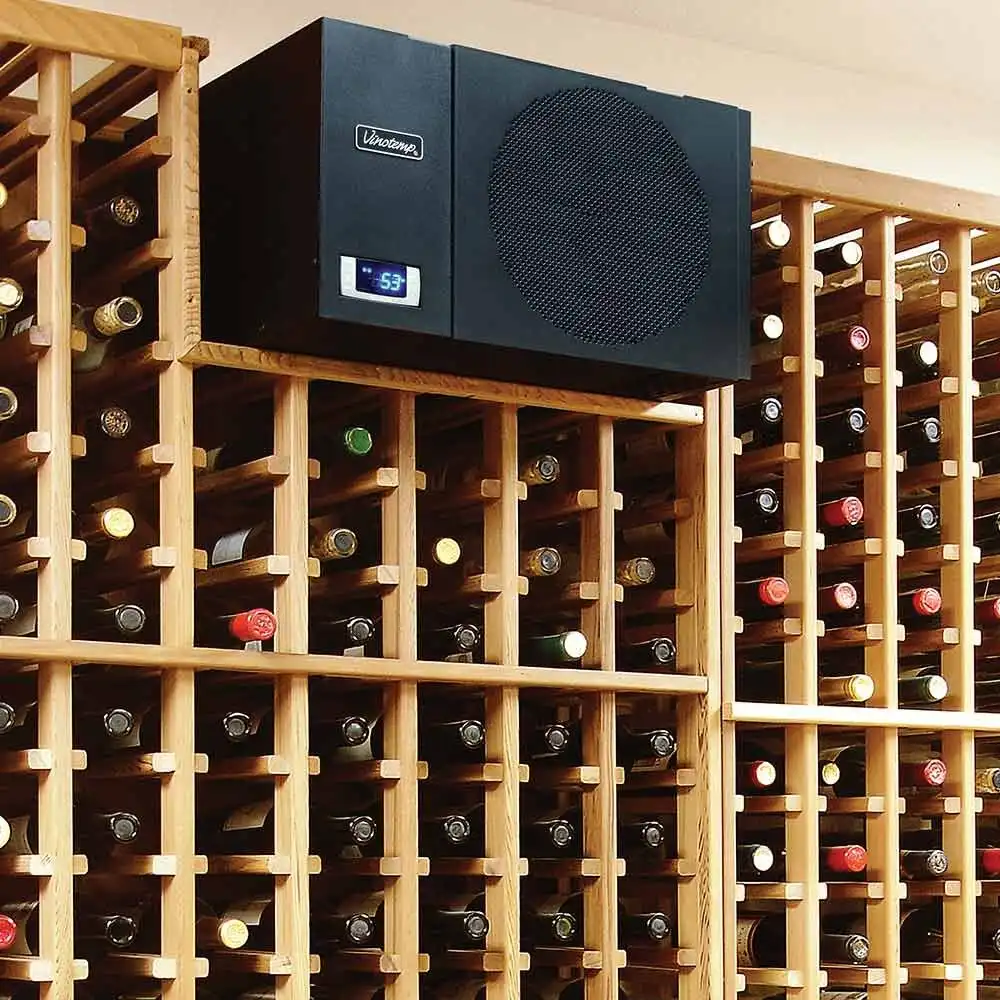
These are self-contained systems often used for smaller cellars or converted closets. They mount directly between the cellar studs and exhaust heat into an adjacent room.
- Best for small to medium collections.
- Requires an adjacent room capable of absorbing heat and fan noise.
- Quickest installation turnaround time.
Ductless Split Refrigeration Systems
Similar to a mini-split AC, these separate the noisy condenser (placed outside or in a mechanical room) from the quiet evaporator (inside the cellar). This is the preferred choice for collectors who value aesthetics and silence.
- Eliminates noise and vibration in the cellar, which can disturb sediment in older wines.
- Flexible installation options for the condenser unit.
- Higher efficiency ratings for larger cellars.
Ducted Self-Contained Systems
These units are fully concealed. The cooling unit sits in a remote location (like an attic or basement) and ducts cold air into the cellar while ducting hot air outside.
- Zero visible equipment inside the cellar, maximizing racking space.
- Complete silence within the storage area.
- Ideal for glass-enclosed or display-centric wine walls.
Maintenance and Optimization
Beyond installation, we provide rigorous maintenance protocols. A neglected wine cooling unit often suffers from clogged condenser coils or blocked drain lines, leading to water leaks that can damage labels and racking. Our scope includes verifying refrigerant pressures, cleaning condensate drains to prevent mold growth, and calibrating digital thermostats to ensure the readout matches the actual liquid temperature of the wine.
How the Installation and Replacement Process Works
Installing a wine cooling system is significantly more complex than installing a standard room air conditioner. The process requires a "sealed envelope" approach to ensure the equipment does not burn out trying to cool a leaking room. We follow a strict, technically driven workflow to ensure your system performs efficiently for years.
Phase 1: Heat Load Calculation
We begin by performing a Manual J load calculation specific to wine cellars. This calculation is not based on square footage alone. We analyze:
- The R-value of the insulation in the walls, ceiling, and floor.
- The amount of glass (windows or doors) and whether it is single or dual-paned thermal glass.
- The type of lighting used (LED vs. incandescent heat generation).
- The ambient temperature of the surrounding spaces (e.g., is the cellar next to a hot boiler room?).
Phase 2: Vapor Barrier Verification
Before a unit is selected, we verify the integrity of the vapor barrier. In Schererville, humidity control is vital. If moisture migrates through the walls, it can condense on the cold vapor barrier, causing rot and mold behind the walls.
- We check that the vapor barrier is on the warm side of the insulation (exterior).
- We ensure the room is airtight to prevent infiltration of unconditioned air.
Phase 3: Unit Placement and Rough-In
- For split systems, we run line sets (copper tubing) and electrical wiring to the designated condenser location.
- For ducted systems, we install insulated ductwork to prevent condensation and ensure airflow reaches the bottom of the racking where cold air naturally settles.
- Drain lines are pitched correctly to ensure condensate flows away from the cellar.
Phase 4: System Charging and Calibration
- Once the equipment is set, we pressure test the lines with nitrogen to check for leaks.
- We evacuate the system to remove moisture and contaminants.
- We weigh in the precise amount of refrigerant specified by the manufacturer.
- Finally, we set the controller parameters, including the differential (the temperature range before the unit kicks on) to minimize short-cycling.
Deciding Between Repair and System Replacement
Wine cooling units operate continuously—24 hours a day, 7 days a week—unlike standard ACs that cycle off when the house is cool. This heavy duty cycle means components wear out. Deciding whether to repair an existing unit or invest in a new system depends on the age of the unit, the nature of the failure, and the value of your wine collection.
When to Repair
Repair is often the logical choice if the system is under seven years old and the issue is a specific, replaceable component.
- Failed Sensors: If the unit is reading the wrong temperature but cooling fine, a sensor replacement is simple and cost-effective.
- Fan Motor Burnout: Evaporator or condenser fans are mechanical parts that can be swapped out without replacing the entire system.
- Minor Refrigerant Leaks: If a leak is found at a flare connection or a valve, it can be tightened, tested, and recharged.
- Clogged Drains: Water pooling on the floor usually indicates a blockage, which is a maintenance issue rather than a system failure.
When to Replace
Replacement becomes necessary when the cost of repair approaches 50% of a new unit, or when reliability is compromised to the point where your collection is at risk.
- Compressor Failure: The compressor is the heart of the system. On an older unit, replacing a compressor is labor-intensive and expensive. A new unit offers a fresh warranty.
- Evaporator Coil Corrosion: In high-humidity environments, coils can corrode and develop pinhole leaks. These are virtually impossible to patch reliably.
- Refrigerant Obsolescence: If your older unit uses phased-out refrigerants (like R-22), repair costs will be astronomical due to scarcity. Newer units use eco-friendly, efficient refrigerants.
- Inadequate Sizing: If the unit runs 100% of the time and never reaches 55°F, it is likely undersized. No repair will fix physics; the unit must be upgraded to a higher BTU capacity.
Local Climate Factors and Technical Requirements
Operating a wine cellar in this specific region requires addressing local environmental factors. The humid continental climate presents a "tale of two extremes" that your cooling system must handle.
Summer Humidity Management
During the humid summers, the moisture load in the air is high. A standard AC removes humidity rapidly, which is bad for wine corks (drying them out). However, too much humidity leads to mold on labels. Our systems use oversized evaporator coils to gently remove heat without stripping excessive moisture, maintaining that crucial 50-70% humidity sweet spot.
Winter Ambient Control
In winter, the ambient temperature outside can drop well below freezing. If your condenser is located outdoors, the oil in the compressor can thicken, preventing the unit from starting or causing damage. We install "low ambient kits" on outdoor condensers. These kits control the fan speed and head pressure, allowing the cooling unit to operate safely even when it is snowing outside. This is essential because the interior of a wine cellar must stay at 55°F even if the garage or exterior wall is 20°F.
Electrical and Permitting
Dedicated wine cooling units typically require a dedicated electrical circuit to prevent tripping breakers, which would leave your cellar unconditioned. We assess your panel capacity to ensure it can handle the startup amperage of the cooling unit. Furthermore, specific municipalities may have noise ordinances regarding outdoor mechanical equipment; we ensure outdoor condensers are placed and shielded to comply with local regulations.
The Critical Importance of Specialized Refrigeration
Wine cellar cooling is not a DIY project or a job for a general handyman. The stakes are financially high; a single malfunction can ruin thousands of dollars worth of wine in a matter of days.
Standard HVAC technicians often attempt to treat wine coolers like refrigerators or house ACs. This leads to improper superheat settings and humidity levels that are too low. We approach your project with the specific understanding of preservation. We understand that vibration must be minimized to protect the chemical structure of the wine. We understand that temperature stability is more important than rapid cooling.
By choosing specialized service, you ensure:
- Consistent Temperatures: Eliminating the daily swings that cause corks to expand and contract, which pumps air into the bottle and oxidizes the wine.
- Mold Prevention: Proper management of condensate and humidity to protect organic racking materials (redwood, mahogany) and paper labels.
- Equipment Longevity: Correct installation of vapor barriers and insulation prevents the cooling unit from overworking, extending its operational lifespan.
When you engage Mr.Freeze Heating & Cooling for your assessment, you are securing a partner dedicated to the longevity of your collection. We prioritize the safety of your vintage assets through precise, verified engineering controls.
Secure Your Investment with Expert Cooling
Your wine collection represents a significant investment of time, passion, and money. Do not let mechanical failure or improper climate control compromise the quality of your vintages. Whether you require an emergency repair on a failing unit, a retrofit for an existing cellar, or a complete installation for a new build, we provide the technical expertise required to maintain a perfect 55°F environment. Take control of your cellar's climate today. Schedule your professional consultation now.