
Eliminate High Energy Bills with Efficient Geothermal Solutions
Tired of skyrocketing heating bills and inefficient systems that struggle to keep up with the weather? Discover how our geothermal systems provide a sustainable, cost-effective solution designed for Schererville’s unique climate by contacting us today to schedule a site assessment or discuss financing options.
- Reduce heating costs by up to 50% with efficient underground heat transfer.
- Enjoy consistent comfort year-round, no matter the outdoor temperature.
- Long-lasting systems with a lifespan that doubles traditional HVAC solutions.
All installations are backed by comprehensive warranties and are eligible for flexible financing options.
Unlock Efficient Heating with Geothermal Technology
Traditional HVAC systems rely heavily on the fluctuating outdoor air temperature to heat or cool your home. In an area like Schererville, where winter lows frequently drop to around 15°F and summer highs reach 85°F, air-source heat pumps and furnaces have to work significantly harder to maintain a comfortable indoor environment. This strain results in higher energy consumption, increased wear and tear on components, and inconsistent interior temperatures. Geothermal technology bypasses these atmospheric challenges by utilizing the constant temperature of the earth found just a few feet below the surface.
Mr.Freeze Heating & Cooling specializes in designing and implementing ground-source heat pump systems that leverage this thermal stability. Regardless of whether there is a blizzard or a heatwave above ground, the earth remains at a steady temperature between 50°F and 60°F year-round. A geothermal system circulates a water-based solution through a series of underground pipes, known as a loop field, to exchange heat. In the winter, the fluid absorbs heat from the ground and concentrates it for use inside the home. In the summer, the process reverses, pulling heat from your home and discharging it into the cooler earth.
The efficiency gains from this method are substantial. Because the system moves heat rather than generating it through combustion, it delivers three to four units of energy for every one unit of electricity consumed. This translates to an efficiency rating of 300% to 400%, compared to 95-98% for the most efficient gas furnaces. For homeowners looking to decouple their monthly expenses from volatile fossil fuel prices, this technology offers a permanent, infrastructure-based solution.
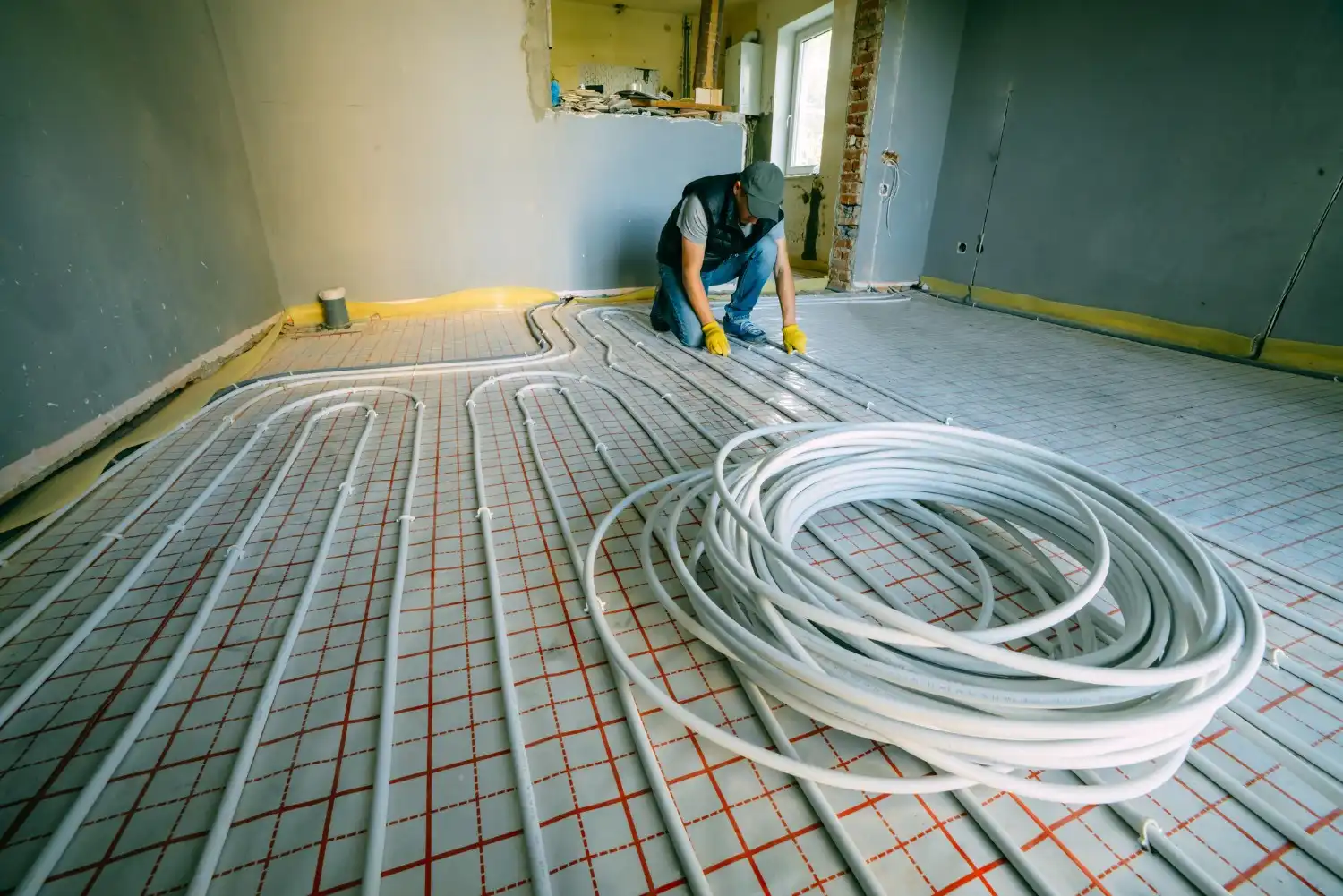
What to Expect from Our Geothermal Installation Service
Switching to geothermal is a significant construction project that involves more than just swapping out a box in your basement. It requires precise load calculations, geological understanding, and skilled excavation. When you engage a professional service for this installation, you are investing in a custom-engineered power plant for your property. The scope of work encompasses the exterior ground loop installation, the interior heat pump unit setup, and the integration with your existing or new ductwork system.
Our approach ensures that every component is sized correctly for your specific heating and cooling load. An oversized unit will short-cycle, leading to humidity issues and premature failure, while an undersized unit will fail to keep the house warm during the coldest Indiana nights. We handle the complete project management, from the initial thermal load calculation to the final system balancing. This includes coordinating with local utility markers to ensure safe digging and managing the landscape disruption to be as minimal as possible.
You also gain access to advanced features common in modern geothermal units. These often include:
- Variable-speed blowers that adjust airflow for precise temperature control.
- Two-stage or variable-speed compressors that run at lower capacities for maximum efficiency, only ramping up when demand is high.
- Desuperheaters, which are auxiliary heat exchangers that can provide a significant portion of your domestic hot water for free using excess heat from the system.
- Advanced thermostat integration for remote monitoring and diagnostics.
Our Step-by-Step Geothermal Installation Process
A successful geothermal installation relies on a strict adherence to engineering protocols. We follow a methodical process to ensure the longevity and performance of the ground loop and the indoor equipment.
- The process begins with a comprehensive site evaluation and Manual J load calculation. This step determines exactly how much heat energy the home loses in winter and gains in summer. Technicians also assess the soil conditions and available land area in Schererville to determine the best loop type (vertical, horizontal, or pond loops).
- Next, the design phase finalizes the loop configuration. If space is limited, vertical loops are drilled hundreds of feet straight down. If acreage is ample, horizontal loops are laid in trenches. This design phase also accounts for the specific thermal conductivity of the soil to ensure the loop length is sufficient.
- Excavation and drilling commence once the design is approved. Heavy machinery is brought in to bore holes or dig trenches. High-density polyethylene (HDPE) piping is inserted into the ground. These pipes are thermally fused—melting the plastic together—to create joints that are stronger than the pipe itself, eliminating the risk of underground leaks.
- Once the piping is in place, the loop is pressure-tested before being covered. This ensures system integrity. The trenches are backfilled, and the loop is connected to a manifold system that brings the fluid into the home through the foundation wall.
- Inside the home, the old furnace and air conditioner are removed. The new geothermal heat pump unit is set in place and connected to the loop manifold, the electrical supply, and the forced-air ductwork. If the system is hydronic (for radiant floor heating), it is connected to the distribution piping.
- The system is flushed and purged to remove air and debris from the loop lines. An antifreeze solution (typically methanol or propylene glycol) is added to the water to prevent freezing during extreme winter operation.
- Finally, the system is started, and technicians perform a detailed commissioning. They measure static pressure, water flow rates, and air temperature differentials to verify the system is performing to manufacturer specifications.
Deciding Between Geothermal Replacement and Repair
Homeowners often face a difficult choice when an existing HVAC system begins to fail: repair the old unit or invest in a geothermal replacement. While the upfront cost of geothermal is higher than a standard air-source replacement, the decision often comes down to long-term ownership horizons and current system status.
Mr.Freeze Heating & Cooling suggests evaluating the following criteria when making this decision:
- System Age and Frequency of Repair: If your current furnace or air conditioner is over 15 years old and requires repairs costing more than 50% of its value, replacement is usually the wiser financial move. Continuing to patch an aging system throws money at declining efficiency.
- Monthly Budget Impact: If high utility bills are a primary pain point, repairing a standard system will not solve the problem. Only a fundamental change in technology, like switching to geothermal, will drastically reduce monthly operating costs. The savings on monthly bills can often offset the monthly payment of a financed installation.
- Future Home Plans: Geothermal systems add value to a property. If you plan to stay in your home for at least five to seven years, the Return on Investment (ROI) from energy savings typically pays for the price difference between a standard system and a geothermal one.
- Environmental Goals: For those prioritizing carbon footprint reduction, no amount of repair on a fossil-fuel furnace will achieve the sustainability of a geothermal system.
- Component Failure: If the compressor in an AC or the heat exchanger in a furnace has failed, these are catastrophic failures. Rather than replacing these expensive parts in an old chassis, directing that capital toward a new geothermal installation resets the warranty clock and ensures reliability.
Permitting and Seasonal Considerations for Schererville
Installing a geothermal system involves interaction with the ground and local utilities, making permitting a crucial step in the process. In Schererville and the surrounding Lake County areas, specific codes govern excavation, drilling, and electrical upgrades.
- Permitting Requirements: Before any drilling begins, permits must be secured to ensure the protection of local aquifers and underground utilities. Vertical drilling, in particular, requires strict adherence to environmental guidelines to prevent groundwater contamination. Electrical permits are also required to run the dedicated circuits needed for the heat pump and potential auxiliary electric heat strips.
- Utility Marking: "Call Before You Dig" is a mandatory step. We coordinate with local utility companies to flag gas, water, electric, and communication lines. This is critical in established neighborhoods where underground infrastructure can be complex.
- Soil and Hydrology: The clay and soil composition in Northern Indiana affects thermal conductivity. Wet soil transfers heat better than dry sand. Local installers must understand these soil conditions to size the loop correctly. Incorrect soil assessment can lead to a system that fails to keep up in January.
- Seasonality of Installation: While the indoor unit can be installed year-round, the outdoor loop installation is weather-dependent. Frozen ground in deep winter makes trenching difficult and costly. The ideal windows for installation are spring, summer, and fall. However, vertical drilling rigs can often operate later into the season than trenchers. Planning your installation before the ground freezes ensures the project stays on schedule and on budget.
Why Choose Us for Your Geothermal Needs?
Geothermal systems differ vastly from standard HVAC equipment. They require a skillset that bridges the gap between geology, plumbing, and refrigeration. Selecting a contractor without specific geothermal certifications and experience can lead to poorly designing loops, which are impossible to fix without re-excavating your yard.
- Specialized Loop Design: We do not use "rule of thumb" sizing. We use industry-standard software to calculate the precise loop length required for your home’s thermal load and the local soil conditions. This prevents the ground loop from freezing in winter or overheating in summer.
- Fusion Expertise: Our technicians are trained in heat fusion techniques for HDPE piping. This is the only approved method for joining underground geothermal pipes, creating a leak-proof, maintenance-free connection that lasts for decades.
- Comprehensive System Balancing: We understand that the water side and the air side of the system must work in harmony. We possess the flow centers and diagnostic tools necessary to balance the pressure and flow rates, ensuring maximum efficiency and compressor longevity.
- Local Experience: We understand the specific heating degree days and cooling load requirements of this region. We know what works in the local soil and how to navigate local permitting offices efficiently.
Investing in geothermal is a decision to secure your home’s energy future against rising costs and inefficiency. It transforms your property into a model of sustainability and comfort. To start the conversation about your transition to geothermal heating and cooling, contact us today for a consultation.
Transform Your Home with Geothermal
Ready to embrace energy efficiency and save on heating costs year-round? Geothermal systems offer a sustainable, long-lasting solution for Schererville's climate, reducing your energy bills by up to 50%. With our expert installation and flexible financing options, transitioning to geothermal has never been easier. Contact Mr. Freeze Heating & Cooling today to schedule your site assessment and explore the future of heating and cooling for your home.