
Breathe Easier with Professional Whole Home Dehumidification
Struggling with persistent humidity in your home? Our whole home dehumidification services ensure your indoor air remains dry and comfortable, whatever the weather outside. Contact us today to schedule your indoor air quality assessment and installation proposal.
Living in Schererville, where summers bring heavy humidity and shoulder seasons remain damp, relying solely on your air conditioner often isn't enough to control indoor moisture levels. Excess moisture creates a breeding ground for mold, mildew, and dust mites, compromising both your home’s structure and your family’s health. Mr.Freeze Heating & Cooling specializes in integrating advanced dehumidification systems directly into your existing HVAC infrastructure, providing a comprehensive solution that portable units simply cannot match.
- Install industry-leading dehumidifiers that provide lasting relief from moisture.
- Reduced allergen levels and enhanced air quality in every room.
- Energy-efficient solutions that lower your utility costs and environmental footprint.
Backed by comprehensive warranties and available financing options, ensuring peace of mind with every install.
Control Indoor Climate and Protect Your Property
High humidity is more than just a comfort issue; it is a direct threat to the integrity of your home and the efficiency of your cooling system. When moisture levels exceed 50%, your home becomes susceptible to warping wood floors, sticking doors, peeling wallpaper, and the rapid growth of biological contaminants. An integrated whole-home dehumidifier works in tandem with your central air system to mechanically remove gallons of water from the air daily, maintaining a consistent, healthy setpoint regardless of the outdoor conditions.
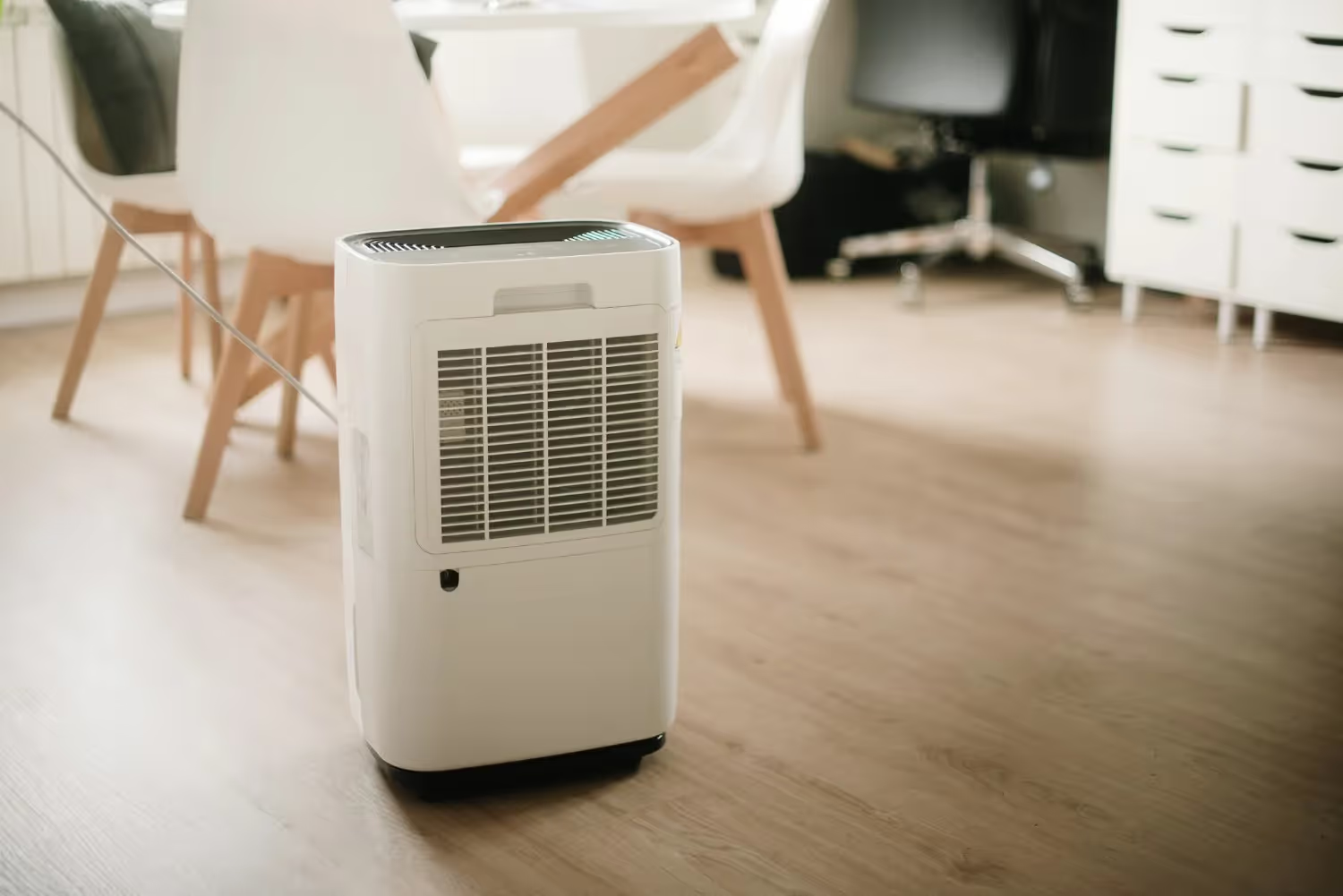
Investing in a dedicated dehumidification system changes how your home feels and functions immediately. Unlike portable units that treat single rooms and require constant manual draining, a whole-home system treats the entire air volume of your house. It operates automatically, draining water away without user intervention. By removing latent heat (moisture) from the air, these systems allow your air conditioner to focus on lowering the temperature, reducing the workload on your cooling equipment and extending its lifespan.
Residents in Indiana often find that they can set their thermostat higher in the summer while feeling cooler, simply because the air is dry. This "thermal comfort" effect results in tangible energy savings. You receive a system designed to run quietly in the background, utilizing high-capacity filtration to capture particulates while managing moisture, delivering a crisp, clean indoor environment.
The Installation Process: What to Expect
Professional installation is the differentiator between a noisy, inefficient unit and a seamless home upgrade. The process begins with a calculation of your home’s latent load requirements. This ensures the unit selected has the capacity to handle the specific square footage and moisture infiltration rates of your property.
- Site Assessment and Sizing: The first step involves a thorough evaluation of your existing HVAC configuration and ductwork. Technicians identify the optimal location for the unit, typically near the air handler in the basement, attic, or crawlspace. The unit must be sized correctly; an undersized unit will run continuously without reaching the target humidity, while an oversized unit may short-cycle.
- Ductwork Integration: For a true whole-home solution, the dehumidifier is ducted into the supply and return plenums of your central heating and cooling system. This allows the unit to pull air from the return, extract the moisture, and discharge dry, filtered air back into the supply stream to be distributed to every room in the house. Alternatively, in homes without central air or for specific basement applications, a dedicated return and supply can be installed.
- Drainage and Electrical Setup: Proper drainage is critical to prevent leaks and water damage. The system is piped to a floor drain, a sump pump, or a condensate pump that moves water away from the unit automatically. Electrical connections are hardwired to code, ensuring the unit has a dedicated and safe power source. This step eliminates the need for extension cords or the daily chore of emptying water buckets.
- Control Configuration: You gain control over humidity levels through a dedicated humidistat or an integrated smart thermostat. This allows you to set a specific percentage of relative humidity (typically between 40% and 50%). The system monitors the air constantly and activates only when moisture levels rise above your setting, running independently of the air conditioner if necessary.
- System Testing and Commissioning: Once installed, the system undergoes rigorous testing. Technicians verify airflow, check for air leaks in the new duct connections, test the drainage flow, and calibrate the controls. The goal is to ensure the unit operates at peak efficiency from the moment it is turned on.
When to Upgrade or Add Dehumidification
Homeowners often debate whether their current air conditioner is sufficient or if a dedicated dehumidifier is necessary. While air conditioners do dehumidify as a byproduct of cooling, they are controlled by temperature, not humidity. This creates gaps in performance, particularly during the spring and fall in Schererville when temperatures are moderate but humidity remains high.
Consider installing a whole-home dehumidifier if you experience the following issues:
- Clammy or Sticky Feeling: If the air feels heavy or your skin feels sticky even when the thermostat reads a comfortable temperature, the relative humidity is too high.
- Musty Odors: Persistent musty smells in basements, crawlspaces, or living areas indicate active mold or mildew growth due to excess moisture.
- Condensation on Windows: Water beading on the inside of windows or sweating on cold water pipes signals that the air holds more water vapor than it can sustain.
- Allergy and Asthma Flare-ups: Dust mites and mold thrive in humid environments. If respiratory issues worsen while indoors, controlling humidity is a primary mitigation strategy.
- Short-Cycling AC: If your air conditioner turns on and off frequently, it cools the air quickly but doesn't run long enough to remove moisture. A dedicated dehumidifier solves this latent load problem.
If you currently have an older whole-home dehumidifier that vibrates excessively, trips breakers, or fails to lower humidity despite continuous operation, replacement is likely more cost-effective than repair. Compressor failures in older units usually warrant a full system upgrade to take advantage of newer, more energy-efficient refrigerants and technologies.
Regional Considerations for Moisture Control
The climate in Schererville and the surrounding region presents specific challenges that dictate the need for robust humidity control. The area experiences a distinct four-season climate, but the proximity to regional water bodies and agricultural areas can contribute to elevated dew points. This "corn sweat" and lake effect humidity means that outdoor air brings significant moisture into the home whenever doors or windows are opened, or through natural infiltration in attics and basements.
Local building codes and utility guidelines emphasize energy efficiency. Modern dehumidifiers are Energy Star rated, often qualifying for local utility rebates that can offset installation costs. Furthermore, because many local homes feature basements or crawlspaces, the "stack effect" constantly pulls damp air from the foundation up into the living spaces. Treating the air at the lowest level of the home is often critical for protecting the structural wood framing and preventing the upward migration of soil gases and mold spores.
Technicians operating in this area are familiar with the specific drainage requirements and electrical permits needed for compliant installation. Whether your home is on a slab, has a finished basement, or has an encapsulated crawlspace, the installation approach must adapt to the local housing stock to ensure proper performance.
Why Professional Implementation Matters
Attempting to control whole-home humidity with retail-grade portable units is inefficient and often ineffective. Professional systems offer superior filtration (often MERV 11 or higher), removing dust and pollen while drying the air. They are designed to process large volumes of air with industrial-grade components that outlast consumer models by years.
Choosing the right partner for this installation ensures that the equipment is matched to your specific ductwork static pressure and airflow requirements. An improperly installed unit can restrict airflow to your furnace or AC, causing damage to your primary HVAC equipment. Professionals ensure that backdraft dampers are installed to prevent air from bypassing the system when not in use, maintaining the efficiency of your heating and cooling operations.
Schedule Your Service Now
Mr.Freeze Heating & Cooling provides the technical expertise required to seamlessly merge moisture control with your home’s existing mechanical systems. The focus remains on delivering a "set it and forget it" solution that protects your investment and improves daily living conditions. By managing humidity effectively, you reduce the strain on your AC, lower cooling bills, and eliminate the risk of moisture-related damage to your property. Take control of your indoor environment and eliminate excess moisture for good. Call us now to discuss your whole home dehumidification options and book your installation.