
Is Your Indoor Air Safe? Find Out With Expert Air Quality Testing
Concerned about the air quality in your home or office? You're not alone. Many residents in Munster are turning to professional air quality testing to ensure their environments are safe and healthy. Contact us today to schedule your comprehensive air analysis.
When you choose our professional testing services, you can expect:
- Receive detailed reports on your air quality within 24 hours.
- Benefit from thorough testing of various pollutants, including mold, radon, and VOCs.
- Get actionable recommendations to improve your indoor air quality based on the latest standards.
Licensed and certified professionals ensure your peace of mind with every test.
Ensure Your Air is Breathable: Professional Testing Services
Indoor air pollution is often two to five times higher than outdoor levels. Because modern homes are built to be energy-efficient, they are tightly sealed to keep heat in during the winter and cool air in during the summer. While this is excellent for utility bills, it can be detrimental to air quality. Pollutants, allergens, and chemicals get trapped inside with nowhere to go, circulating through your HVAC system and into your lungs.
Residents in Munster often notice persistent issues such as lingering odors, excessive dust accumulation, or physical symptoms like headaches and congestion that seem to disappear when leaving the building. These are clear indicators that the indoor environment requires assessment. Professional testing eliminates the guesswork. Instead of buying random filters or purifiers hoping for a solution, testing provides hard data. It identifies exactly what is in the air, from biological growth to chemical vapors, allowing for a targeted and effective remediation strategy.
Ignoring these signs can lead to long-term issues for your property and the comfort of its occupants. Humidity imbalances can warp wood floors and encourage mold growth behind drywall, while high levels of Volatile Organic Compounds (VOCs) from paint or furniture can cause lasting discomfort. Our testing services bridge the gap between suspicion and certainty, providing the evidence needed to make informed decisions about your property’s health.
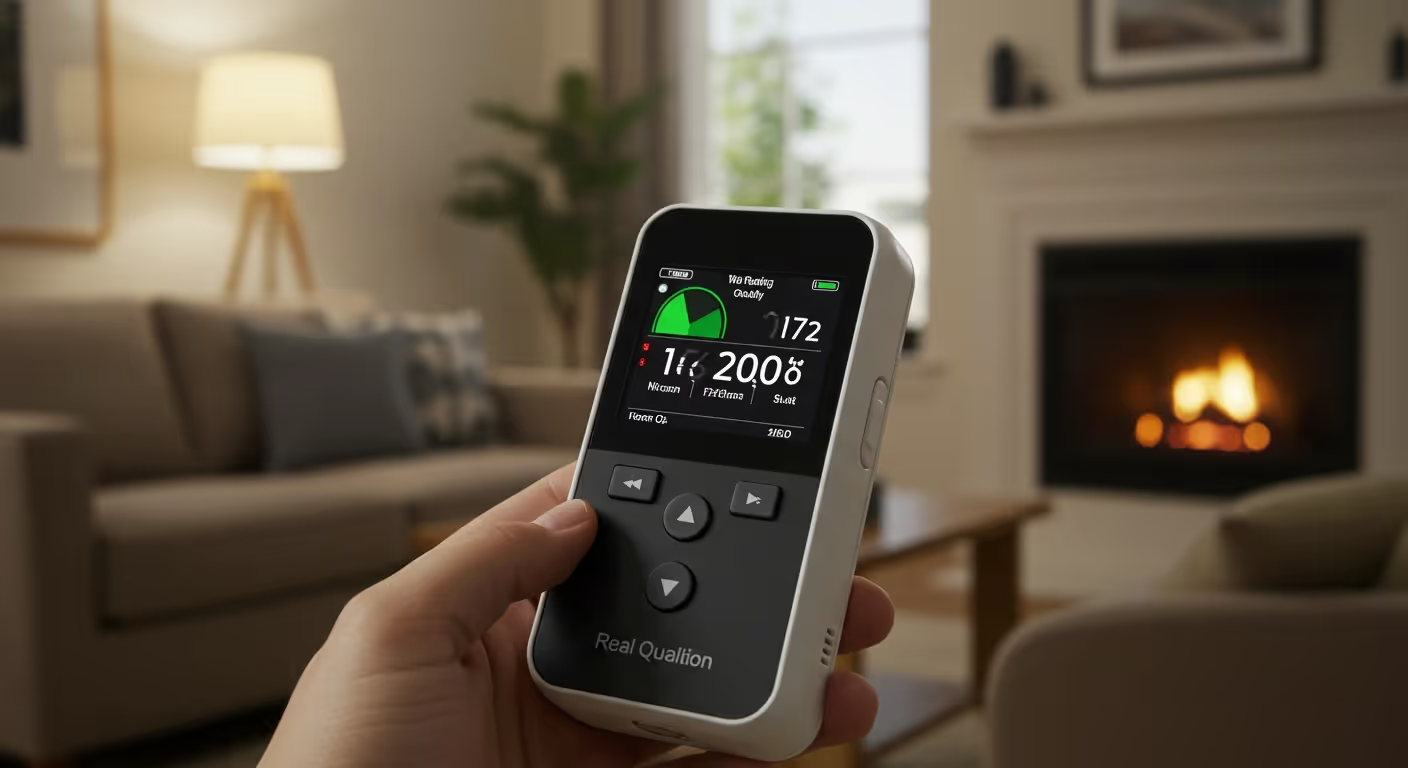
What’s Included in Your Air Quality Test: Services and Timelines Explained
When you commission a professional air quality assessment, you are paying for precision and scope. A standard over-the-counter kit cannot replicate the sensitivity of industrial-grade equipment used by certified technicians. The goal is to create a comprehensive profile of the atmosphere inside your home.
Comprehensive Pollutant Analysis
The testing protocol covers a wide spectrum of potential contaminants. This includes particulate matter analysis, which looks for dust, pollen, and dander that can aggravate respiratory systems. It also includes biological sampling to detect the presence of mold spores or bacteria that may be growing in unseen areas like ductwork or basements.
Chemical analysis is equally critical. Technicians test for VOCs, which are gases emitted from certain solids or liquids. These include a variety of chemicals, some of which may have short- and long-term adverse health effects. Common sources include paints, cleaning supplies, pesticides, building materials, and furnishings. Furthermore, combustion byproducts like Carbon Monoxide (CO) and Nitrogen Dioxide (NO2) are measured to ensure your heating systems are not leaking dangerous gases into the living space.
Structural and Environmental Factors
Testing goes beyond just sampling the air; it involves assessing the environment that creates the air quality.
- Humidity and Temperature Mapping: High humidity fosters mold; low humidity spreads viruses. Accurate readings determine if your HVAC system is properly balancing moisture.
- Ventilation Assessment: Technicians evaluate air exchange rates to see if fresh air is entering the home effectively or if the air is stagnant.
- Pressure Differentials: Understanding how air moves between rooms helps identify if pollutants are being sucked in from the garage, attic, or crawlspaces.
Timeline for Results
Speed is often a priority for homeowners and business owners, especially during real estate transactions or when health issues are present.
- On-Site Collection: The physical testing process typically takes between one to three hours, depending on the square footage of the property.
- Lab Analysis: Samples are sent to accredited laboratories immediately.
- Reporting: Preliminary results are often available within 24 hours, with full, detailed written reports delivered shortly thereafter.
Our Testing Process: From Scheduling to Reporting
Understanding what happens during a service call helps alleviate anxiety and prepares you for the visit. The process is designed to be non-intrusive while gathering the maximum amount of data possible.
- Initial Consultation and Visual Inspection: The service begins with a discussion about your concerns. Are there specific rooms that smell musty? Do family members feel sick only at night? Following this, a technician performs a visual inspection, looking for water damage, condensation on windows, potential mold growth, or dusty vents. This guides where the most intensive testing should occur.
- Equipment Setup and Calibration: Technicians set up specialized air sampling pumps and laser particle counters. These devices must be calibrated on-site to ensure accuracy. When Mr.Freeze Heating & Cooling technicians arrive, they utilize state-of-the-art diagnostic tools that are sensitive enough to detect microscopic particles that the human eye misses.
- Sample Collection: Air samples are collected from multiple zones in the house, including high-traffic areas and basements. Outdoor control samples are also taken. This is a crucial step; comparing indoor levels to outdoor levels helps determine if the source of the problem is internal or external. Surface swabs or tape lifts may also be collected if visible growth is suspected on walls or vents.
- Data Analysis and Interpretation: The raw data is analyzed against established health and safety standards. It is not enough to know that mold spores are present; the type and concentration matter. The analysis determines if the levels are typical for the region or if they indicate an active infestation.
- Final Report Walkthrough: You do not just receive a PDF full of scientific jargon. The service includes a consultation to explain the findings. You will understand clearly if your CO levels are dangerous, if the VOCs are from your new carpet, or if the humidity is simply too high.
Understanding Your Air Quality Report: What Comes Next?
Receiving the report is the pivot point from investigation to action. The data provided dictates whether you need a simple repair, a cleaning service, or equipment installation. This is where the service moves from diagnosing to problem-solving.
Interpreting the Data
The report will categorize findings based on safety levels.
- Green/Normal: Levels are within a healthy range. No major action is needed, perhaps just routine maintenance.
- Yellow/Caution: Elevated levels found. This usually suggests a need for better ventilation, filter changes, or investigating a specific moisture source.
- Red/High Priority: Dangerous levels of contaminants or active mold growth detected. Immediate remediation or equipment installation is required.
Moving from Diagnosis to Solution
Based on the specific results, different paths of action become clear:
- Filtration Upgrades: If high levels of dust, dander, or pollen are found, upgrading to HEPA filtration or installing a whole-home media air cleaner is the logical step.
- Humidity Control: If the test reveals humidity consistently above 50%, a whole-home dehumidifier may be recommended to prevent future mold growth. Conversely, extremely dry winter air might require a humidifier installation.
- Ventilation Solutions: High CO2 or VOC levels often indicate "tight home syndrome." The solution here is often an Energy Recovery Ventilator (ERV) or Heat Recovery Ventilator (HRV) to mechanically exchange stale indoor air for fresh outdoor air without losing energy efficiency.
- UV Purification: If biological contaminants like bacteria or viruses are high, installing UV germicidal lights within the HVAC system can neutralize these pathogens as they circulate.
Munster's Seasonal Air Quality Considerations
Local climate plays a massive role in indoor air quality. In Munster, the distinct four-season climate creates a cycle of challenges that property owners must manage.
- Winter Challenges: During the freezing winters, homes are sealed tight. Furnaces run constantly, drying out the air and circulating dust. This is also the season where Carbon Monoxide risks are highest due to the operation of gas furnaces and potential back-drafting from fireplaces. Radon levels can also spike in winter as the "stack effect" pulls gas up from the soil into the warmer house.
- Spring and Fall Allergens: As the seasons change, pollen counts in the region explode. If your home has negative pressure issues or poor window sealing, these outdoor allergens infiltrate the home. Testing during these seasons often reveals high counts of organic particulates that trigger seasonal allergies.
- Summer Humidity: Summers in the area are warm and humid. If an air conditioning system is oversized or short-cycling, it cools the air quickly but fails to remove moisture. This leaves the home feeling clammy and creates the perfect breeding ground for mold and dust mites. Testing in summer frequently targets relative humidity levels and biological growth.
- Permits and Local Regulations: While air quality testing itself typically does not require a municipal permit, any subsequent work—such as installing new ventilation systems or extensive mold remediation—may require adherence to local building codes. Professional testers are familiar with local utility requirements and safety standards, ensuring that any recommendation given complies with regional regulations.
Why Trust Us: Certifications and Real Customer Reviews
In the unregulated world of "air quality kits" sold online, professional expertise is the differentiator. Accuracy is non-negotiable when dealing with health and safety.
- Certified Expertise: Technicians undergo rigorous training to understand building science. It is not just about reading a meter; it is about understanding how airflow, thermal dynamics, and pollutant sources interact.
- Industrial-Grade Technology: Consumer-grade sensors often have high margins of error. Professional services utilize calibrated industrial equipment capable of detecting parts per billion (PPB) for chemicals and precise counts for particulates.
- Unbiased Reporting: The primary goal is accurate data. The report stands as an objective document regarding the condition of the property. This is essential for real estate transactions, landlord-tenant disputes, or insurance claims.
- Local Experience: Understanding the specific housing stock in the area helps technicians predict common failure points. Whether it is an older home with potential asbestos concerns or a new build off-gassing construction adhesives, local knowledge speeds up the diagnostic process.
Know Exactly What’s in Your Air: Get a Data-Driven Indoor Air Analysis Now
When you trust Mr.Freeze Heating & Cooling for your air quality needs, you are choosing a partner dedicated to factual, scientific analysis of your indoor environment.
Take control of the air you breathe and schedule your professional air quality test today.