
Protect Your Vintage Collection from Temperature Instability
Maintaining the perfect climate in your wine cellar can be challenging, especially with the humid continental climate and distinct seasonal shifts found in St. John. Fluctuating temperatures and inconsistent humidity levels can rapidly degrade the quality of your investment, turning a valuable collection into vinegar. For immediate assistance with installation or repair, contact us or inquire about our financing options today. Mr.Freeze Heating & Cooling provides specialized refrigeration solutions designed to keep your inventory at the optimal aging temperature.
Our wine cellar cooling services deliver:
- Precise temperature control that remains constant regardless of external weather spikes.
- Advanced humidity management to prevent cork drying or label mold.
- High-efficiency cooling units that reduce long-term energy consumption.
- Expert installation that accounts for vapor barriers and thermal load calculations.
All installations are fully licensed, with extended warranties and flexible financing options available to protect your investment.
Comprehensive Wine Cellar Cooling Solutions
A wine cellar is not simply a cold room; it is a controlled environment designed to mimic the conditions of natural underground caves. Standard air conditioning units are insufficient for this task because they are designed to cool air quickly and remove moisture. In contrast, wine cellar cooling systems are engineered to maintain a stable temperature between 55°F and 58°F while sustaining relative humidity levels between 50% and 70%.
When you invest in a dedicated cooling solution, you are securing the longevity of your wine. Our service includes a comprehensive assessment of your current or proposed cellar space. We do not simply install a unit in the wall; we evaluate the entire thermal envelope of the room. This includes analyzing the insulation values, the type of lighting used, the frequency of door openings, and the presence of glass walls or doors, all of which impact the thermal load.
Types of Systems Available
We provide specific cooling technologies suited to different cellar configurations:
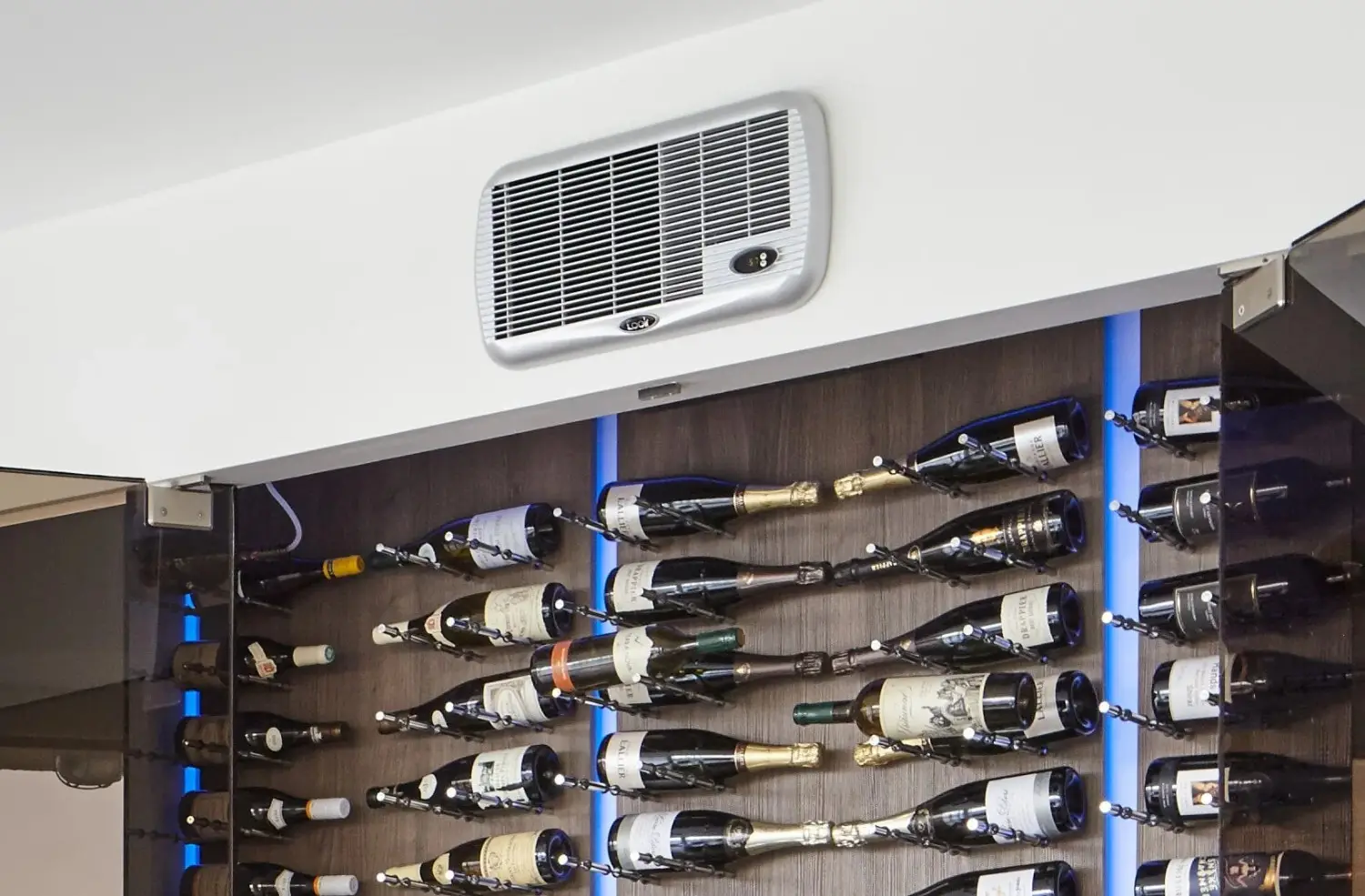
- Through-the-Wall Systems: These self-contained units are cost-effective and relatively easy to install. They mount between the studs of an existing wall and exhaust heat into an adjacent room. They are ideal for smaller cellars where space is optimized, and ductwork is not feasible.
- Split Systems: Similar to residential central air, the evaporator is placed inside the cellar, while the noisy condenser is located outside or in a mechanical room. This eliminates noise and vibration—two enemies of proper wine aging—from the cellar environment.
- Ducted Cooling Systems: For collectors who demand an aesthetic free of visible mechanical equipment, ducted systems are the superior choice. The unit is located remotely, and cool air is ducted into the cellar. This allows for near-silent operation and maximizes storage space within the cellar.
The Installation and Optimization Process
Proper installation is the difference between a functional cellar and a room filled with condensation and mold. Our process adheres to strict technical standards to ensure the system performs efficiently for years.
Thermal Load Calculation
Before any equipment is selected, we perform a detailed calculation of the heat gain in your specific room.
- We measure the square footage and cubic footage of the space.
- We account for the R-value of the walls, ceiling, and floor.
- We factor in heat sources such as interior lighting and the heat generated by the wine bottles themselves as they cool down.
- We adjust for glass exposure, which has a significantly lower insulation value than solid walls.
Vapor Barrier Assessment
A wine cellar must be sealed tighter than a standard room. If moisture from the warm St. John summer air migrates into the cool cellar, it will condense on surfaces, causing mold growth and damaging labels.
- We verify the integrity of the vapor barrier, which should be installed on the warm side of the insulation.
- We ensure that the room is airtight, sealing gaps around outlets, light fixtures, and door frames.
- We recommend closed-cell foam insulation for the best protection against moisture migration.
Equipment Placement and Calibration
Once the prep work is complete, the physical installation begins.
- We mount the evaporator unit to ensure optimal airflow circulation throughout the racks.
- We install the condensate drain line to safely remove excess moisture produced during the cooling process.
- We wire the dedicated electrical circuit required for refrigeration equipment to prevent breaker trips.
- We calibrate the thermostat and humidistat to the specific requirements of your varietals.
Repair vs. Replacement: Making the Right Decision
Cooling units for wine cellars operate continuously to maintain a steady state, unlike standard HVAC systems that cycle on and off based on human comfort. This constant duty cycle can lead to wear and tear. Deciding when to repair an existing unit or invest in a replacement depends on several technical factors.
When to Repair
If your system is generally reliable but has developed a specific, isolated issue, repair is often the most cost-effective path.
- Sensor Malfunctions: If the unit is cooling but the temperature readout is inaccurate, replacing the thermostat or temperature probe is a standard repair.
- Minor Refrigerant Leaks: If the leak is accessible and small, it can be sealed and recharged.
- Fan Motor Failures: A noisy fan or one that has stopped spinning can usually be replaced without discarding the entire system.
- Clogged Coils: Reduced performance often stems from dirty condenser coils. A professional cleaning can restore efficiency.
When to Replace
Mr.Freeze Heating & Cooling recommends replacement when the system reaches the end of its service life or when repairs become a temporary patch on a larger problem.
- Compressor Failure: The compressor is the heart of the system. If it fails, the cost of the part and labor often approaches the cost of a new, more efficient unit.
- Age of the Unit: Most wine cellar cooling units have a lifespan of 10 to 15 years. If your unit is in this age range and requires a major repair, replacement is the smarter financial move.
- Inconsistent Humidity Control: Older units often lose their ability to manage humidity effectively. If you notice corks drying out or mold developing, the unit is no longer protecting your investment.
- Incorrect Sizing: If the unit runs constantly without reaching the set temperature (short of a refrigerant leak), it may have been undersized for the room initially. Replacing it with a correctly sized unit is the only way to solve the problem.
Local Considerations for St. John Installations
Building a wine cellar in St. John requires specific attention to the local climate and building codes. The distinct seasonality presents unique challenges that generic cooling advice often overlooks.
Managing Seasonal Extremes
The primary challenge in this region is the swing between humid summers and dry, freezing winters.
- Summer Humidity: During the summer, the ambient humidity is high. Your cooling unit must be capable of removing excess moisture (latent cooling) without over-cooling the air (sensible cooling). If the unit is oversized, it will cool the room too quickly and shut off before it has removed enough humidity, leading to a damp cellar.
- Winter Dryness: In the winter, the ambient air is extremely dry. While the cooling unit runs less frequently, the lack of moisture in the surrounding home can pull moisture out of the cellar through any gaps in the vapor barrier. In some cases, integrated humidification is necessary to keep corks from shrinking and allowing oxygen to spoil the wine.
Electrical and Structural Requirements
Local building standards impact how these units are installed.
- Dedicated Circuits: Wine cellar cooling units typically require a dedicated electrical circuit to avoid overloading residential lines, especially when the compressor kicks on.
- Insulation Standards: Because of the temperature differential between the cellar (55°F) and the surrounding home (70°F-75°F), higher insulation R-values are required for interior walls than are typically standard. We ensure your setup meets local energy efficiency recommendations to prevent thermal bleed.
- Ventilation: Through-the-wall units require an adjacent room to exhaust heat. This room must be well-ventilated and roughly twice the size of the cellar. Venting into a small closet or utility room will cause the unit to overheat and fail.
Why Specialized Refrigeration Expertise Matters
Many homeowners assume that a general handyman or a standard AC technician can install a wine cellar cooling system. However, wine storage requires specialized knowledge of refrigeration thermodynamics that differs significantly from comfort cooling.
The Problem with Standard AC
A standard window AC unit or mini-split is designed to drop the temperature to 72°F and remove as much humidity as possible. If you use a standard AC in a wine cellar:
- It will struggle to reach 55°F, often freezing up its coils in the attempt.
- It will strip the air of moisture, dropping humidity below 50%, which dries out corks.
- It is not built to run 24/7/365, leading to premature failure.
The Professional Difference
We approach wine cellar cooling as a critical asset protection service.
- Vibration Elimination: We utilize mounting strategies and equipment choices that minimize vibration, which can disturb the sediment in fine wines and alter their chemistry.
- Quiet Operation: We prioritize acoustic performance, ensuring that the hum of machinery does not intrude on your living space or the cellar ambience.
- Asset Protection: Ultimately, the cost of the cooling system is a fraction of the value of the wine collection it protects. We ensure that your collection ages gracefully, preserving its taste and value.
Mr.Freeze Heating & Cooling understands that a wine cellar is a long-term commitment. Whether you are building a new custom cellar in your St. John home or retrofitting an existing space, our team ensures that the mechanical backbone of your cellar is robust, efficient, and reliable. Don't leave your vintage collection to the mercy of the weather.
Precision Climate Control for Lasting Wine Preservation
A wine cellar demands exact temperature and humidity control to preserve flavor, structure, and long-term value. With specialized cooling systems, proper insulation, and expert installation, your collection is protected from seasonal extremes and mechanical failure. Investing in professional wine cellar cooling is an investment in the future of your collection.
Secure the future of your wine collection today. Contact us now to schedule your specialized consultation.