
Tired of High Heating Costs? Discover the Savings with Geothermal Installation
Dealing with unpredictable heating bills can be frustrating, especially when St. John winters drive energy consumption through the roof. Switching to a geothermal system not only stabilizes your costs but also significantly lowers them, and you can contact us today to discuss financing options that make this transition seamless. Mr.Freeze Heating & Cooling specializes in designing and implementing ground-source heat pumps that leverage the earth's consistent temperature to provide efficient climate control.
- See up to 70% reduction in monthly energy costs compared to traditional fossil fuel systems.
- Enjoy the comfort of a reliable, efficient heating system year-round, regardless of outside temperatures.
- Gain long-term savings with low maintenance requirements and equipment life spans exceeding 20 years.
This comprehensive installation service includes handling all necessary permits, backed by comprehensive warranties and flexible financing options to ensure your investment is protected from day one.
What is Included in a Geothermal System Installation
Investing in geothermal energy is a significant infrastructure upgrade for your property. Unlike a standard furnace swap, this process involves integrating your home’s HVAC system with the stable thermal energy stored beneath your yard. The solution we provide is a closed-loop ground-source heat pump system designed to handle the specific heating and cooling loads of your home.
When you authorize a geothermal installation, the following components and services are included in the scope of work:
- The Ground Loop System: This is the critical infrastructure installed underground. High-density polyethylene piping is buried in your yard, circulating a water-based solution that absorbs heat from the ground in winter and dissipates heat into the ground during summer.
- The Heat Pump Unit: Located inside your home, typically in a basement or utility closet, this unit replaces your furnace and air conditioner. It contains the compressor and heat exchanger necessary to transfer energy between the ground loop and your home’s ductwork.
- The Flow Center: This pumping module circulates the fluid through the ground loop. It is a compact, quiet component that ensures continuous thermal transfer.
- Ductwork Modifications: To maximize efficiency, we assess and modify your existing plenum and duct connections to accommodate the airflow requirements of the new heat pump.
- Thermostat Integration: We install smart thermostats compatible with geothermal multi-stage systems to give you precise control over humidity and temperature zones.
This system eliminates the need for on-site fossil fuel combustion. There are no flames, no fumes, and no carbon monoxide risks associated with the heating process. The equipment operates solely on electricity but uses it primarily to move heat rather than generate it, resulting in efficiency ratings that often exceed 400%.
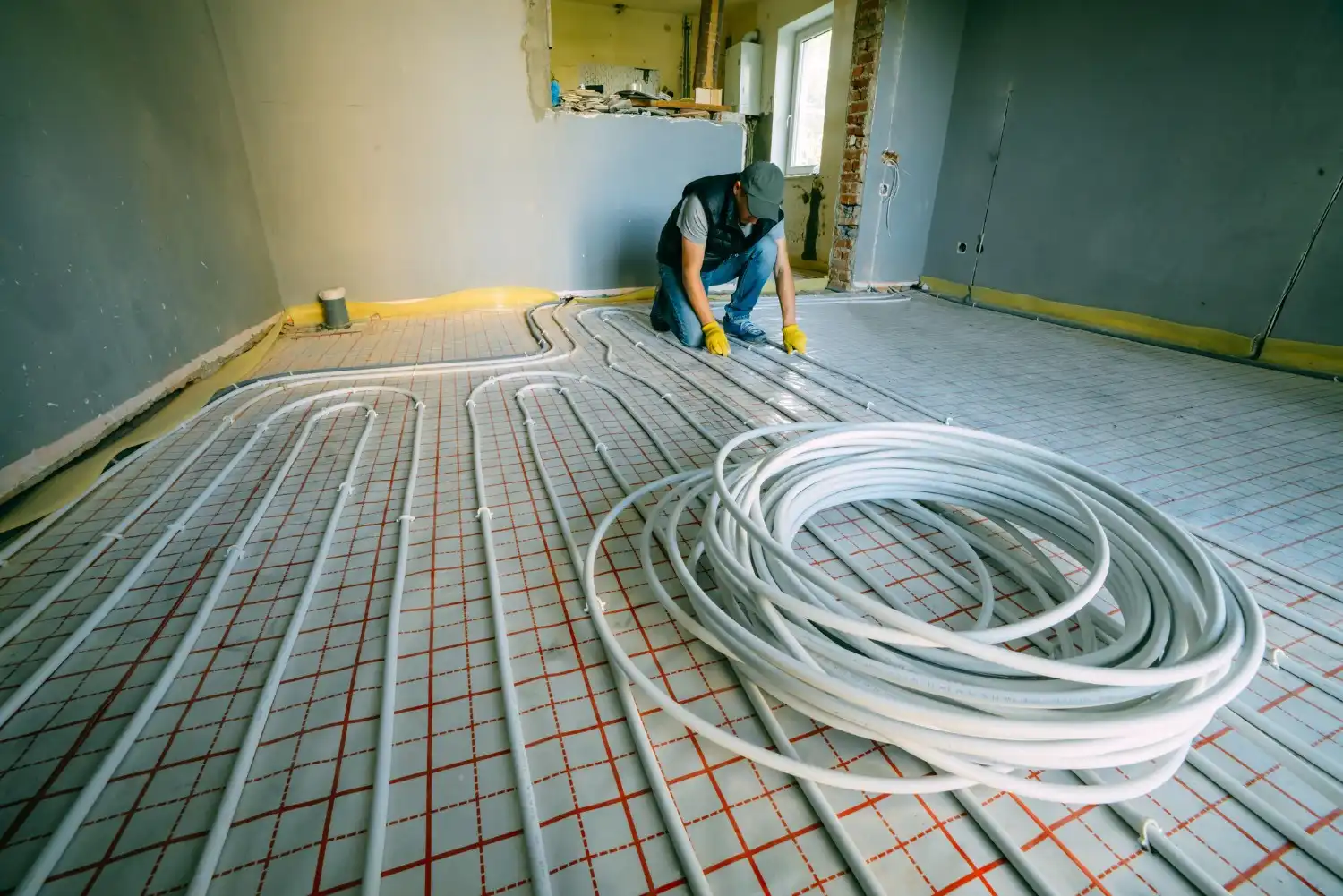
The Installation Process: From Assessment to Activation
Installing a geothermal system is a construction project that requires precise engineering and coordination. We manage the entire timeline to ensure minimal disruption to your daily routine while adhering to safety protocols. The process is broken down into distinct phases to ensure quality control at every step.
- Site Evaluation and Load Calculation: The first step involves a Manual J load calculation to determine exactly how much heat your home loses in winter and gains in summer. We also analyze the geology of your property in St. John to determine the best drilling or trenching method. Factors such as soil conductivity, available land area, and underground utilities influence whether a vertical or horizontal loop system is best.
- Loop Field Installation: Once the design is finalized, the excavation team begins work. For vertical loops, drilling rigs create boreholes—often 150 to 400 feet deep—into which the piping is inserted. For horizontal loops, trenches are dug to lay the pipework over a wider area. After the pipe is placed, the trenches or boreholes are grouted with a thermally conductive material to ensure efficient heat transfer and to protect groundwater.
- Interior Equipment Setup: While the exterior work is being completed, technicians work inside to remove old equipment and position the new geothermal heat pump. This involves electrical connections, plumbing the flow center to the loop field entering the home, and connecting the unit to the existing ductwork.
- System Flushing and Testing: Before the system is turned on, the ground loop is flushed to remove any debris or air pockets. The system is then pressure-tested to ensure there are no leaks in the underground piping. Antifreeze solution is added to the loop fluid to prevent freezing during extreme cold snaps.
- Final Commissioning: The system is powered up and calibrated. Technicians adjust blower speeds, check refrigerant levels, and verify that the temperature differential across the coil meets manufacturer specifications. You receive a walkthrough of the system’s operation and maintenance requirements before we sign off on the project.
When to Replace Traditional HVAC with Geothermal
Homeowners often debate whether to repair an aging gas furnace or air conditioner or to make the leap to geothermal. While the upfront investment for geothermal is higher, specific scenarios make replacement the mathematically superior choice over repair.
If your current HVAC system is over 15 years old, it is likely operating at 70-80% efficiency, meaning 20-30 cents of every dollar spent on fuel is wasted. Geothermal systems operate at 300-400% efficiency. If you plan to stay in your home for more than five years, the energy savings alone typically cover the monthly financing costs of the new system, effectively costing you less on a monthly cash-flow basis than continuing to pay high utility bills.
Consider replacement if you are facing the following issues:
- Fluctuating Energy Bills: If you rely on propane, oil, or natural gas, you are subject to volatile market prices. Geothermal relies on the stable temperature of the earth and electricity, offering predictable operating costs.
- Uneven Heating and Cooling: Traditional furnaces blast hot air, creating cold spots and drafts. Geothermal units run for longer cycles at lower speeds, providing consistent, even conditioning throughout the home.
- High Repair Costs: If you are facing a repair bill that is 50% or more of the cost of a new standard unit, investing that capital into a geothermal system with a 30% federal tax credit yields a better long-term return on investment.
Mr.Freeze Heating & Cooling helps you calculate the break-even point based on your current energy usage and local utility rates.
Analyzing the Return on Investment
The financial aspect of geothermal goes beyond monthly utility savings. The federal government and various local entities recognize the environmental benefits of these systems, offering substantial financial incentives that lower the net cost of installation.
Currently, the Federal Investment Tax Credit (ITC) allows homeowners to deduct 30% of the total cost of the geothermal system installation from their federal taxes. This includes labor, site preparation, equipment, and piping. There is no cap on this credit. For a comprehensive system installation, this can amount to thousands of dollars in direct tax liability reduction.
In addition to tax credits, geothermal systems add significant resale value to a property. Appraisers and buyers increasingly value energy efficiency. A home with a documented low cost of ownership due to geothermal heating is a competitive asset in the real estate market.
Furthermore, the longevity of the equipment changes the replacement cycle. While a standard air conditioner lasts 12-15 years, the indoor geothermal unit lasts 20-25 years, and the underground loop system is warrantied for up to 50 years. This eliminates one full replacement cycle for the homeowner, adding to the long-term savings profile.
Local Considerations for St. John Installations
Installing geothermal systems in Indiana requires specific knowledge of local climate patterns and geological conditions. St. John experiences a humid continental climate, meaning the system must be capable of handling significant heating loads in winter and high humidity removal in summer.
- Soil Conditions and Thermal Conductivity: The efficiency of the ground loop depends heavily on the soil type. Indiana’s soil composition varies, often containing clay or limestone, which actually possess excellent thermal conductivity properties. We design the loop length specifically for these soil types to ensure the heat pump extracts enough energy during sub-zero cold snaps.
- Permitting and Utilities: Any excavation or drilling requires strict adherence to local building codes and utility marking. We handle the "Call Before You Dig" coordination to locate gas, electric, and water lines. Additionally, specific permits are required for vertical drilling to ensure the protection of local aquifers and groundwater supplies. We manage all regulatory paperwork with the county and city to ensure the installation is fully code-compliant.
- Winter Performance: A common misconception is that heat pumps struggle in freezing weather. While this is true for air-source heat pumps, geothermal systems do not rely on outside air. Even when the air temperature in St. John drops to -10°F, the ground temperature just a few feet below the surface remains at a constant 50-55°F. This allows the system to provide warm air without the need for expensive backup resistance heating strips in most scenarios.
Operations and Maintenance Requirements
One of the primary advantages of geothermal systems is their simplicity regarding maintenance. Because the unit is located indoors, it is not exposed to rain, snow, debris, or vandalism. There is no outdoor condenser fan to clean and no flue pipes to inspect for corrosion.
Routine maintenance for a geothermal system is straightforward:
- Filter Changes: Like any forced-air system, the air filter must be changed regularly (typically every 3-6 months depending on the filter type) to maintain airflow and indoor air quality.
- Loop Pressure Checks: Periodically, the pressure in the ground loop should be verified to ensure there are no slow leaks. This is part of our standard annual service check.
- Condensate Drain Cleaning: In summer, the system removes significant humidity from your home. The drain line should be checked to prevent clogs and water backups.
- Coil Cleaning: The air coil should be inspected and cleaned annually to ensure maximum heat transfer efficiency.
Unlike combustion furnaces, there is no burner to clean and no heat exchanger that risks cracking and leaking gas. This inherent safety and durability make geothermal the lowest-maintenance heating option available.
Why Technical Precision Matters in Loop Design
The most common cause of geothermal system failure is not equipment malfunction, but improper loop design. If a loop is undersized, the system will extract heat from the ground faster than the earth can replenish it, causing the ground temperature around the pipe to drop to freezing levels. This results in the system shutting down or switching to inefficient backup heat.
We utilize advanced software to model the thermal exchange over decades. We account for the specific heating and cooling degree days in the region to balance the loop field. This ensures that the heat put into the ground in summer roughly balances the heat extracted in winter, maintaining the thermal health of the ground loop indefinitely.
We also specialize in various loop configurations to fit different properties:
- Vertical Loops: Ideal for smaller lots where surface space is limited.
- Horizontal Loops: Cost-effective for larger properties with ample yard space.
- Pond/Lake Loops: If your property features a body of water, we can utilize it for heat exchange, often lowering installation costs significantly.
Secure Your Energy Independence
Transitioning to geothermal heating and cooling is a strategic financial decision that insulates your household from rising energy prices. It transforms your property into an energy-efficient stronghold, providing superior comfort control while drastically reducing your carbon footprint. The combination of monthly savings, tax incentives, and property value appreciation makes the Return on Investment clear.
If you are ready to stop renting your energy from the utility company and start owning your own power source, the time to act is now. Mr.Freeze Heating & Cooling is ready to design a system that fits your home and your budget perfectly — contact us today.
Take control of your heating bills today. Contact us to schedule your comprehensive site assessment and geothermal consultation.