
Combat Excessive Humidity With Whole Home Dehumidification
Struggling with sticky furnishings and escalating energy bills due to high humidity? Our whole-home dehumidification solutions can restore your comfort and cut down your expenses. For immediate scheduling or to discuss financing options for a new installation, contact our team today.
High indoor moisture levels do more than just make the air feel heavy; they actively degrade your home’s structure and your indoor air quality. In St. John, where the humid continental climate brings heavy summer moisture, relying solely on an air conditioner often fails to remove enough latent heat (moisture) from the air to provide true comfort. Mr.Freeze Heating & Cooling specializes in integrating dedicated dehumidification systems directly into your existing HVAC infrastructure. This ensures that every room in your house maintains an optimal relative humidity level between 30% and 50%, regardless of the weather outside.
- Experience reduced allergens and fresher air across your entire home.
- Achieve consistent climate control without the noise or hassle of portable units.
- Save on cooling costs during summers by effectively managing indoor moisture levels.
Certified installation with extensive warranties and flexible financing options available.
Controlling Indoor Climate and Energy Efficiency
Effective moisture management is a critical component of total home comfort. While air conditioners provide some dehumidification as a byproduct of cooling, they run based on temperature settings, not humidity levels. On mild but muggy days, your AC may not run long enough to pull moisture out of the air, leading to a "clammy" feeling indoors. This often forces homeowners to lower the thermostat significantly just to feel comfortable, leading to unnecessary energy spikes.
A dedicated whole-home dehumidifier works independently of your cooling cycle. It monitors the dew point and relative humidity continuously. When levels rise above your set parameters, the system activates, removing gallons of water from the air daily without overcooling the space. This allows you to set your thermostat higher—saving money on electricity—while feeling cooler and dryer.
What Is Included in a Whole-Home System
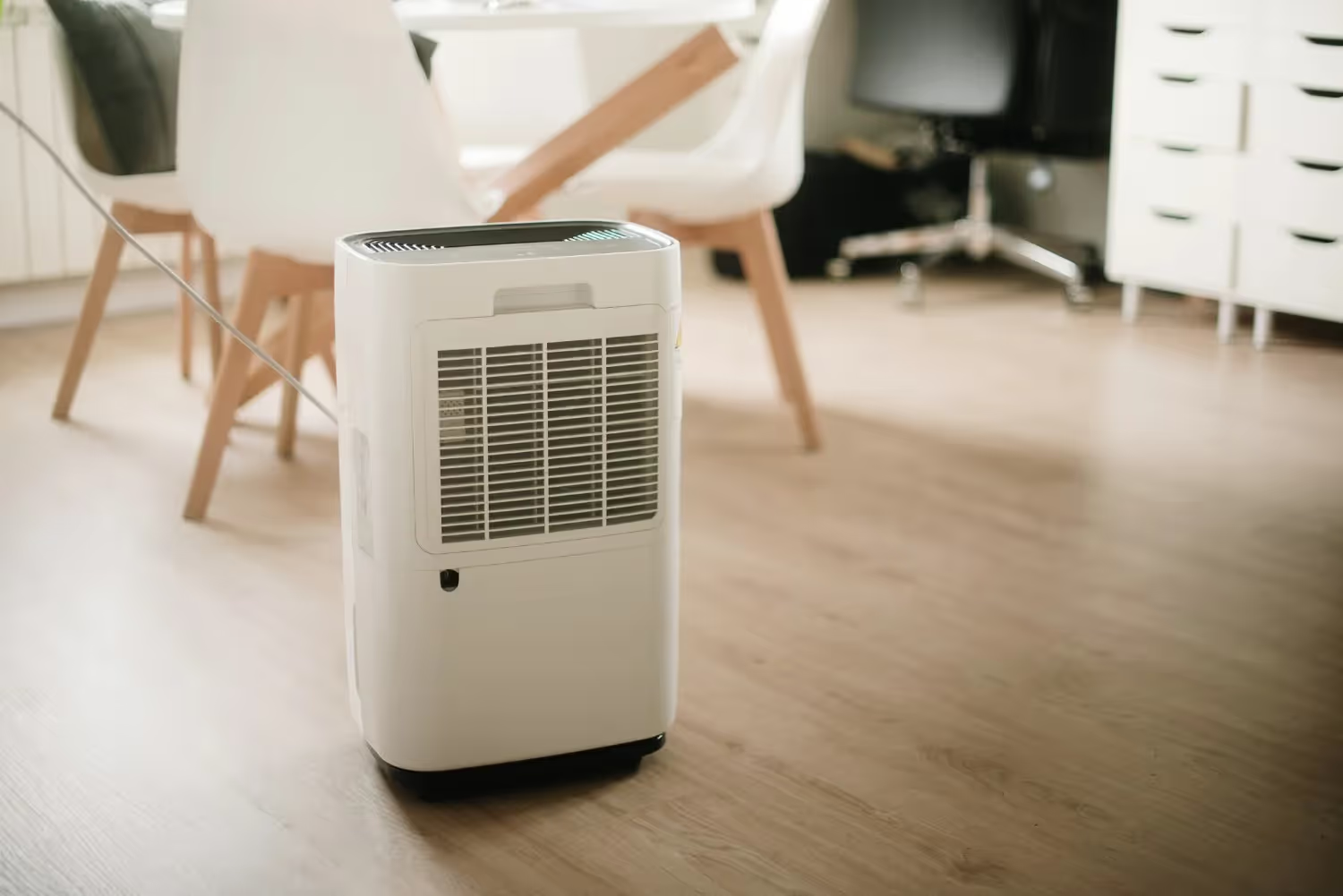
When you invest in a central dehumidification system, you are purchasing a permanent solution to indoor air quality issues. Unlike portable units that require manual emptying and only treat a single room, a whole-home unit is plumbed directly into your home's drainage and ductwork.
The standard scope of installation typically includes:
- High-Capacity Unit: Systems are sized based on the square footage of your home and the tightness of the building envelope, capable of removing 70 to 130+ pints of water per day.
- Dedicated Return and Supply Ducting: To ensure proper airflow, we install dedicated duct runs or integrate bypass dampers to pull moist air from the house, treat it, and redistribute dry air through the supply vents.
- Filtration Integration: Most units come with MERV-rated filters (often MERV 11 or 13) that clean the air as it is dried, capturing mold spores, dust mites, and pollen.
- Automated Controls: Modern systems include digital controls that can be mounted near your thermostat or integrated into smart home systems, allowing for precise humidity settings.
- Condensate Drainage: Hard-piped drainage lines eliminate the need for buckets. We route the condensate to a floor drain, sump pump, or condensate pump to ensure maintenance-free operation.
The Installation Process Explained
Installing a whole-home dehumidifier is a technical process that involves electrical work, duct modification, and condensate management. We follow a strict protocol to ensure the system operates efficiently and does not disrupt the static pressure of your existing HVAC equipment.
The installation generally follows this sequence:
- Site Assessment and Sizing: We first calculate the load requirements based on your home's size and the typical humidity levels in St. John. This determines whether a ventilating dehumidifier or a dedicated bypass unit is required.
- Unit Positioning: The unit is typically suspended from the ceiling in the basement or placed on a vibration-isolation pad in the crawlspace or mechanical room. Proper leveling is critical for drainage.
- Ductwork Integration: We cut into the existing return and supply plenums. Collars and dampers are installed to create a loop where air is pulled into the dehumidifier and pushed back into the supply stream. If the HVAC system has high static pressure, we may install a dedicated return air grille.
- Drainage Configuration: A P-trap is installed in the drain line to prevent sewer gases or air locks. The line is routed to the nearest approved drain location, ensuring gravity flow or utilizing a pump if necessary.
- Electrical Connection: The unit requires a dedicated power circuit. We install a service disconnect switch for safety and code compliance.
- Control Wiring: Low-voltage wiring connects the dehumidifier to your thermostat or a dedicated humidistat. We also interlock the system with your HVAC blower to ensure the fan circulates air when the dehumidifier runs.
- System Commissioning: We test the unit across all operational modes, verify the pint-per-day extraction rate, and check for air leaks in the new duct connections.
Protecting Your Home Structure and Health
Beyond comfort, moisture control is a preservation strategy for your property. Excessive humidity is the primary driver for biological growth and structural damage inside a home. Porous materials like drywall, wood flooring, and structural joists absorb airborne moisture. Over time, this causes wood to warp, doors to stick, and drywall to soften.
From a health perspective, high humidity creates the perfect breeding ground for dust mites and mold. Dust mites thrive in humidity levels above 50%. By mechanically maintaining the environment below this threshold, you naturally suppress dust mite populations and prevent mold spores from colonizing surfaces. This is particularly vital for residents in Indiana, where seasonal allergies can be severe. A dry home is a cleaner, healthier home.
Determining When to Repair vs. Install New
If you currently have a dehumidification system that is underperforming, the decision to repair or replace depends on several factors, including age, efficiency, and the cost of the repair relative to a new unit.
Consider replacement if you observe the following:
- Age of the Equipment: Most dehumidifiers have a service life of 10 to 15 years. If your unit is approaching this age and requires a major component like a compressor, replacement is often more economical.
- Compressor Failure: The compressor is the heart of the system. If it seizes or fails, the cost of labor and parts usually rivals the cost of a modern, more efficient unit.
- Refrigerant Leaks: Older units often use phased-out refrigerants. Locating leaks and recharging these systems is expensive and a temporary fix.
- Persistent Noise: As units age, fan bearings wear out and compressors become louder. New units are designed with insulated cabinets and quieter operation.
- Inadequate Capacity: If you have added onto your home or finished a basement, an older unit may no longer be sized correctly to handle the increased volume of air.
Repair is typically a viable option if the unit is under seven years old, the warranty is still active, and the issue is minor, such as a failed sensor, a clogged drain line, or a faulty control board.
Regional Climate Factors and Requirements
St. John experiences a climate where humidity management is a year-round concern, not just a summer issue. The shoulder seasons—spring and fall—often bring rain and moderate temperatures. During these times, the air conditioner may not run at all, yet the outdoor humidity can remain near saturation levels. This allows moisture to infiltrate the home through the foundation, crawlspace, and ventilation gaps.
Basements and Crawlspaces
In our region, basements and crawlspaces are the primary entry points for moisture. The "stack effect" pulls damp, heavy air from the lowest level of the home up into the living spaces. Treating the whole home often begins with aggressive moisture management in these lower levels. Our installations account for this dynamic, ensuring that the dehumidifier is powerful enough to treat the entire building envelope, not just the upper floors.
Permitting and Utility Considerations
Proper installation requires adherence to local building codes regarding electrical safety and condensate disposal. We handle the logistical details, ensuring that the dedicated circuits meet ampacity requirements and that drainage does not violate local plumbing codes. Additionally, modern high-efficiency dehumidifiers are Energy Star rated, which may qualify homeowners for specific utility rebates depending on current local programs.
Why Choose Professional Installation
While big-box stores sell portable units, they lack the capacity, efficiency, and integration of a professional-grade system. Brands like Aprilaire, Honeywell, and Lennox manufacture units specifically for whole-home integration, requiring specialized knowledge to install correctly. An improperly sized or installed unit can create negative pressure in the home, back-drafting combustion appliances, or fail to drain properly, leading to water damage.
Mr.Freeze Heating & Cooling ensures that every aspect of the system is engineered for the specific layout of your home. We evaluate the static pressure of your ductwork to guarantee that the addition of a dehumidifier improves airflow rather than restricting it. Our focus is on creating a "set it and forget it" environment where your indoor climate remains stable regardless of the humidity spikes outside.
Maximizing Energy Savings
One of the most overlooked benefits of these systems is the reduction in cooling load. Dry air feels cooler than humid air. By removing the latent heat (moisture), you can keep your thermostat set at 74°F or 75°F and feel as comfortable as you would at 70°F in a humid house. This differential can lead to significant savings on your summer electricity bills, often offsetting the operational cost of the dehumidifier itself.
Long-Term Comfort Through Complete Humidity Control
Excessive humidity undermines your home’s structure, your health, and your daily comfort. Rather than relying on inefficient portable units, a professionally installed whole-home dehumidification system addresses moisture at the source across your entire living space. With improved air quality, lower energy costs, and protection against mold and material damage, this solution delivers lasting value.
Secure your home against humidity and enjoy superior indoor air quality year-round. Contact us today to schedule your consultation.