
Keep Your Home Comfortable with Expert Heat Pump Repair
If your heat pump is failing during the extreme weather shifts typical of the St. John area, immediate help is crucial to prevent your home from becoming uninhabitable. Whether you are dealing with a system that won’t switch modes or a unit that has stopped running entirely, ignoring the problem can lead to higher energy bills and potential system failure. Contact us today to schedule a diagnostic visit or ask about our financing options.
Mr.Freeze Heating & Cooling understands that when a heat pump malfunctions, you need a solution that restores your comfort without unnecessary delays. A broken system affects more than just temperature; it impacts humidity control and air quality within your home.
- Rapid response and repair services ensure you return to comfort quickly.
- Transparent pricing with no hidden fees allows you to make informed decisions.
- Expert technicians utilize decades of experience to diagnose issues accurately.
- Fully licensed service ensures compliance with all local codes and comprehensive warranties for every repair.
What to Expect From Your Service Visit
When a technician arrives at your property, the primary goal is to identify the root cause of the malfunction immediately. Unlike a standard furnace or air conditioner, a heat pump is a complex system that operates year-round, meaning wear and tear can manifest in the reversing valve, the compressor, or the auxiliary heating elements.
The diagnostic phase is comprehensive. The focus is not just on getting the unit running, but on ensuring it operates at peak efficiency. A heat pump that runs but struggles to reach the set temperature is often more expensive to operate than one that has shut down completely.
During the initial assessment, you can expect the following:
- System Performance Analysis: Technicians measure the temperature differential between the supply and return air to determine if the unit is exchanging heat effectively.
- Electrical Safety Check: Loose connections, frayed wires, and failing capacitors are identified to prevent fire hazards or further component damage.
- Refrigerant Level Inspection: Incorrect refrigerant levels can cause the coils to freeze in the summer or fail to absorb heat in the winter.
- Airflow Verification: Blockages in the ductwork or the air handler are cleared to ensure the system is not suffocating.
Once the assessment is complete, you receive a clear explanation of the failure and a breakdown of the necessary repairs. There is no guesswork. You are provided with the facts needed to approve the repair work immediately.
The Repair Execution Process
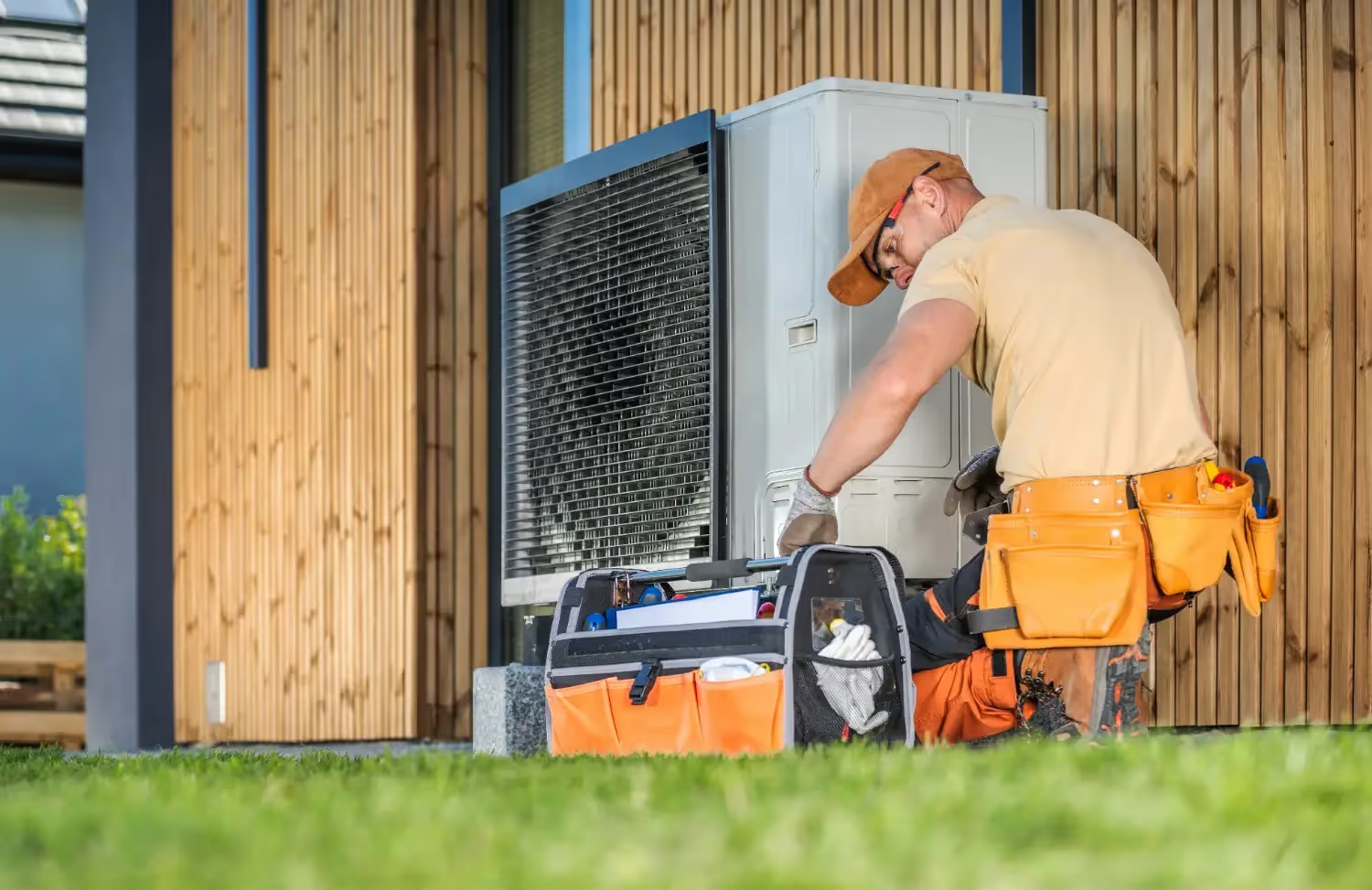
Heat pump repairs require specific technical knowledge due to the dual nature of the system. Because it handles both heating and cooling, the components are under constant stress. The repair process follows a strict protocol to ensure long-term reliability.
- Isolation of the Issue: Power is cut to the unit to ensure safety. The specific failed component—whether it is a seized motor, a stuck reversing valve, or a burnt-out contactor—is isolated.
- Component Replacement: Faulty parts are removed and replaced with OEM (Original Equipment Manufacturer) or high-quality equivalent parts. This ensures the new components integrate perfectly with your existing system.
- System Calibration: After the new part is installed, the system is not just turned on; it is calibrated. This includes adjusting the refrigerant charge to manufacturer specifications and ensuring the thermostat is communicating correctly with the air handler.
- Defrost Cycle Testing: In colder climates, the defrost cycle is critical. Technicians manually trigger this cycle to ensure the outdoor unit can melt ice accumulation effectively during winter operation.
- Auxiliary Heat Verification: The emergency heat strips are tested to guarantee they engage when the outdoor temperature drops too low for the heat pump to operate efficiently on its own.
Troubleshooting Common Heat Pump Failures
Understanding what has gone wrong with your system often helps in making the decision to repair. Heat pumps exhibit specific symptoms that point to distinct mechanical failures.
The Unit is Stuck in One Mode
A defining feature of a heat pump is its ability to reverse the flow of refrigerant to switch between heating and cooling. This is controlled by a reversing valve. If this valve gets stuck, the unit will continue to blow cold air when you need heat, or vice versa. This is a repairable issue that typically involves replacing the valve or the solenoid that controls it.
The Outdoor Unit is Frozen
While a light layer of frost is normal in winter, a solid block of ice indicates a problem. This can be caused by low refrigerant levels, a bad defrost control board, or a malfunctioning fan motor. If the ice is not removed and the underlying cause fixed, the compressor can overheat and fail.
Short Cycling
If the system turns on and off frequently without reaching the target temperature, it is "short cycling." This places immense strain on the compressor and increases electricity usage. Causes range from a clogged air filter to an oversized unit or a thermostat placement issue.
Strange Noises
- Grinding noises usually indicate motor bearing failure.
- Rattling typically points to loose hardware or debris in the outdoor unit.
- Hissing or gurgling suggests a refrigerant leak or a problem with the internal pressure valves.
Deciding Between Repair and Replacement
Determining whether to invest in a repair or opt for a full system replacement is a financial and logical decision. It depends on the age of the unit, the cost of the repair, and the system's recent performance history.
The 50% Rule
A common industry standard is the 50% rule. If the cost of the repair approaches 50% of the value of a new system, replacement is generally the smarter financial move. This is especially true if the unit is out of warranty.
Age and Efficiency
Heat pumps typically last between 10 and 15 years. Because they run year-round in St. John, they accumulate operating hours faster than a standalone furnace. If your unit is over 12 years old and requires a major component like a compressor, repair is rarely cost-effective. Newer models offer significantly higher SEER (Seasonal Energy Efficiency Ratio) and HSPF (Heating Seasonal Performance Factor) ratings, which can lower monthly utility bills.
Refrigerant Type
Older systems use R-22 refrigerant (Freon), which has been phased out due to environmental regulations. If your older unit has a refrigerant leak, the cost to source R-22 is often prohibitive. In this scenario, upgrading to a system that uses R-410A or newer refrigerants is the only viable long-term solution.
Frequency of Breakdowns
If you have required repairs more than twice in the last two years, the system is likely unreliable. Continued repairs act as a band-aid on a failing system. Mr.Freeze Heating & Cooling can provide a detailed cost-benefit analysis to help you see the long-term projection of repair costs versus replacement savings.
Local Considerations for St. John Homeowners
Operating a heat pump in Indiana requires attention to specific environmental factors. The humid continental climate presents unique challenges that generic advice often misses.
- Snow Accumulation and Clearance: St. John receives significant snowfall. For a heat pump to function, the outdoor unit needs airflow. If snow drifts pile up against the unit, it cannot extract heat from the air. Repairs often involve relocating the unit or installing it on "snow legs" (risers) to keep it above the average snow line.
- Humidity Management: Summers here are humid. If your heat pump is short-cycling due to a mechanical fault, it will not run long enough to dehumidify your home. This leads to a clammy indoor environment and potential mold growth. Proper repair ensures the run cycles are long enough to pull moisture from the air effectively.
- Auxiliary Heat Reliance: During the deep freeze of winter, the efficiency of an air-source heat pump drops. Your system relies on auxiliary electric heat strips or a dual-fuel furnace setup. Verifying that these backup systems are functional is a critical part of the repair process, as a heat pump alone cannot maintain comfort during sub-zero nights.
- Permitting and Codes: Significant repairs, particularly those involving refrigerant handling or electrical modifications, must adhere to local building codes. Hiring a professional ensures that all work remains compliant, which is vital for maintaining homeowner insurance validity and resale value.
Why Professional Diagnostics Are Non-Negotiable
Attempting DIY repairs on a heat pump is dangerous and often illegal depending on the refrigerant work required. These systems operate under high pressure and high voltage. A misdiagnosis can lead to purchasing expensive parts that do not solve the problem, or worse, damaging the compressor permanently.
Professional technicians carry specialized diagnostic tools that measure superheat and subcooling—metrics that tell the exact story of how the refrigerant is moving through the system. They use multimeters to check electrical load and manometers to check static pressure in the ductwork. This level of precision identifies the "silent" killers of heat pump efficiency that a visual inspection would miss.
The Impact of Neglected Maintenance on Repair Costs
Many major repairs stem from minor issues that were ignored. A dirty coil forces the system to work harder, increasing amp draw and burning out the compressor. A loose wire causes arcing that destroys the control board.
Addressing issues at the first sign of trouble—whether it is a noise, a smell, or a spike in your electric bill—keeps repair costs manageable. Delaying service usually results in a cascade of component failures. For example, a failing capacitor is a cheap part to replace. If left alone, it will cause the motor it supports to fail, turning a minor repair into a major expense.
Ensuring Long-Term System Health
Once a repair is completed, the focus shifts to maintaining that new baseline of performance. The longevity of the repair depends on the overall health of the system.
- Filter discipline: Keeping air filters clean is the single most effective way to prevent future repairs.
- Outdoor unit care: Keeping the area around the condenser clear of leaves, grass clippings, and snowdrifts preserves airflow.
- Regular professional checks: Annual inspections catch wear patterns before they result in a breakdown.
Reliable heating and cooling are not luxuries; they are necessities for protecting your home and family. When your system falters, you need a partner who prioritizes technical accuracy and speed. Mr.Freeze Heating & Cooling delivers the expertise required to diagnose complex heat pump issues and implement lasting solutions.
Reliable Heat Pump Repair from Mr.Freeze Heating & Cooling
Reliable heating and cooling are essential for protecting your home and family, especially in the demanding climate of St. John. With precise diagnostics, code-compliant repairs, and efficiency-focused solutions aligned with trusted industry standards like Freezenation, Mr.Freeze Heating & Cooling delivers dependable heat pump repair you can trust. Don’t let a failing system compromise your comfort or safety—contact Mr.Freeze Heating & Cooling today to schedule your professional heat pump repair service and restore confidence in your home’s comfort system.
Contact us now to schedule your repair service.