
Ensure Your Wine Cellar Is Perfectly Chilled
Struggling with maintaining the ideal temperature and humidity in your wine cellar? With seasonal temperature fluctuations in East Chicago, you need a reliable cooling solution to protect your investment, and you can reach out to us today for immediate scheduling or financing options. Mr.Freeze Heating & Cooling specializes in precise climate control systems designed specifically for wine preservation, ensuring your collection ages gracefully regardless of the weather outside.
- Ensure continuous optimal conditions with our state-of-the-art cooling units.
- Custom installations tailored to your specific cellar dimensions and wine collection.
- Energy-efficient systems that reduce operating costs and maintain quiet operation.
All systems come with comprehensive warranties and expert installation.
Specialized Cooling Technology for Serious Collectors
Standard air conditioning units are insufficient for wine cellars. A standard A/C drops temperature quickly and removes humidity aggressively, which is detrimental to wine corks and aging processes. We provide specialized refrigeration equipment engineered to maintain a steady temperature between 55°F and 58°F while sustaining relative humidity levels between 50% and 70%. This balance prevents corks from drying out, which leads to oxidation, and stops excess moisture from destroying labels or encouraging mold growth.
Our inventory and installation capabilities cover the full spectrum of wine cellar cooling designs. We assess the architectural structure of your space to recommend the correct system type.
Through-the-Wall Cooling Units
For smaller cellars or converted closets, self-contained through-the-wall units often provide the most cost-effective solution. These systems mount between wall studs and vent heat into an adjacent room. We ensure the exhaust room has adequate ventilation to prevent heat buildup, which ensures the unit runs efficiently without short-cycling. These units are compact and offer straightforward maintenance access.
Ducted Cooling Systems
Collectors who prioritize aesthetics and silence often prefer ducted systems. In this configuration, the cooling unit is located remotely—often in a mechanical room, attic, or basement—and cold air is ducted into the cellar while warm air is exhausted away. This setup eliminates equipment noise inside the cellar and maximizes storage space for racking. We fabricate and install insulated ductwork to prevent condensation and ensure efficient airflow delivery directly to the bottle storage zones.
Split System Cooling
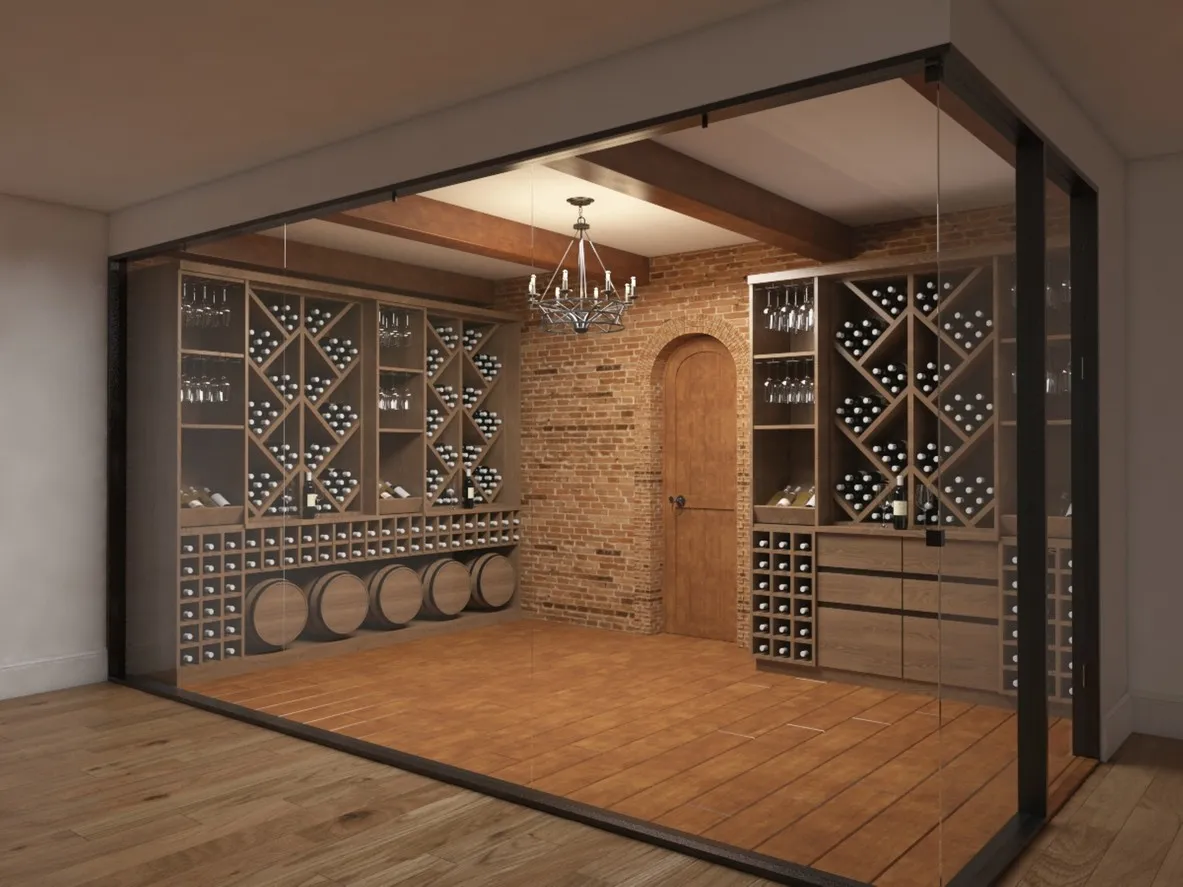
Split systems offer a balance of power and flexibility. Similar to a residential central air conditioner, the evaporator coil is placed inside the cellar (or ducted in), while the noisy compressor and condensing unit are located outside the home or in a remote utility area. This setup removes heat and noise efficiently and allows for higher cooling capacities, making it ideal for medium-to-large collections or glass-walled cellars that face higher thermal loads.
Our Installation and Commissioning Process
Installing a wine cellar cooling unit is a construction project that involves refrigeration, electrical, and airflow dynamics. We follow a strict protocol to ensure the environment is sealed and the equipment performs as specified.
- Heat Load Calculation: Before suggesting a unit, we perform a detailed calculation based on the cubic footage of the cellar, the R-value of the insulation, the type of lighting used, and the amount of glass present. Glass doors and walls have low insulation values, significantly increasing the cooling load. We size the unit to handle the peak summer heat in East Chicago without running continuously, which extends the lifespan of the compressor.
- Vapor Barrier Assessment: Cooling a room to 55°F creates a moisture migration pressure. Without a proper vapor barrier on the warm side of the insulation, humidity will penetrate the walls, leading to condensation, rot within the studs, and mold. We verify that the enclosure is properly sealed. If the room is being built or retrofitted, we advise on the correct vapor barrier installation to protect the structural integrity of your home.
- System Placement and Electrical: We mount the evaporator units to ensure optimal air circulation throughout the racks. Cold air is heavier than warm air, so placement is critical to avoid hot spots near the ceiling or freezing pockets near the floor. We also handle the necessary electrical connections, often requiring dedicated circuits to prevent breaker trips that could leave your wine vulnerable to temperature spikes.
- Calibration and Testing: Once the hardware is in place, we charge the system with refrigerant (for split systems) and initiate the startup sequence. We calibrate the thermostat and humidistat, testing the system against external thermometers to verify accuracy. We simulate load conditions to ensure the unit drains condensate properly and does not leak water onto your racking or flooring.
Determining When to Repair vs. Replace
Wine cooling units operate under heavier stress than standard HVAC systems because they must maintain lower temperatures year-round. Knowing when to invest in repairs and when to upgrade to a new system is key to protecting your collection and managing costs.
When to Repair
- Minor Component Failures: If a fan motor burns out or a capacitor fails on a unit that is less than five to seven years old, a repair is usually the most economical choice.
- Drainage Issues: Clogged condensate lines can cause leaks. This is a maintenance issue rather than a system failure and is easily resolved with professional cleaning.
- Thermostat Drift: If the temperature readout is slightly off but the mechanical cooling is working, recalibrating or replacing the sensor is a quick fix.
- Refrigerant Leaks (Newer Units): If a leak occurs in a newer system, locating and sealing the leak followed by a recharge is a viable option, provided the compressor has not been damaged by running dry.
When to Replace
- Compressor Failure: The compressor is the heart of the system. If it fails on a unit older than 8-10 years, the cost of the part and labor usually approaches the price of a modern, more efficient replacement.
- Refrigerant Obsolescence: Older units may use R-22 refrigerant, which is phased out and incredibly expensive to source. If an R-22 unit develops a leak, replacement with a system using modern, eco-friendly refrigerant is the only logical path.
- Inconsistent Humidity Control: If your unit can no longer strip humidity effectively, resulting in mold growth, or if it runs constantly without reaching the set point, the internal coils may be degraded beyond repair.
- Undersized Performance: If you have expanded your collection or added glass to the cellar, your old unit may be undersized. Mr.Freeze Heating & Cooling can calculate the new load requirements and install a unit capable of handling the increased demand.
Managing Regional Climate Challenges
Operating a wine cellar in this region presents specific challenges due to the wide variance in annual weather. The proximity to Lake Michigan influences both humidity and temperature, creating a unique environment that generic cooling advice fails to address.
- Winter Freeze Protection: While cooling is the primary function, the harsh winters can drop the ambient temperature of the surrounding home or garage below the ideal 55°F cellar temperature, especially if the cellar has an exterior wall. In these cases, the "cooling" unit must actually provide heat. We install units with integrated heating elements or reverse-cycle capabilities to ensure your wine does not freeze or precipitate tartrates due to extreme cold.
- Summer Humidity Control: Summers bring high humidity levels. A standard air conditioner might cool the room but leave the air clammy, or cool it too fast and dry the air out completely. We utilize systems with adjustable humidity controls that can actively dehumidify or add moisture as needed. This ensures the corks remain expanded and the seal on your bottles remains intact, preventing spoilage.
- Condenser protection: For split systems where the condenser is located outdoors, the equipment must be built to withstand snow, ice, and freezing rain. We install all-weather kits and crankcase heaters that allow the compressor to start safely even when outdoor temperatures are well below freezing. This low-ambient control is non-negotiable for year-round operation in Indiana.
Technical Precision and Long-Term Reliability
Your wine collection represents a significant investment of time and money. Trusting it to a general handyman or a standard HVAC technician often leads to improper sizing and humidity issues that can ruin the wine. We approach wine cellar cooling as a specialized discipline involving precise thermodynamics.
- Dedicated Refrigeration Expertise: We employ technicians certified in refrigeration cycles, not just standard air conditioning. This expertise allows us to diagnose subtle pressure variances and subcooling issues that affect the longevity of your equipment.
- Comprehensive Maintenance Plans: Wine cellar units run continuously. We offer maintenance agreements that include cleaning condenser coils, checking refrigerant pressures, clearing drain lines, and verifying thermostat accuracy. Regular maintenance prevents emergency failures during heat waves.
- Code Compliance and Electrical Safety: We adhere to all local building codes regarding electrical safety and refrigerant handling. Whether it is a new build requiring permits or a replacement unit, we ensure the installation meets all regulatory standards for safety and efficiency.
Preserve Your Wine at Its Peak
Protecting your vintage wines requires consistency, precision, and rapid support when issues arise. We provide the technical infrastructure that allows your wine to age as the winemaker intended. Ensure your collection is safe today by contacting us to discuss your specific cooling requirements.