
Combat Moisture and Enhance Comfort with Professional Dehumidification
Excess humidity creates a heavy, sticky environment indoors and risks long-term structural damage to your property. Residents in East Chicago often face this challenge during the warm, muggy months, requiring a robust solution to protect air quality and home health. Contact us today to schedule an indoor air quality assessment or discuss financing options for a new system.
High indoor humidity is not merely a comfort issue; it is a threat to the integrity of a home and the respiratory health of its occupants. While standard air conditioners remove some moisture as a byproduct of cooling, they often cannot keep up with the high latent heat loads found in the Midwest. A dedicated whole-home dehumidifier works in tandem with your existing HVAC infrastructure to mechanically remove water vapor from the air, maintaining a precise relative humidity (RH) level regardless of the temperature outside. Mr.Freeze Heating & Cooling ensures that every installation is sized correctly to handle the specific volume and moisture load of your residence.
- Achieve consistent indoor humidity levels for increased comfort and health.
- Professional installation ensures optimal performance and energy efficiency.
- Reduce allergens and protect your home’s structure from moisture damage.
All installations are backed by a comprehensive service warranty and comply with local building codes.
Comprehensive Moisture Control for Modern Homes
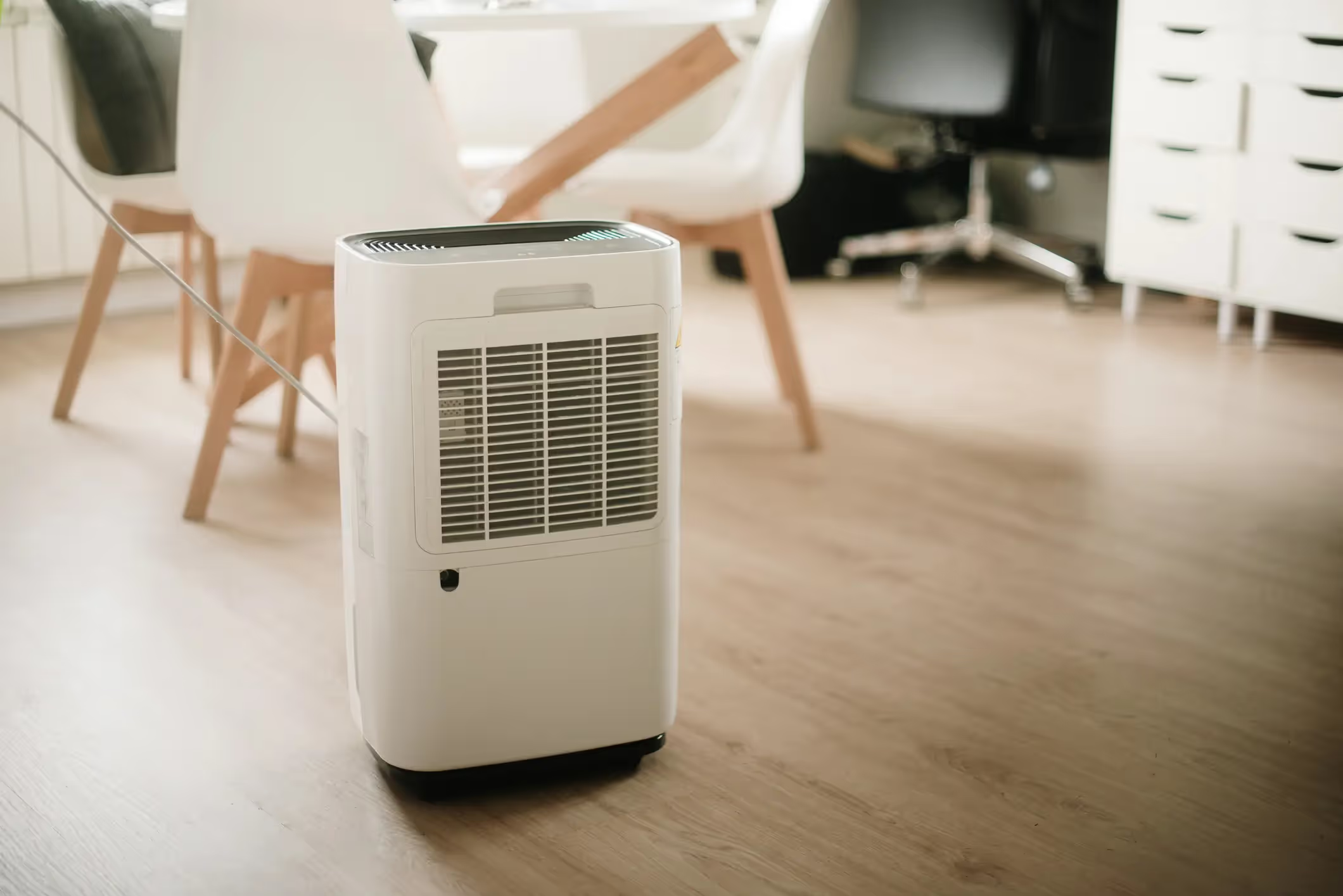
Installing a whole-home dehumidification system transforms the way a house handles air quality. Unlike portable units that treat single rooms and require constant manual draining, a whole-house system integrates directly into the central heating and cooling ductwork. This integration allows for the treatment of the entire air volume of the house, ensuring that every room, from the basement to the upper bedrooms, maintains a consistent humidity level.
The primary deliverable of this service is a controlled indoor environment where relative humidity stays between the ideal range of 30% and 50%. Keeping moisture within this specific band is critical. When levels exceed 50%, the environment becomes conducive to the growth of mold, mildew, and dust mites. Conversely, keeping the air too dry can cause wood cracking and respiratory irritation. A professionally installed system modulates operation to stay exactly within these parameters, engaging automatically when sensors detect a rise in moisture.
Energy Efficiency and Cooling Load Reduction
One of the immediate benefits homeowners experience is a reduction in cooling costs. Humid air feels significantly warmer than dry air at the same temperature because high moisture content hinders the body's natural ability to cool itself through evaporation. By removing the excess water vapor, the air feels cooler and lighter.
This phenomenon allows residents to set their thermostats several degrees higher while maintaining the same level of physical comfort. Consequently, the central air conditioning unit runs less frequently, reducing wear and tear on the compressor and lowering monthly electrical consumption. The dehumidifier handles the latent heat (moisture), allowing the AC to focus on sensible heat (temperature), creating a more efficient overall system.
Protection of Structural Integrity
Moisture is a persistent enemy of building materials. In areas like East Chicago, where seasonal shifts can be drastic, fluctuating humidity levels cause wood to expand and contract. Over time, this leads to warped floorboards, sticking doors, and cracks in drywall or plaster. High moisture also compromises the effectiveness of insulation and can cause wallpaper to peel.
A whole-home system acts as a safeguard for these materials. By stabilizing the internal atmosphere, the stress on wood framing, cabinetry, and flooring is minimized. This preservation extends to personal property as well; books, electronics, musical instruments, and artwork are all susceptible to damage from excess dampness and benefit from a stable environment.
Integration with Smart Home Technology
Modern dehumidification systems are designed for seamless integration with existing smart thermostats and home automation systems. This connectivity provides homeowners with real-time data regarding their indoor air quality. Users can monitor humidity spikes, adjust settings remotely, and receive maintenance alerts directly to their smartphones. This level of control ensures that the system is only running when necessary, further optimizing energy usage and providing peace of mind regarding the home's condition even when the owner is away.
The Installation and System Integration Process
The installation of a whole-home dehumidifier is a technical process that requires precise modification of the HVAC system. It is not a plug-and-play appliance; it requires electrical work, ductwork modification, and drainage planning. The process follows a structured workflow to ensure safety and functionality.
Site Assessment and Load Calculation
The process begins with a thorough evaluation of the home’s current HVAC configuration and moisture load. Technicians perform a Manual J load calculation to determine the exact amount of moisture removal required per day, measured in pints. This calculation accounts for the square footage of the home, the level of insulation, the number of occupants, and the tightness of the building envelope. Using an undersized unit will result in continuous running without achieving the desired set point, while an oversized unit may short-cycle, leading to inefficiency.
Ductwork Modification
Once the correct unit is selected, the physical installation begins. The dehumidifier is typically installed near the indoor air handling unit, often in a basement, crawl space, or utility closet. Two main installation configurations are common:
- Supply-to-Return: Air is drawn from the supply side, treated, and discharged into the return side.
- Return-to-Return: Air is pulled from the main return trunk, dehumidified, and exhausted back into the supply stream or further down the return trunk.
Technicians cut into the existing sheet metal ductwork to create bypass loops or dedicated intake and exhaust ports. These connections must be sealed with mastic or foil tape to prevent air leakage, which would compromise system pressure and efficiency.
Drainage and Electrical Setup
Dehumidifiers extract significant amounts of water—often ranging from 70 to 130 pints per day depending on the unit size and conditions. This water requires a permanent drainage solution. Technicians pipe the condensate drain to a floor drain, sump pump, or condensate pump. A P-trap is installed in the drain line to prevent sewer gases from backing up into the air stream.
Electrical connections are hardwired into the home’s panel, usually requiring a dedicated circuit to handle the amperage load safely. Control wiring is then run to the thermostat or a dedicated humidistat/dehumidistat, ensuring the unit communicates correctly with the central blower fan.
Commissioning and Calibration
After physical installation, the system undergoes rigorous testing. Technicians verify airflow static pressure to ensure the dehumidifier does not restrict the main HVAC system. The humidistat is calibrated to the homeowner's preferred settings, and the system is cycled through its operation modes to verify that the blower activates when dehumidification is called for, even if the AC is not running. This "shoulder season" capability is vital for spring and autumn comfort.
Repair vs. Replacement: Making the Right Decision
Dehumidifiers are durable machines, but they have a finite lifespan. Determining whether to repair a malfunctioning unit or replace it involves analyzing the cost of repair against the age and efficiency of the equipment.
When to Repair
If the unit is under five years old and the issue is minor, repair is often the most cost-effective path. Common repairable issues include:
- Sensor Malfunctions: If the humidistat is reading incorrectly, replacing the sensor is a straightforward fix.
- Electrical Connections: Loose wiring or a failed capacitor can stop the unit from starting but are inexpensive to remedy.
- Drainage Clogs: Algae or sediment blocking the drain line can cause overflow switches to trip the unit off. clearing the line restores function immediately.
When to Replace
Replacement becomes the logical choice when the cost of repair approaches 50% of the value of a new unit, or when the unit has exceeded its expected service life (typically 10-15 years). Critical failures that usually signal the need for replacement include:
- Compressor Failure: The compressor is the heart of the system. If it seizes or shorts out, the part and labor cost usually exceeds the value of the machine.
- Refrigerant Leaks: Leaks in the evaporator or condenser coils are difficult to locate and seal reliably. A system low on refrigerant will run continuously without removing moisture, driving up electric bills.
- Heat Exchanger Corrosion: In older units, internal components may corrode, leading to structural failure of the unit’s internals.
- Obsolescence: Older units are significantly less energy-efficient than modern models. upgrading can result in immediate utility savings that offset the installation cost over time.
Local Considerations for East Chicago Residents
Operating a dehumidification system in Northwest Indiana requires specific attention to local climate patterns and building regulations. The region’s proximity to Lake Michigan creates a unique microclimate that heavily influences indoor moisture levels.
Seasonal Humidity Fluctuations
East Chicago experiences a humid continental climate. Summers are characterized by dew points that frequently exceed 65°F or 70°F, creating a "muggy" atmosphere. However, the transitional seasons of spring and fall pose a different challenge. During these months, temperatures may be moderate (60°F-70°F), meaning the air conditioner does not run often. However, the outdoor humidity remains high. Without the AC running to dry the air, indoor humidity spikes. A whole-home dehumidifier is essential during these periods to run independently of the cooling cycle, keeping the home dry without overcooling it.
Basements and Crawl Spaces
Many homes in the area utilize basements or crawl spaces, which are naturally prone to dampness due to hydrostatic pressure from the soil. Ground moisture seeps through concrete foundations, raising the humidity level of the entire home via the stack effect (warm air rising and pulling crawl space air upward). Local codes often require specific vapor barriers, but mechanical dehumidification is frequently necessary to keep these subterranean spaces dry enough to prevent mold colonization and structural rot.
Permitting and Utility Requirements
Modifying the HVAC system and adding electrical circuits typically requires adherence to local building codes. Installations must meet the National Electric Code (NEC) standards adopted by the city. Professional installers handle the permitting process, ensuring that the dedicated circuits for the dehumidifier meet amperage requirements and that condensate drains are routed according to plumbing codes to prevent cross-contamination. Mr.Freeze Heating & Cooling maintains strict compliance with all regional regulations to ensure safety and pass any required municipal inspections.
Differentiators and Service Standards
Selecting a provider for dehumidification services involves looking for technical expertise and adherence to industry standards. High-quality installation goes beyond simply connecting ducts; it involves a holistic view of the home’s building envelope and thermal dynamics.
Precision Sizing and Airflow Management
Improper sizing is the leading cause of dissatisfaction with dehumidification systems. A unit that is too small will run 24/7 and fail to reach the set point, while an oversized unit will turn on and off rapidly, failing to pull moisture effectively. Professional technicians utilize industry-standard calculation methods to match the equipment capacity exactly to the home’s volume and infiltration rate. Furthermore, ensuring that the static pressure in the ductwork remains balanced prevents the dehumidifier from "starving" the main furnace or AC blower of air.
Indoor Air Quality Focus
The goal of installation is not just moisture removal but overall air quality improvement. Technicians assess the entire ventilation strategy, ensuring that the dehumidifier helps filter the air. Many whole-home units include high-MERV filtration that captures mold spores and pollen as the air passes through the drying cycle. This dual-functionality is emphasized during the design phase to maximize the health benefits for the household.
Warranty and Long-Term Reliability
Professional-grade equipment comes with manufacturer warranties that cover parts for extended periods, typically 5 to 10 years. However, these warranties are often contingent upon installation by a licensed contractor. Using a certified service provider protects this coverage. Additionally, labor warranties on the installation work itself provide assurance that any issues related to the duct connections, drainage piping, or electrical integration will be resolved without additional cost to the homeowner.
Controlling the moisture in your home is a definitive step toward preserving your property value and ensuring a healthy living space. The heavy, damp air characteristic of the region does not have to dictate your indoor comfort. By implementing a dedicated moisture control strategy, you eliminate the risks associated with mold and structural decay while enjoying a cooler, fresher environment.
Secure your indoor air quality and protect your home investment by scheduling a professional consultation for whole-home dehumidification today.