
Protecting Your Collection From Environmental Instability
Your wine deserves perfect storage conditions, but fluctuating temperatures in Crown Point can challenge even the best setups, leading to spoiled vintages and wasted investments. Without precise environmental control, corks can dry out, allowing air to oxidize your wine, or excess moisture can lead to mold growth that ruins labels and lowers value. Contact us today to schedule a comprehensive assessment of your wine cellar cooling needs or to discuss available financing options.
We provide specialized solutions designed to combat these risks:
- Ensure constant temperature maintenance between 55°F and 60°F, creating the optimal environment for long-term aging.
- Achieve and maintain perfect humidity levels between 50% and 70% to prevent cork degradation and oxidation.
- Deliver customized cooling configurations tailored specifically to your cellar’s cubic footage, insulation quality, and glass exposure.
Equipped with certified expertise and extended warranties, our team ensures total peace of mind for your collection.
Specialized Cooling Solutions for Serious Collectors
Standard air conditioning units are fundamentally incapable of protecting a wine collection. A standard AC is designed to drop temperature quickly and remove humidity, which is exactly the opposite of what a wine cellar requires. A dedicated wine cooling system is designed to lower temperature gradually and maintain a stable relative humidity. In the Crown Point area, where seasonal shifts are drastic, relying on anything less than specialized equipment puts the chemistry of your wine at risk.
We provide comprehensive installation and service for the three main categories of wine cellar cooling systems, ensuring the right fit for your specific architectural constraints and storage goals.
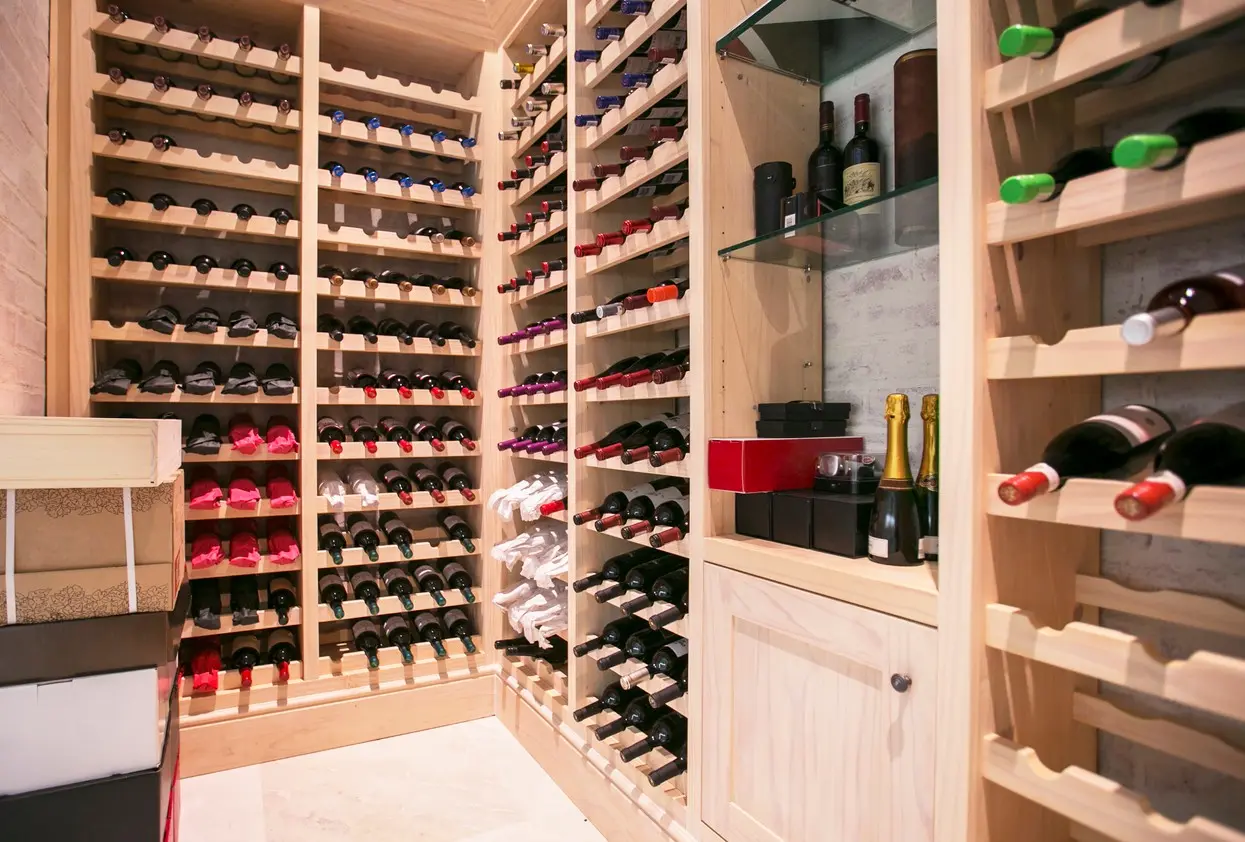
Through-the-Wall Systems
These self-contained units are cost-effective and relatively easy to install in smaller cellars. The evaporator and condenser are housed in the same unit, which mounts through a wall into an adjacent room.
- Ideal for small to medium-sized collections where budget is a primary consideration.
- Requires an adjacent room that is well-ventilated and can handle the heat exhaust (up to 85°F).
- Offers a simplified installation process with fewer modifications to the home’s existing infrastructure.
Split Systems (Ductless)
Split systems separate the evaporator (inside the cellar) from the condenser (placed outside the home or in a mechanical room). This configuration significantly reduces noise and vibration within the cellar, which is crucial as vibration can disturb the sediment in aging wine.
- Provides a near-silent operation inside the cellar, preserving the ambiance of the tasting area.
- Eliminates the need for large exhaust ventilation into adjacent living spaces.
- Allows for higher BTU capacity, suitable for larger collections or cellars with significant glass components.
Ducted Systems
For collectors who demand a cellar with no visible mechanical equipment, ducted systems are the superior choice. The unit is located entirely outside the cellar, and conditioned air is ducted in while warm air is ducted out.
- Maximizes storage space by removing the need for a wall-mounted evaporator unit.
- Offers the highest level of aesthetic appeal for showcase cellars.
- Provides superior control over airflow distribution, ensuring no hot or cold spots exist within the racking.
The Installation Process: Precision and Protocols
Installing a wine cooling unit is not a plug-and-play operation. It requires a physics-based approach to ensure the envelope of the room is sealed against the variable Indiana climate. If the room is not properly prepared, even the most expensive cooling unit will run continuously, burn out its compressor, and fail to hold temperature.
Mr.Freeze Heating & Cooling approaches every installation with a rigorous, multi-step protocol to ensure system longevity and efficiency.
- Heat Load Calculation: We begin by performing a manual J-style load calculation specific to wine cellars. This calculation accounts not just for the cubic footage, but for the R-value of the insulation, the thermal conductivity of the door (especially if it is glass), the type of lighting used, and the ambient temperature of the surrounding spaces. Undersizing a unit leads to constant running; oversizing leads to short-cycling, which fails to control humidity.
- Vapor Barrier Verification: A cooling unit creates a cold, somewhat humid environment inside the cellar while the outside air may be warm and humid or cold and dry. Without a proper vapor barrier (typically 6-mil polyethylene applied to the warm side of the insulation), moisture will migrate through the walls. This causes condensation on the vapor barrier, leading to rot in the studs and mold behind the walls. We verify the integrity of the vapor barrier before confirming equipment placement.
- Rough-In and Line Set Installation: For split and ducted systems, we run insulated copper line sets and drain lines. Proper sloping of the drain line is critical to prevent water backup, which can damage the unit or the cellar floor. We use brazing techniques that ensure leak-proof connections, essential for the high-pressure refrigerants used in modern systems.
- Electrical and Control Wiring: Wine cooling units often require dedicated electrical circuits to prevent tripping breakers when the compressor kicks on. We handle the hardwiring of the unit and the installation of remote thermostats or bottle probes. Bottle probes measure the liquid temperature rather than the air temperature, providing a more accurate reading of the wine’s actual condition.
- System Charge and Calibration: Once the hardware is in place, the system is pressure-tested with nitrogen to check for leaks. After passing the pressure test, we evacuate the lines to remove moisture and charge the system with the precise amount of refrigerant. The final step involves calibrating the thermostat and humidity controls to your desired set points.
Repair vs. Replacement: Making the Right Decision
Cooling units are mechanical devices that operate under high stress, often running 50% to 70% of the time to maintain steady conditions. Determining whether to repair a failing unit or invest in a replacement depends on the age of the system, the nature of the failure, and the value of the collection it protects.
When to Opt for Repair
- Minor Component Failure: If a fan motor, capacitor, or relay switch fails on a relatively new unit (under 5 years old), repair is usually the most cost-effective option.
- Refrigerant Leaks in Accessible Areas: If a leak is detected at a connection point that is easily accessible and the system uses modern refrigerant, a repair is viable.
- Clogged Coils or Drains: Issues caused by lack of maintenance, such as dust buildup on condenser coils or a blocked condensate drain, are service tasks that restore the unit to full functionality without replacement.
When to Opt for Replacement
- Compressor Failure: The compressor is the heart of the system. If it fails, especially on a unit older than 7-10 years, the cost of the part and labor often approaches the price of a new, more efficient unit.
- Evaporator Coil Corrosion: Wine cellars are humid environments. Over time, this humidity can corrode the evaporator coils. Once the coils are compromised, they develop pinhole leaks that are virtually impossible to patch permanently.
- Obsolete Refrigerant: Older units may use R-22 refrigerant, which is phased out and extremely expensive. If an R-22 unit leaks, replacement is the only logical financial decision.
- Inconsistent Performance: If the unit runs continuously but cannot pull the temperature down to 55°F, or if it short-cycles rapidly, it may be undersized or nearing the end of its mechanical life. Risking a collection worth thousands of dollars to save on a replacement unit is rarely a wise trade-off.
Local Considerations for Crown Point Cellars
Building and maintaining a wine cellar in Crown Point presents unique challenges due to the specific climate conditions of the region. The interplay between the local weather and your cellar’s location within the home dictates specific installation requirements.
Managing High Humidity Summers
In the summer, humidity levels in the region can be significant. If your cellar is not perfectly sealed, moisture will attempt to enter the cool cellar environment. This latent heat load requires a cooling unit with sufficient capacity to strip excess moisture without over-cooling the air. We ensure that the units we install have adjustable humidity controls or can be paired with integrated humidification/dehumidification systems to balance these swings.
Protecting Against Freezing Winters
Conversely, winter temperatures can drop well below freezing. If the condenser of a split system is located outdoors, it must be equipped with a "low ambient kit." This kit allows the compressor to function properly even when outside temperatures are low. Without it, the oil in the compressor can thicken, causing the unit to seize. Furthermore, if your cellar is located on an exterior wall, passive cooling from the outside might drop the cellar temperature below 55°F. In these cases, we may recommend a system with an integrated heating element to maintain stability during cold snaps.
Basement vs. Main Floor Placement
Basements are popular for cellars due to their naturally cooler temperatures. However, concrete is porous. In our area, where the water table can affect basements, treating the concrete floor and walls with a sealant is mandatory before building the cellar. For main floor glass-enclosed wine walls, the solar gain from nearby windows must be calculated into the BTU requirements. A beautiful glass wine wall requires significantly more cooling power than a traditional insulated basement room.
Why Technical Expertise Matters
Your wine collection is an investment that matures over time. The system protecting it must be reliable, precise, and properly maintained. Generic HVAC knowledge is insufficient for refrigeration of this nature. Wine cooling operates in a much tighter temperature window than residential air conditioning and deals with humidity in a completely different way.
We work with top-tier manufacturers of wine cellar cooling systems, such as WhisperKOOL, CellarPro, and Breezaire. Our familiarity with these brands means we understand the nuances of their ducting requirements, their specific voltage needs, and their warranty stipulations. We ensure that the installation adheres strictly to manufacturer guidelines so that your warranty remains valid.
Furthermore, we understand the aesthetics of a wine cellar. We know that the cooling system should be felt but not heard, and present but not intrusive. Whether it is hiding ductwork in a soffit, color-matching a grille to your racking, or locating a remote condenser to eliminate noise, our focus is on integrating the mechanicals seamlessly into the design.
Get Your Precision Cooling Solution!
Maintaining the ideal environment for wine requires a blend of refrigeration science and construction knowledge. From calculating the thermal break in a glass door to sizing the liquid line for a long-run split system, the details matter. A variance of just a few degrees over a year can alter the aging process of the wine. We provide the technical rigor necessary to keep that line flat and your wine safe.
Protect your vintage collection with a cooling solution designed for precision and longevity. Ensure your cellar performs exactly as intended, regardless of the weather outside.
Secure the future of your wine collection—schedule your cellar cooling consultation today.