
Struggling with Home Humidity? Whole-Home Dehumidification Solutions
Tired of sticky, humid summers and damp, musty winters in your home? Discover how our Whole Home Dehumidification systems can transform your indoor climate into a comfort zone year-round; contact us today to schedule an assessment or inquire about our flexible financing options.
- Achieve ideal humidity levels throughout your home, reducing mold growth and allergens.
- Enjoy a consistently comfortable indoor environment, regardless of the weather outside.
- Lower your energy costs by enhancing the efficiency of your HVAC system.
Backed by full installation warranties and available financing options to make comfort affordable.
Homeowners in Crown Point know that temperature is only half of the comfort equation. When indoor humidity rises, your home feels warmer than the thermostat reads, leading to clammy skin, sleepless nights, and an overworking air conditioner. Mr.Freeze Heating & Cooling provides dedicated whole-home solutions that integrate directly with your existing heating and cooling infrastructure to mechanically remove excess moisture from every room in your house.
Immediate Benefits of Whole-Home Dehumidification
Installing a centralized dehumidification system offers immediate, tangible changes to how your home feels and functions. Unlike portable units that only treat a single room, a whole-home system manages the moisture levels of the entire building envelope. This control is critical in our humid continental climate, where summer storms and lingering moisture can wreak havoc on indoor air quality.
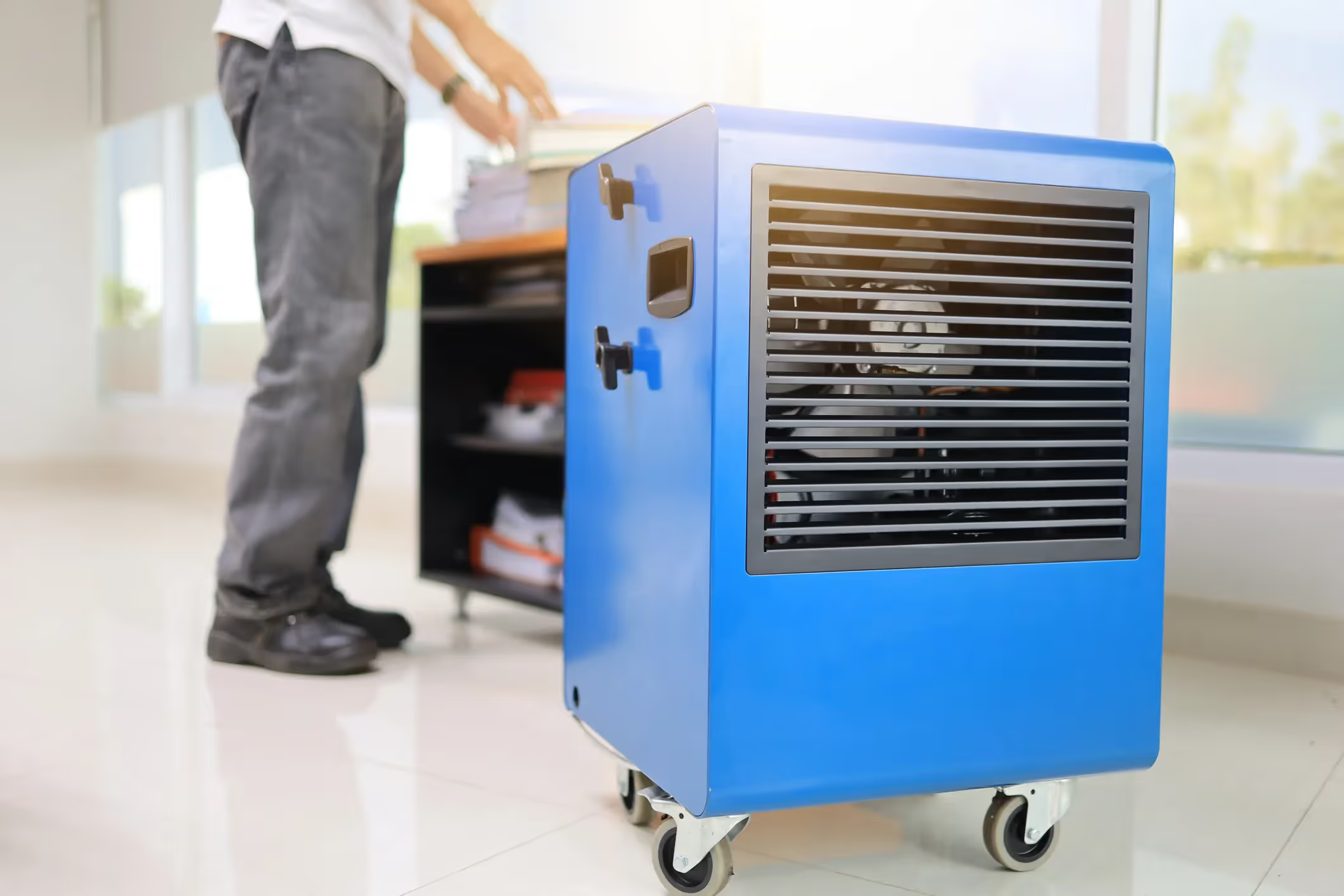
Enhanced Cooling and Energy Efficiency
High humidity prevents your body’s natural cooling mechanism—sweating—from working effectively. This is why a humid 75°F feels much hotter than a dry 75°F. With a whole-home dehumidifier, you can often raise your thermostat setting by several degrees while maintaining the same level of perceived comfort. By removing the latent heat (moisture) from the air, your central air conditioner does not have to work as hard to cool the home. This reduces the runtime of your AC unit, lowering electricity bills and extending the lifespan of your cooling equipment.
Protection for Home Structure and Furnishings
Excess moisture is aggressive. It warps hardwood floors, swells door frames, peels wallpaper, and degrades drywall. Musical instruments, expensive electronics, and wood furniture are all susceptible to damage when relative humidity fluctuates wildly or remains high for extended periods. A centralized system maintains a steady relative humidity set point, usually between 45% and 50%, preserving the structural integrity of your property and protecting your investments from moisture damage.
Healthier Indoor Air Quality
Biological pollutants thrive in moist environments. Dust mites, one of the most common indoor allergens, reproduce rapidly in humidity levels above 50%. Mold and mildew growth also accelerates when moisture is present on surfaces or in ductwork. By keeping humidity below these critical thresholds, you create an environment that is hostile to allergens and biological growth. This leads to cleaner air, reduced allergy symptoms, and the elimination of that distinctive "musty" basement odor often found in homes with moisture issues.
Streamlined Installation Process Explained
Implementing a whole-home dehumidification strategy involves more than simply plugging in a device. It requires a strategic integration with your home’s air distribution system. We approach every installation with a technical assessment to ensure the unit is sized correctly for the square footage and tightness of your home.
Site Assessment and Sizing
- First, technicians evaluate the total volume of the home and the specific moisture load. This includes checking basements, crawl spaces, and the building envelope's insulation.
- Next, the correct capacity is determined, measured in pints of water removed per day. An undersized unit will run continuously without achieving the set point, while an oversized unit may cycle too frequently.
Ductwork Integration
- The dehumidifier is typically installed near your existing furnace or air handler.
- We install a dedicated return air intake for the dehumidifier or pull from the main return trunk.
- The dry, treated air is then ducted into the supply plenum, allowing the HVAC blower to distribute the dry air evenly to every room in the house.
- In some configurations, dedicated ducting may be run to specific problem areas, such as a finished basement, to ensure localized control.
Drainage and Electrical Setup
- Unlike portable units that require daily bucket emptying, whole-home systems are plumbed for automatic drainage.
- We run a condensate line directly to a floor drain, sump pump, or outdoors, ensuring the water removed from the air is disposed of effortlessly.
- If gravity drainage is not possible due to the unit's location, a condensate pump is installed to move the water to the appropriate drain.
- Electrical connections are hardwired or installed on a dedicated circuit to ensure safe, consistent operation.
Controls and Calibration
- Finally, the system is connected to a humidistat. This can be a standalone controller located near the equipment or integrated into a smart thermostat in your living space.
- We calibrate the sensors to ensure accurate readings and demonstrate how to adjust settings based on seasonal changes.
Why Choose Whole-Home Dehumidification Over Portable Units?
Many homeowners initially attempt to solve humidity issues with portable dehumidifiers purchased from big-box stores. While these units have their place for spot treatment in small closets or temporary drying, they are generally ineffective for long-term, whole-house moisture control. When you calculate the long-term operational costs and comfort levels, a centralized system provided by Mr.Freeze Heating & Cooling often proves to be the superior investment.
Capacity and Efficiency
Portable units are limited in the volume of air they can treat. To replicate the capacity of a single whole-home unit, you would often need multiple portable units running simultaneously in different rooms. This significantly increases electricity consumption, as portable units are generally less energy-efficient per pint of water removed compared to high-capacity, whole-home systems. Additionally, portable units add heat to the room they are operating in, which can be counterproductive during the summer months. Whole-home units are integrated into the ductwork, meaning the heat generated during the dehumidification process can be managed more effectively or discharged appropriately.
Maintenance and Convenience
The primary failure point for humidity control with portable units is user compliance. If the bucket is full, the unit shuts off. In a humid Crown Point summer, a portable unit might fill its bucket two or three times a day. If you are at work or asleep, the unit stops working, and humidity levels spike immediately. Whole-home systems require zero daily interaction. The drainage is automatic, and the filtration is typically managed alongside your standard HVAC filter maintenance. There are no buckets to carry and no spills to clean up.
Noise and Aesthetics
Portable dehumidifiers are noisy. The compressor and fan operate directly in your living space, creating a constant drone that interferes with conversation and television. A whole-home system is located in the mechanical room, basement, or attic. The operation is virtually silent in the living areas, providing comfort without the acoustic intrusion. Furthermore, you regain floor space by eliminating bulky plastic units and power cords from your hallways and bedrooms.
Filtration Capabilities
Most portable units use a basic mesh screen that captures only large lint particles. Whole-home dehumidifiers often include or integrate with high-efficiency media filters (MERV 11 or higher). This means that while the system is drying the air, it is also filtering out smaller particulates, pollen, and dust, contributing to a comprehensive improvement in indoor air quality.
Adapted to Crown Point, IN: Your Seasonal Comfort Guide
The climate in Northwest Indiana presents specific challenges that make humidity control a year-round consideration rather than just a summer concern. Understanding local seasonality helps in optimizing how you run your equipment.
Summer Humidity Spikes
During the peak of summer, dew points in our region can remain high for weeks. While your air conditioner removes some moisture, it is controlled by temperature, not humidity. On mild but humid days (e.g., 75°F with 80% humidity), your AC may not run enough to dry the air, leaving the house feeling clammy. A whole-home dehumidifier runs independently of the cooling cycle, removing moisture even when the AC is off. This is crucial for maintaining comfort during those "in-between" weather patterns common in the Midwest.
Shoulder Seasons (Spring and Fall)
Spring and Fall are prime times for high indoor humidity. Frequent rains and moderate temperatures mean the AC isn't running, but the outdoor air is saturated. Without mechanical dehumidification, this moisture accumulates indoors, absorbing into drywall, carpets, and furniture. This accumulation often leads to the "basement smell" appearing in upper levels of the home. Running a dehumidifier during these months keeps the home dry and fresh without the need to over-cool the space.
Basements and Crawl Spaces
In our area, many homes have basements or crawl spaces. The "stack effect" draws air from these lower levels up into the main living areas. If the air in your basement is damp and moldy, that same air is eventually circulating in your kitchen and bedrooms. Properly dehumidifying the lowest level of the home is essential for the air quality of the entire structure. We ensure that the installation addresses these critical zones, creating a dry foundation for the rest of the home's air.
Certified and Trusted by Crown Point Homeowners
Selecting the right equipment is only part of the solution; the quality of the installation determines the system's longevity and performance. Integrating a powerful appliance into your central HVAC system requires a deep understanding of airflow dynamics, electrical safety, and drainage codes.
Precision Installation Standards
We adhere to strict installation protocols. This includes ensuring that the static pressure in your ductwork remains within the manufacturer's specifications after the unit is installed. Improper installation can restrict airflow, damaging both the dehumidifier and your furnace. We verify that all duct connections are sealed to prevent air leakage and that the drainage systems are trapped correctly to prevent sewer gas backflow or water damage.
Warranty and Long-Term Support
Professional installation comes with the assurance of manufacturer warranty coverage. DIY or handyman installations can often void warranties if specific building codes or manufacturer guidelines are not followed. We provide clear documentation of the installation, registration of the equipment, and an explanation of the coverage. Furthermore, should the system ever require service, you have a local partner ready to assist with diagnostics and repair.
Focus on Total Home Comfort
Our approach is holistic. We don't just sell a box; we provide a solution to a comfort problem. We look at how the dehumidifier interacts with your air conditioner, your thermostat, and your lifestyle. Whether you have a historic home with older ductwork or a new construction property with high-efficiency standards, we tailor the installation to fit the specific architecture and thermal properties of your residence.
Take Action Today!
Take control of your indoor climate today. Stop relying on ineffective portable units and start enjoying the benefits of professional-grade moisture control.
Improve your home’s air quality and comfort now—contact us to schedule your whole-home dehumidification consultation.